

Hess_CI_12e_PPT_CH04_

Presentation
•
Social Studies
•
University
•
Practice Problem
•
Easy

Dr. Eli Herrera
Used 1+ times
FREE Resource
38 Slides • 28 Questions
1
2
3
Multiple Choice
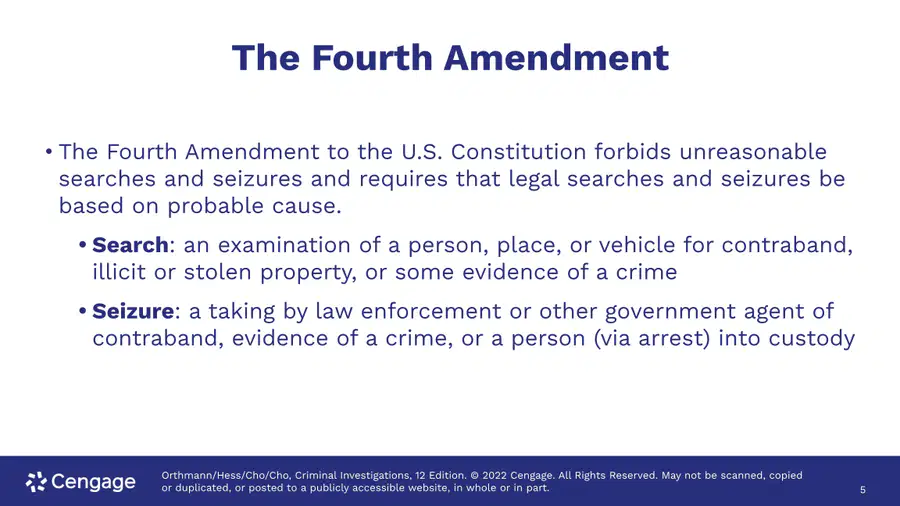
Which constitutional amendment primarily restricts investigative searches and seizures?
First Amendment
Fourth Amendment
Fifth Amendment
Sixth Amendment
4
Open Ended
Why is it important for investigators to understand the legal restrictions on searches and seizures during a criminal investigation?
5
6
7
8
9
Fill in the Blanks
Type answer...
10
Multiple Choice
Which constitutional amendment restricts investigative searches and seizures, and what are the two key terms associated with it?
First Amendment and liberty, equality
Fourth Amendment and search, seizure
Fifth Amendment and due process, double jeopardy
Sixth Amendment and speedy trial, impartial jury
11
12
Fill in the Blanks
Type answer...
13
Multiple Select
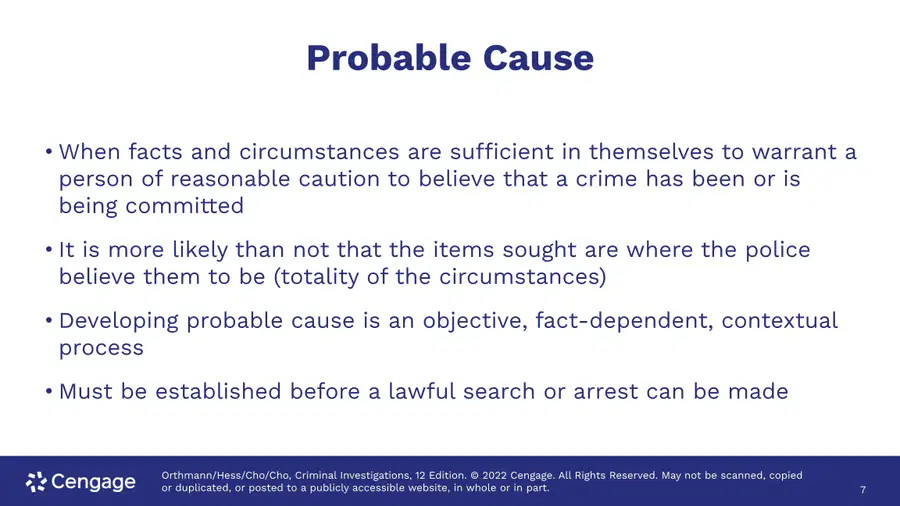
Which of the following statements about probable cause is correct? Select all that apply.
Probable cause must be established before a lawful search or arrest can be made.
Probable cause is a subjective process based on personal opinion.
Probable cause is based on the totality of the circumstances.
Probable cause is not required for police to search a person or place.
14
Open Ended
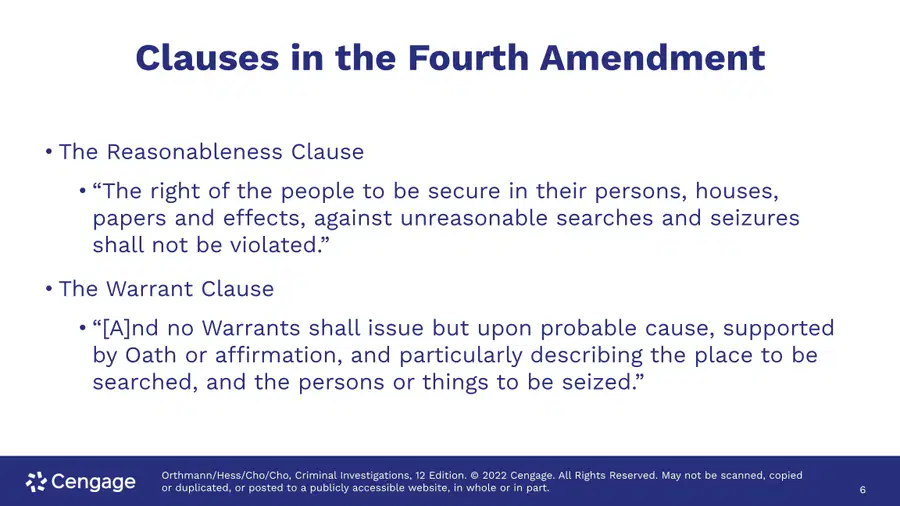
Explain the difference between the Reasonableness Clause and the Warrant Clause in the Fourth Amendment.
15
16
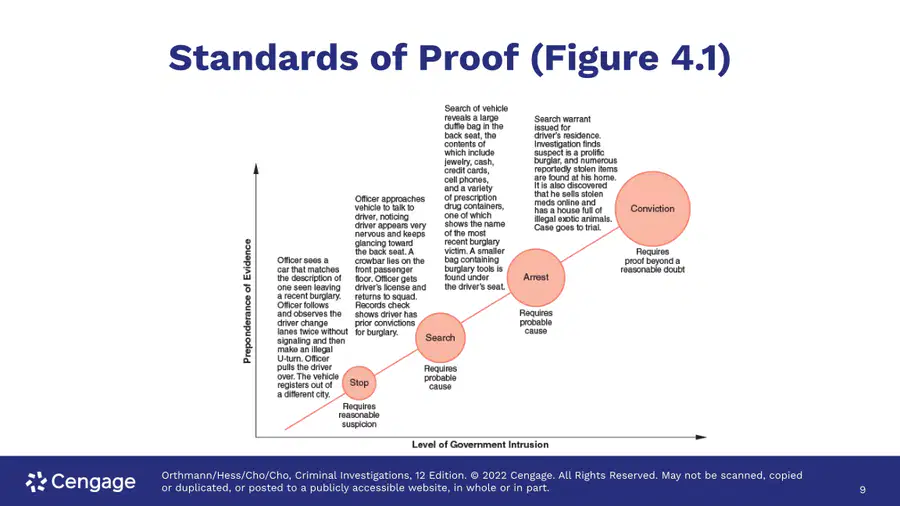
Open Ended
Describe the progression of common levels of proof required during various stages of the criminal investigative process.
17
18
Multiple Choice
Which of the following actions requires proof beyond a reasonable doubt?
Stop
Search
Arrest
Conviction
19
20
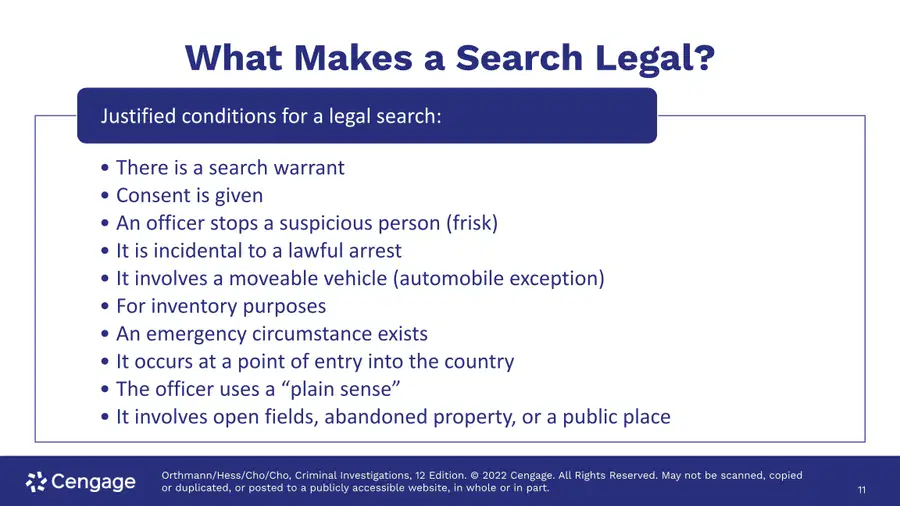
Open Ended
Explain the conditions that justify a legal search.
21
22
Multiple Select
Which of the following are justified conditions for a legal search?
Consent is given
Officer suspects a crime without evidence
It involves a moveable vehicle
Officer feels nervous during stop
23
24
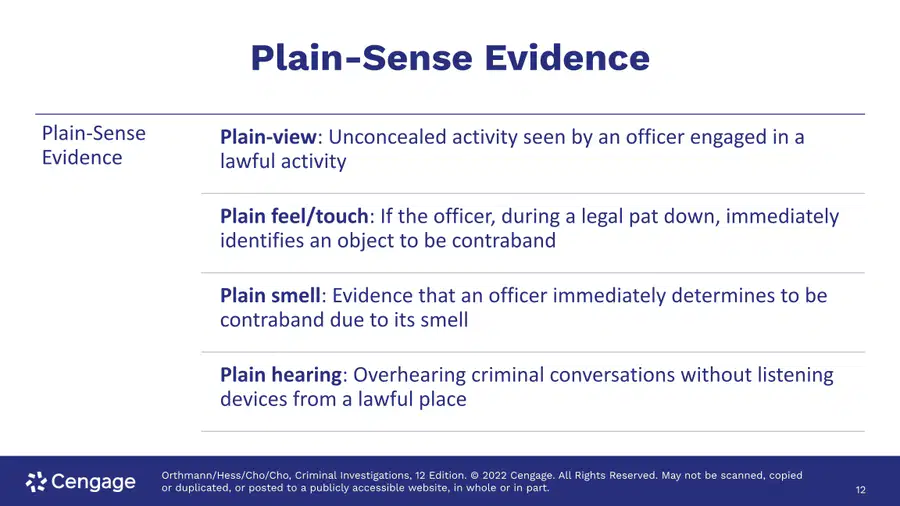
Fill in the Blanks
Type answer...
25
26
Open Ended
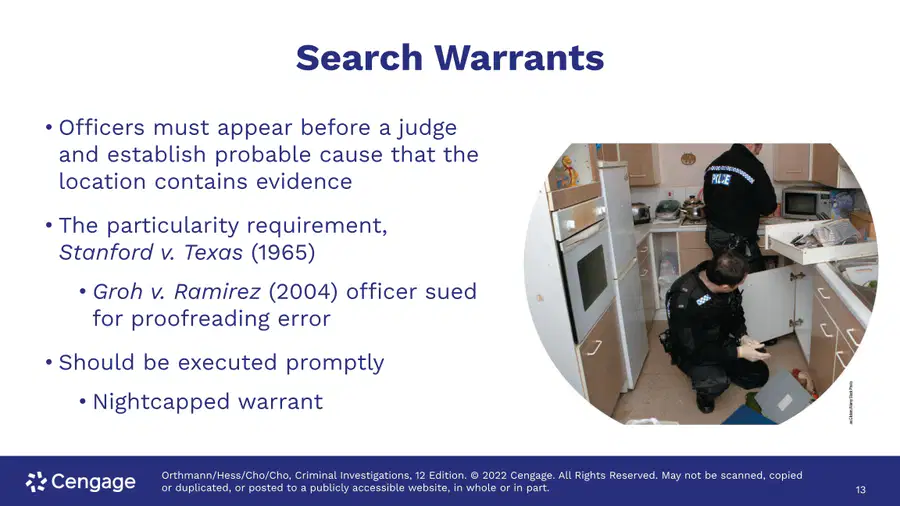
What is the particularity requirement for a search warrant, and why is it important in criminal investigations?
27
28
Fill in the Blanks
Type answer...
29
30
Open Ended
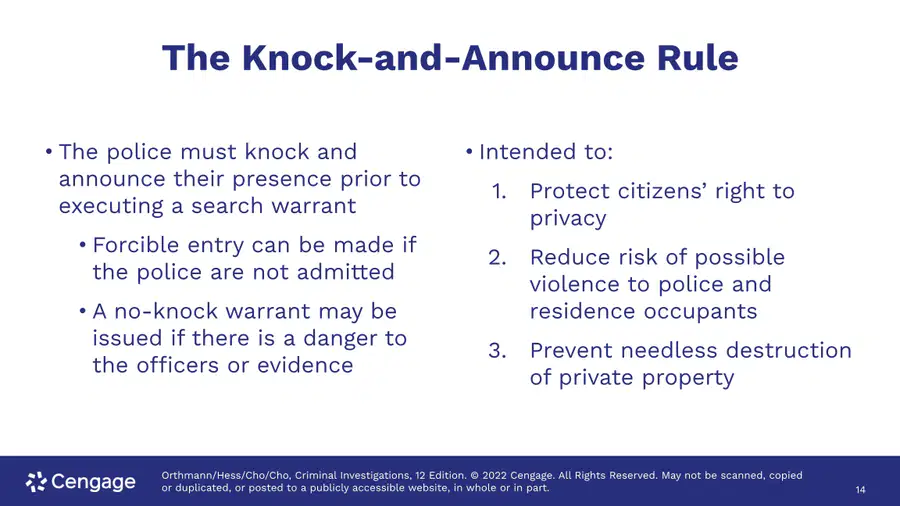
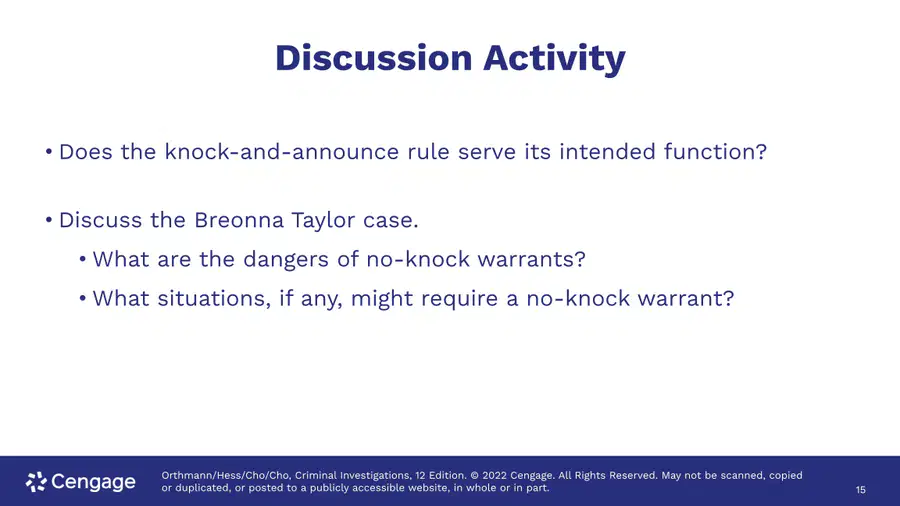
What are the dangers of no-knock warrants?
31
Open Ended
Does the knock-and-announce rule serve its intended function?
32
33
Multiple Choice
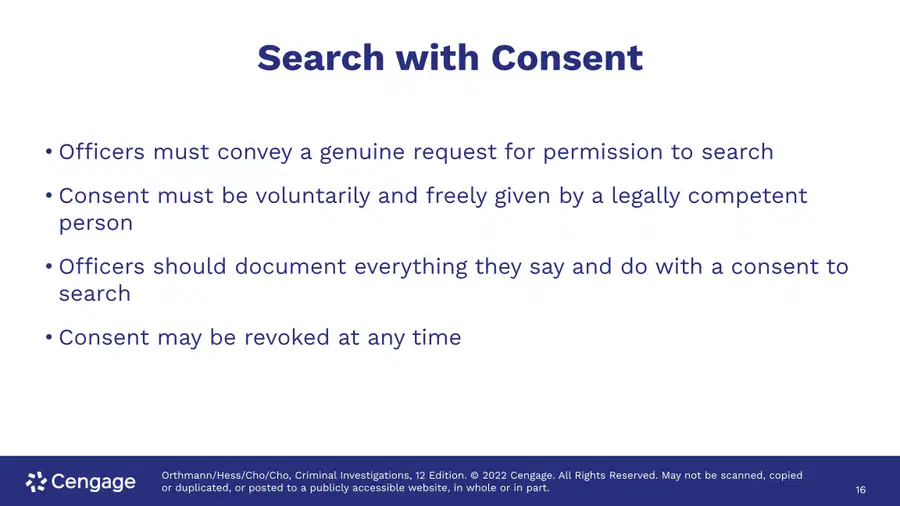
Which of the following is NOT a requirement for a valid consent search by officers?
Consent must be voluntarily and freely given by a legally competent person
Officers must convey a genuine request for permission to search
Consent may be revoked at any time
Consent must be given in writing
34
35
36
37
Fill in the Blanks
Type answer...
38
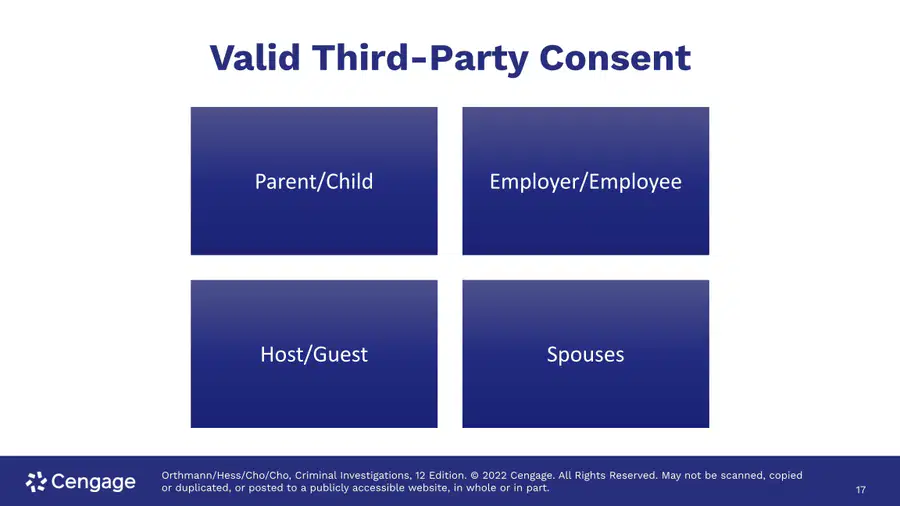
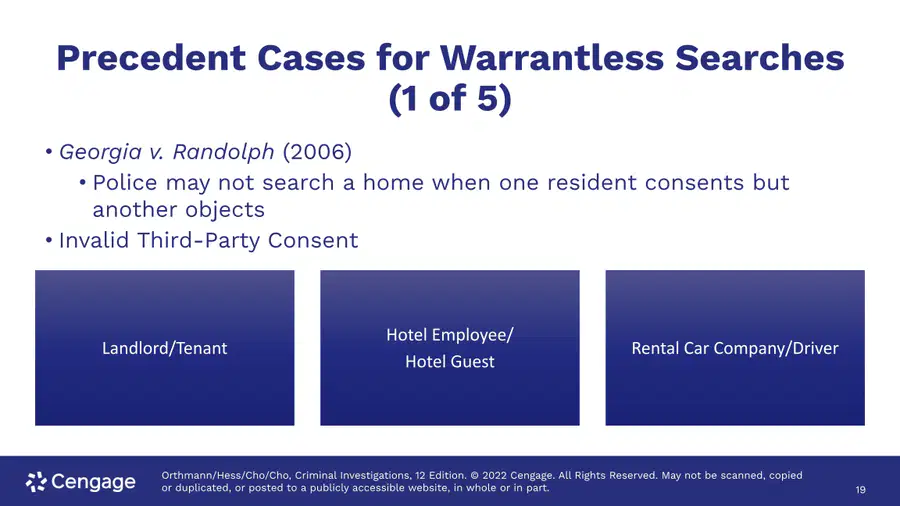
Multiple Select
Which relationships are considered valid third-party consent for searches?
Parent/Child
Employer/Employee
Host/Guest
Landlord/Tenant
39
40
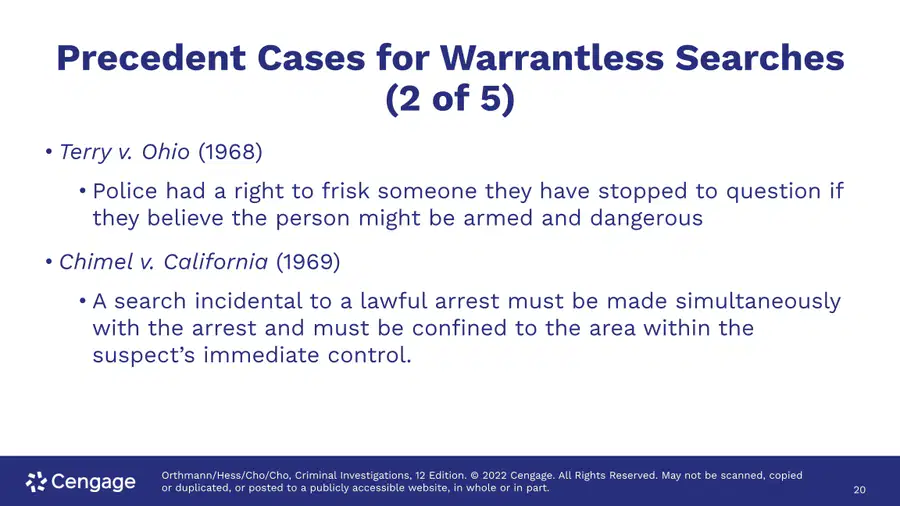
Open Ended
Explain the difference between the Terry v. Ohio and Chimel v. California decisions regarding warrantless searches.
41

42
Multiple Choice
According to Carroll v. United States (1925), under what conditions may vehicles be searched without a warrant?
If there is probable cause for the search and the vehicle would be gone before a search warrant could be obtained
If the owner gives verbal consent
If the vehicle is parked in a public lot
If the vehicle is registered out of state
43
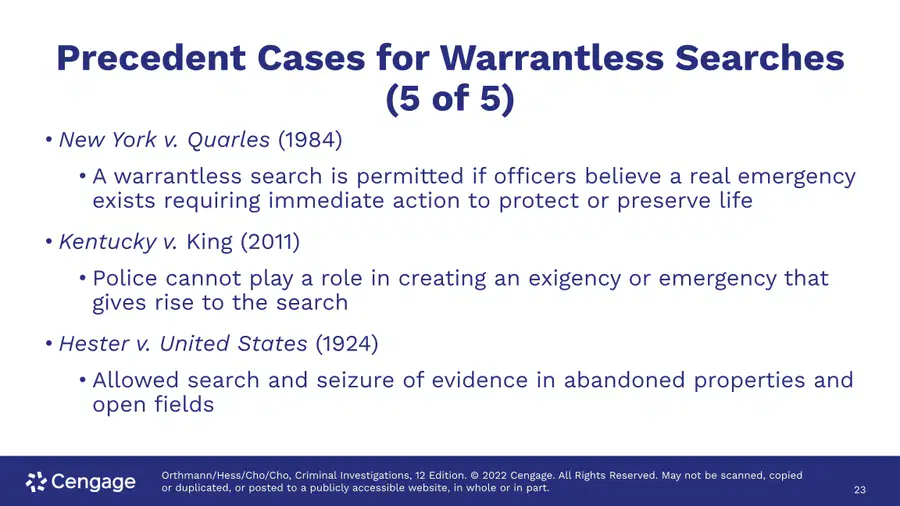
Multiple Choice
Which precedent case established that a search warrant is required to search an arrested person's cell phone?
Riley v. California (2014)
Carroll v. United States (1925)
Chambers v. Maroney (1970)
New York v. Quarles (1984)
44
45
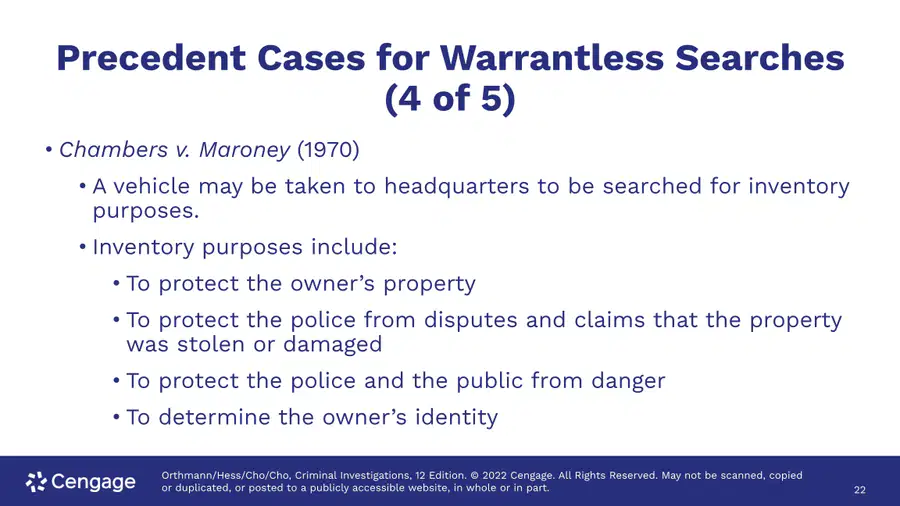
Open Ended
Explain the inventory purposes for which a vehicle may be taken to headquarters to be searched, as established in Chambers v. Maroney (1970).
46
47
48
49
Fill in the Blanks
Type answer...
50
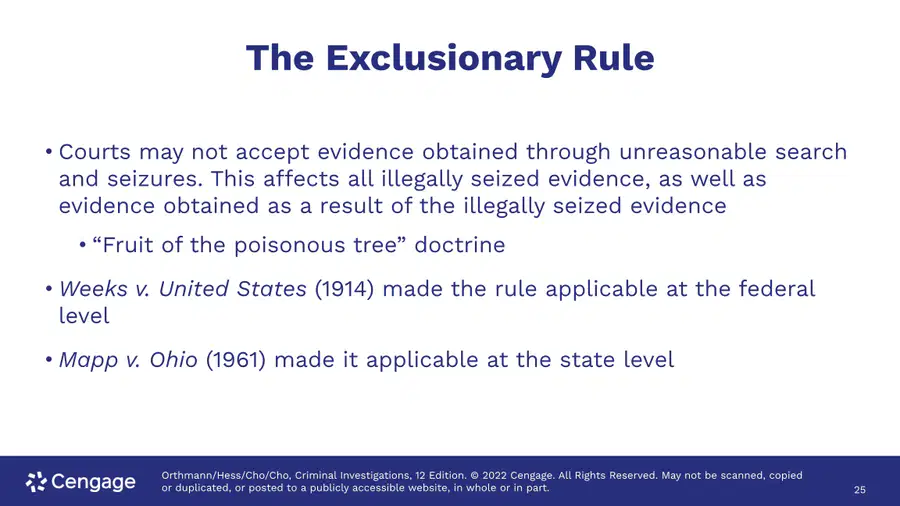
Multiple Choice
Which cases made the exclusionary rule applicable at the federal and state levels?
Weeks v. United States and Mapp v. Ohio
Riley v. California and Carroll v. United States
Chambers v. Maroney and Hester v. United States
New York v. Quarles and Kentucky v. King
51
52
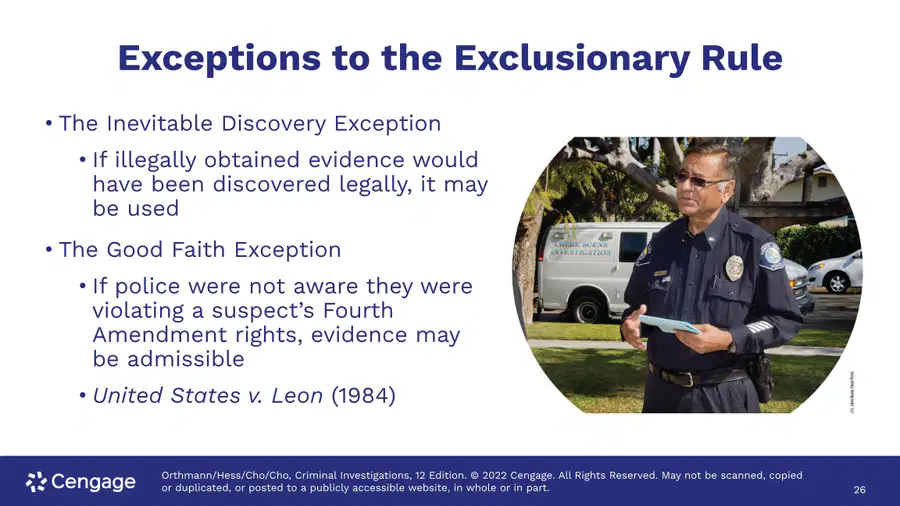
Open Ended
Describe the two main exceptions to the exclusionary rule and provide an example case for one of them.
53
54
55
56
57
58
59
60
61
62
63
64
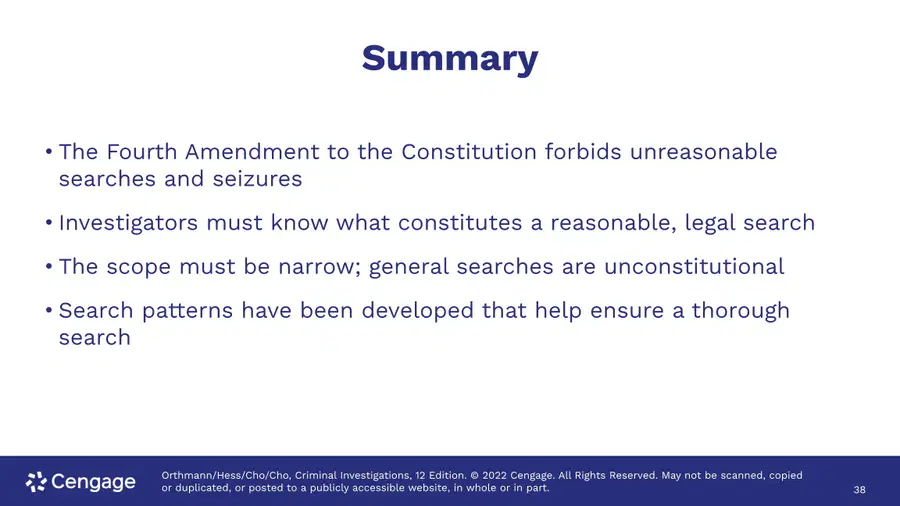
65
Multiple Choice
Which constitutional amendment restricts investigative searches and seizures?
First Amendment
Fourth Amendment
Fifth Amendment
Sixth Amendment
66
Open Ended
Reflecting on this chapter, what questions do you still have about investigative searches and seizures, or is there a topic you would like to explore further?
Show answer
Auto Play
Slide 1 / 66
SLIDE
Similar Resources on Wayground

61 questions
Chapter 9 Electrons in Atoms and the Periodic Table
Presentation
•
University
63 questions
PAST SIMPLE VS PRESENT PERFECT
Presentation
•
University
60 questions
Mid-year Review
Presentation
•
University
61 questions
The Nutrients
Presentation
•
University
61 questions
Part 5 Review
Presentation
•
University
59 questions
Black Indigenous
Presentation
•
KG - 12th Grade
59 questions
Unidad 0: Repaso
Presentation
•
University
61 questions
Collision Theory and Reaction Rate
Presentation
•
12th Grade
Popular Resources on Wayground
11 questions
Hallway & Bathroom Expectations

Quiz
•
6th - 8th Grade
10 questions
HCS SCI 03 Summer School Assessment 2
Quiz
•
3rd Grade
11 questions
Home Scope
Quiz
•
7th - 8th Grade
12 questions
2026 TAP Technology in the Classroom
Presentation
•
Professional Development
15 questions
HCS SCI 05 Summer School Assessment 2 Review
Quiz
•
5th Grade
15 questions
HCS SCI 04 Summer School Review 2
Quiz
•
4th Grade
59 questions
Geometry Unit 3 Review
Quiz
•
9th - 12th Grade
14 questions
FAST ELA READING SMAPLE TEST MATERIALS

Passage
•
3rd Grade