

Biological Basis of Psychology Part 1

Presentation
•
Social Studies
•
9th - 12th Grade
•
Practice Problem
•
Medium

Austin Simms
Used 1+ times
FREE Resource
30 Slides • 27 Questions
1
2
Multiple Choice
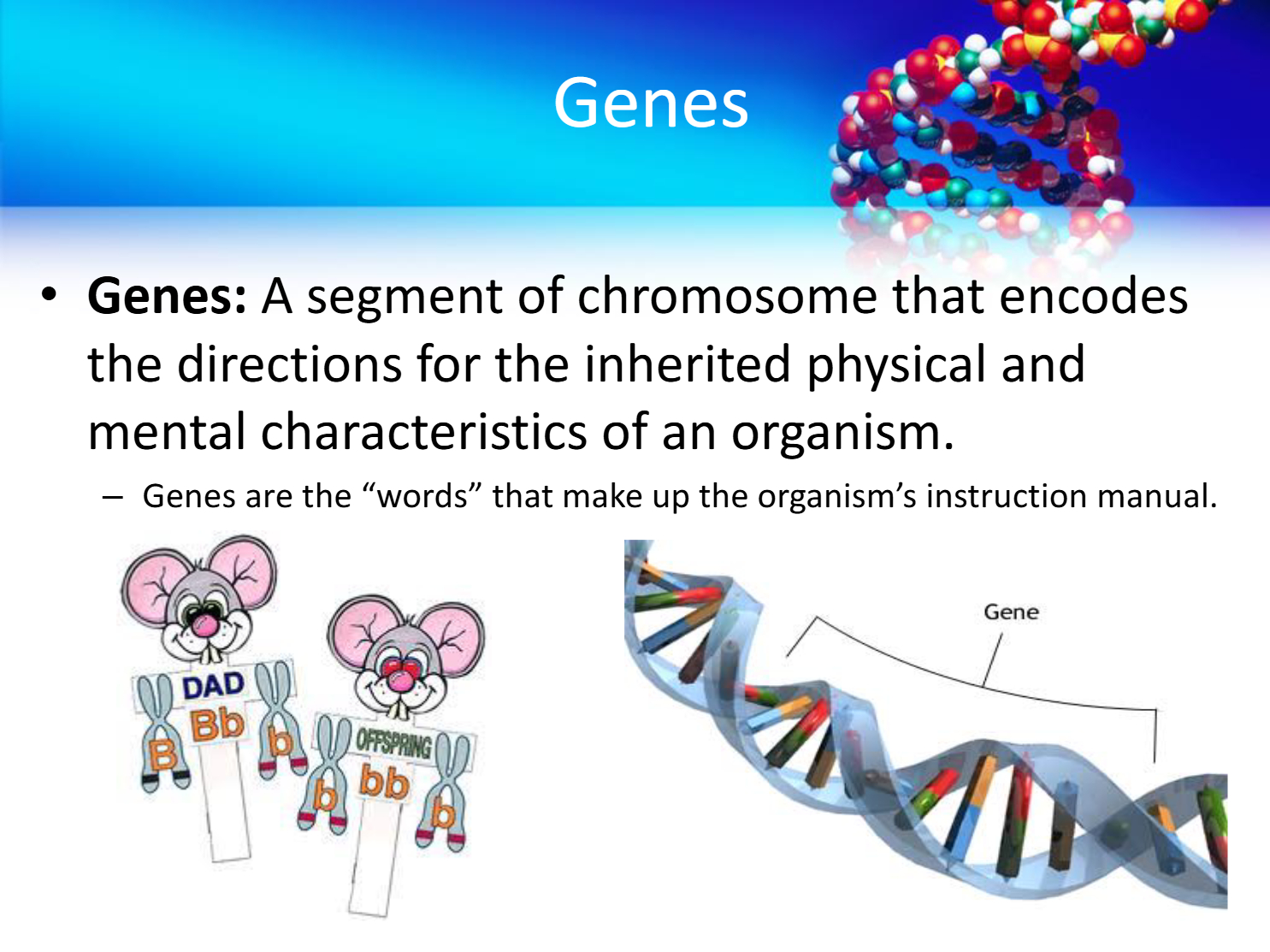
Why are genes considered the 'instruction manual' for an organism's physical and mental characteristics?
Because they determine the organism's age
Because they encode directions for inherited traits
Because they control only physical traits
Because they are visible under a microscope
3
4
5
Multiple Choice
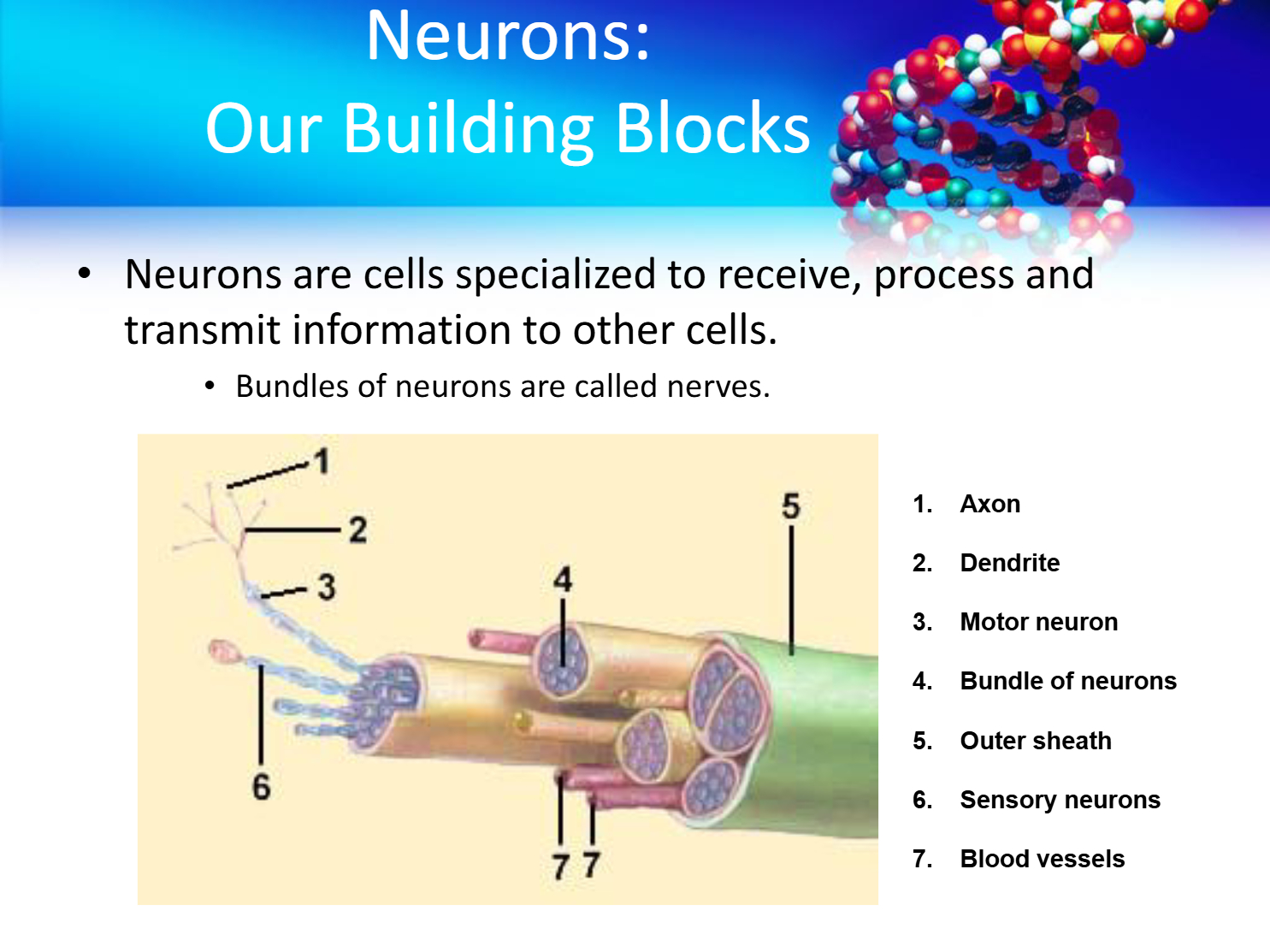
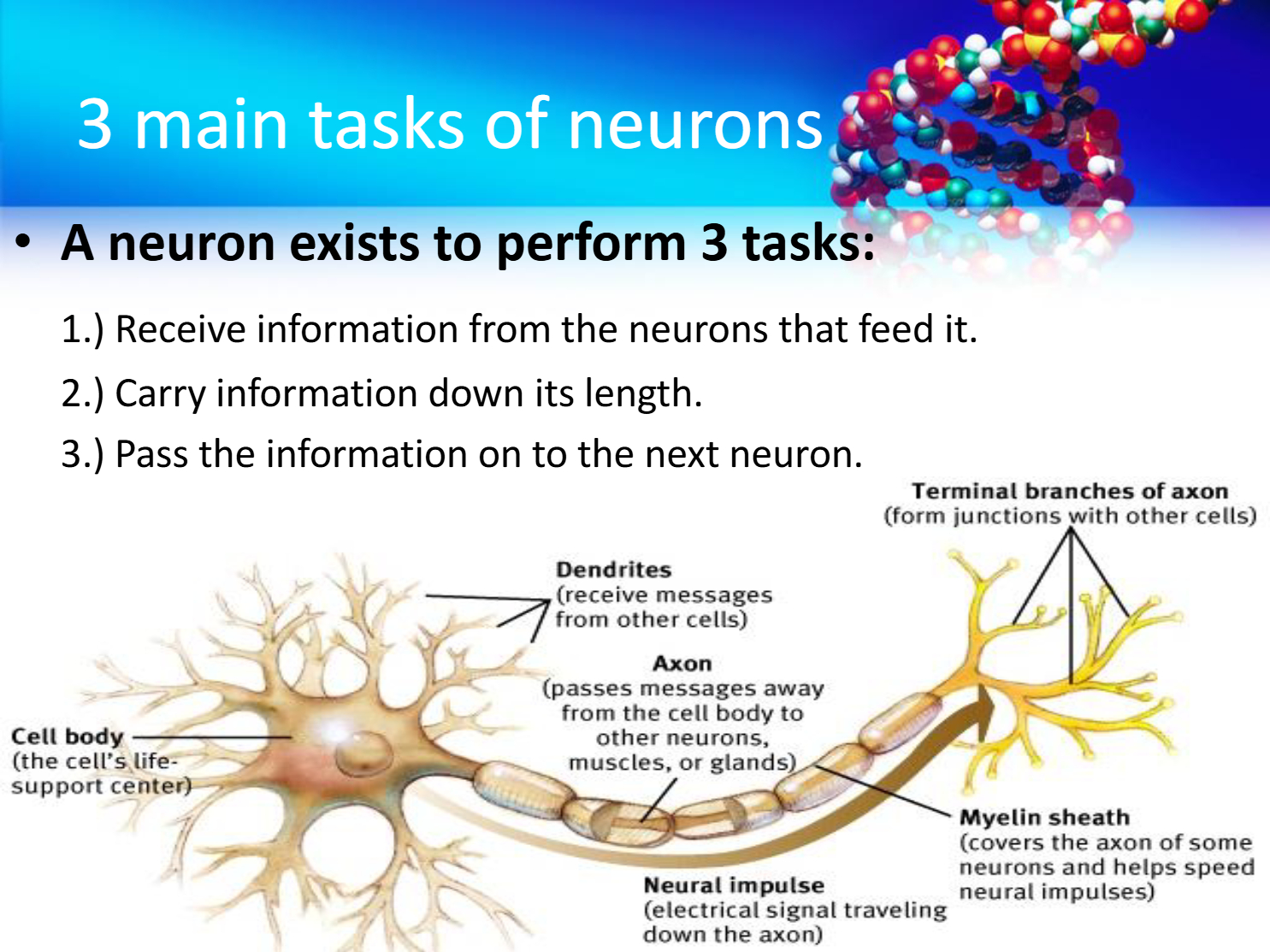
Which part of the neuron is responsible for receiving incoming messages?
Axon
Dendrite
Motor neuron
Outer sheath
6
7
Multiple Select
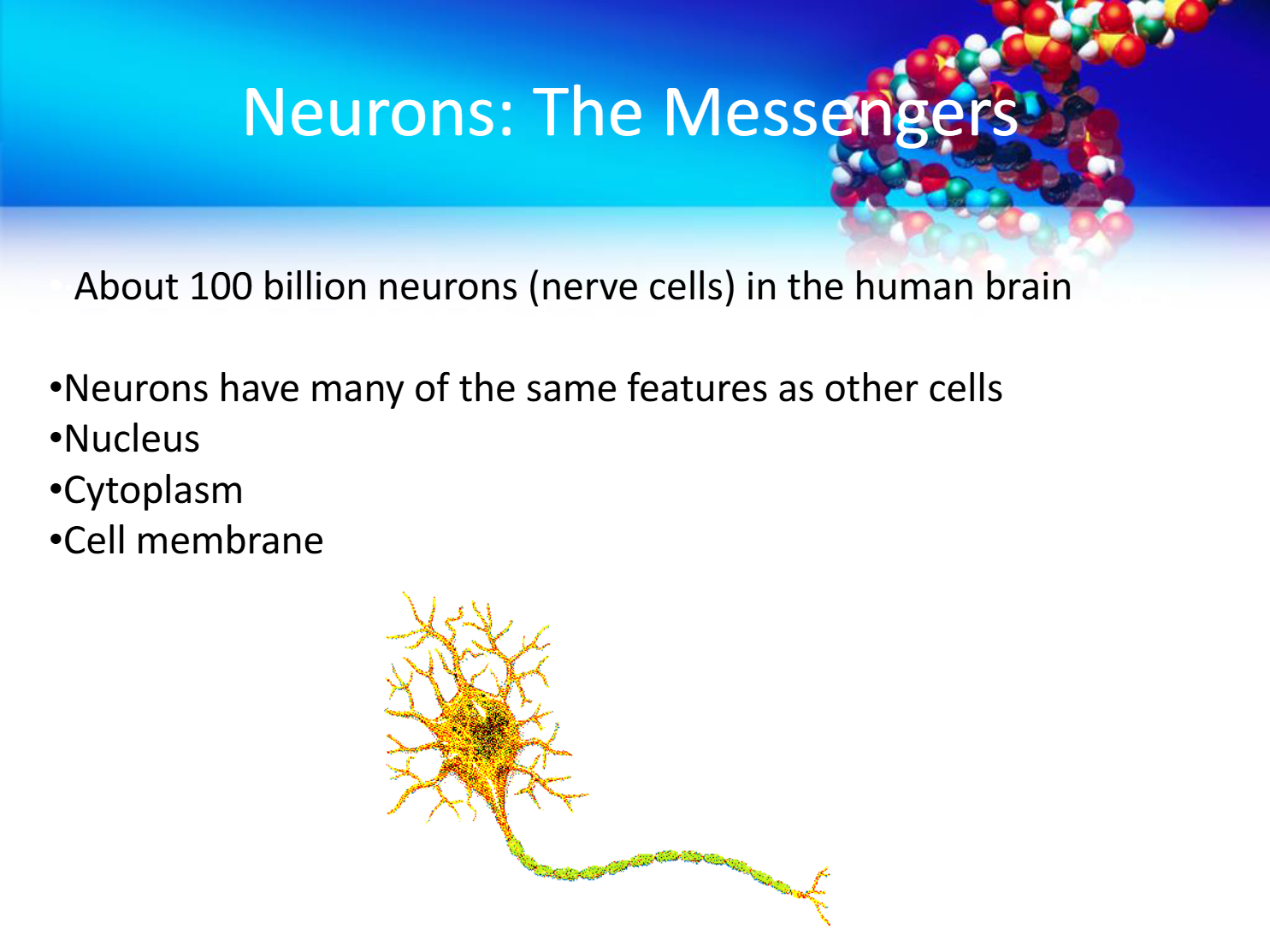
Which of the following are features that neurons share with other cells?
Nucleus
Cytoplasm
Cell membrane
Axon
8
9
Fill in the Blanks
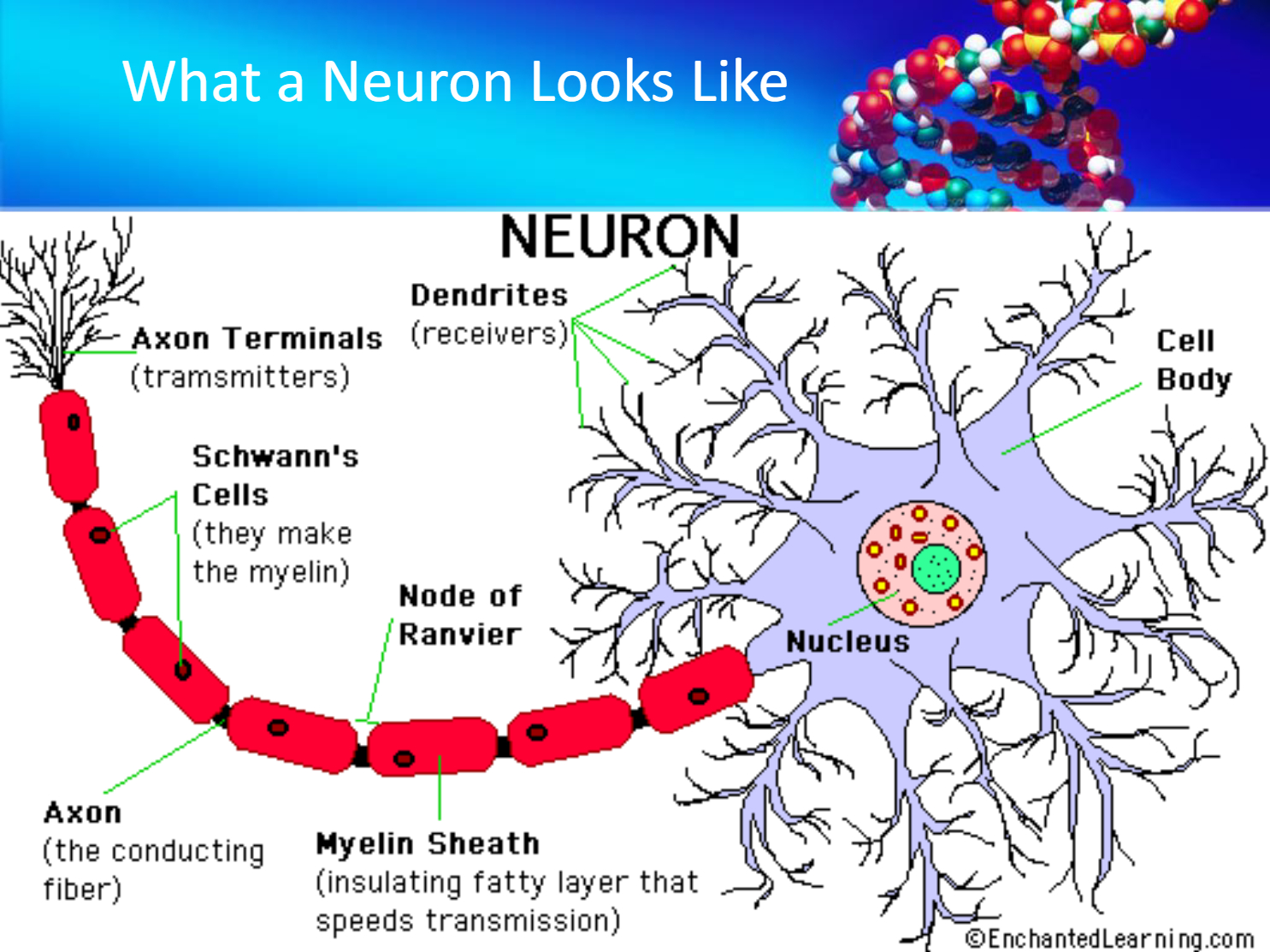
The insulating fatty layer that speeds transmission in a neuron is called the
Type answer...
10
11
Open Ended
Explain how the structure of a neuron helps it perform its function of transmitting information.
12
13
Multiple Choice
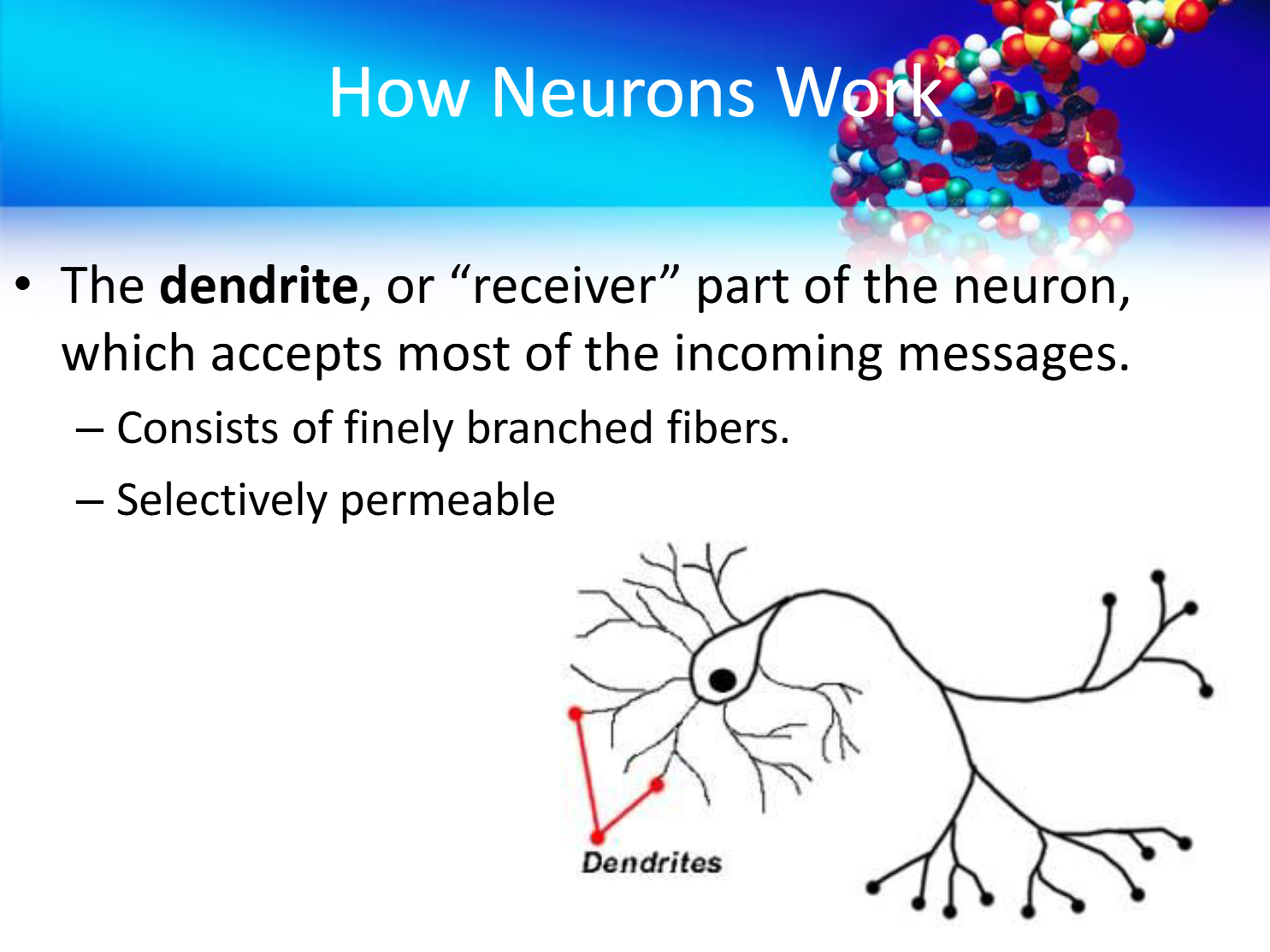
What is the main function of dendrites in a neuron?
Transmit signals to muscles
Receive incoming messages
Produce myelin
Store nutrients
14
15
Open Ended
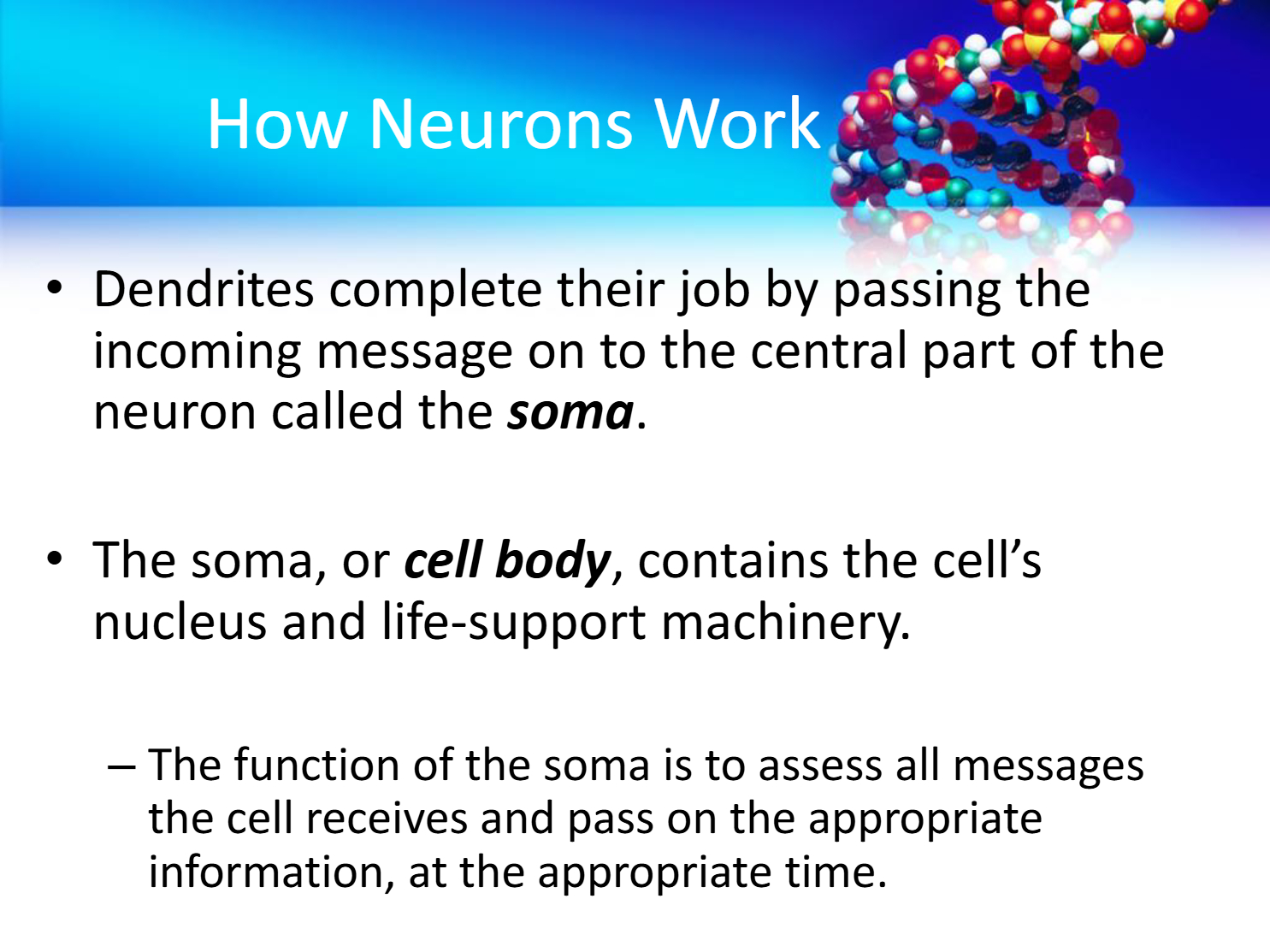
Describe the role of the soma (cell body) in a neuron and why it is important for the cell's function.
16
17
Multiple Choice
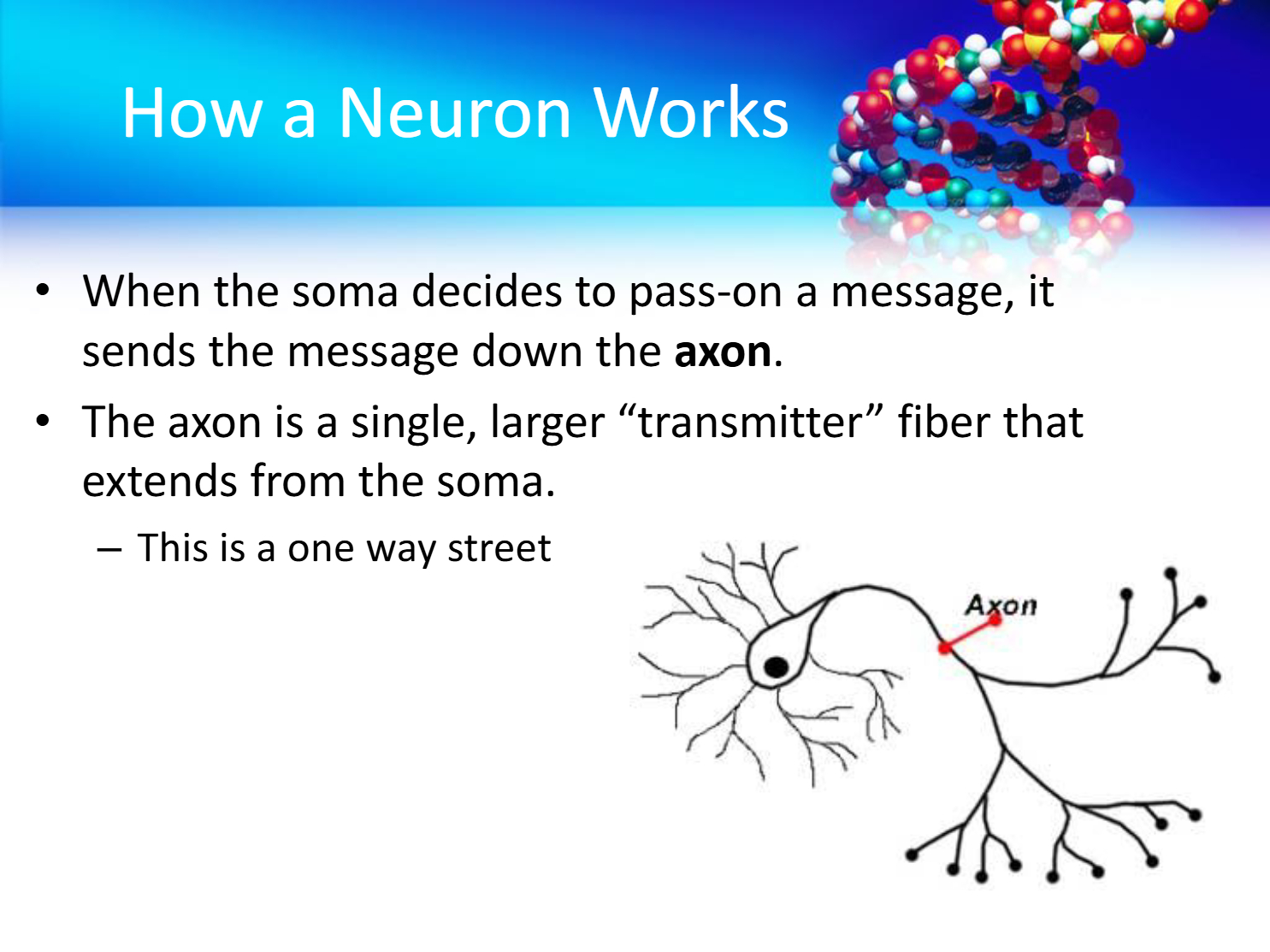
Which part of the neuron is responsible for transmitting messages away from the soma?
Axon
Dendrite
Cell body
Synapse
18
19
Open Ended
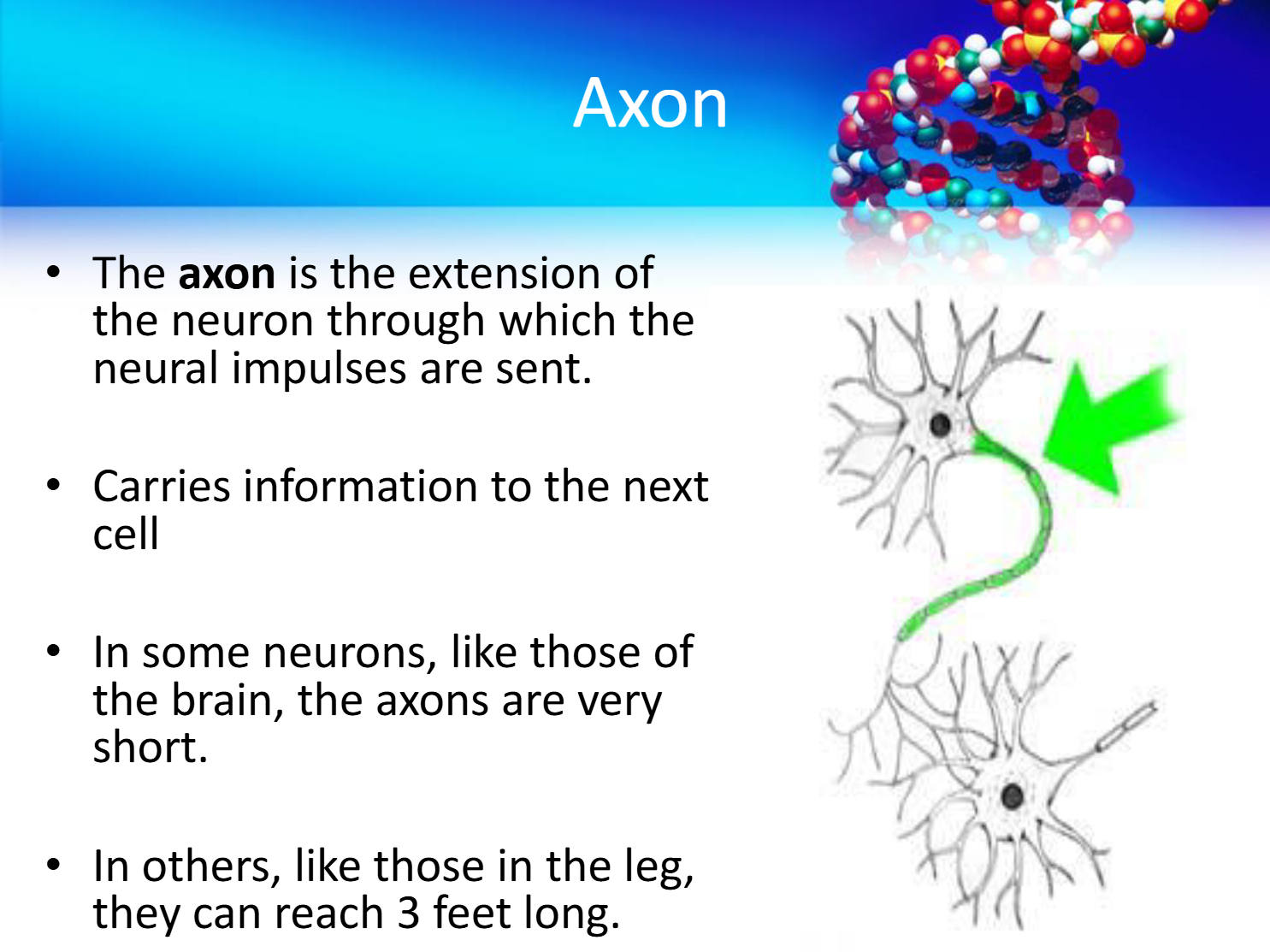
Explain how the structure of the axon supports its function in neural communication.
20
21
Multiple Select
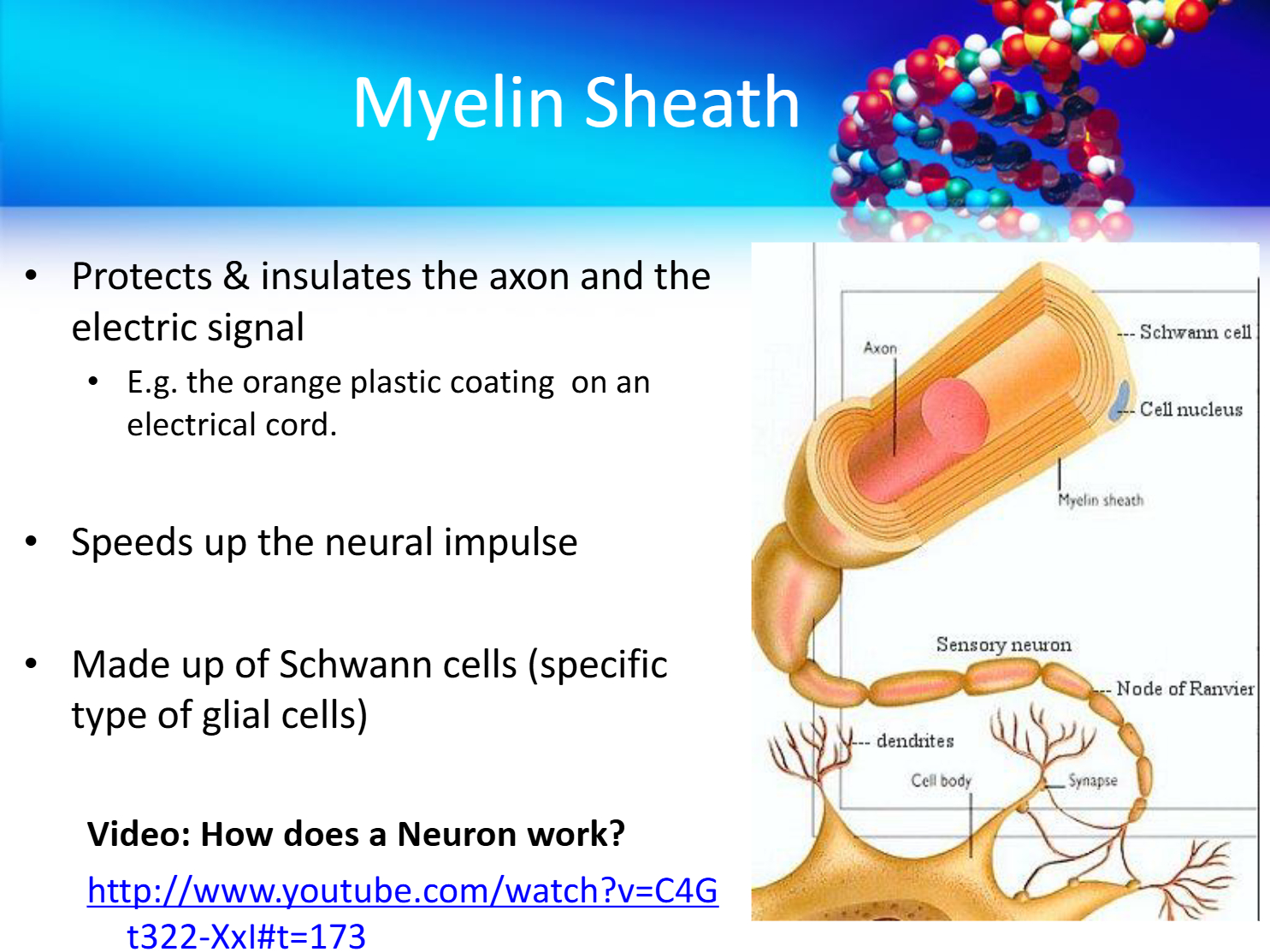
Which of the following are functions of the myelin sheath?
Protects and insulates the axon
Speeds up the neural impulse
Carries information to the next cell
Made up of Schwann cells
22
Fill in the Blanks
The myelin sheath is primarily made up of
Type answer...
23
24
Open Ended
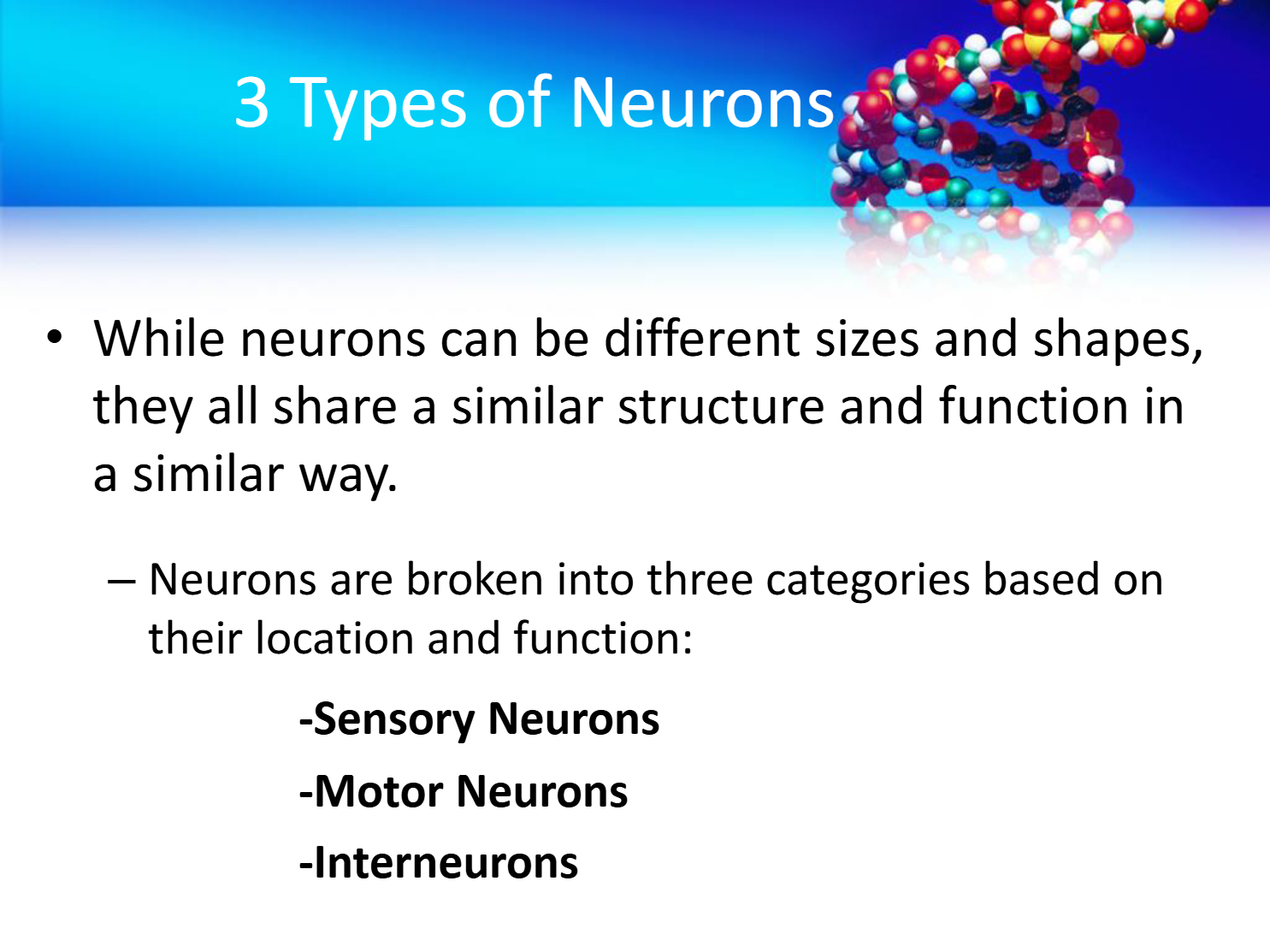
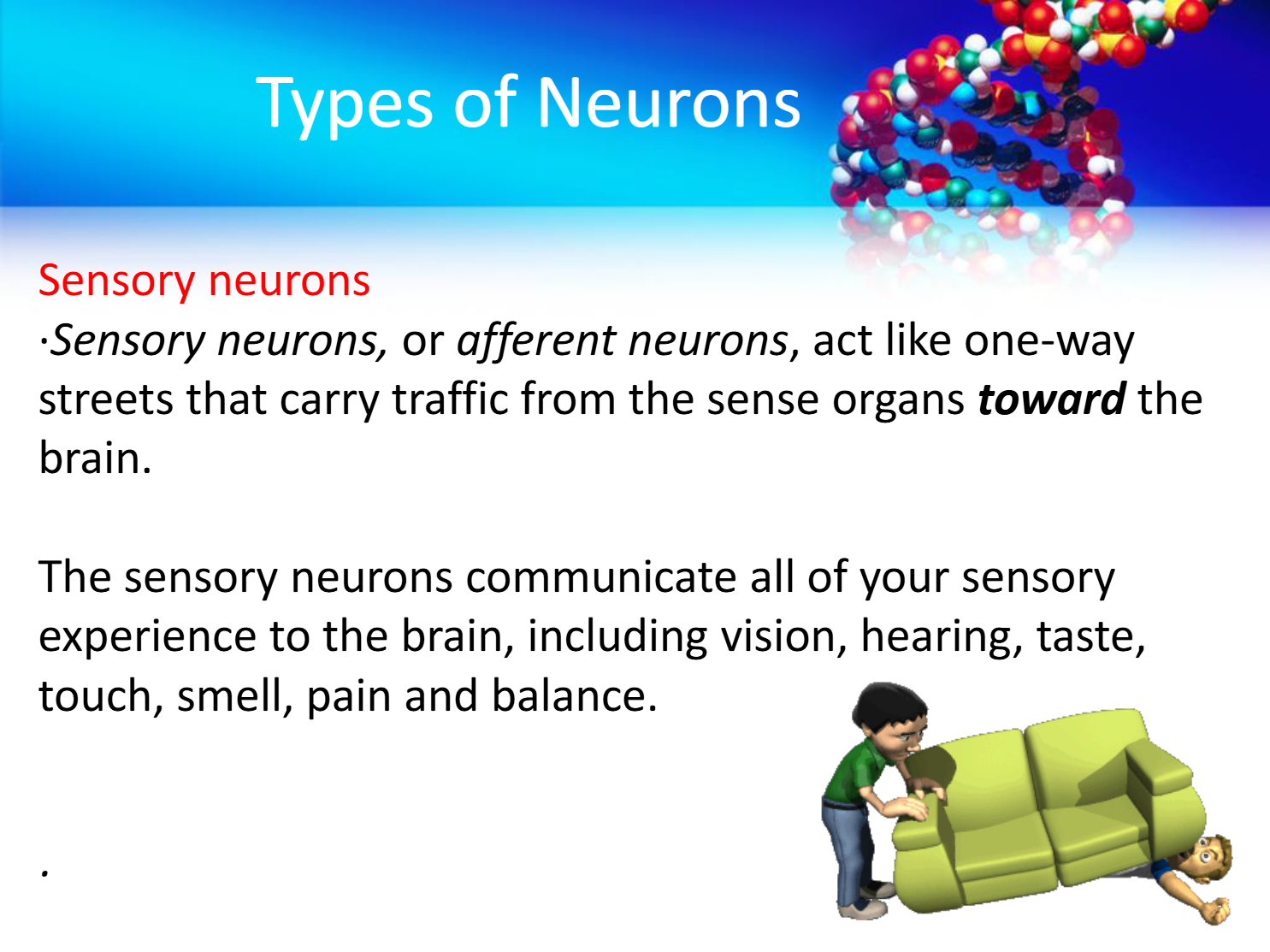
List and briefly describe the three main types of neurons based on their location and function.
25
26
27
Fill in the Blanks
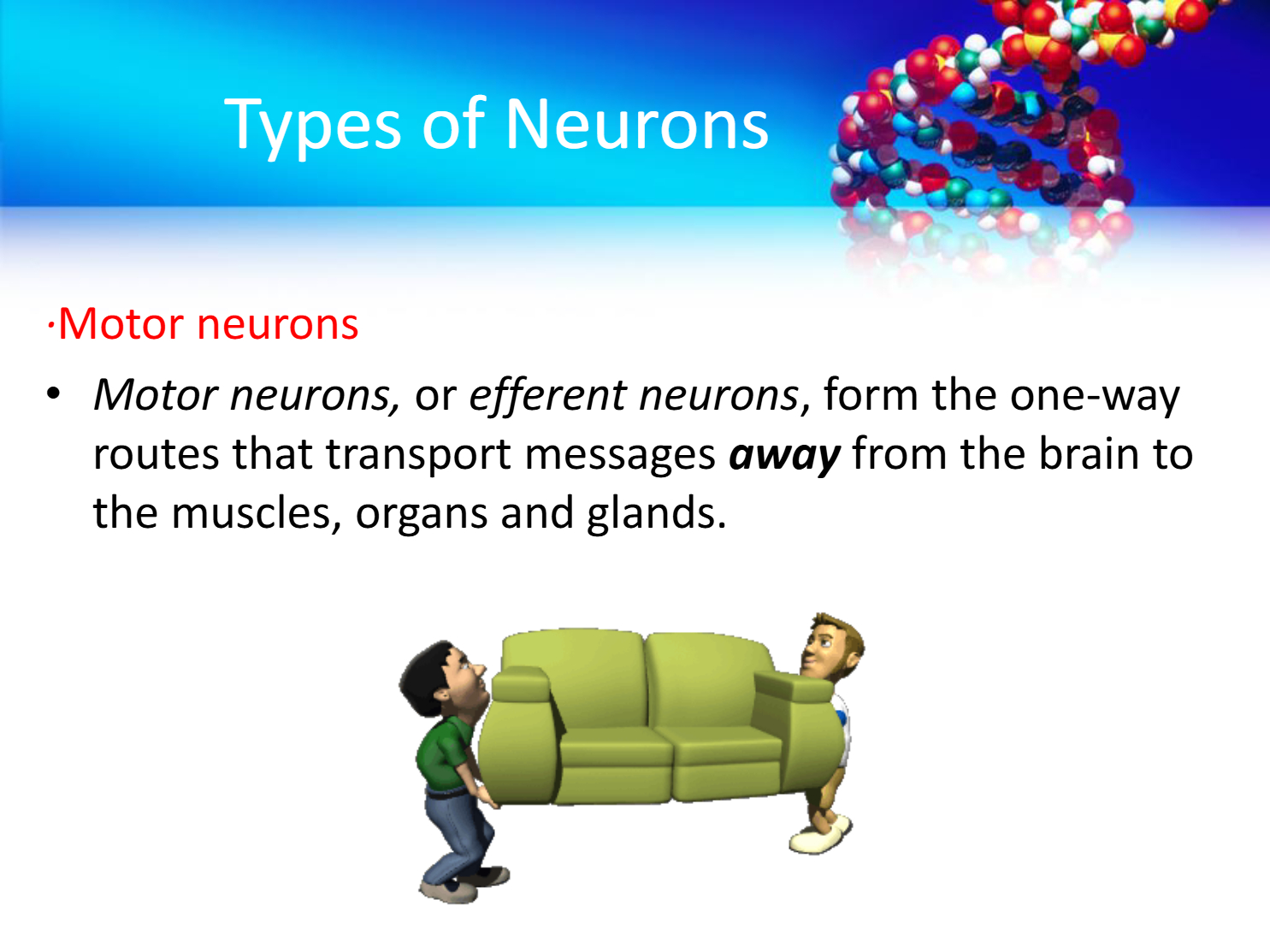
Motor neurons transport messages
Type answer...
28
29
Multiple Choice
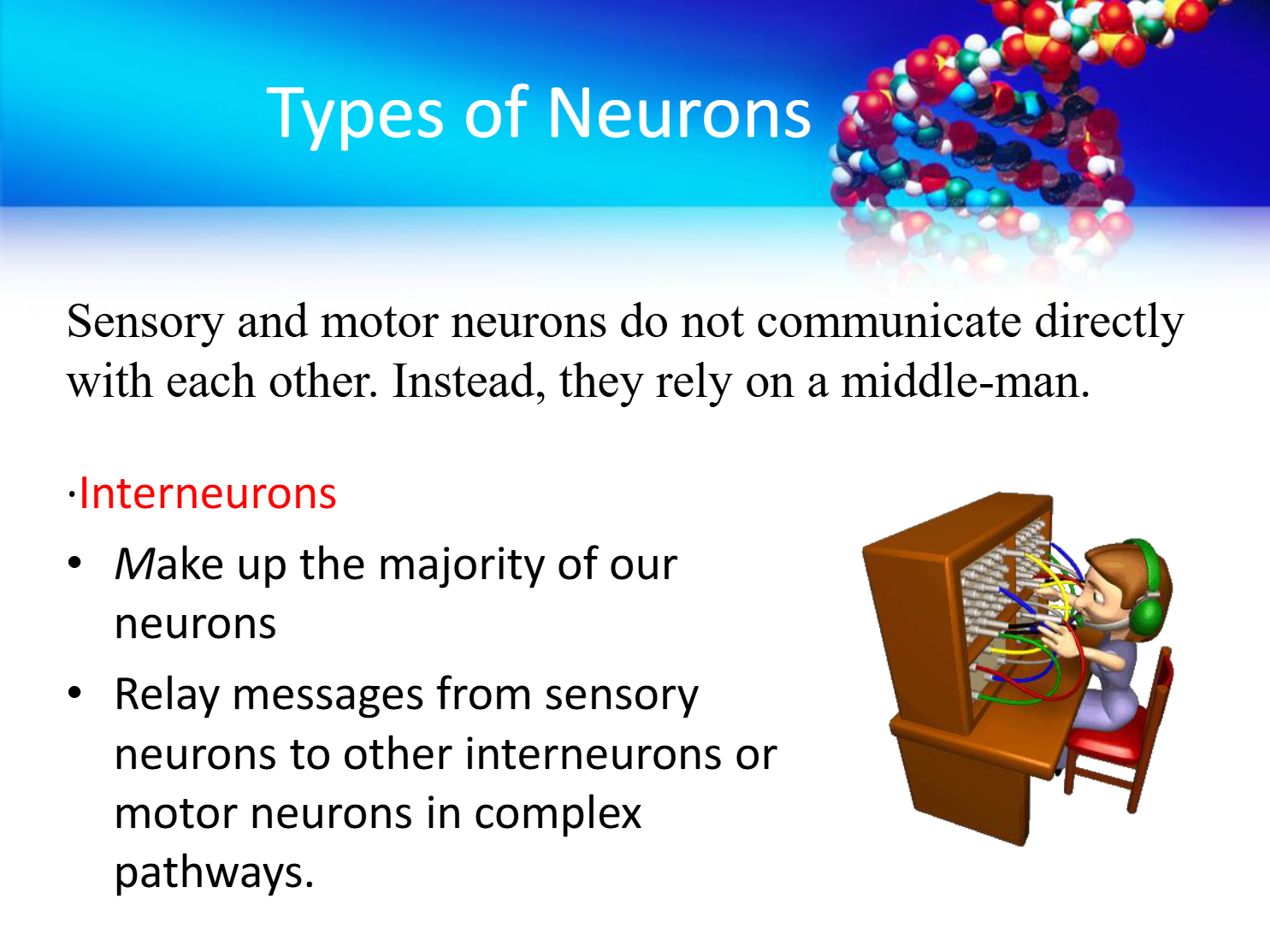
Which type of neuron acts as a middle-man between sensory and motor neurons, relaying messages in complex pathways?
Sensory neuron
Motor neuron
Interneuron
Glial cell
30
31
Open Ended
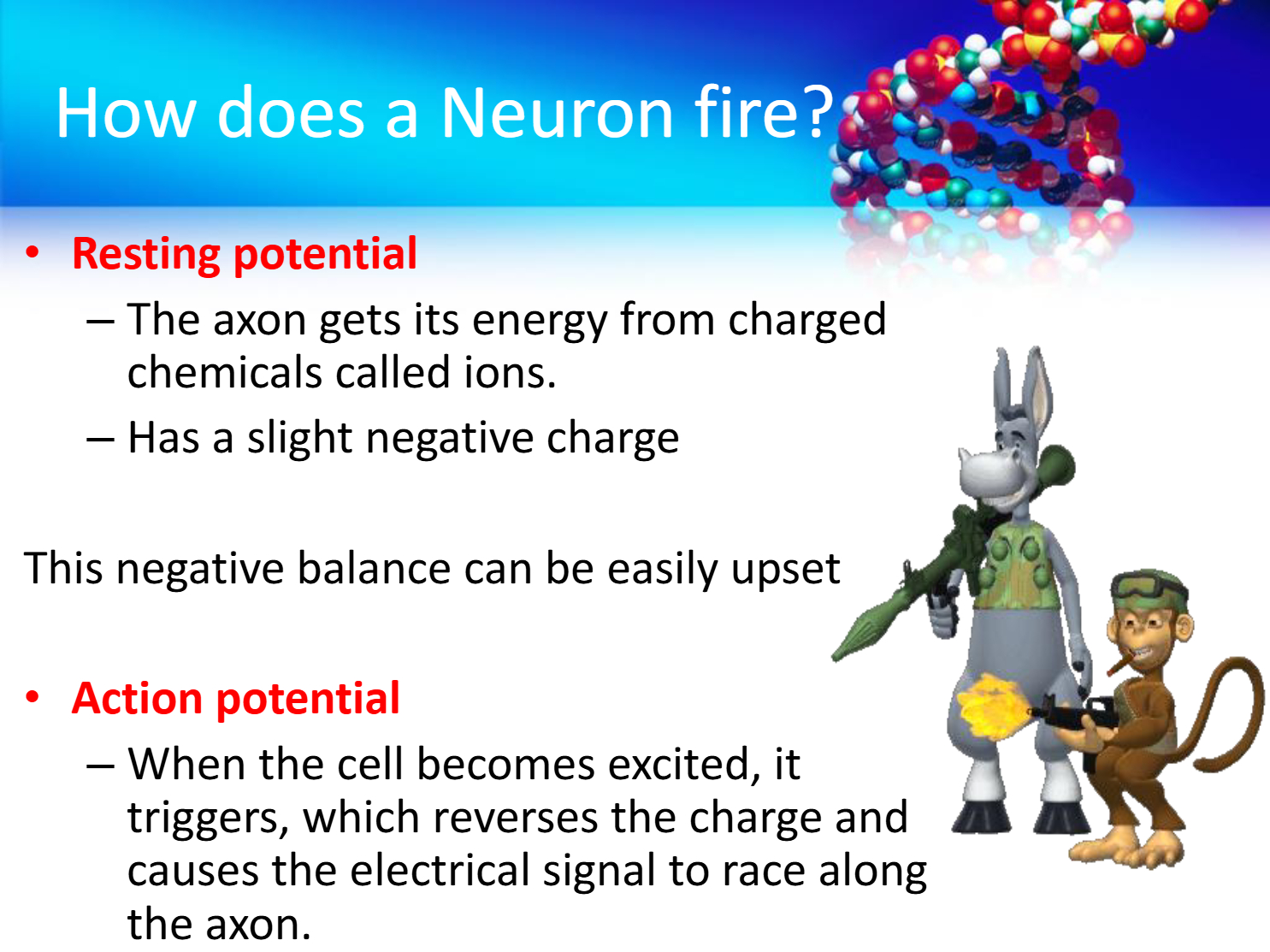
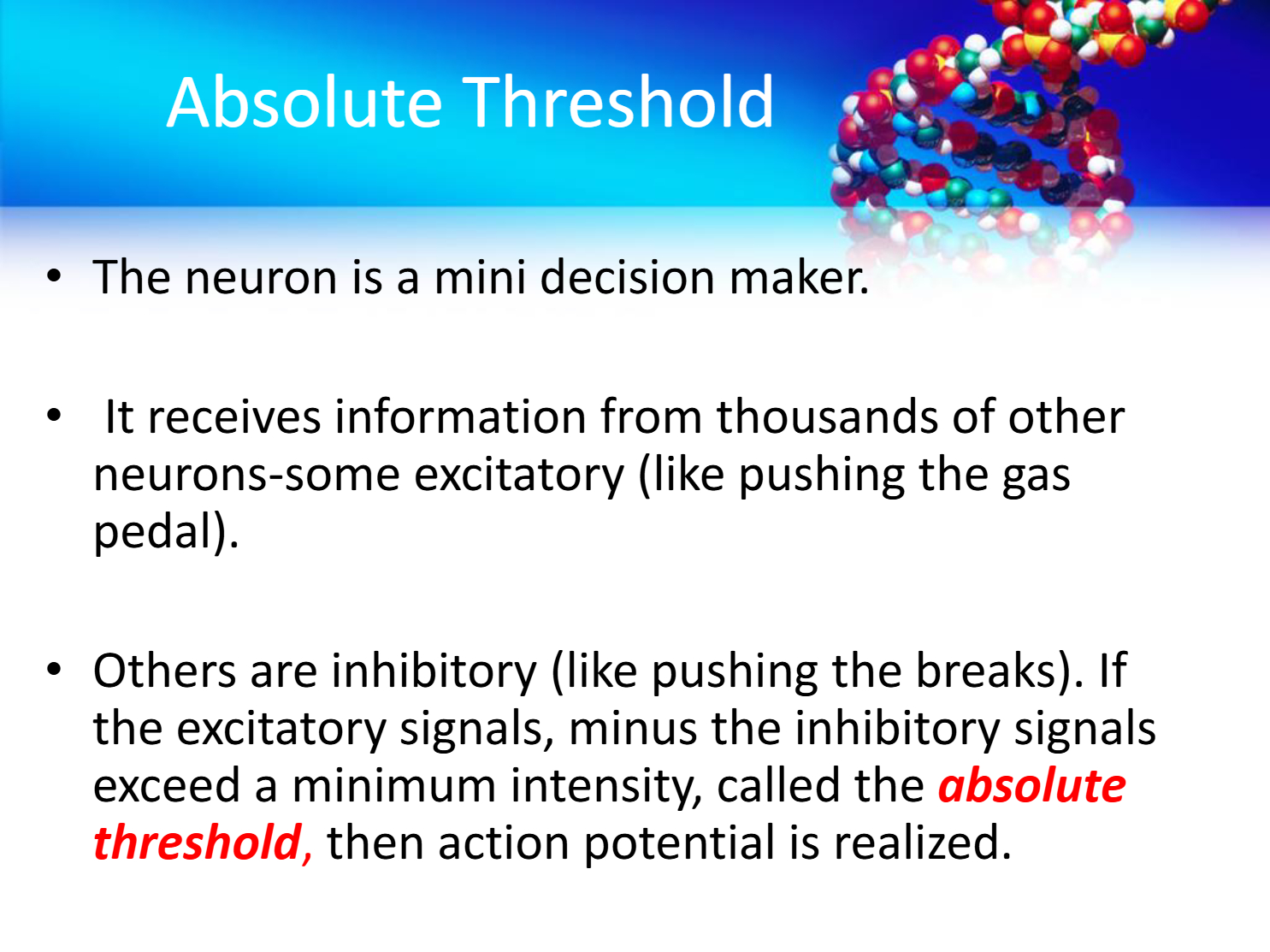
Explain the difference between resting potential and action potential in a neuron.
32
33
Fill in the Blanks
Fill in the blank: The minimum intensity that must be exceeded for a neuron to fire is called the
Type answer...
34
35
Multiple Choice
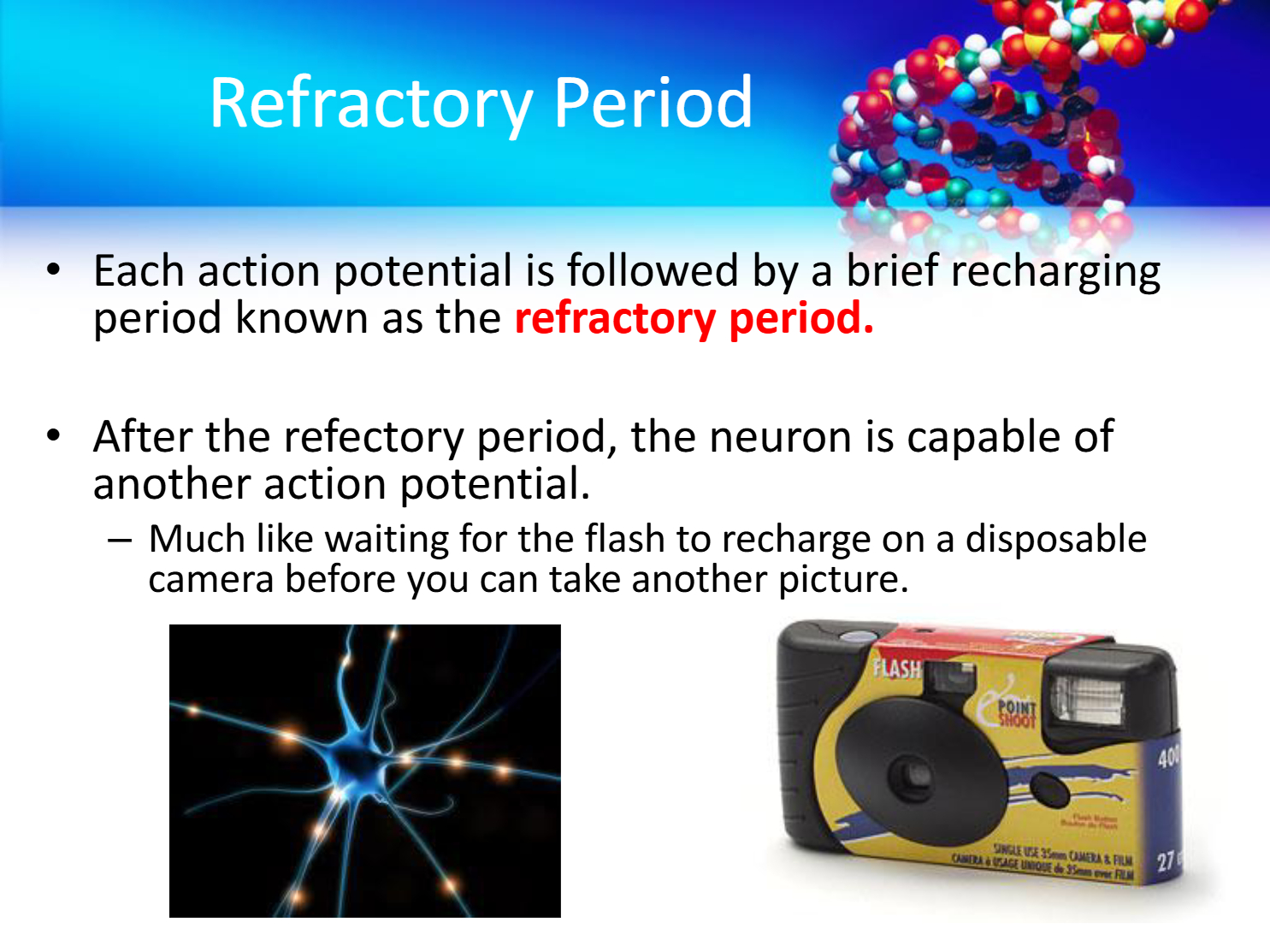
Which of the following statements about the refractory period is correct?
The neuron can fire another action potential immediately after the first one.
The refractory period prevents the neuron from firing another action potential for a brief time.
The refractory period allows the neuron to fire continuously without pause.
The refractory period is unrelated to neuron firing.
36
37
Multiple Select
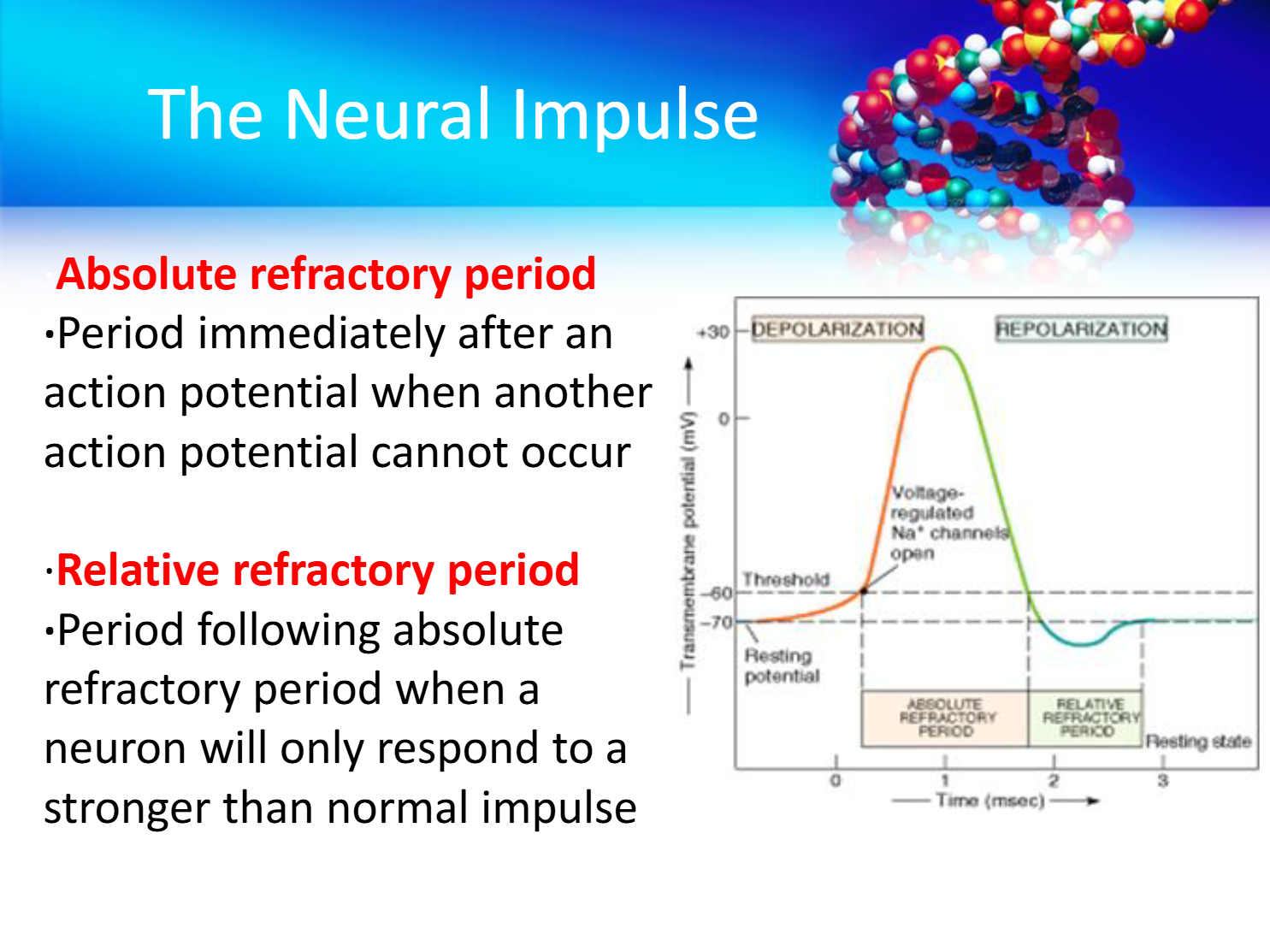
Select all that apply: Which statements are true about the absolute and relative refractory periods?
Absolute refractory period is when no action potential can occur.
Relative refractory period requires a stronger than normal impulse for the neuron to fire.
Absolute refractory period occurs before the action potential.
Relative refractory period occurs immediately after the absolute refractory period.
38
39
Open Ended
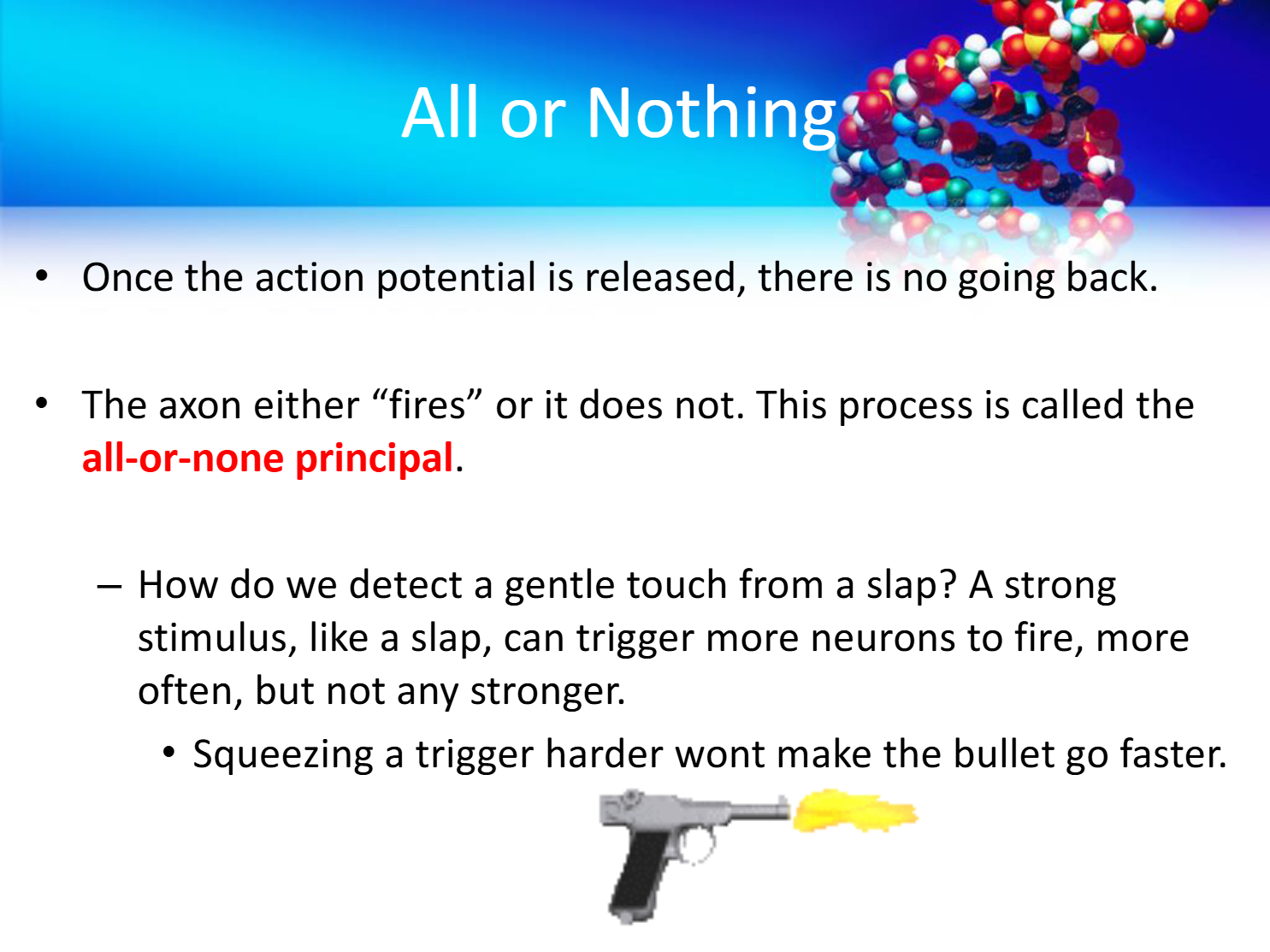
Describe the all-or-none principle in neuron firing and how it relates to detecting different strengths of stimuli.
40
41
Open Ended
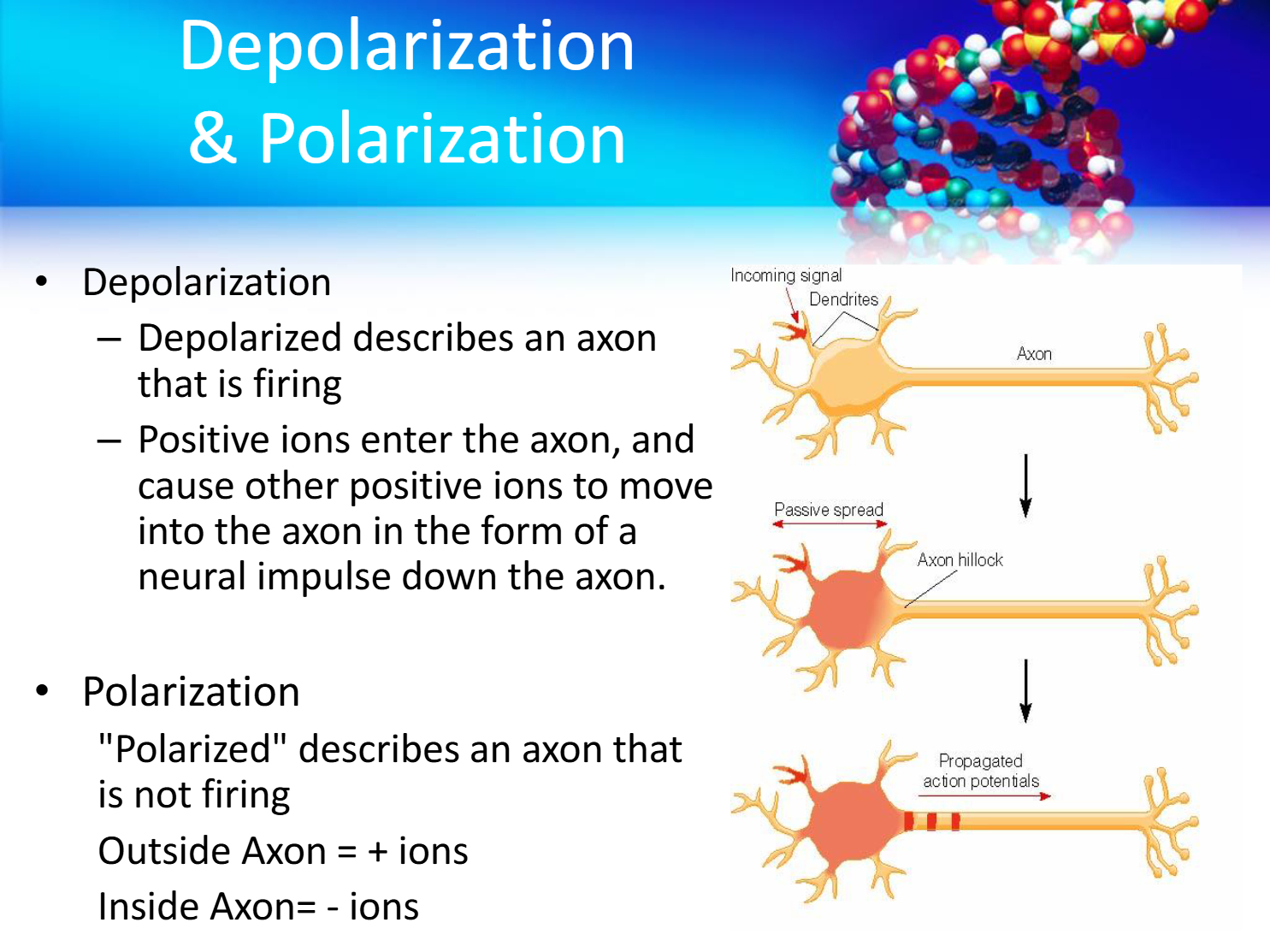
Explain the difference between polarization and depolarization in the context of neural impulses.
42
Multiple Choice
Which of the following best describes the process of depolarization in a neuron?
Positive ions leave the axon, causing a negative charge to spread
Positive ions enter the axon, causing a neural impulse to move down the axon
Negative ions enter the axon, causing the axon to fire
Negative ions leave the axon, causing a neural impulse to move down the axon
43
44
Fill in the Blanks
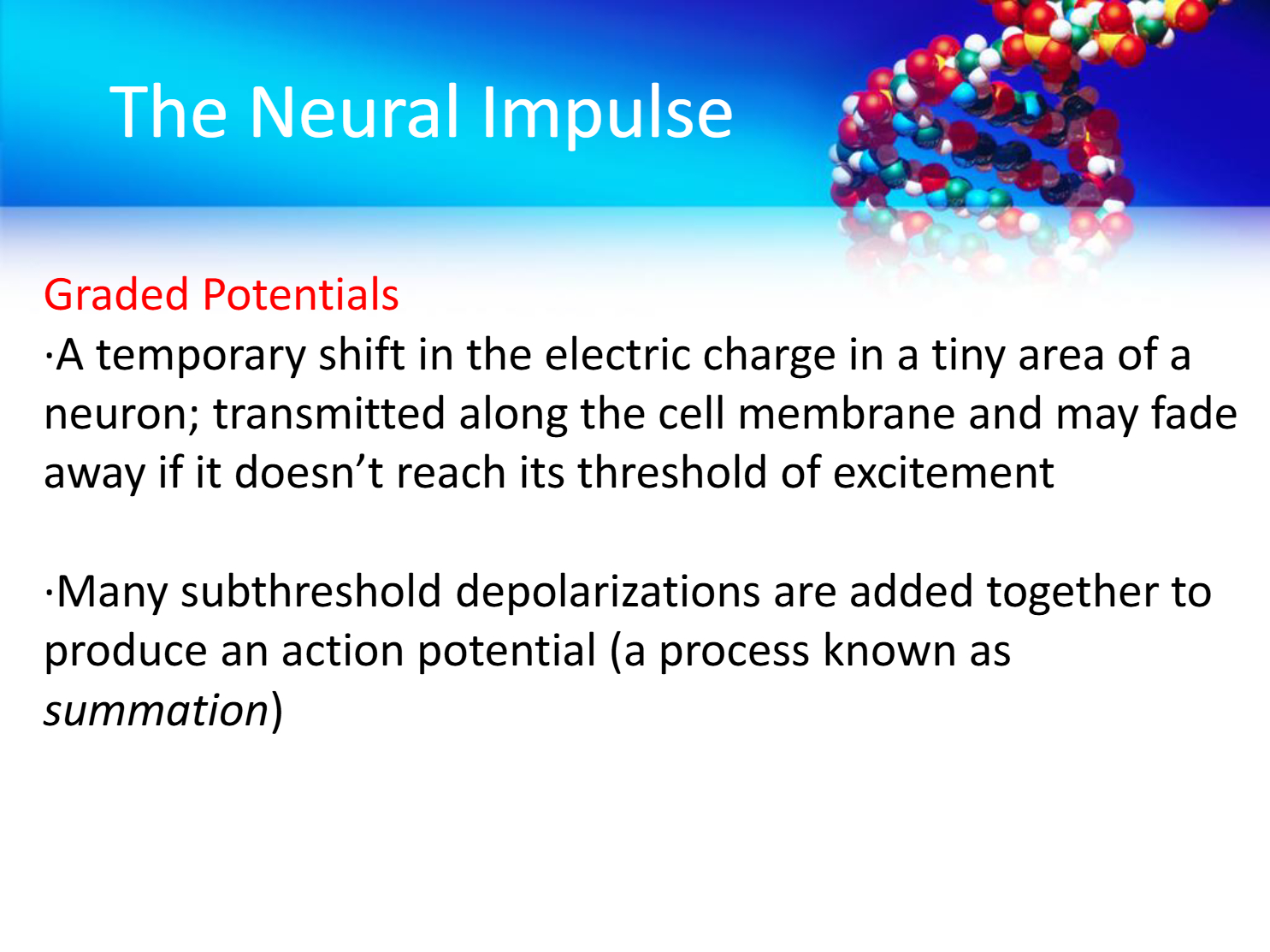
A temporary shift in the electric charge in a tiny area of a neuron that may fade away if it doesn’t reach its threshold of excitement is called a
Type answer...
45
46
Multiple Choice
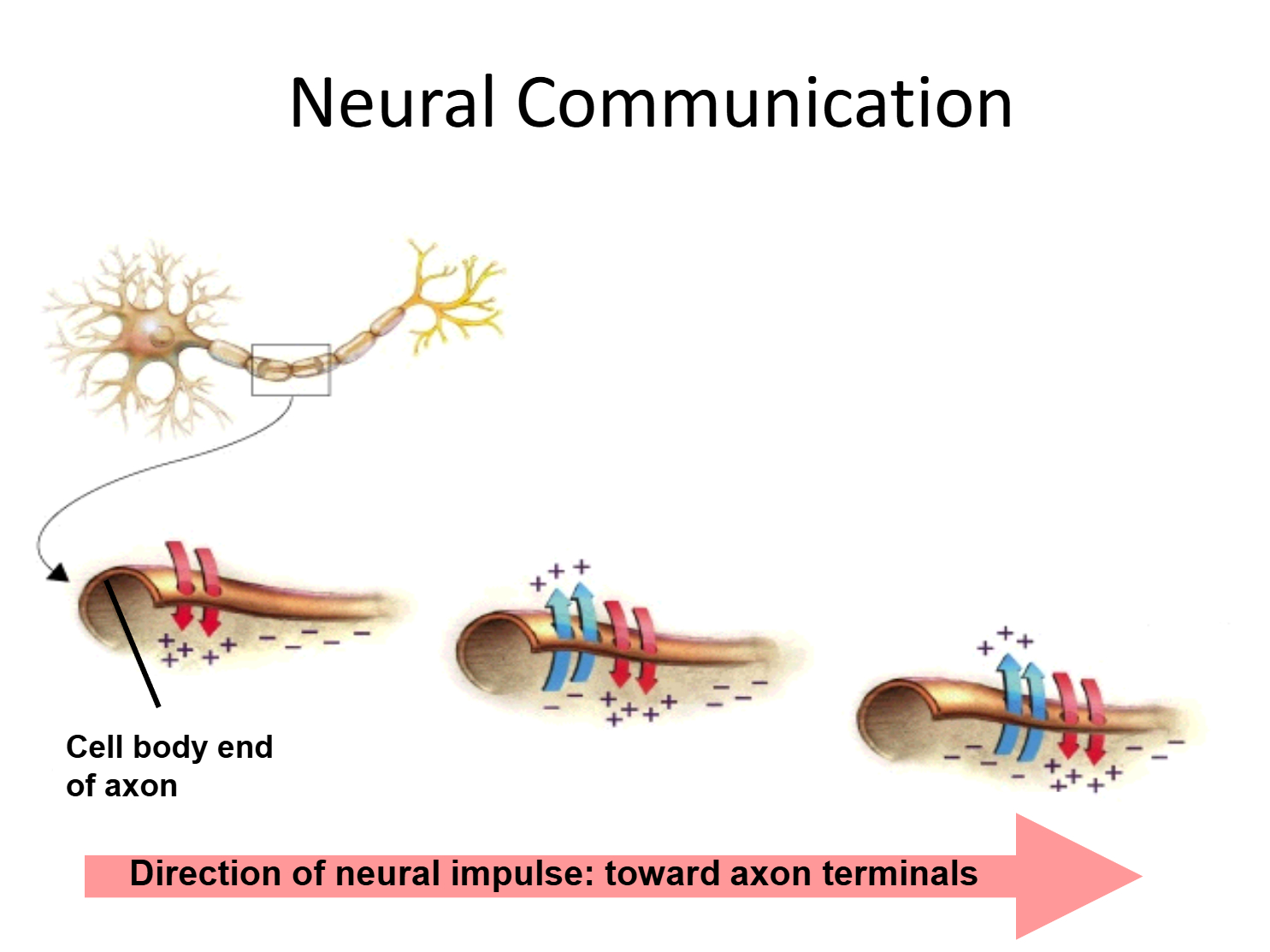
Which of the following statements about neural communication is correct?
Neural impulses travel toward the cell body end of the axon
Neural impulses travel toward the axon terminals
Neural impulses travel in both directions along the axon
Neural impulses do not require ions to move
47
48
49
Open Ended
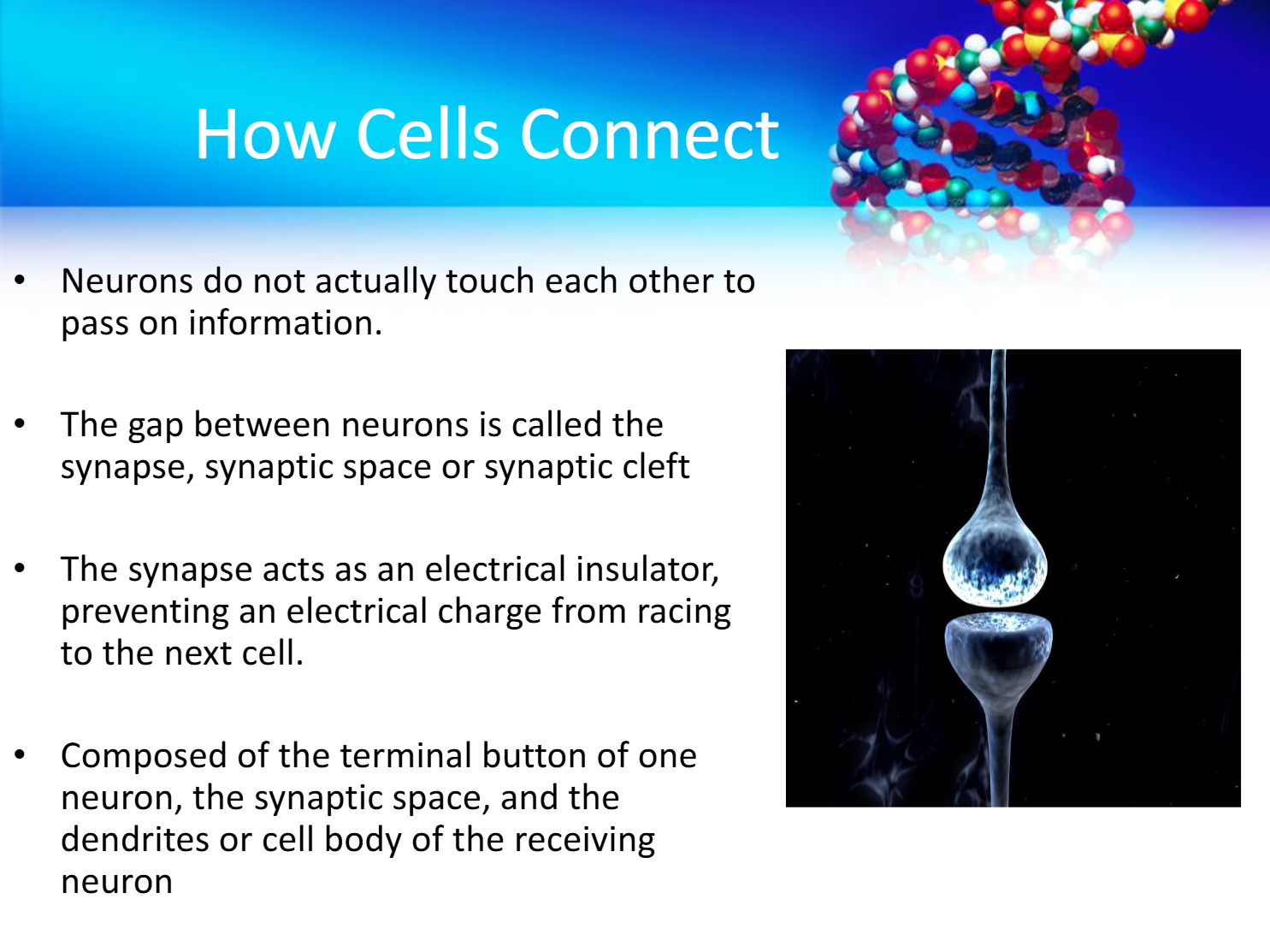
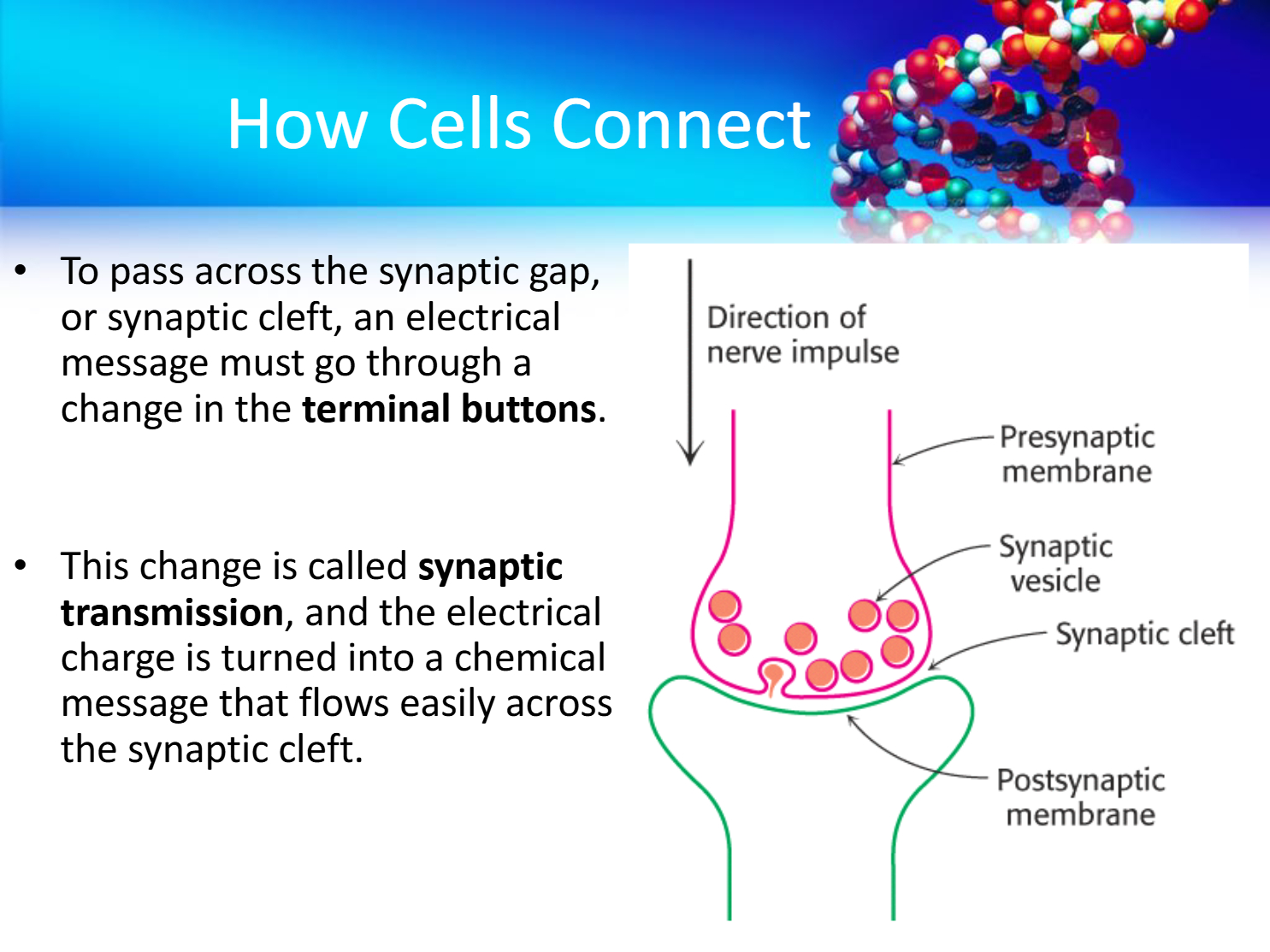
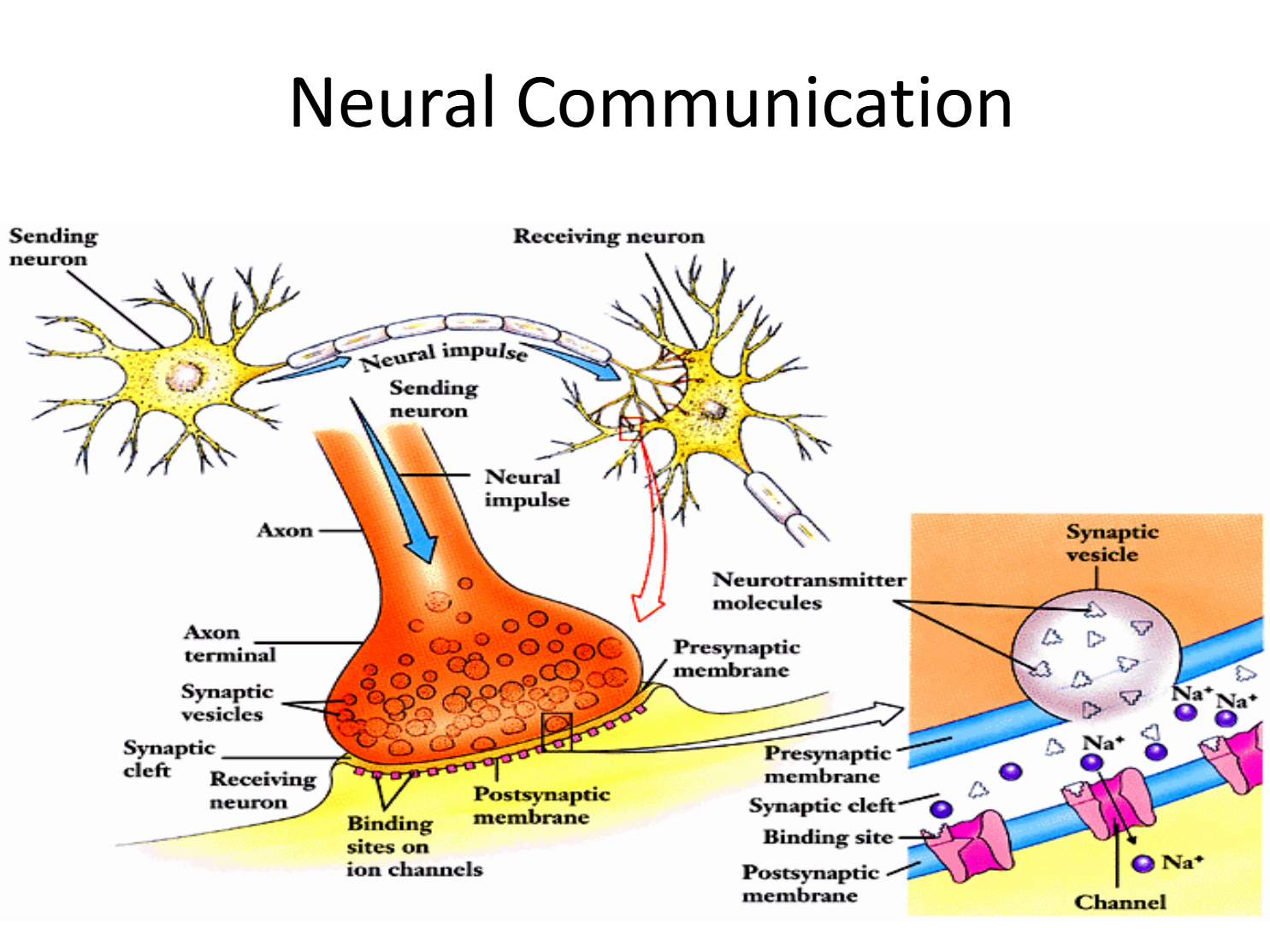
Describe the role of the synapse in neural communication and how it prevents electrical charges from racing to the next cell.
50
51
Multiple Choice
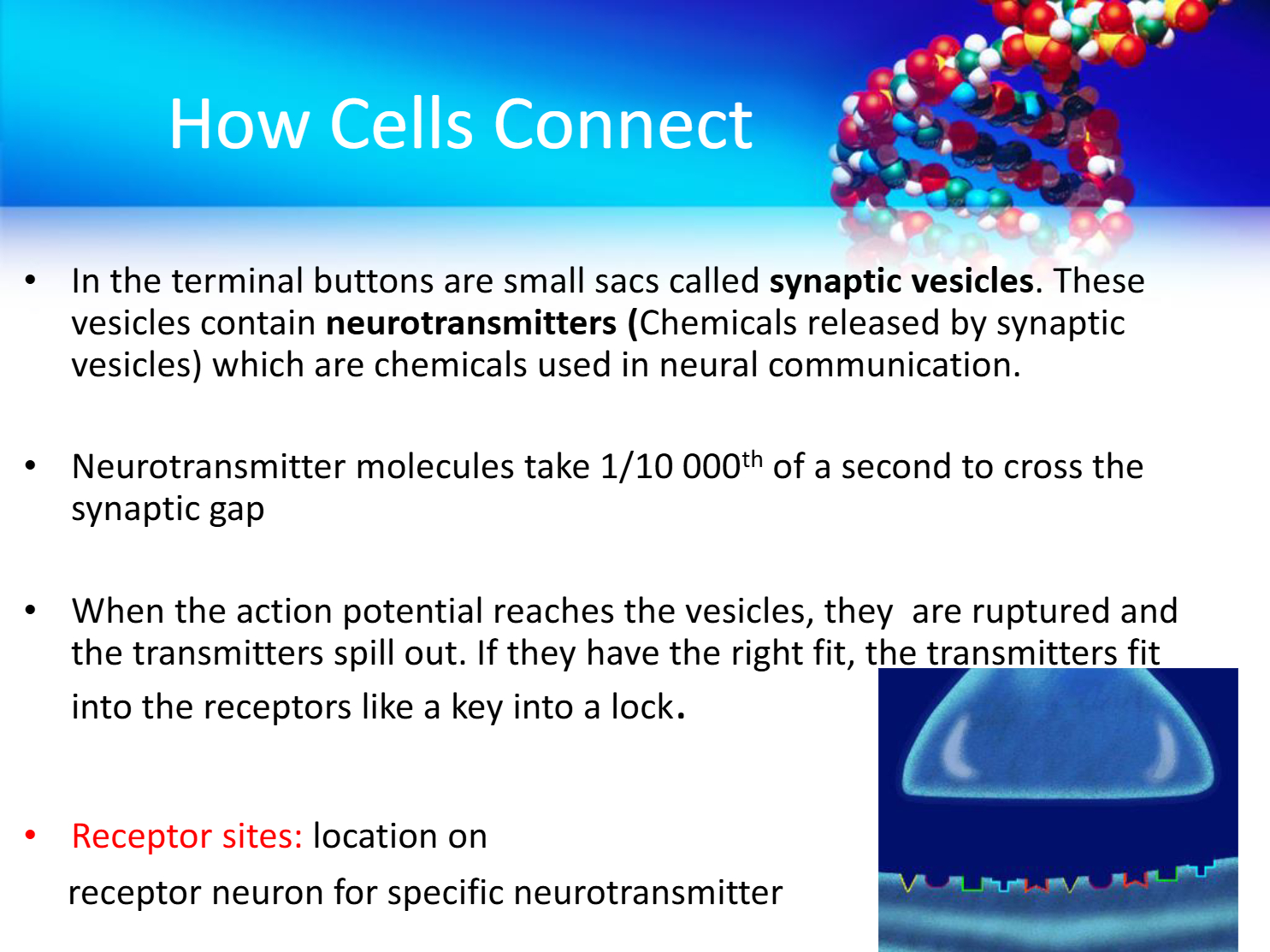
What is the function of synaptic vesicles in the process of neural communication?
They store electrical charges
They release neurotransmitters into the synaptic cleft
They block the passage of neural impulses
They absorb neurotransmitters from the synaptic cleft
52
53
54
55
56
Multiple Choice
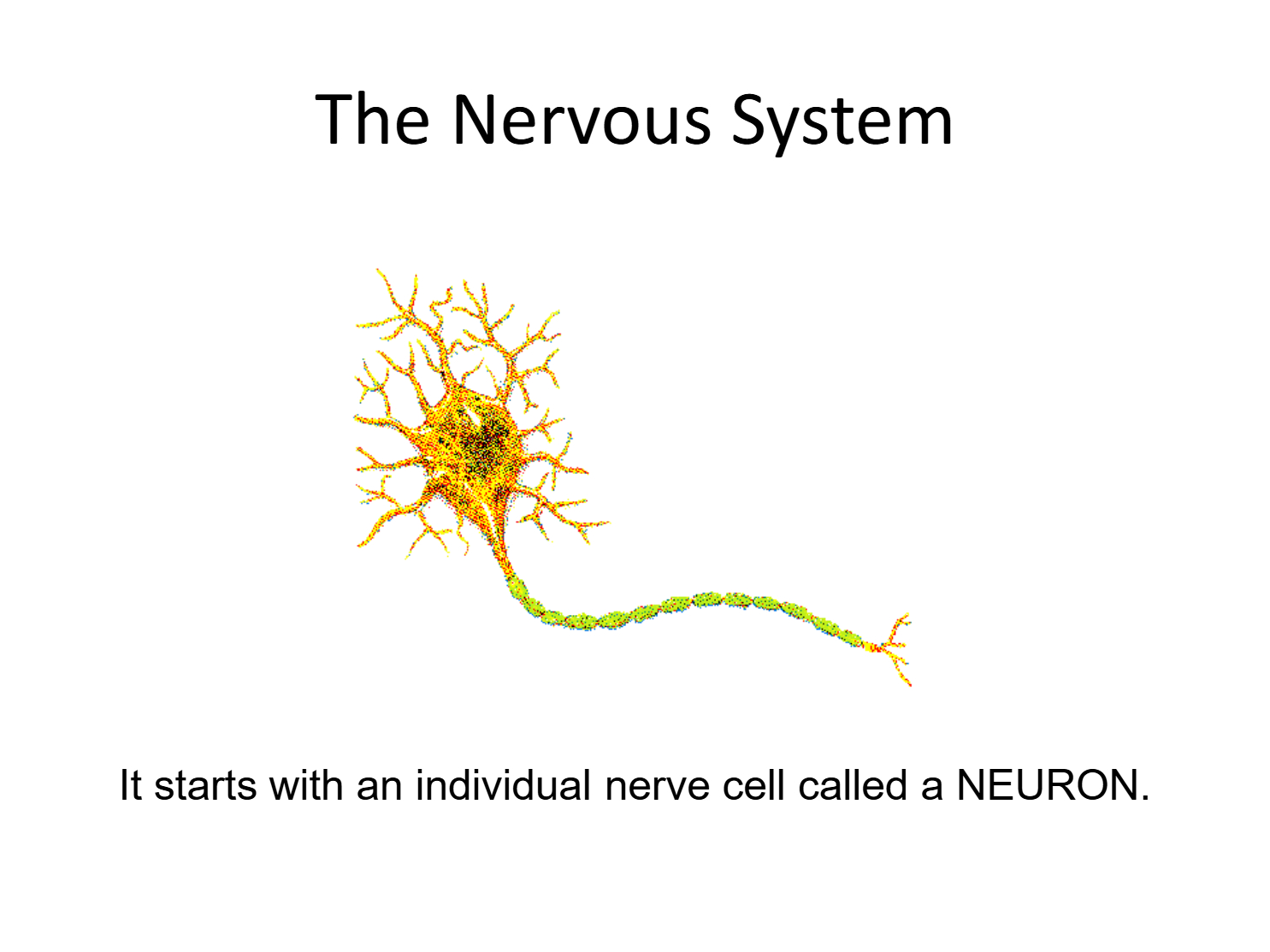
What is the basic unit of the nervous system called?
Neuron
Gene
Chromosome
Cell wall
57
Open Ended
How do genes influence the physical and mental characteristics of an organism?
Show answer
Auto Play
Slide 1 / 57
SLIDE
Similar Resources on Wayground

52 questions
Spanish Flu
Presentation
•
9th - 12th Grade
50 questions
Family Members
Presentation
•
9th - 12th Grade
50 questions
1.1 Introduction to Economics: Scarcity and Choice
Presentation
•
9th - 12th Grade
54 questions
WH Cold War
Presentation
•
9th - 12th Grade
51 questions
2.1.1 The Engineering Design Process
Presentation
•
9th - 12th Grade
51 questions
photo & cell notes 25
Presentation
•
9th - 12th Grade
Popular Resources on Wayground
10 questions
How much do you know about our Portrait of an Eagle?

Quiz
•
10th Grade
10 questions
Fast Food Slogans
Quiz
•
6th - 8th Grade
21 questions
Continents and Oceans
Quiz
•
6th Grade
20 questions
Parts of Speech
Quiz
•
5th Grade
16 questions
Subject & Predicate
Quiz
•
5th Grade
25 questions
Multiplication Facts
Quiz
•
5th Grade
12 questions
Map Skills
Quiz
•
3rd Grade
22 questions
Continents and Oceans
Quiz
•
5th Grade
Discover more resources for Social Studies
10 questions
Exploring the Age of Exploration: Key Events and Figures

Interactive video
•
6th - 10th Grade
17 questions
1.3 Review
Presentation
•
11th Grade
10 questions
Exploring the 13 Colonies Regions
Interactive video
•
6th - 10th Grade
8 questions
Smith Unit 5 Quick Check #1 Big Business, Monopolies &Technology
Quiz
•
11th Grade
46 questions
Unit 1 Test REVIEW Ancient Greece and Rome
Quiz
•
9th - 12th Grade
10 questions
Exploring Ancient Mesopotamia Through Song
Interactive video
•
6th - 10th Grade
27 questions
Supply & Demand Test Review
Quiz
•
12th Grade
36 questions
Unit 5 Key Terms
Quiz
•
11th Grade - University