

6.4 - Monarchies of Europe

Presentation
•
Social Studies
•
9th - 12th Grade
•
Hard

Cole Ferguson
Used 1+ times
FREE Resource
23 Slides • 1 Question
1
Monarchies of Europe

2
This Day in History! (12/17)
In 1989, the first Simpsons episode aired on Fox. The first episode was " Simpsons roasting on an open fire"
1989- First Simpsons Episode Aired
In 1903, Orville Wright pilots the first sustained, powered, and controlled flight of a heavier-than-air aircraft at Kill Devil Hills near Kitty Hawk, North Carolina.
1903- First Flight


3
Today!
Today we will:
describe changes that occurred in European states in the fifteenth through eighteenth century under monarchs
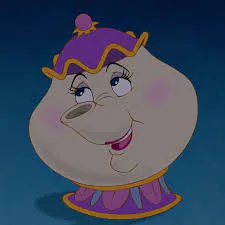
Riddle! - What starts with T, ends with T, and has T in it?
4
A teapot!
5
Vocabulary
Bourbon family - family that began ruling France in 1598, with the reign of Henry IV and last until 1793, it then also from 1814 through 1830
Elizabeth I - Henry VIII’s daughter who ruled over England from 1558 to 1603
Habsburg family - family that held the title of Holy Roman Emperor between 1438 and 1740 and again from 1745 to 1806
Holy Roman Empire - a multi-ethnic group of territories in central Europe that developed during the Middle Ages and continued until its dissolution in 1806
Inquisition - an effort by the Catholic Church to root out heresy, which included punishment of anyone who did not agree with the beliefs of the Catholic Church
Peter the Great - became tsar of Russia in 1689, he is known for his attempt to westernize Russia and modernizing its military
6
Vocabulary
Philip II - King of Spain from 1556 - 1598
Romanov Family - family that ruled over Russia from 1613 to 1917
Spanish Armada - a huge naval fleet what was organized by Phillip II of Spain, in an attempt to invade and overthrow Queen Elizabeth I of England
Spanish Empire - a global empire that lasted from the fifteenth to the twentieth century and included Spanish colonies in the Americas, Africa, and Asia
tsar or czar - monarchs of Russia
Tudor family - a ruling family who occupied the throne of England from 1485 to 1603
7
The Tudor Dynasty
The Tudor family was a ruling family who occupied the throne of England from 1485 to 1603.
The first Tudor monarch was Henry the VII, who took the throne after killing the previous king at the conclusion of a civil war.

8
Henry VIII
When you studied the Protestant Reformation, you learned that Henry VIII split the Church of England from the Roman Catholic Church. Some historians view Henry VIII as a warrior king who restored England’s honor and overseas image as a major player in European and world politics. Other historians view him as a ruthless tyrant, who ruled by execution and murder. He executed an estimated 57,000 to 72,000 people for crimes or for rebelling against his rule. Henry VIII increased the power of the English Crown by utilizing support from his politically skilled ministers and by confiscating property from the Catholic Church to increase the Crown’s wealth. Under Henry’s reign, England repelled an invasion from the Scottish navy and strengthened the English navy, making England safer from another maritime attack.

9
Edward VI
Edward VI was the son of Henry VIII and Jane Seymour, Henry’s third wife. He assumed the throne at the age of nine when Henry VIII died in 1547. Upon Edward VI’s coronation, his uncle, Edward Seymour, took the leadership position Lord Protector and served as a counselor to Edward VI, who was too young to rule effectively. Seymour, in Edward VI’s name, invaded Scotland due to Scotland’s violation of an agreement to give Mary, Queen of Scots in marriage to Edward. England attempted to conquer Scotland, but the war drained the English Crown’s finances, and English forces withdrew. Edward VI died at the age of 15 after six years of reign.

10
Mary I
Though succession usually went to males, Henry VIII had no more male heirs, and Edward VI did not have an heir. Mary I of England was the next Tudor monarch in line for the Crown. She was the daughter of Henry VIII and Henry’s first wife, Catherine of Aragon. Mary I began her reign by reversing the religious changes of her father, returning England to Catholicism and reestablishing the authority of the pope in England. However, Parliament refused to return the church lands Henry VIII had confiscated from Rome. Mary I of England restored the property the Crown still possessed to Rome. She became known as Bloody Mary because of the religious persecution that took place during her reign. Almost 300 people were sentenced to death and burned at the stake as a result of trials for heresy.

11
Elizabeth I
When Mary I died in 1558, Elizabeth I took the throne. Elizabeth I was the daughter of Henry VIII and his second wife, Anne Boleyn. Elizabeth I was the longest-reigning English monarch in nearly two centuries. She enjoyed huge popularity during her life and became an even greater legend after her death. Elizabeth’s reign was defined by her proficient use of Parliament and her advisors. Elizabeth firmly reestablished Protestantism in England through the Church of England, expanded English trade, and defended the nation against the powerful Spanish Armada. During Elizabeth I’s reign, England saw cultural developments in poetry, drama, and literature, including the works of William Shakespeare. Elizabeth I was the last of the Tudor monarchs, as she never married or had children. She died in 1603, the same year Tokugawa Ieyasu became the shogun of Japan, and was succeeded by her closest relative, James VI of Scotland.

12
The Spanish Empire
The Spanish Empire was a global empire that lasted from the fifteenth to the twentieth century and included Spanish colonies in the Americas, Africa, and Asia.
In the late 1500s, under King Philip II, the Spanish Empire reached the peak of its power in terms of territory and economic strength.
However, the empire also met its limits as Philip inherited a massive debt from his father.
Spain also lost control of the Netherlands in 1581.

13
The Spanish Armada
Philip II was a devout Catholic and as a result Spain organized a huge naval fleet against Protestant England in 1588 known as the Spanish Armada.
Philip II felt that one of his goals was to enforce Catholicism.
This affected the intellectual and cultural life of Spain as anyone who did not agree with the Catholic Church was punished.
Students were forbidden to study outside of church-sanctioned education, and high ranking officials would be jailed if they showed sympathy towards the Protestant Reformation.

14
The Decline of The Spanish
Beginning in the mid 1600s continual conflict led to the decline of Spain.
Spain fought against the Ottoman Empire and France, while also competing against the Portuguese, English, and Dutch in the colonial aspirations.
Government funds diminished in Spain due to having military across vast territories.

15
France's Bourbon Monarchs
Monarchs of the Bourbon family began ruling France in 1589, beginning with Henry IV of France. Henry IV is best known for the restoration of stability in France after destructive religious wars between Catholics and Protestants that occurred within France in the sixteenth century.
Henry IV, a Protestant, began preparations to invade Germany against the Catholic Habsburg dynasty, a move that French Catholics opposed. As Henry IV prepared to join his army for the invasion, a Catholic assassin killed him.

16
Louis XIV
Henry IV’s son, Louis XIII, took the throne. Louis XIII linked the House of Bourbon to the three major royal houses of Europe through the marriages of his three sisters to other royal families.
Louis XIV was the third monarch of the Bourbon Dynasty. He ruled for 72 years from 1643 - 1715.
When Louis XIV inherited France it was internally separated, military depleted, and almost bankrupt.
During his reign France grew and became one of the strongest powers in the Western World.

17
France under Louis XIV
Under Louis’s reign, France developed economically through the growth of industry. The country also expanded its military and solidified control of its colonies in Africa, the Americas, and Asia.
Within France, Louis promoted intellectual life by founding institutions for the arts and sciences. His fondness for art, however, led him to order the construction of elaborate mansions that depleted the country’s funds and drew criticism from the populace.

18
The Holy Roman Empire
The Holy Roman Empire was a multi-ethnic group of territories in central Europe that developed during the Middle Ages and continued until its dissolution in 1806.
Its leader, known as the Holy Roman Emperor, was traditionally elected by a group of German princes, who usually elected one of their peers to be the emperor.
In the sixteenth century, the pope officially crowned the emperor. The empire was decentralized and had hundreds of sub-units. Although the various princes, lords, bishops, and cities of the empire owed the emperor their allegiance, they also possessed privileges that gave them de facto independence within their territories.

19
The Habsburg Family
The Habsburg family held the title of Holy Roman Emperor from 1438–1740 and again from 1745–1806.
The Emperor gained the title through elections and the position never became hereditary.
The Habsburgs had various leadership positions outside of the Holy Roman Empire. These lands were called the Austrian Monarchy.
The Habsburgs ruled in Central Europe.

20
Romanov Tsars
The Romanovs took over Russia in 1613 and held the title of tsar (pronounced “zahr;” also spelled czar), the word used for monarchs in Russia. The image shows the Romanov coat of arms. In the first decades of their reign, the Romanovs attempted to restore peace, as Russia was experiencing a period of turmoil internally as well as with Russia’s rivals, including Poland and Sweden. To avoid more civil war, the nobles cooperated with the Romanovs and helped them centralize power. In return, the Romanov tsars allowed the nobles to establish a system of feudalism, which bound peasants to a lord’s estate as serfs.

21
Peter the Great's Westernization
Peter the Great of the Romanov family became tsar in 1689. After a visit to Western Europe, Peter decided to westernize Russia, or make it more like Western Europe, since Russia was lagging behind the West in military and economic strength. Drawing on Western influence, he modernized the Russian army and navy using European technologies, and he reorganized the country’s administrative system. He also created state-endorsed handicraft shops in large cities, inspired by similar shops he had observed in the Netherlands, to provide products for the army. He commanded all his officials to wear Western clothing and cut off their long beards, a move that angered the officials.

22
Conditions of Workers
Peter’s reign deepened the control landowners had over serfs. He firmly enforced class divisions, and he implemented a tax code that placed a heavier burden on the working class. With Peter’s official support of the feudal system, serfs’ condition was little different from enslavement. In the image, a serf girl is being sold along with the land she lives on. Peter created a new class of serfs who had broader rights than ordinary serfs but still paid taxes to the state, but for most serfs, conditions worsened under Peter’s reign, and rebellions were common.

23
Multiple Choice
What factor caused the Spanish Empire to decline in the 1600s?
frequent attempts to overthrow the monarch
conflicts within the ruling family
continual warfare
the expense of funding colonies
24
Tomorrow!
Tomorrow we will review for our unit 6 quiz with a kahoot review.
If you have any questions please ask!
Have a great rest of your day!
Monarchies of Europe
Show answer
Auto Play
Slide 1 / 24
SLIDE
Similar Resources on Wayground

16 questions
Ideas That Shaped US Government
Presentation
•
9th - 12th Grade
20 questions
Agricultural Revolution Notes Presentation
Presentation
•
9th - 12th Grade
19 questions
3.4 Behavior of Gases
Presentation
•
9th - 12th Grade
18 questions
Early Cold War
Presentation
•
9th - 12th Grade
21 questions
Factors of Production!
Presentation
•
9th - 12th Grade
20 questions
Intro to Legislative Branch
Presentation
•
10th - 12th Grade
18 questions
Federalism
Presentation
•
8th - 12th Grade
15 questions
Globalization
Presentation
•
9th - 12th Grade
Popular Resources on Wayground
20 questions
"What is the question asking??" Grades 3-5

Quiz
•
1st - 5th Grade
20 questions
“What is the question asking??” Grades 6-8
Quiz
•
6th - 8th Grade
10 questions
Fire Safety Quiz
Quiz
•
12th Grade
20 questions
Equivalent Fractions
Quiz
•
3rd Grade
34 questions
STAAR Review 6th - 8th grade Reading Part 1
Quiz
•
6th - 8th Grade
20 questions
“What is the question asking??” English I-II
Quiz
•
9th - 12th Grade
20 questions
Main Idea and Details
Quiz
•
5th Grade
47 questions
8th Grade Reading STAAR Ultimate Review!
Quiz
•
8th Grade
Discover more resources for Social Studies
30 questions
Unit 6 Test Review
Quiz
•
9th - 12th Grade
45 questions
US History STAAR Review #3
Quiz
•
11th Grade
67 questions
U.S. History STAAR Practice Test
Quiz
•
11th Grade
18 questions
WH - Asia Practice Quiz
Quiz
•
9th Grade
10 questions
Civil Rights EOC Warm-up/ Exit Ticket
Quiz
•
9th - 12th Grade
10 questions
Exploring the Foundations of Representative Government in Colonial America

Interactive video
•
6th - 10th Grade
59 questions
US History EOC Review
Quiz
•
11th Grade
68 questions
State Testing Review
Quiz
•
11th Grade