Search Header Logo
Photosynthesis L1

Photosynthesis L1

Assessment

Presentation

Biology

9th - 12th Grade

Hard

NGSS
HS-LS1-7, HS-PS1-4, HS-LS1-5

+2

Standards-aligned

Created by

Matthew Cotton

Used 1+ times

FREE Resource

9 Slides • 8 Questions

1
media

2

media

3

Multiple Choice

Why is ATP considered essential for cellular activities?

1

It stores and releases energy needed for cell functions.

2

It acts as a structural component of cell membranes.

3

It is responsible for cell division.

4

It helps in the transport of oxygen in blood.

4

media

5

media

6

Multiple Choice

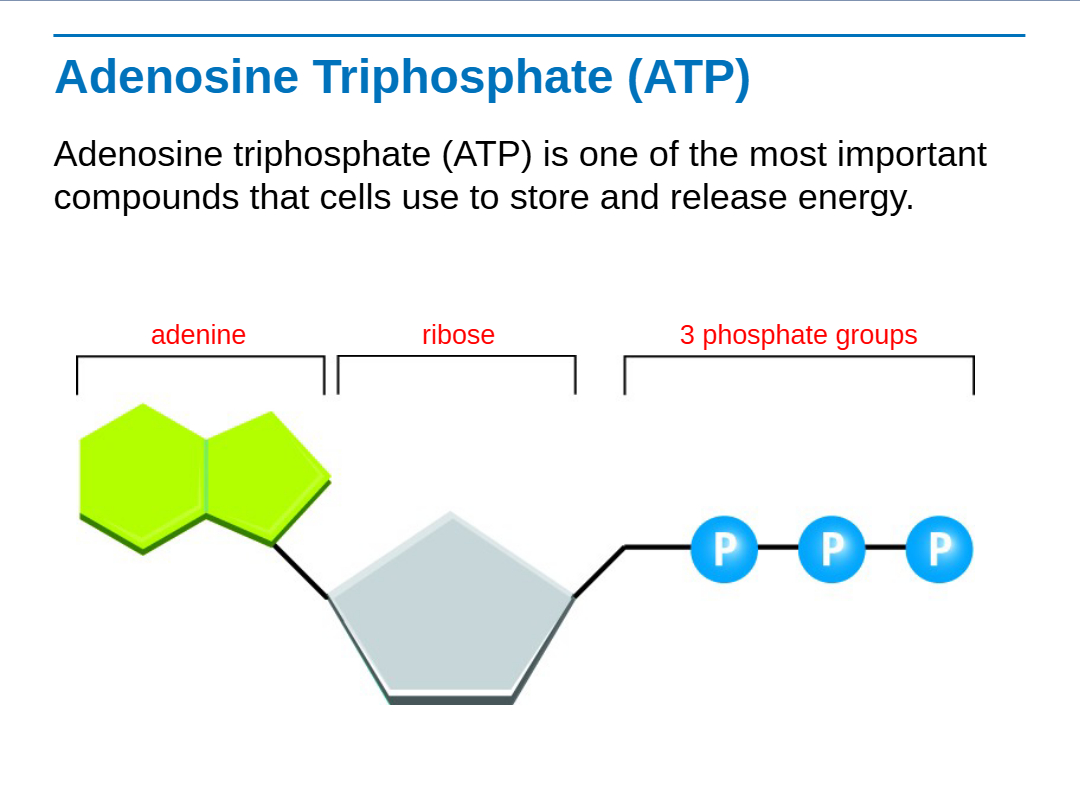
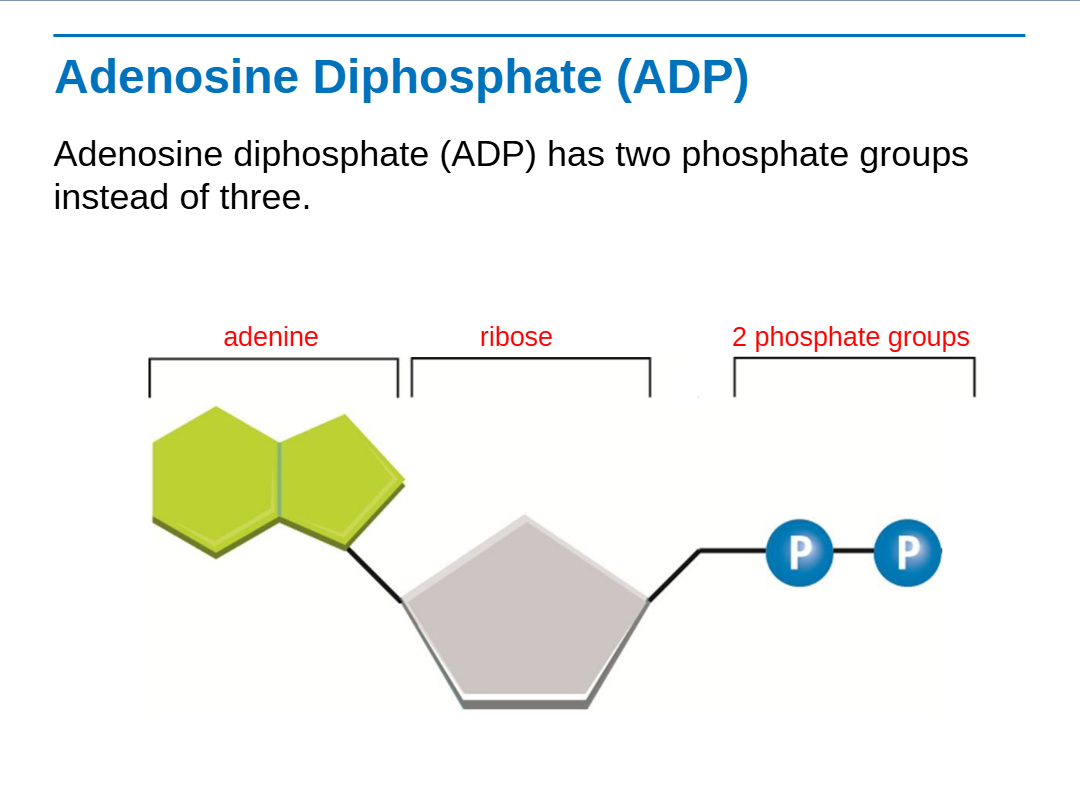
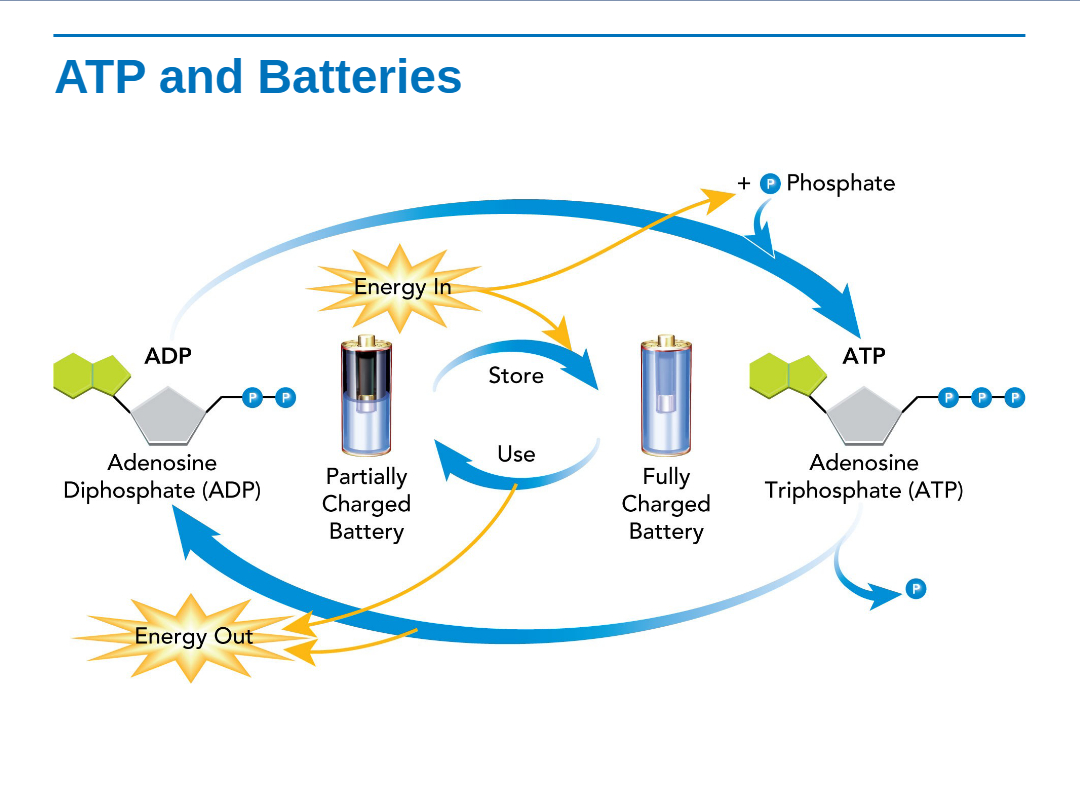
Which component is present in ATP but not in ADP?

1

Adenine

2

Ribose

3

Third phosphate group

4

Second phosphate group

7

media

8

media

9

Multiple Choice

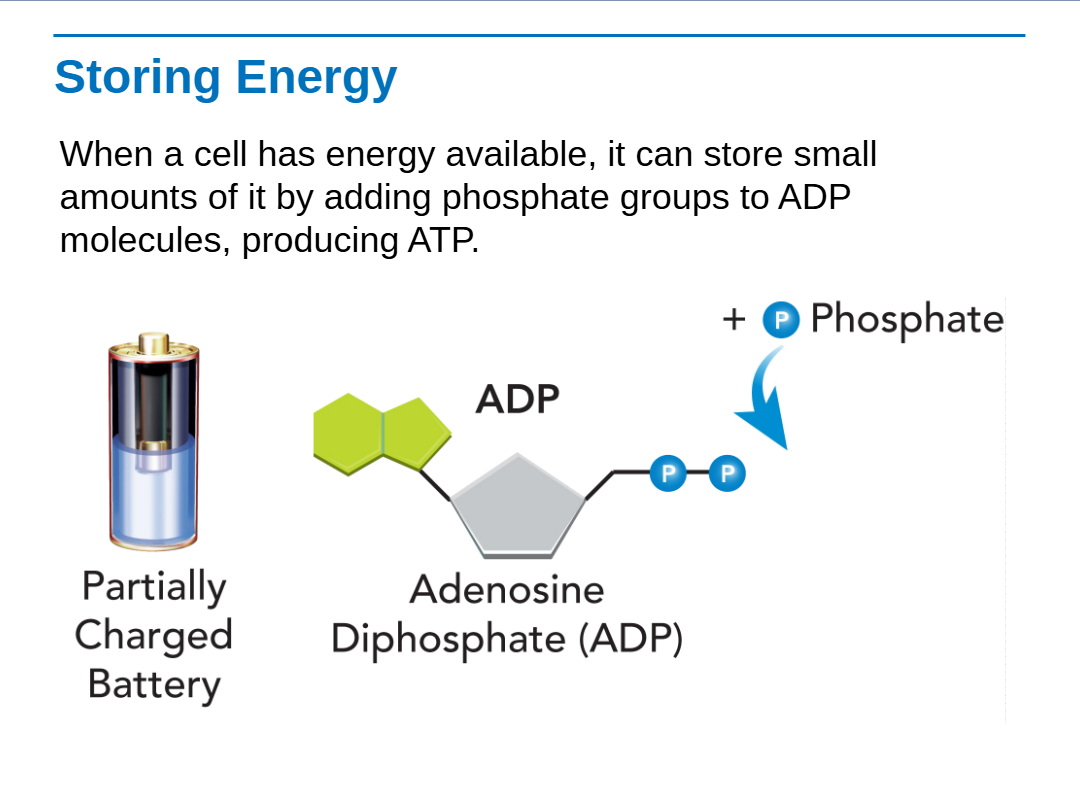
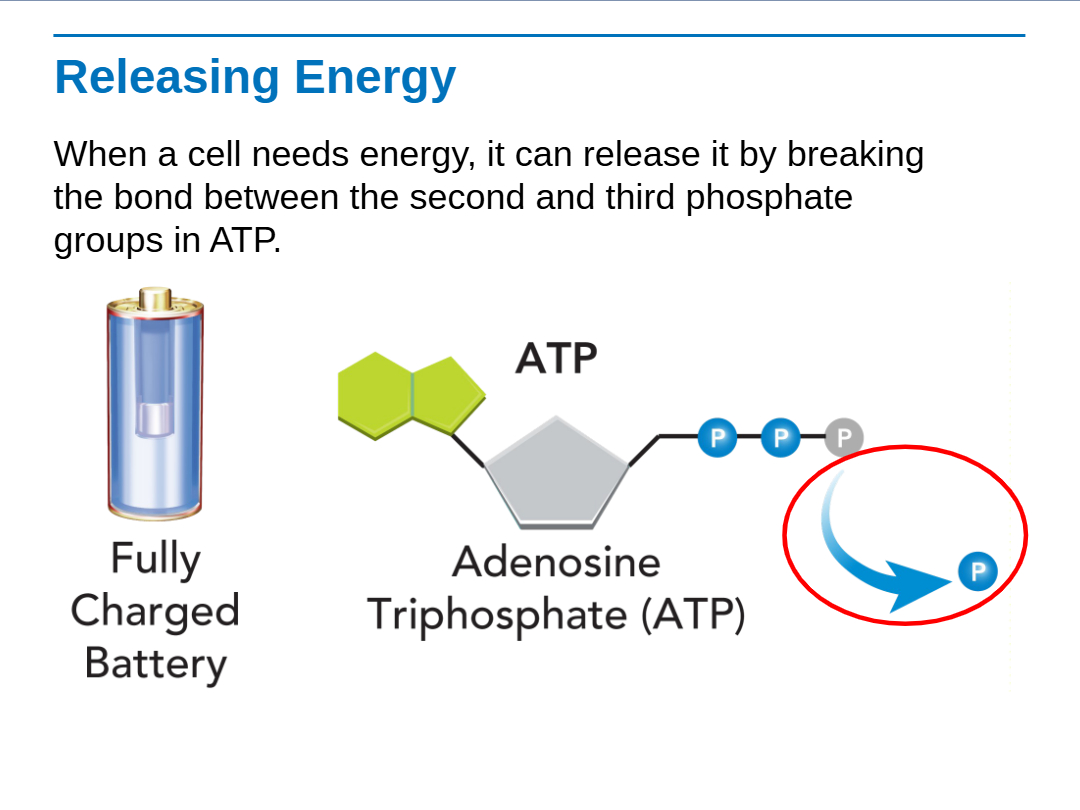
What happens to ATP when a cell needs energy?

1

It gains a phosphate group.

2

It loses a phosphate group.

3

It splits into adenine and ribose.

4

It becomes a fully charged battery.

10

Multiple Select

Which of the following statements are correct about ATP and ADP?

1

ATP has three phosphate groups, while ADP has two.

2

Both ATP and ADP contain adenine and ribose.

3

Energy is released when ATP loses a phosphate group.

4

ADP can be converted to ATP by adding a phosphate group.

11

media

12

Multiple Choice

Question image
Which bond of the ATP molecule is broken in order to release energy?
1
A
2
B
3
C
4
D

13

media

14

Fill in the Blank

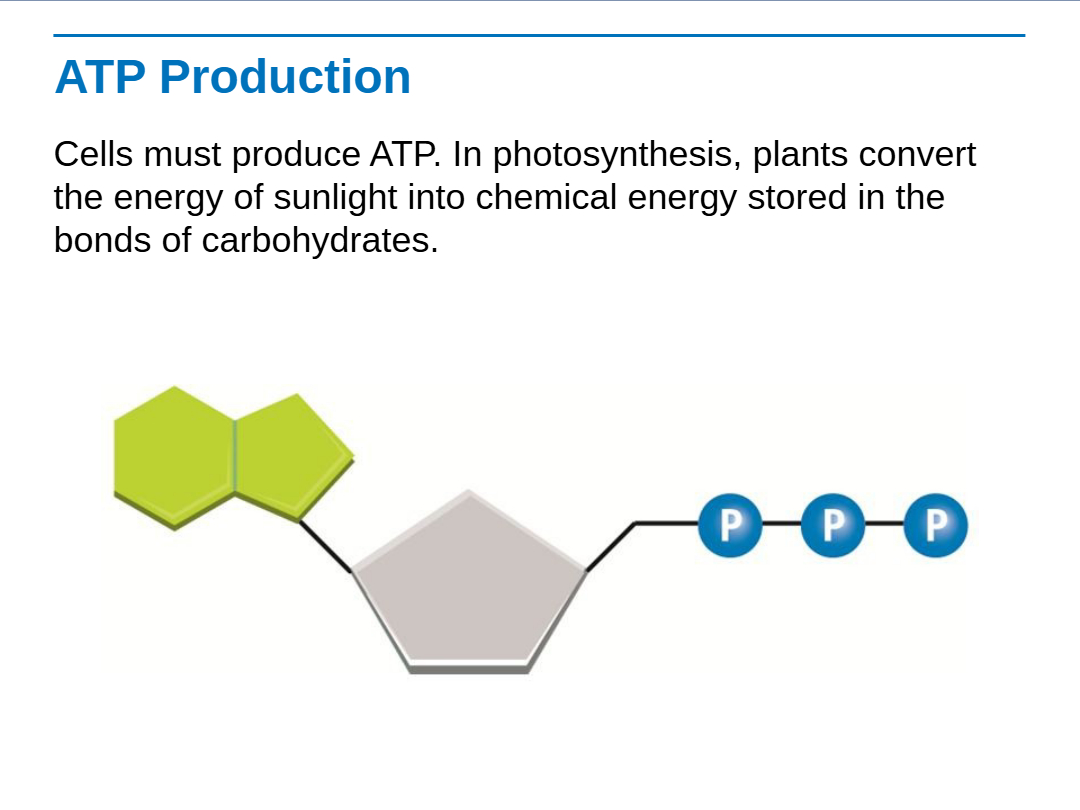
Cells convert the energy of sunlight into chemical energy stored in the bonds of ___ during photosynthesis.

15

media

16

Multiple Choice

How does ATP benefit cells in living organisms?

1

It provides energy for cellular processes.

2

It stores genetic information.

3

It acts as a structural component of the cell membrane.

4

It transports oxygen in the blood.

17

Multiple Choice

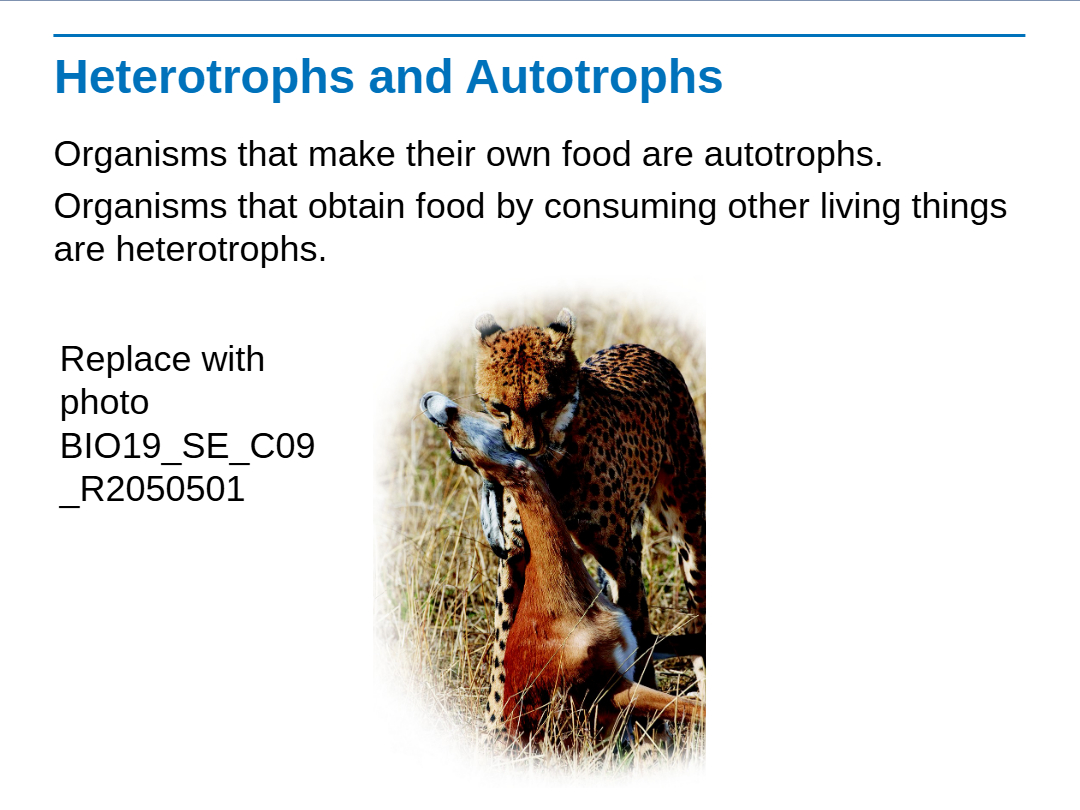
Which of the following best describes the difference between autotrophs and heterotrophs?

1

Autotrophs make their own food, while heterotrophs consume other living things for food.

2

Autotrophs consume other living things for food, while heterotrophs make their own food.

3

Both autotrophs and heterotrophs make their own food.

4

Both autotrophs and heterotrophs consume other living things for food.

media

Show answer

Auto Play

Slide 1 / 17

SLIDE