

HRT-7.6.5-Insect Trapping Leaves: Nature's Ingenious Carnivores

Presentation
•
Science
•
9th - 12th Grade
•
Hard
+1
Standards-aligned

Jacob W
FREE Resource
7 Slides • 6 Questions
1
Multiple Choice
BELLRINGER:
What is one major environmental challenge that causes leaves to develop specialized adaptations?
Water scarcity in arid regions
Abundance of sunlight
High levels of pollution
Lack of pollinators
2
3
4
Multiple Select
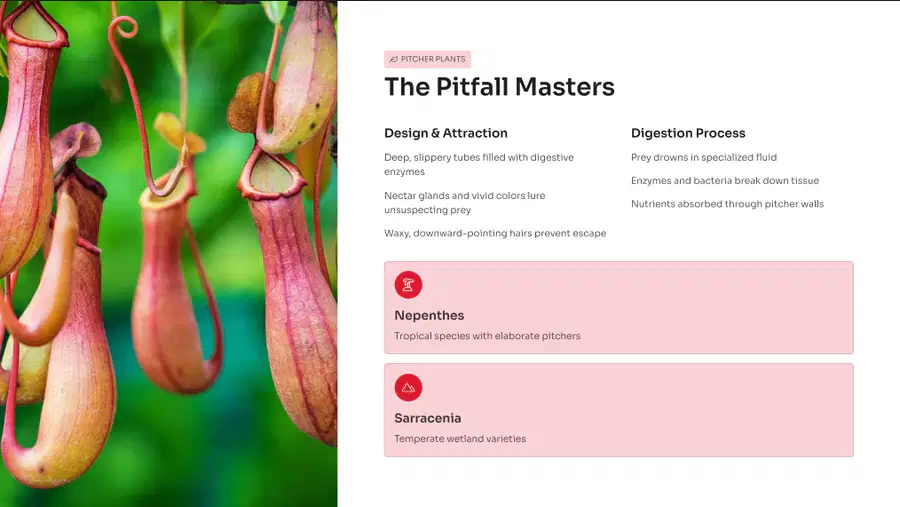
Which of the following features help pitcher plants trap and digest their prey?
Slippery tubes filled with digestive enzymes
Brightly colored flowers for pollination
Waxy, downward-pointing hairs
Leaves that photosynthesize at night
5
6
Multiple Choice
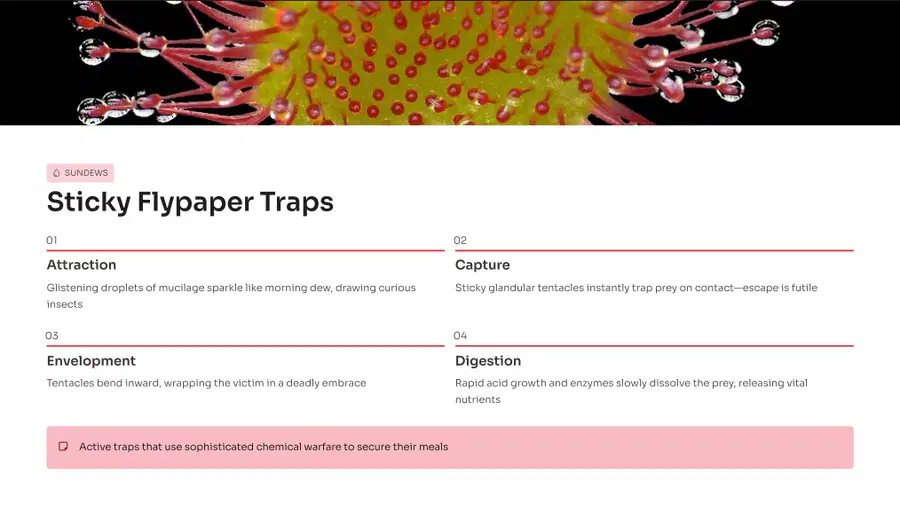
Which of the following best describes the sequence of steps involved in how sticky flypaper traps capture and digest their prey?
Attraction, Capture, Envelopment, Digestion
Capture, Digestion, Attraction, Envelopment
Envelopment, Attraction, Capture, Digestion
Digestion, Envelopment, Capture, Attraction
7
8
9
Open Ended
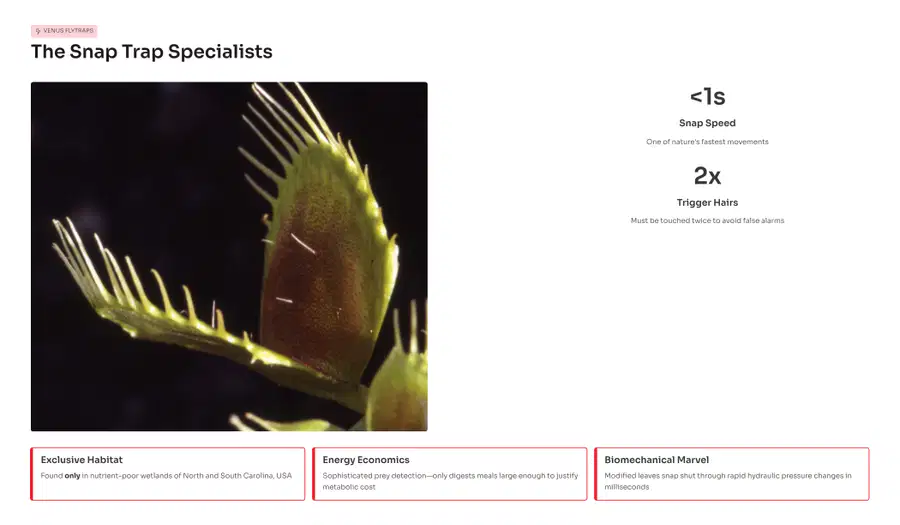
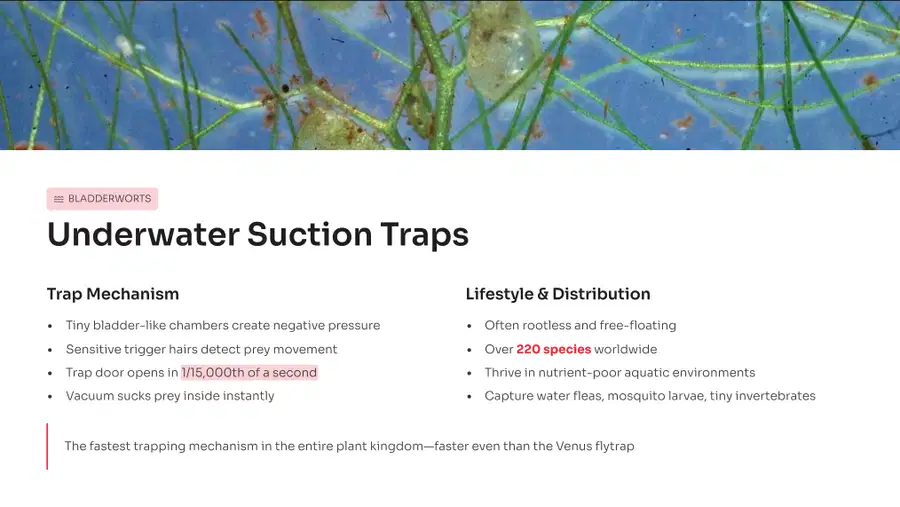
Compare the trapping mechanisms of Venus flytraps and bladderworts. How do their methods reflect adaptations to their environments?
10
11
Multiple Choice
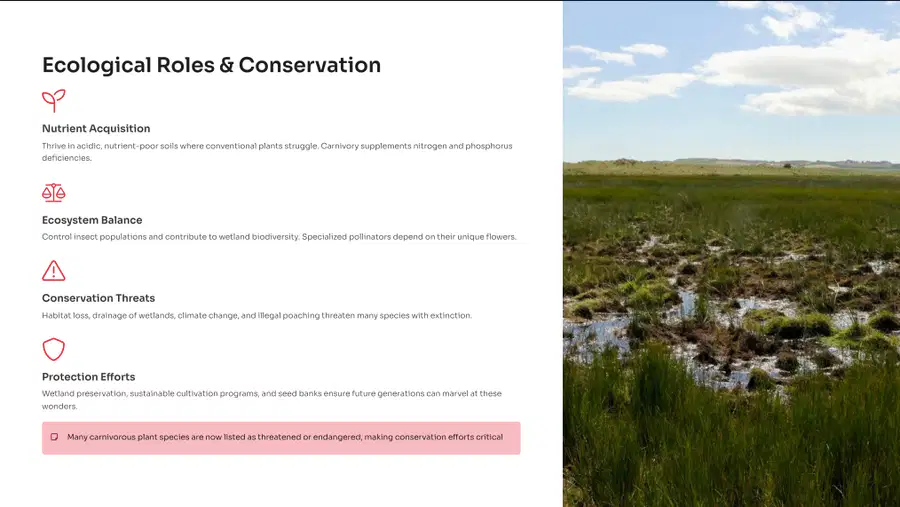
Which of the following are ecological roles of carnivorous plants?
Nutrient acquisition
Ecosystem balance
Conservation threats
All of the above
12
13
Multiple Choice
How do pitcher plants attract and digest their prey?
By releasing a sweet scent and trapping insects in slippery tubes filled with digestive enzymes
By using sticky leaves to capture insects
By snapping shut when an insect touches their leaves
By emitting light to lure insects
BELLRINGER:
What is one major environmental challenge that causes leaves to develop specialized adaptations?
Water scarcity in arid regions
Abundance of sunlight
High levels of pollution
Lack of pollinators
Show answer
Auto Play
Slide 1 / 13
MULTIPLE CHOICE
Similar Resources on Wayground

10 questions
Volcanic Eruption
Presentation
•
8th - 12th Grade
10 questions
Volcanic Eruption Impacts
Presentation
•
8th - 12th Grade
8 questions
Topic Sentences
Presentation
•
9th - 12th Grade
13 questions
Final Review Bacteria and Viruses
Presentation
•
9th - 12th Grade
13 questions
Sedimentary Origins
Presentation
•
9th - 12th Grade
13 questions
Color
Presentation
•
10th - 12th Grade
11 questions
The Essay Day 2
Presentation
•
9th - 12th Grade
11 questions
Ionic Bonds - Explore Learning Vocabulary
Presentation
•
9th - 12th Grade
Popular Resources on Wayground
6 questions
PRIDE Always and Everywhere
Presentation
•
12th Grade
20 questions
Lab Safety Quiz

Quiz
•
6th Grade
26 questions
KOR Review Kahoot Questions
Quiz
•
8th Grade
21 questions
Continents and Oceans
Quiz
•
6th Grade
12 questions
Unit Zero lesson 2 cafeteria
Presentation
•
9th - 12th Grade
20 questions
Parts of Speech
Quiz
•
5th Grade
10 questions
Riddles Riddles fun Riddles
Quiz
•
6th - 12th Grade
16 questions
Subject & Predicate
Quiz
•
5th Grade
Discover more resources for Science
10 questions
Scientific Method (The scientific method)

Interactive video
•
9th Grade
10 questions
Exploring Chemical and Physical Changes
Interactive video
•
6th - 10th Grade
10 questions
Exploring the States of Matter
Interactive video
•
6th - 10th Grade
20 questions
Atomic Structure
Quiz
•
9th Grade
30 questions
Atomic Structure and Periodic Table Review
Quiz
•
10th Grade
9 questions
Exploring the Steps of the Scientific Method
Interactive video
•
6th - 10th Grade
16 questions
Identify Key Characteristics of Living Organisms
Quiz
•
9th - 12th Grade
20 questions
Photosynthesis
Quiz
•
9th Grade