

Korean Numbers

Presentation
•
World Languages
•
11th Grade
•
Easy

Veronica Pradana
Used 4+ times
FREE Resource
25 Slides • 25 Questions
1

2
Open Ended
Why do you think it is important to learn how to ask about quantities in a new language?
3
4
Multiple Choice
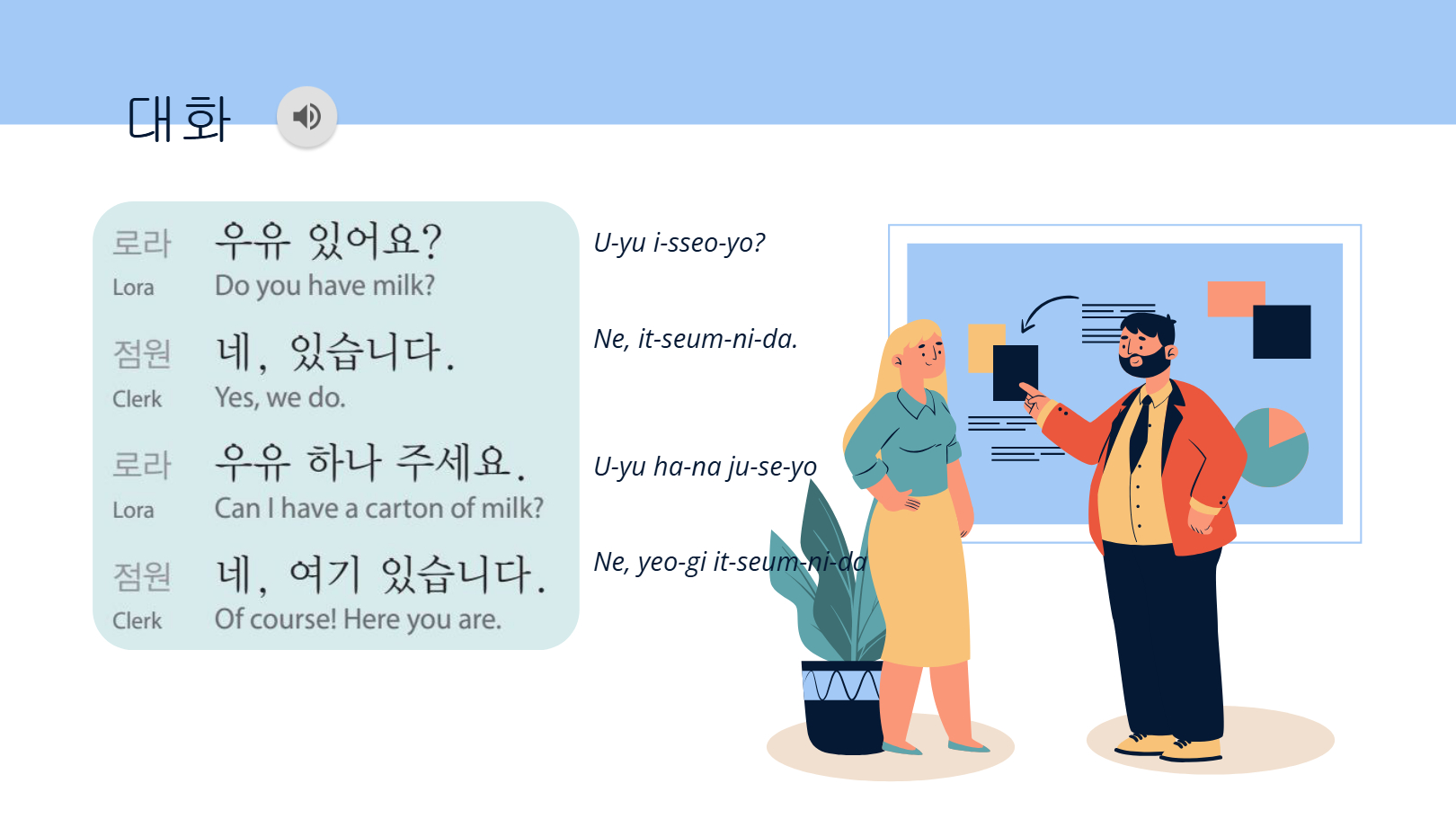
What does '우유 있어요?' mean in English?
Do you have milk?
Can I have a carton of milk?
Yes, we do.
Of course! Here you are.
5
6
7
Multiple Choice
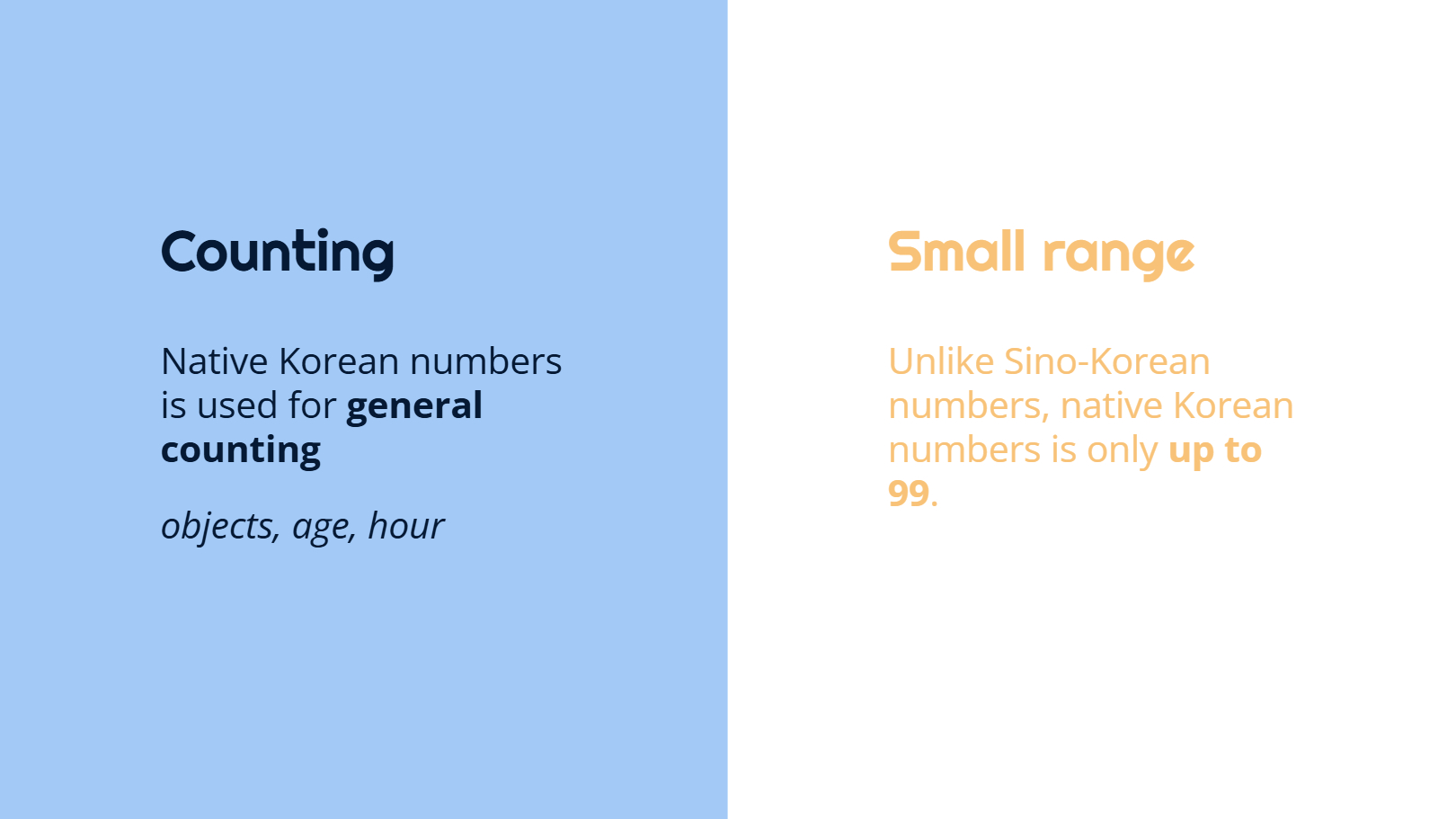
What is the main use of native Korean numbers, and up to what number can they be used?
For general counting, up to 99
For counting money, up to 1000
For counting only people, up to 10
For counting days, up to 365
8
9
Multiple Choice
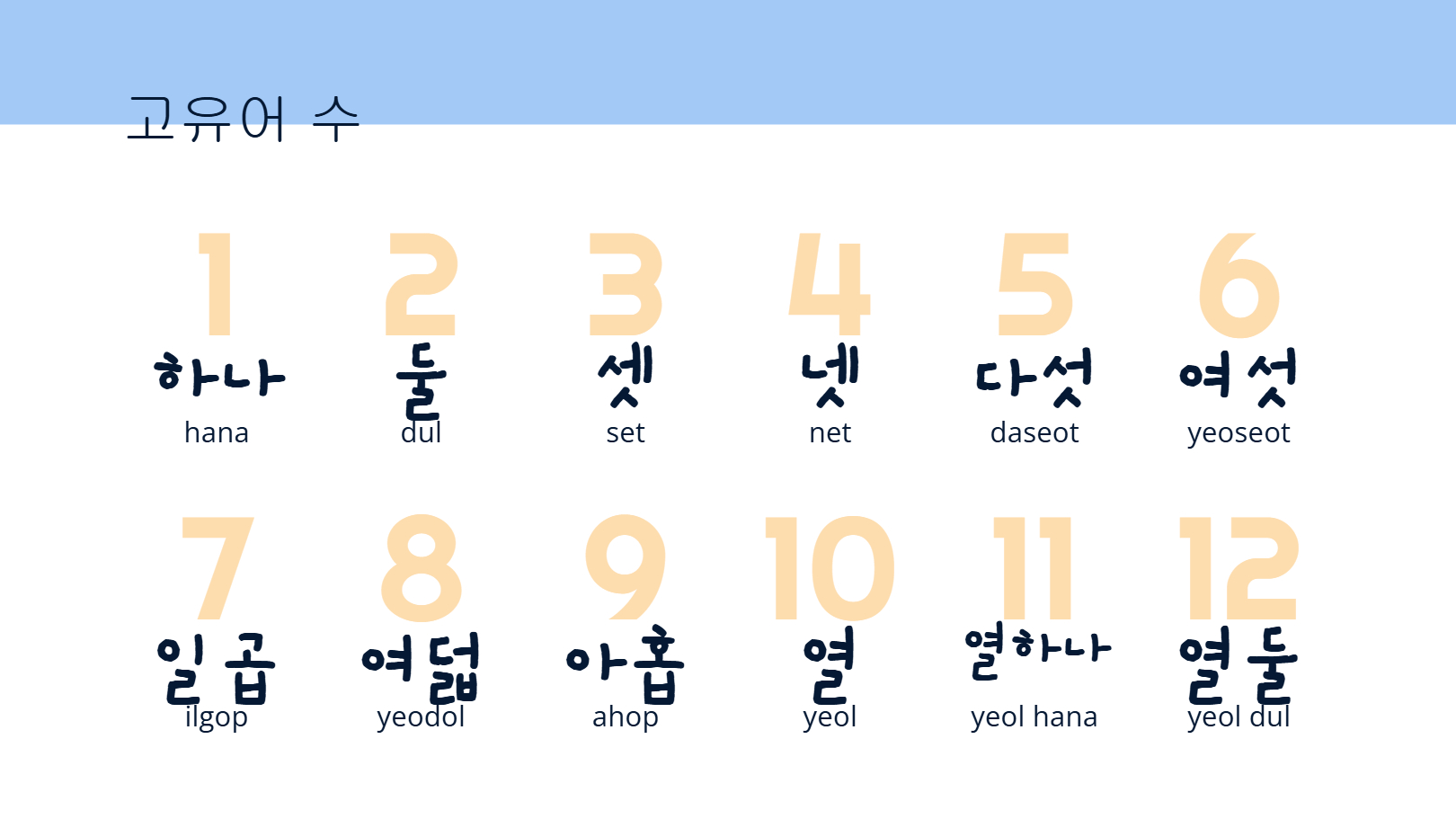
Which of the following are correct native Korean numbers for 1, 2, and 3?
hana, dul, set
il, i, sam
han, du, se
yeol, hana, dul
10
11
Fill in the Blanks
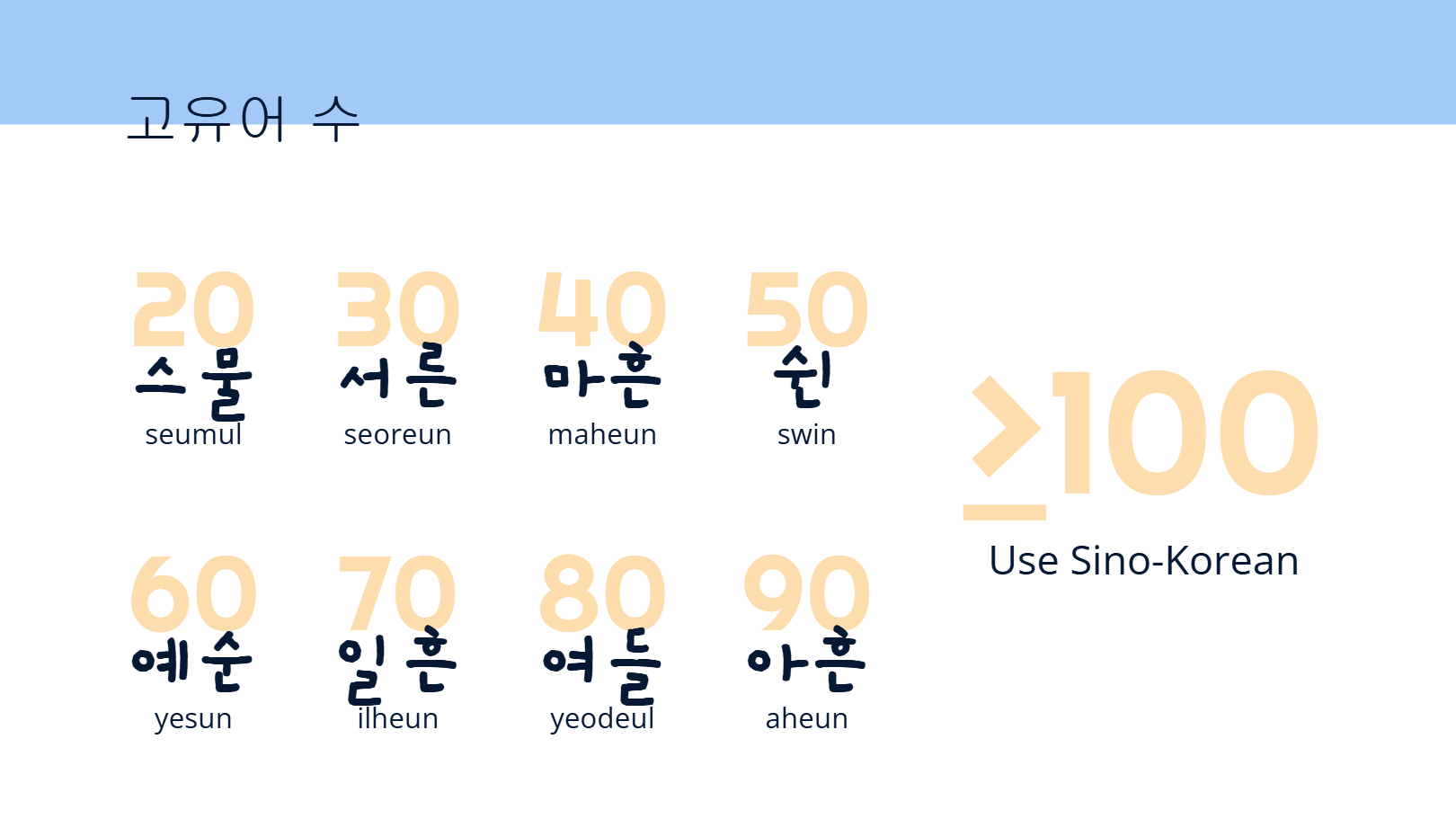
What should you use for numbers greater than 99 in Korean?
Type answer...
12
Multiple Select
Select all the numbers that are represented using native Korean numbers: 20, 30, 40, 100, 90.
20
30
40
90
13

14
15
Multiple Choice
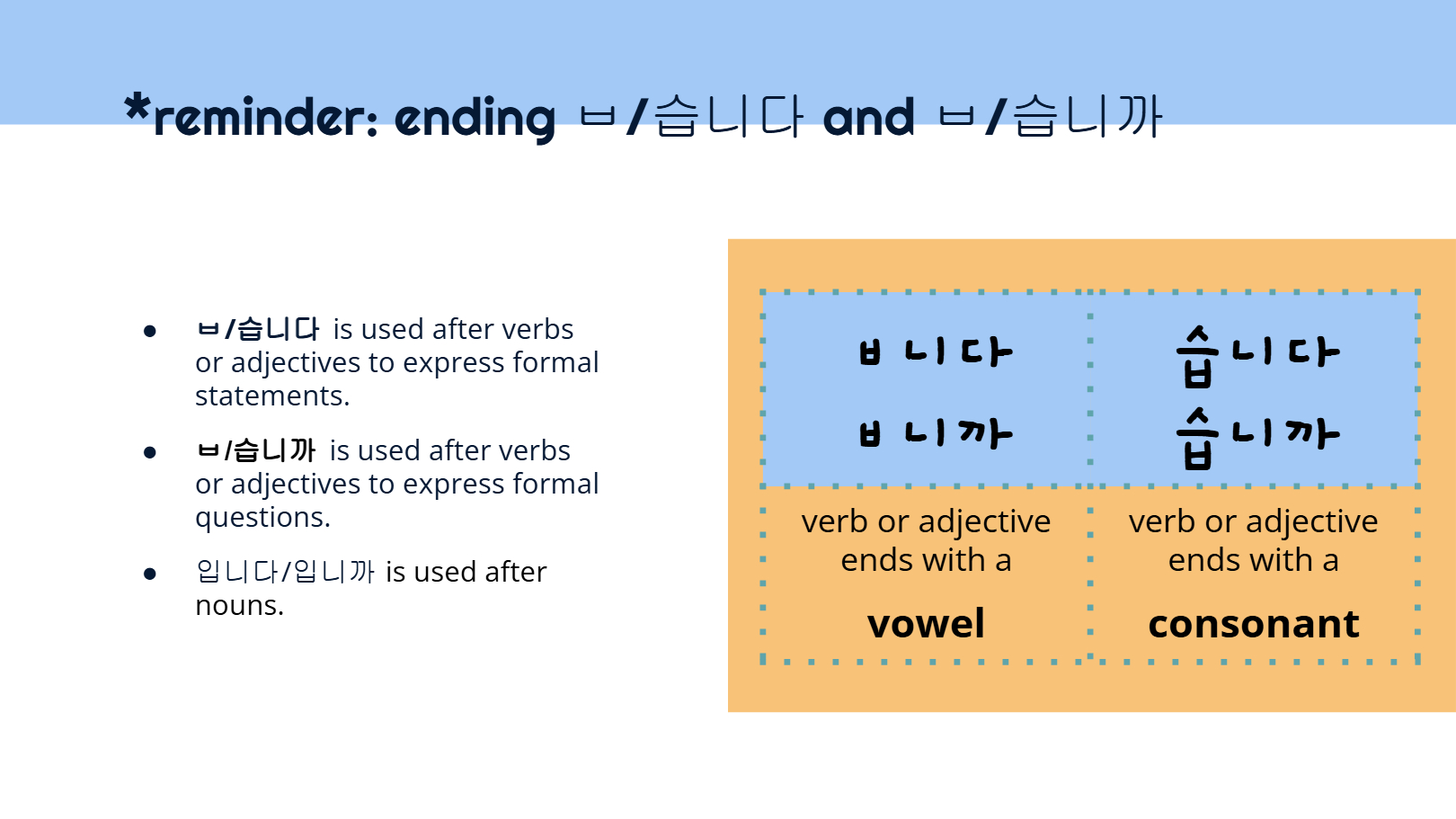
When do you use 입니까 in a Korean sentence?
After nouns
After verbs
After adjectives
After numbers
16
Open Ended
Explain the difference between the endings -ㅂ니다 and -습니다 in Korean formal speech.
17
18
Multiple Choice
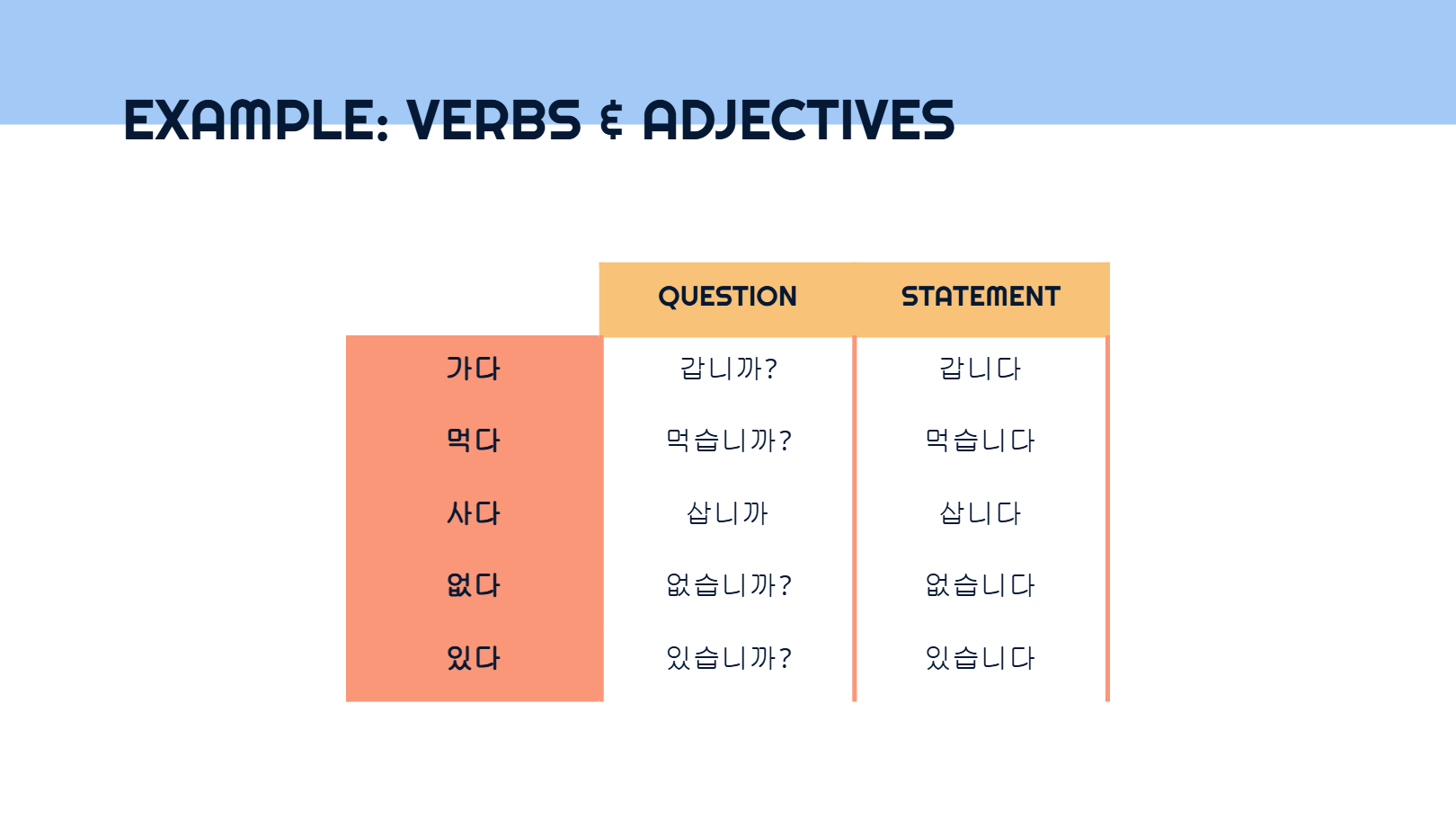
Which of the following is the correct polite formal question form for 'to go' in Korean?
갑니까?
먹습니까?
삽니까?
있습니까?
19
20
Open Ended
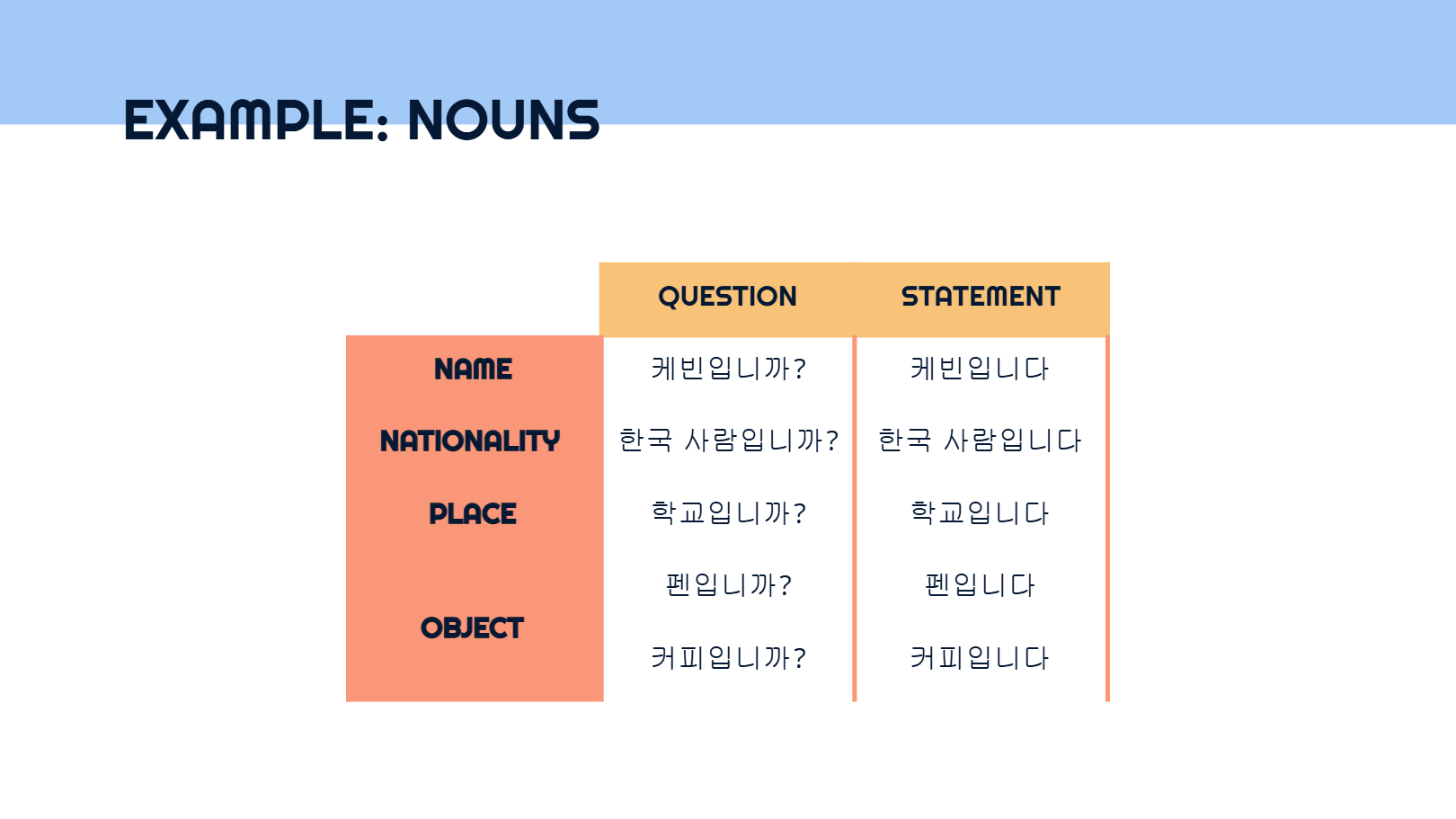
How do you form a polite formal statement and question using the noun 'school' in Korean?
21
22
Fill in the Blanks
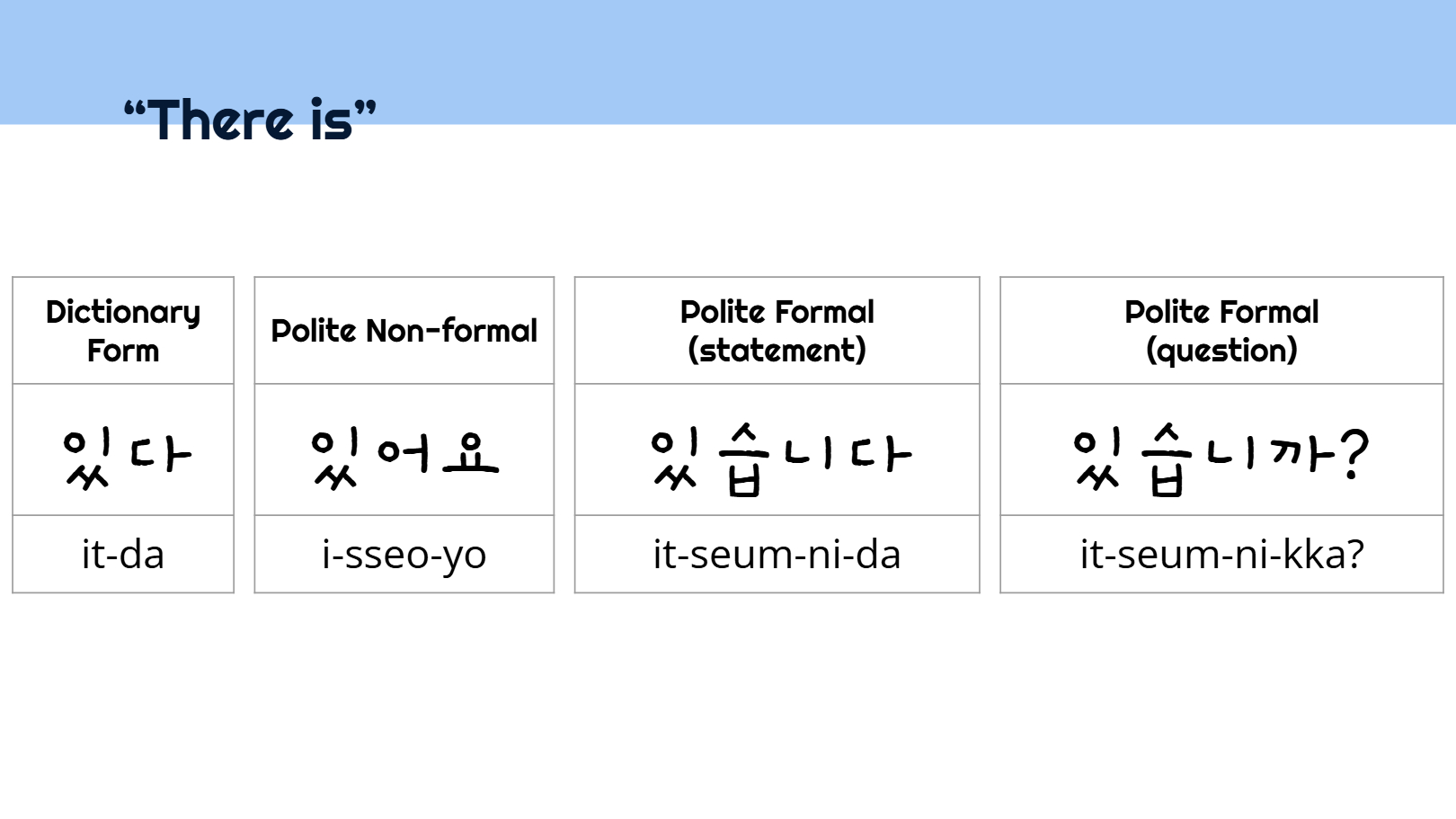
The polite formal statement for 'there is' in Korean is
Type answer...
23
24
Multiple Select
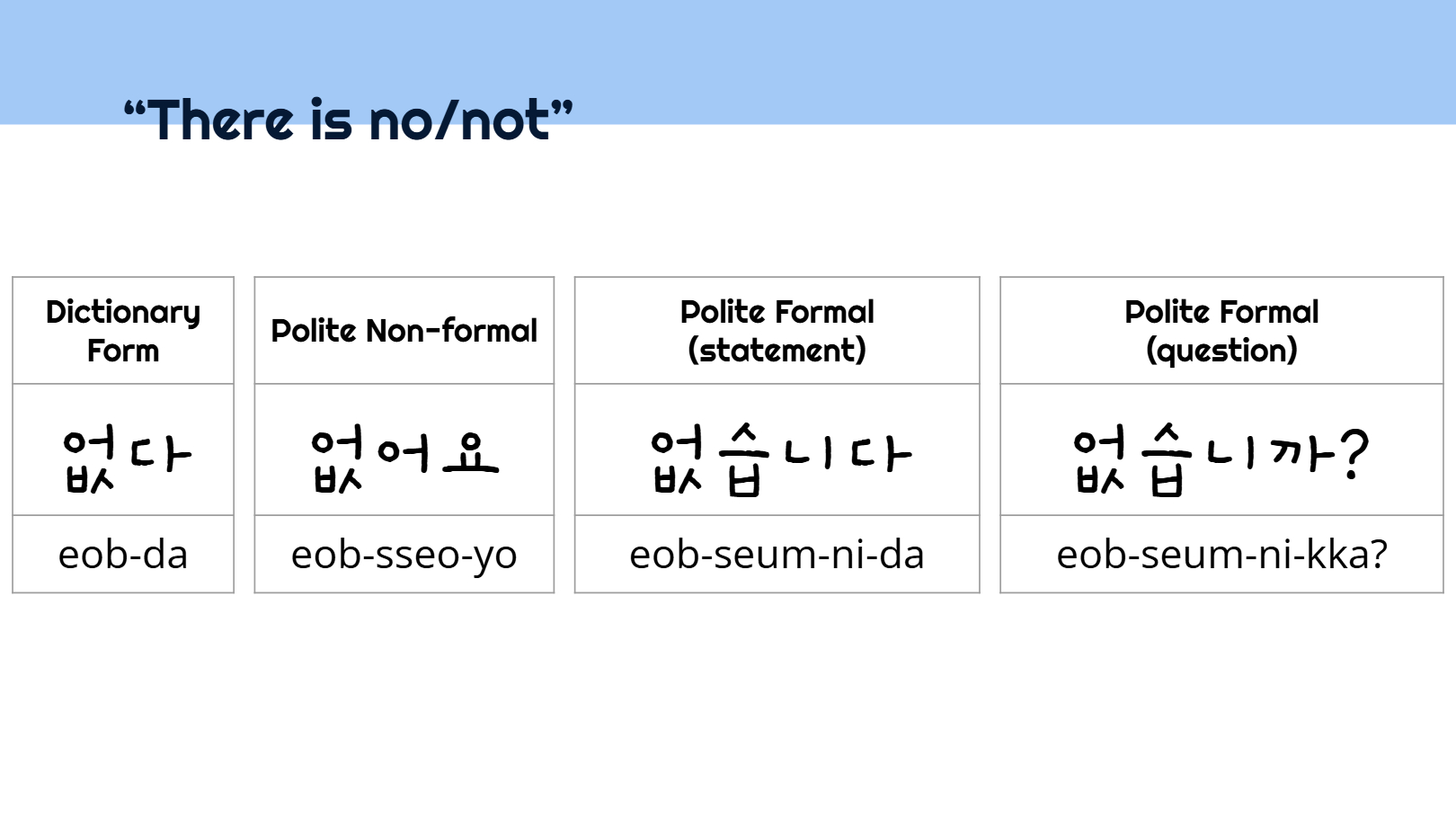
Select all the correct polite non-formal forms for 'there is' and 'there is not' in Korean.
있어요
없어요
있습니까?
없습니까?
25
26
Open Ended
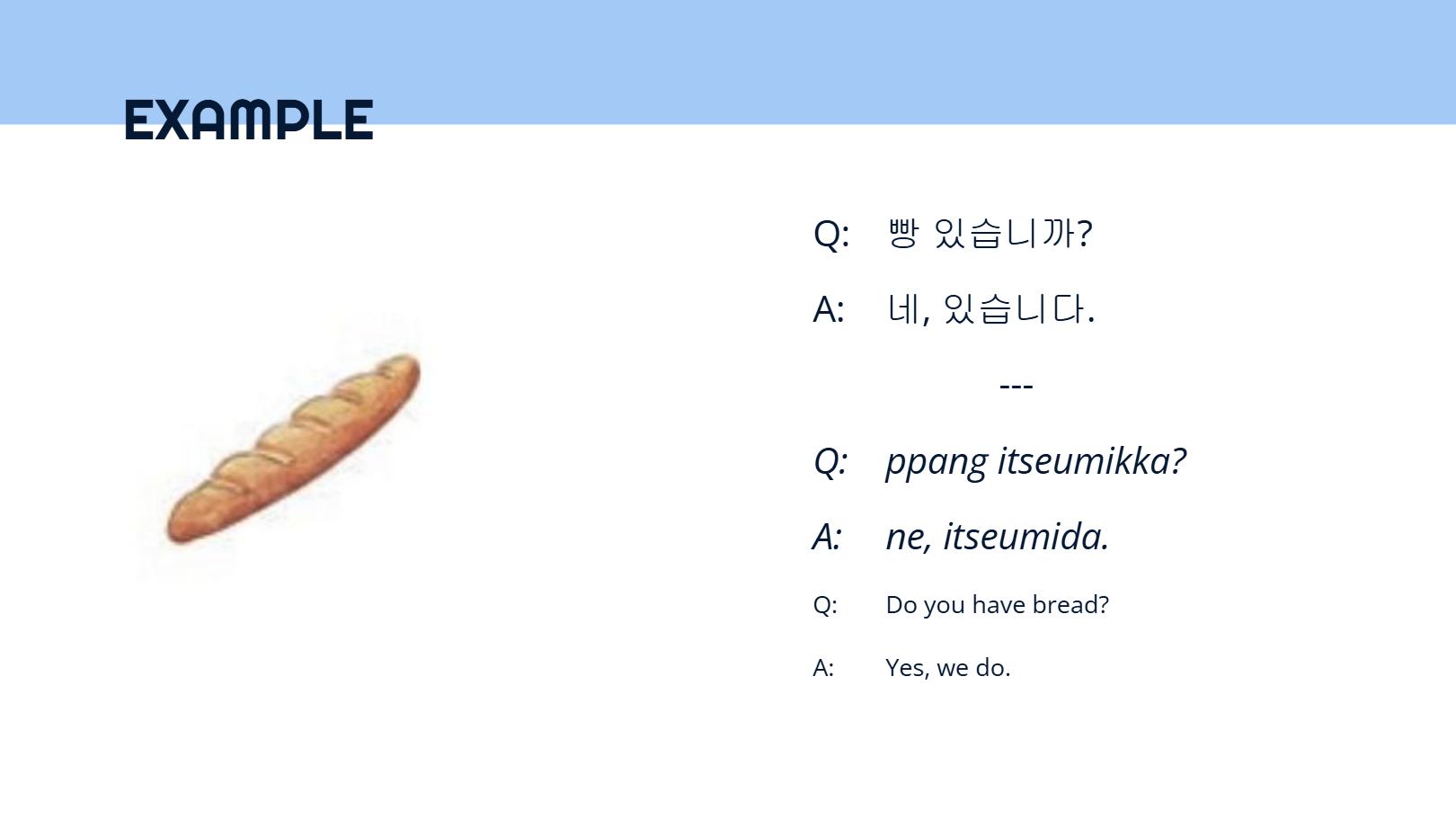
What is the English translation of '빵 있습니까?' and its response?
27
28
Multiple Choice
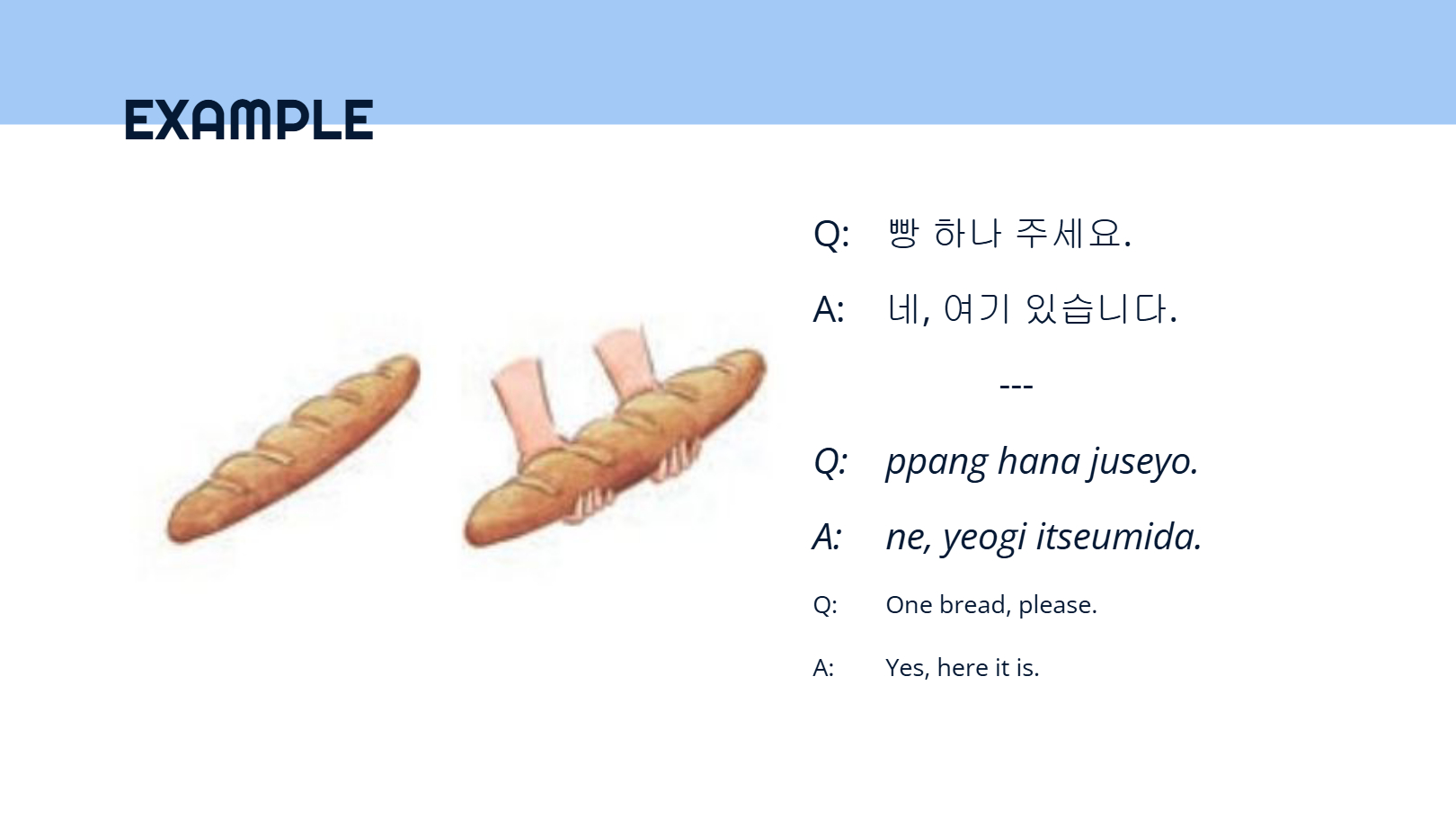
Which phrase would you use to politely ask for one bread in Korean?
빵 하나 주세요
빵 있습니까?
빵 없습니다
빵 먹습니까?
29
30
Multiple Choice
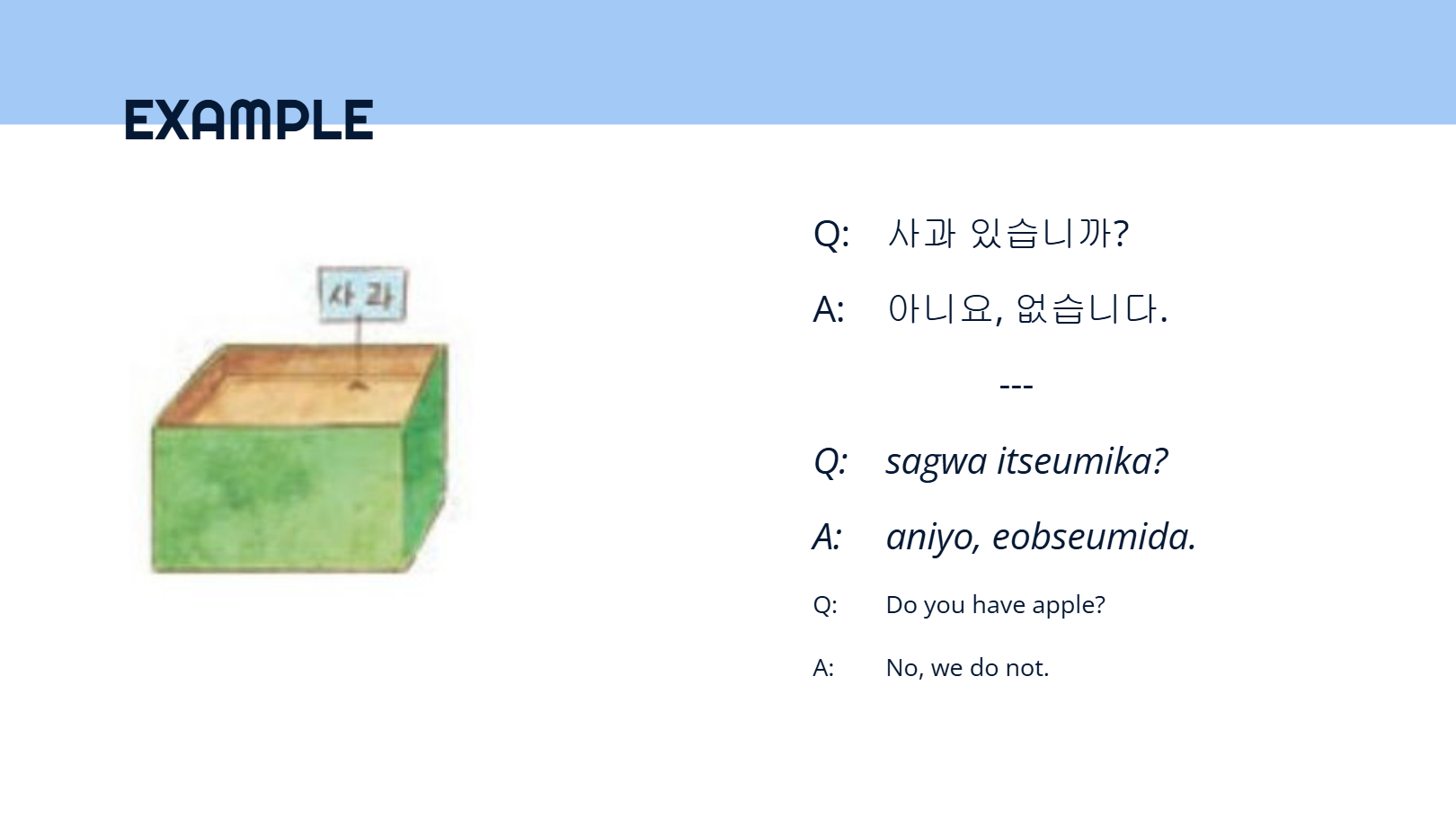
What is the Korean phrase for 'Do you have apple?' and its response when the answer is negative?
사과 있습니까? 아니요, 없습니다.
사과 있습니까? 네, 있습니다.
얼마나 있습니까? 둘.
사과 주세요.
31
32
Multiple Choice
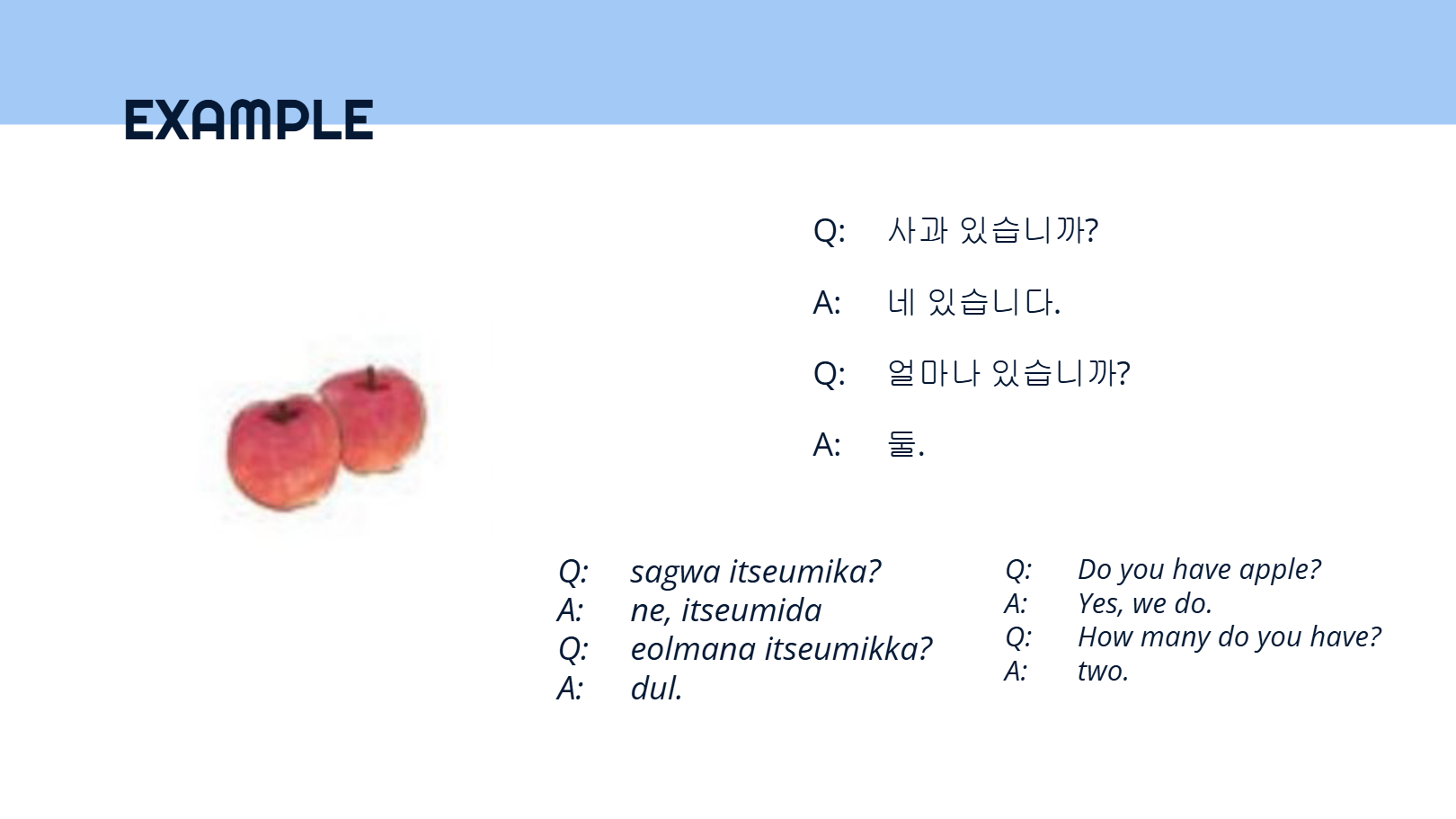
How do you ask 'How many do you have?' in Korean, and what is the response if you have two?
얼마나 있습니까? 둘.
사과 있습니까? 네, 있습니다.
사과 있습니까? 아니요, 없습니다.
얼마나 있습니까? 하나.
33

34
35
Open Ended
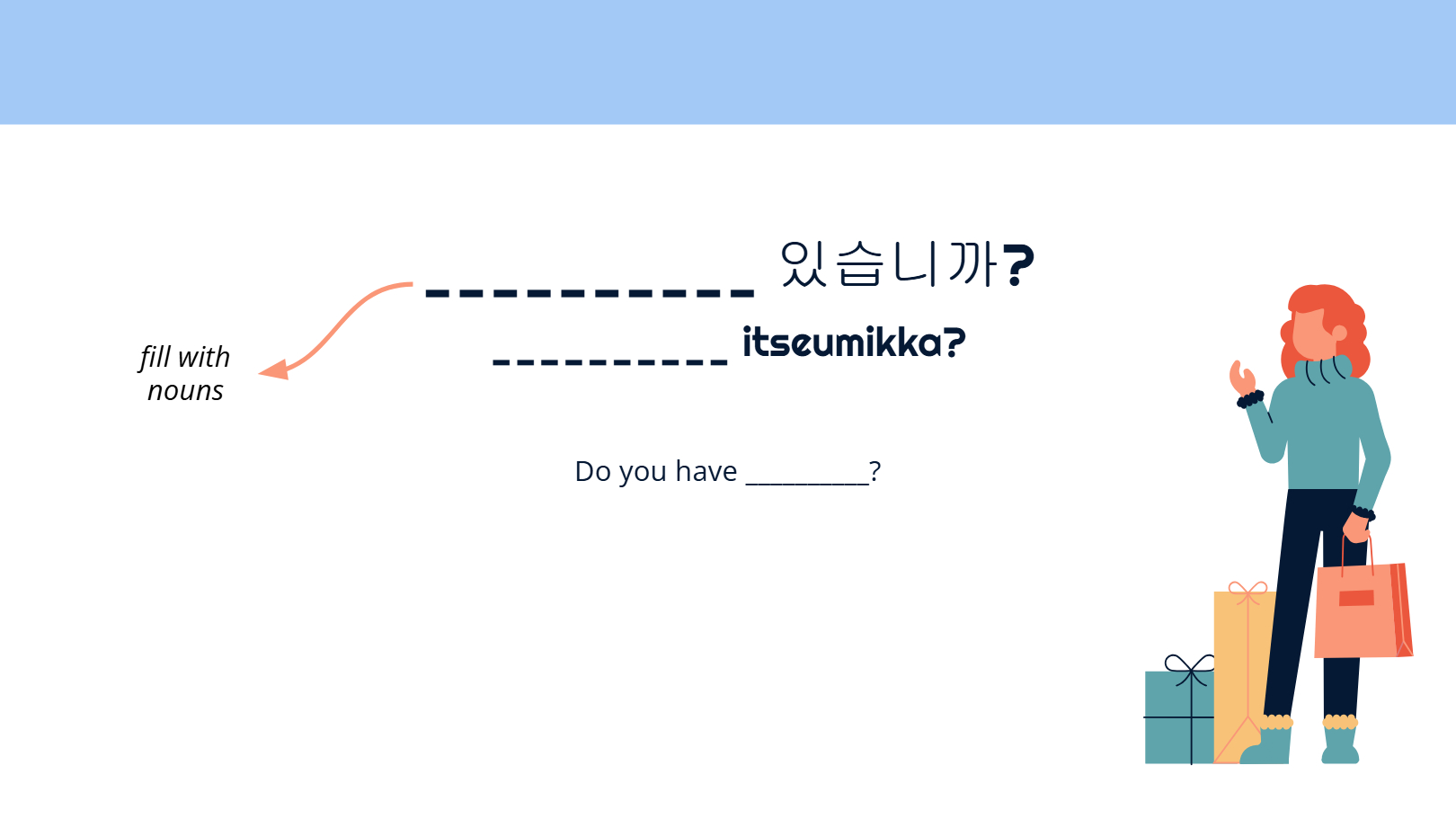
Explain how to form a question in Korean to ask if someone has a particular item. What is the structure of the question?
36

37
Fill in the Blanks
Fill in the blank: 네,
Type answer...
38

39
Multiple Select
Select all the phrases that are used to request or inquire about items in Korean.
_____ 주세요.
_____ itseumikka?
네, 있습니다.
얼마나 있습니까?
40
Multiple Choice
Which of the following is the correct way to politely ask for an amount of something in Korean?
_____ 주세요.
_____ itseumikka?
네, 있습니다.
얼마나 있습니까?
41

42
Multiple Choice
Which Korean phrase would you use to say 'Yes, here it is' when someone asks if you have something?
Ne, yeogi itseumida.
Aniyo, eobseumida.
Annyeong haseyo.
Gamsahamnida.
43

44
Open Ended
Compare the phrases in images 1 and 2. In what situations would you use 'Ne, yeogi itseumida' versus 'Aniyo, eobseumida'?
45
46
Multiple Choice
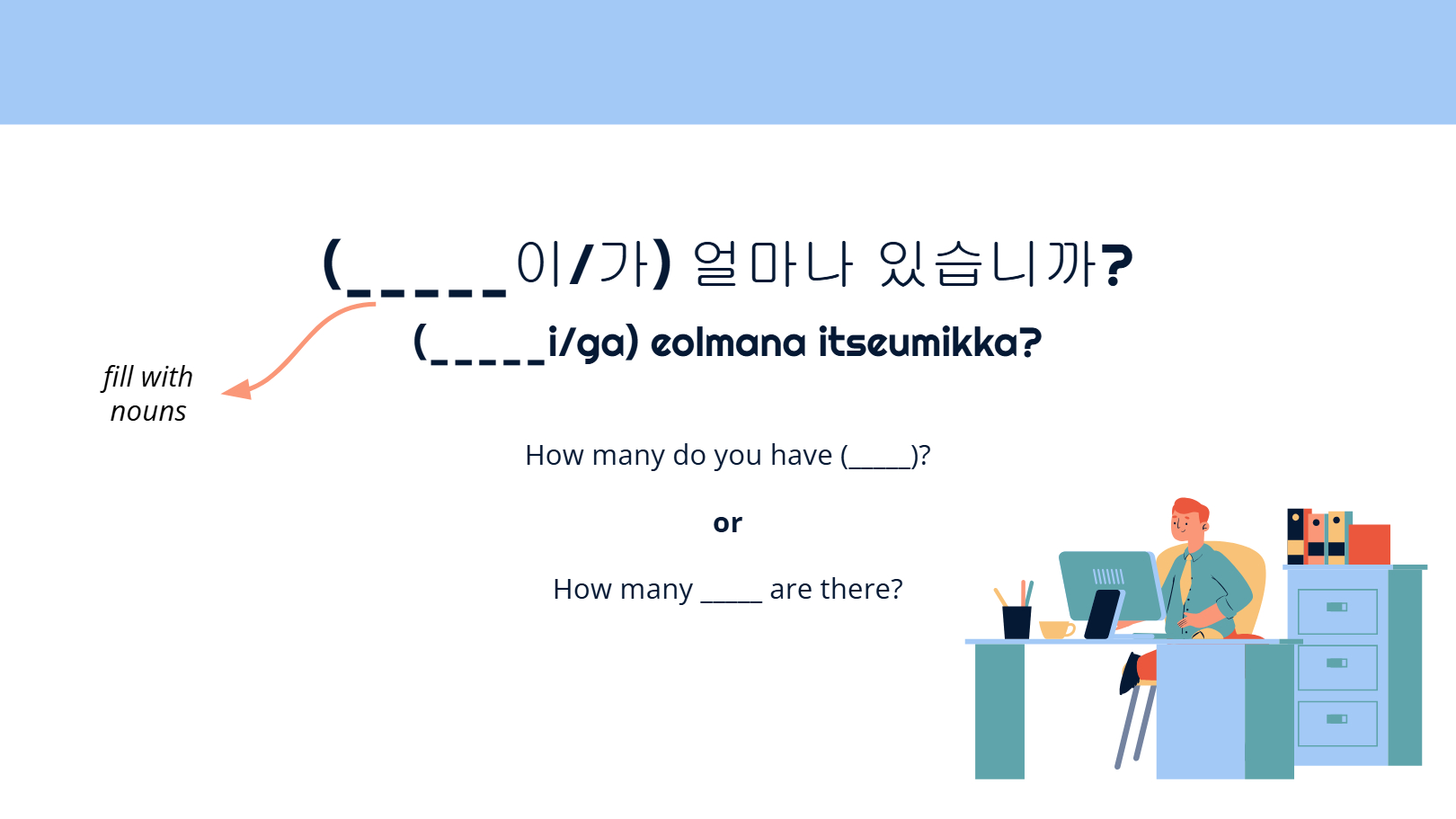
Which of the following best translates the question '(____i/ga) eolmana itseumikka?'
How many do you have (____)?
Where is (____)?
What is your name?
Do you like (____)?
47
Fill in the Blanks
Fill in the blank: (____ 이/가) 얼마나 있습니까? is used to ask 'How many ___ are there?' in Korean.
Type answer...
48

49
Multiple Select
Select all the elements that are commonly used in a business meeting as shown in the image:
Tablet
Pie chart
Coffee cup
Whiteboard
50

Show answer
Auto Play
Slide 1 / 50
SLIDE
Similar Resources on Wayground

43 questions
AP World 9.6
Presentation
•
9th - 12th Grade
42 questions
MODUL AJAR TIKET PENERBANGAN
Presentation
•
11th Grade
44 questions
Hidden Figures | Chapters 15-20
Presentation
•
9th - 12th Grade
43 questions
Unit 9: Cold War Division in Asia & Cold War on the Homefront
Presentation
•
9th - 12th Grade
35 questions
Slides Presidency
Presentation
•
12th Grade
49 questions
Pre-American Revolutionary War
Presentation
•
9th - 12th Grade
46 questions
Chapter 8 – The Asian World (400–1500)
Presentation
•
10th Grade
39 questions
BAHASA INDONESIA
Presentation
•
11th - 12th Grade
Popular Resources on Wayground
10 questions
Safety Day 2026 – Student Review

Quiz
•
9th Grade
21 questions
Continents and Oceans
Quiz
•
6th Grade
20 questions
Parts of Speech
Quiz
•
5th Grade
16 questions
Subject & Predicate
Quiz
•
5th Grade
25 questions
Multiplication Facts
Quiz
•
5th Grade
12 questions
Map Skills
Quiz
•
3rd Grade
22 questions
Continents and Oceans
Quiz
•
5th Grade
15 questions
Rounding Decimals
Quiz
•
5th Grade
Discover more resources for World Languages
10 questions
Spanish Greetings and Goodbyes!
Presentation
•
6th Grade - University
25 questions
Preterito regular
Quiz
•
10th - 12th Grade
28 questions
Ser vs estar
Quiz
•
9th - 12th Grade
18 questions
Subject Pronouns in Spanish
Quiz
•
9th - 12th Grade
20 questions
Preterite vs Imperfect usage
Quiz
•
9th - 12th Grade
16 questions
Subject pronouns in Spanish
Quiz
•
9th - 12th Grade
20 questions
Los pronombres personales
Quiz
•
8th - 12th Grade
25 questions
Que tiempo hace?
Quiz
•
9th - 12th Grade