

Int Science SEM 1 FINAL REVIEW

Presentation
•
Science
•
9th - 12th Grade
•
Hard
+9
Standards-aligned

Penny Turner
FREE Resource
40 Slides • 63 Questions
1
By Penny Turner
Air Masses
Fronts
High and Low Pressure Systems
Global Winds
Coriolis Effect
Clouds
4th Block Final Exam is scheduled for:
Monday 1-12-26 during 4th block class time!
2
►An air mass is a defined as a large body of air with very similar characteristics.
►Air masses are generally defined by temperature and dewpoints (moisture parameters.)
►Air masses are named based on the source region of the air mass itself

3
4 letters you need to know
It's wet with moisture because it is/was over water
It's dry because it is/was over a land mass
It's formed over the poles and is COLD
Classified by temperature and moisture.
4
Tropical – warm or hot air masses that form over the tropics (lower latitudes)
Polar – cold air masses that form over the poles (higher latitudes)
Maritime – air masses that form over the ocean (very humid)
Continental – form over land – (are dry)

5
continental Arctic (cA) - very bitterly cold
maritime Polar (mP)
maritime Tropical (mT)
continentalPolar (cP)
continental Tropical (cT)

6
Multiple Choice
What is an air mass?
A large body of air with uniform temperature and humidity
A type of cloud
A weather instrument
A type of precipitation
7
Multiple Choice
8
Multiple Choice
9
Multiple Choice
10
Multiple Choice
11
Multiple Choice
12
Match
Forms over Continent
Forms over ocean
Forms over cold polar region
Forms over hot tropical region
c
m
P
T
c
m
P
T
13
Draw
Label the air masses below with the correct symbol cP , mP, cT , or mT
14
Drag and Drop
Continental Tropical (cT)
Continental Polar (cP)
Maritime Tropical (mT)
Maritime Polar (mP)
15

COLD front
WARM front
STATIONARY front
OCCLUDED front
16


Forms when cold air moves under warm air.
Since the warm air is less dense the cold air pushes the warm air up and out of the way easily!
Usually do produce thunderstorms.
They are usually followed by colder and drier air.
17
How it works!
Cold air Bullies and pushes underneath warm air.
Encourages Clouds to form.
Produces heavy thunderstorms and precipitation.

18
When warm air moves over colder denser air
DOES NOT happen easily because cold air is more dense and warm air tends to rise up and over the cold air
so... gradually warm air replaces the colder air.
Warm Fronts generally bring rain and are followed by clear and warm weather.


19
How it works!

Warm air advances into an area previously occupied by colder air.
The LESS DENSE warm air rises over a wedge of cold air producing clouds and precipitation.
GRadually, warm air slowly moves cold air out of the way!
Produces persistent rain, usually moderate with some light periods and some heavier bursts.
20
occurs when a cold air mass and a warm air mass meets but neither have the force to push the warm air mass up over the cold air mass.
The two air masses remain separate creating a Stationary Front.
creates several days of rainy weather and leads to flooding!


21

front
How it works!
occurs when a cold front or warm front stops moving
resulting in a relatively stationary boundary between cold and warm air masses.
This boundary can lead to prolonged periods of cloudy or wet weather.
22
The cold air mass moves under the warm air mass and pushes it up.
The coldest air mass moves forward until it meets a cold air mass that is warmer and less dense.
Sometimes the two cold air masses meet together and mix.
This Front bring lots of rain and snow.


Forms when a warm air mass is caught between two colder air masses.
23
Fronts
How it works!

Warm air mass gets "sandwiched" between two cold air masses.
The warm air mass rises as the cool air masses push and meet in the middle.
The temperature drops as the warm air mass is occluded, or “cut off,” from the ground and pushed upward.
Can bring strong winds and heavy precipitation.
24
Multiple Choice
25
Multiple Choice
Which type of front is formed when a warm air mass moves over a cold air mass?
Cold front
Warm front
Stationary front
Occluded front
26
Multiple Choice
What type of weather is most commonly associated with a cold front?
Clear skies and calm winds
Steady, light rain
Thunderstorms and sudden temperature drops
Hot and dry conditions
27
Multiple Choice
How does a cold front interact with the air mass it meets?
The cold air slides under the warm air, forcing it upward
The cold air rises above the warm air
The two air masses mix evenly
The warm air pushes the cold air downward
28
Multiple Choice
Explain why warm fronts usually bring steady, long-lasting precipitation instead of short, intense storms.
Because warm air rises quickly, causing rapid condensation
Because warm air moves gently over cold air, causing gradual cloud formation
Because cold air pushes warm air down, preventing cloud formation
Because warm fronts are always associated with high pressure
29
Multiple Choice
30
Multiple Choice

31
Multiple Choice

32
Multiple Choice

33
Multiple Choice

Which type of front is displayed? Neither air mass seems to be able to move the other one.
34
Multiple Choice
35
Multiple Choice
What type of front occurs when a warm air mass and a cold air mass do not have enough energy to move the other one out of the way?
Warm front
Cold front
Stationary front
Occluded front
36
Multiple Choice
37
Multiple Choice
38
Pay attention to HOW each moves
Move through the slides and answer the questions along the way.
39
High Pressure System Circulation

Air moves OUTWARD and DOWN and circulates CLOCKWISE.
High Pressure moves air and CLEANS OUT any cloud cover leading to= CLEAR SKIES and FAIR WEATHER
40
Low Pressure System Circulation

Air moves INTO a low and circulates UP and COUNTERCLOCKWISE.
LOW Pressure moves air UP and PRODUCES cloud cover leading to= CLOUDS and PRECIPITATION
41

42
43
Multiple Choice

clear, sunny skies
high pressure
low pressure
44
Multiple Choice

Air in a low pressure system moves
clockwise
counterclockwise
45
Multiple Choice

stormy weather (clouds and precipitation)
high pressure
low pressure
46
Multiple Choice

Air in a high pressure system moves...
clockwise
counterclockwise
47
Multiple Choice
Air in a high pressure system moves...
outward
inward
48
Multiple Choice
If the air pressure reading is falling
a storm is approaching
the weather is improving
49
Multiple Choice
clockwise and outward
high pressure
low pressure
50
Multiple Choice

heavier, sinking air
high pressure
low pressure
51

What are the names and directions of the major global winds?
Global Winds
52

Global Winds
- Winds move from areas of high pressure to
low pressure.
- You might expect them to move straight from
the poles (high pressure) to the
equator (low pressure) but…
53
Multiple Choice

Which statement correctly defines wind?
Wind is the movement of air from areas of low pressure to areas of high pressure
Wind is the movement of air from areas of high pressure to areas of low pressure.
Wind is the movement of air to a colder area in the atmosphere.
Wind is the movement of air pushed around and bouncing off Earth's surface.
54
Replace this with your body text.
Duplicate this text as many times as you would like.
Replace this with a header
55

Global Winds
-The paths of global winds
curve because earth is
spinning on an axis.
- This is called the
Coriolis effect. see video on next page
56
POLAR EASTERLIES are winds that blow from east to west between 60 degrees and 90 degrees latitude.

<-- Polar Easterlies
<-- Polar Easterlies
57
PREVAILING WESTERLIES are winds that blow West to East between 30 o and 60 o latitude.
<--PREVAILING WESTERLIES
<--PREVAILING WESTERLIES
58
TRADE WINDS are winds that blow East to West Between 0 o and 30 o latitude.
<-- TRADE WINDS
<-- TRADE WINDS
59
-The DOLDRUMS are the area directly at the equator where there is no wind at all.
<-- DOLDRUMS
60

-The Prevailing Westerlies primarily affect the weather in the United States.
-This is why air masses move from West to East in the US.
61
Multiple Choice
Which global winds have the greatest impact on the weather in the US?
62
Multiple Choice
63
Multiple Choice
64
Multiple Choice
Winds that occur near the equator and flow from either the north or south TOWARDS THE EQUATOR are called
westerlies
trade winds
polar easterlies
coriolis effect
65
Multiple Choice
66
Multiple Choice

Winds that blow away from the poles and curve east to west are
polar easterlies
trade winds
prevailing westerlies
coriolis effect
67
Multiple Choice

What are Doldrums?
An area in the sea with high wind activity
A place where many earthquakes occur
An area in the sea with little to no wind activity
Book by Nicholas Gannon
68

69

70

71

72

73
Multiple Choice
What are the characteristics of Cirrus clouds?
Thin, wispy, and feathery
Thick and dark
Low and fluffy
Dense and layered
74
Multiple Choice
Which cloud type is described as 'sheetlike' or 'layered'?
Cumulus
Cirrus
Stratus
Nimbus
75
Whispy and very high up

Fluffy and flat on the bottom.
Long low sheets of cloud cover
76

77
Multiple Choice
Which of the following clouds are part of the high altitude group?
Cirrus, Cirrostratus, Cirrocumulus
Stratus, Nimbostratus, Altostratus
Cumulus, Stratocumulus, Altocumulus
Cumulonimbus, Altostratus, Cirrus
78
Multiple Choice
Which of the following clouds are part of the MID-LEVEL altitude group?
Cirrus, Cirrostratus, Cirrocumulus
Altostratus, Altocumulus, Cumulonimbus
Cumulus, Stratocumulus, Altocumulus
Cumulonimbus, Altostratus, Cirrus
79

80
Multiple Choice
Stratocumulus clouds are ______
Big white clouds
Lumpy, gray clouds
Thin, layered clouds
81

82
Multiple Choice
What color is a Nimbostratus cloud?
White
Beige
Dark gray
Light blue
83

84
Multiple Choice
Cirrus clouds look like horse tails and are made of __________.
water droplets
snow
layers or sheets
85

86
Multiple Choice
Cumulus clouds look like cotton balls, but you can also think of them as:
layered clouds
horse tails
bunny tails
The clouds from Toy Story
87

88
Multiple Choice
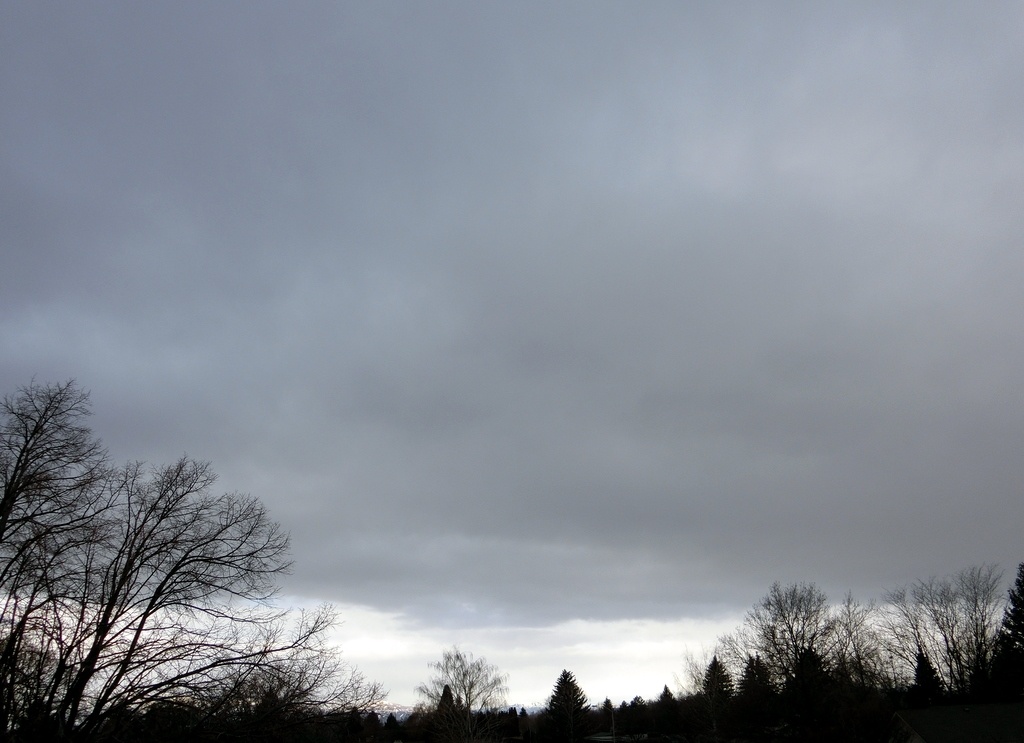
89
Multiple Choice
90
Multiple Choice

91
Multiple Choice
92
Multiple Choice
93
Multiple Choice

94
Multiple Choice
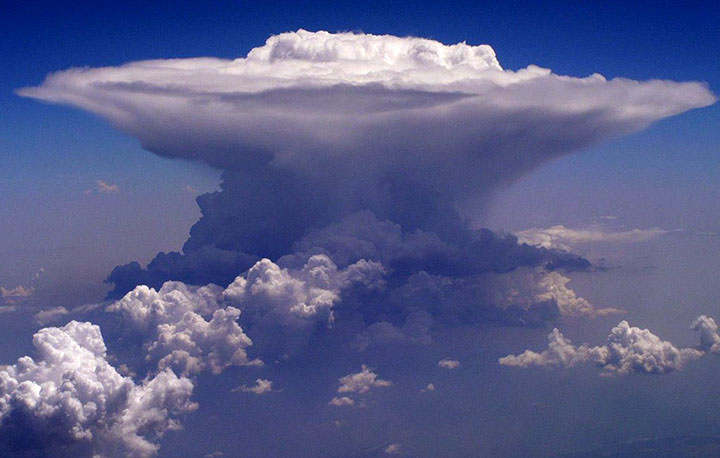
95
Multiple Choice
96
Multiple Choice
97
Multiple Choice

98
Multiple Choice

99
Multiple Choice

100
Multiple Choice

101
Multiple Choice
102
Multiple Choice
Which shows a stratus cloud?
103
Multiple Choice

What type of cloud is this wispy, white cloud?
cumulus
nimbostratus
stratus
cirrus
By Penny Turner
Air Masses
Fronts
High and Low Pressure Systems
Global Winds
Coriolis Effect
Clouds
4th Block Final Exam is scheduled for:
Monday 1-12-26 during 4th block class time!
Show answer
Auto Play
Slide 1 / 103
SLIDE
Similar Resources on Wayground

101 questions
Psychology Sensation and Perception 4
Presentation
•
9th - 12th Grade
96 questions
Biology Keystone Review B
Presentation
•
10th - 12th Grade
95 questions
Advanced Livestock Nutrition
Presentation
•
9th - 12th Grade
97 questions
PASSIVE INFINITIVE AND GERUND
Presentation
•
9th Grade - University
101 questions
Unit 1 Quarter Review
Presentation
•
9th - 12th Grade
101 questions
Chordates and Fish
Presentation
•
9th - 12th Grade
98 questions
ICP Fall Finals Review
Presentation
•
10th - 12th Grade
Popular Resources on Wayground
10 questions
Safety Day 2026 – Student Review

Quiz
•
9th Grade
21 questions
Continents and Oceans
Quiz
•
6th Grade
20 questions
Parts of Speech
Quiz
•
5th Grade
16 questions
Subject & Predicate
Quiz
•
5th Grade
25 questions
Multiplication Facts
Quiz
•
5th Grade
12 questions
Map Skills
Quiz
•
3rd Grade
22 questions
Continents and Oceans
Quiz
•
5th Grade
15 questions
Rounding Decimals
Quiz
•
5th Grade
Discover more resources for Science
10 questions
Exploring Chemical and Physical Changes

Interactive video
•
6th - 10th Grade
20 questions
Atomic Structure
Quiz
•
9th Grade
10 questions
Exploring the Electromagnetic Spectrum for Middle School Science
Interactive video
•
6th - 10th Grade
10 questions
Exploring Force and Motion Concepts
Interactive video
•
6th - 10th Grade
10 questions
Exploring Air Masses and Weather Fronts
Interactive video
•
6th - 10th Grade
14 questions
Periodic Trends
Interactive video
•
11th Grade
10 questions
Exploring the States of Matter
Interactive video
•
6th - 10th Grade
10 questions
Exploring Forces: Net Force, Normal Force, Gravity, and Friction
Interactive video
•
6th - 10th Grade