Search Header Logo
Hominid Evolution

Hominid Evolution

Assessment

Presentation

Science

9th - 12th Grade

Easy

NGSS
MS-LS4-2, MS-LS3-1, HS-LS4-2

+4

Standards-aligned

Created by

Adrienne Aguilar

Used 3+ times

FREE Resource

18 Slides • 20 Questions

1

Trends in Hominid Evolution

2

media

3

media

4

Multiple Choice

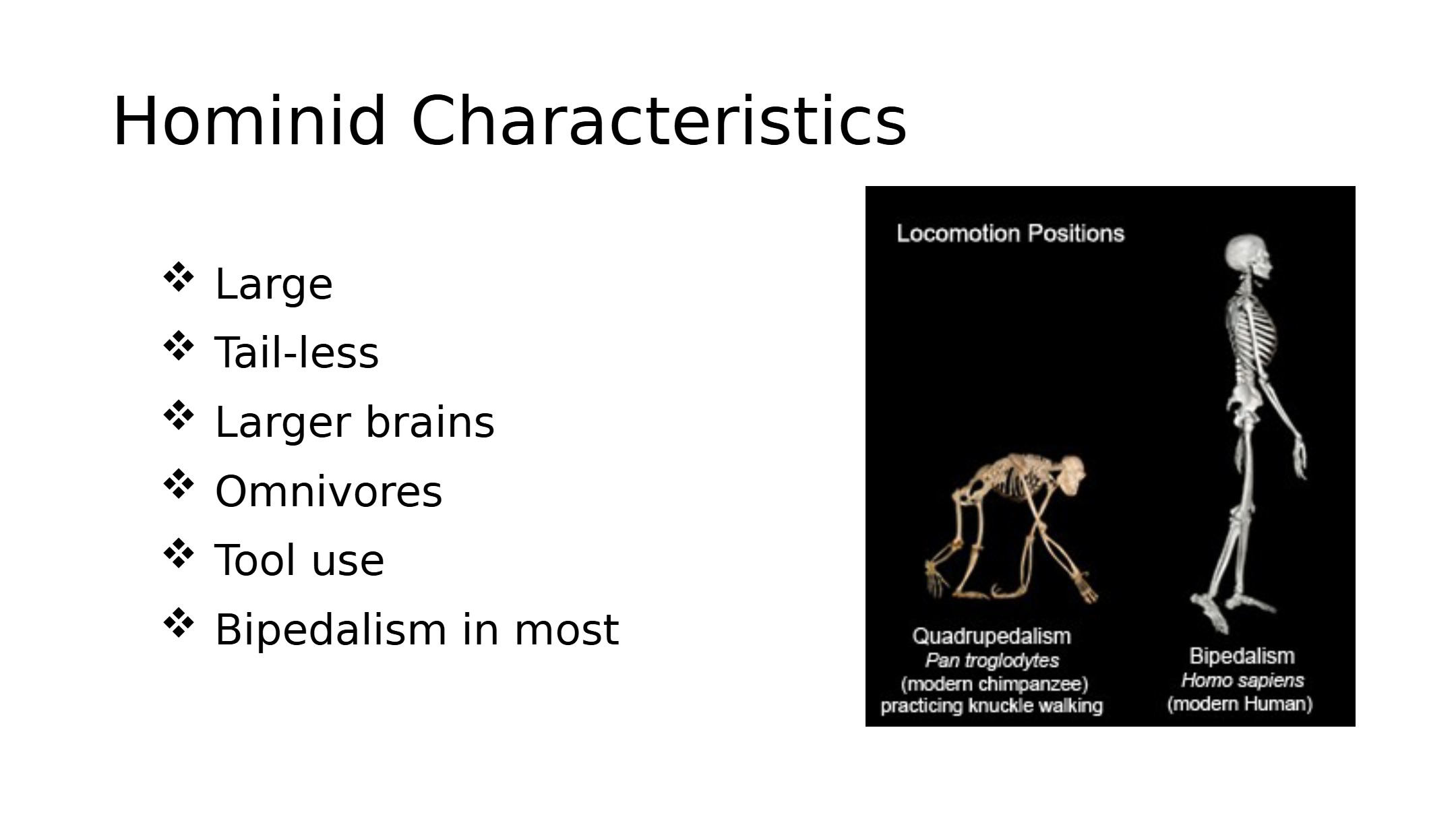
Which of the following is NOT a characteristic commonly found in hominids?

1

Large size

2

Tail-less bodies

3

Herbivore (plant only diet)

4

Tool use

5

media

6

media

7

media

8

Multiple Choice

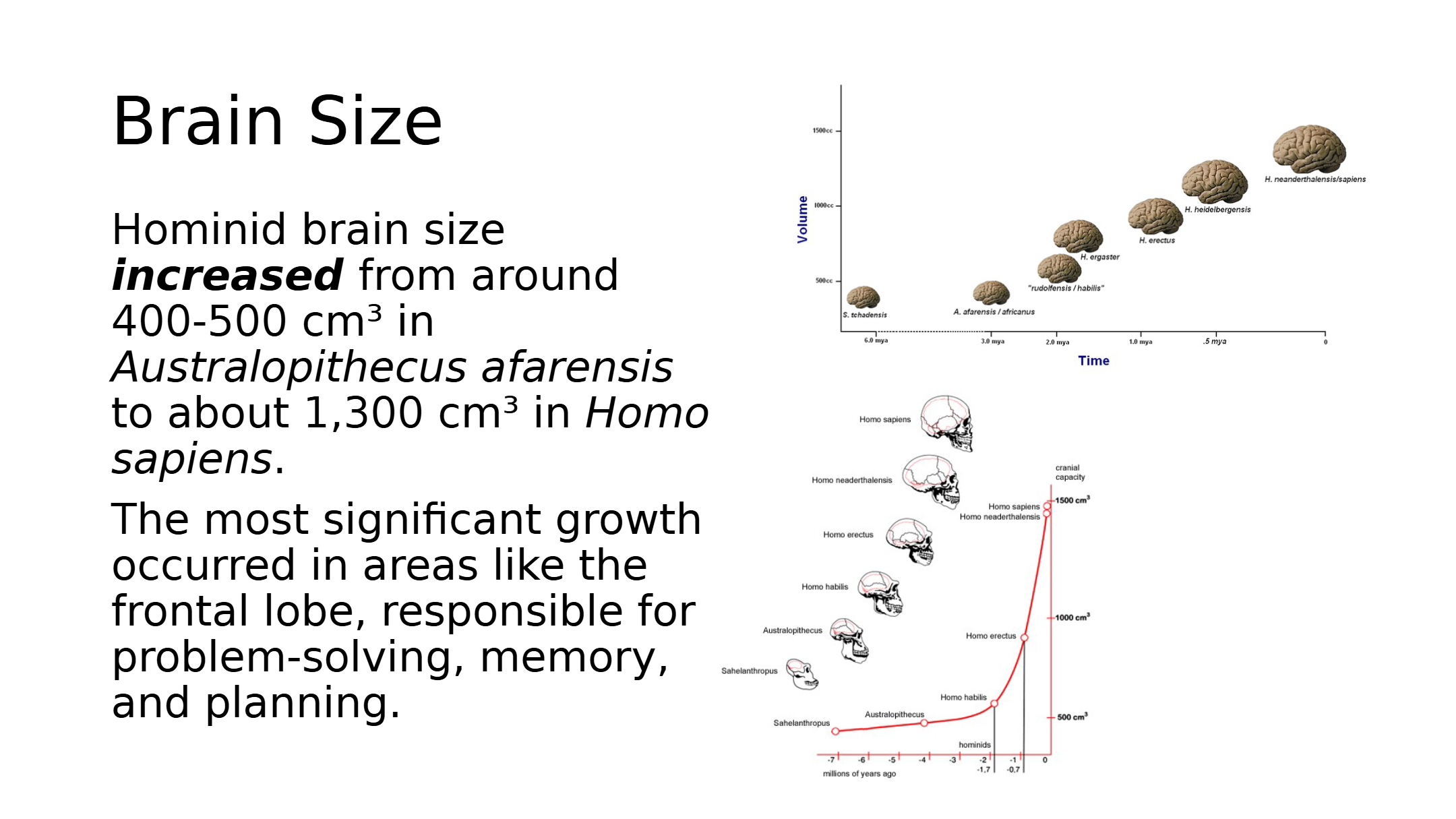
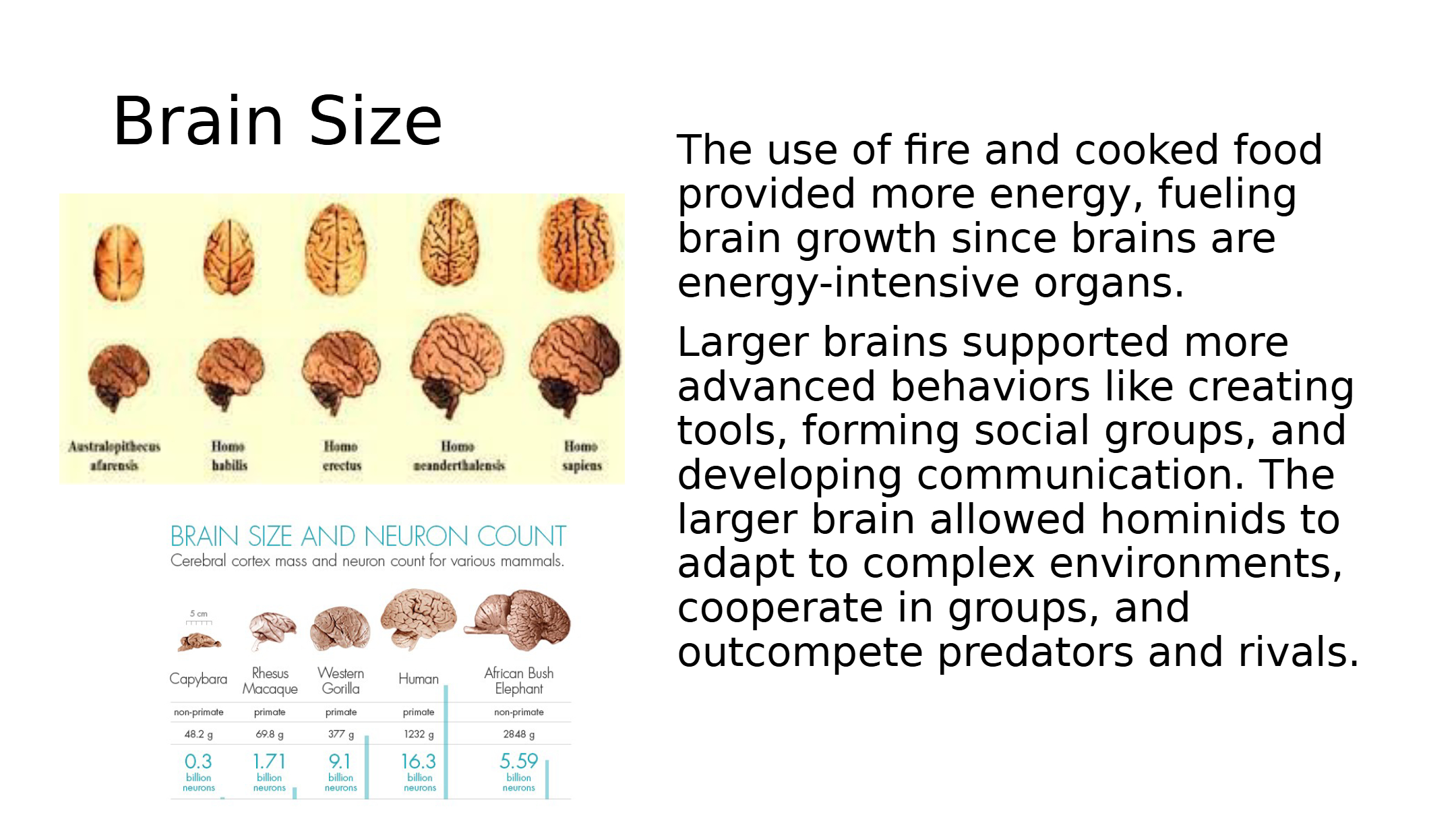
Which factors contributed to the increase in hominid brain size and how did this affect their behavior?

1

Use of fire and cooked food, supporting advanced behaviors like tool-making and social groups.

2

Migration to colder climates, supporting better heat retention.

3

Development of fur, supporting better protection from predators.

4

Reduction in body size, supporting faster movement.

9

media

10

media

11

Multiple Choice

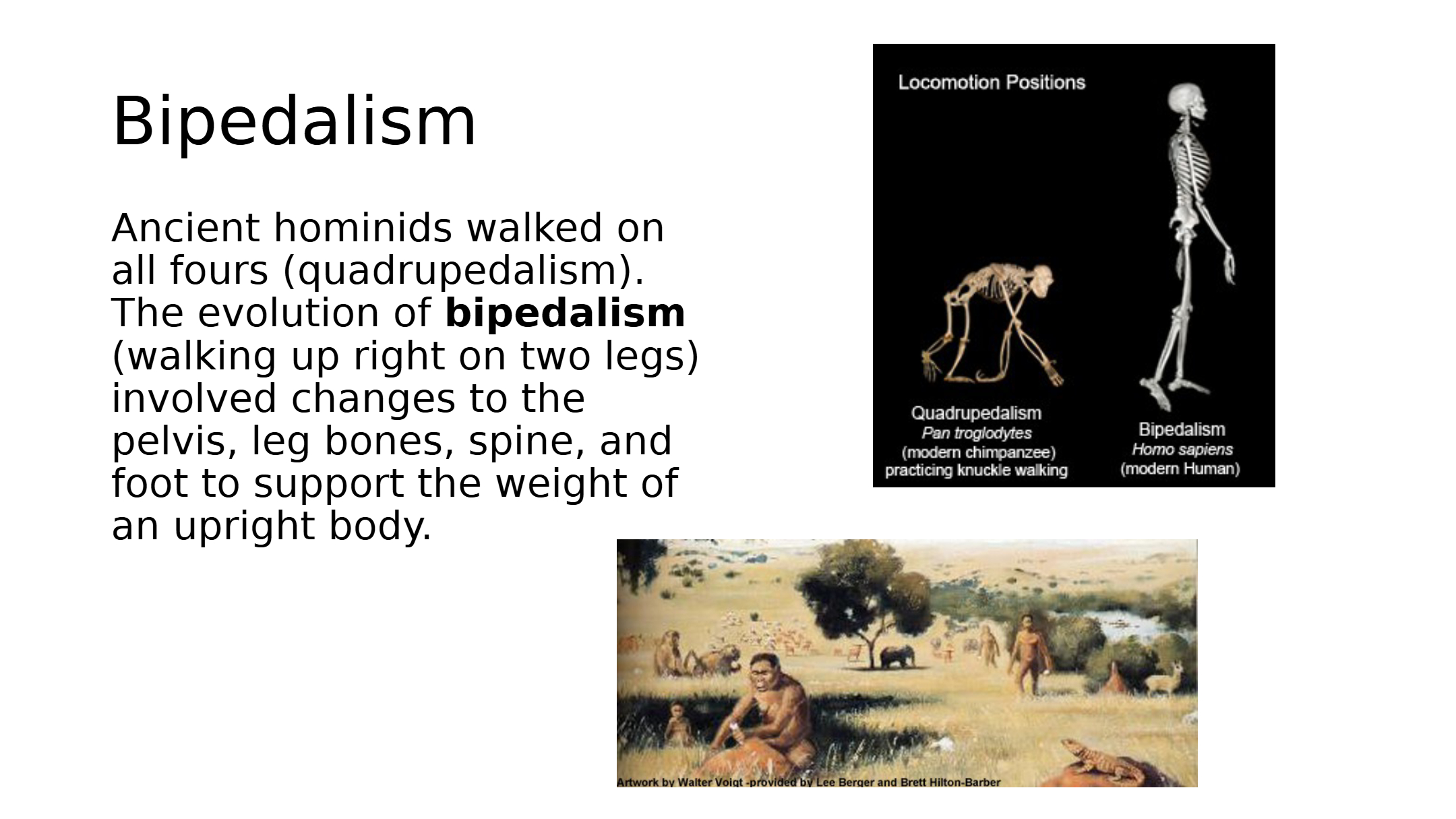
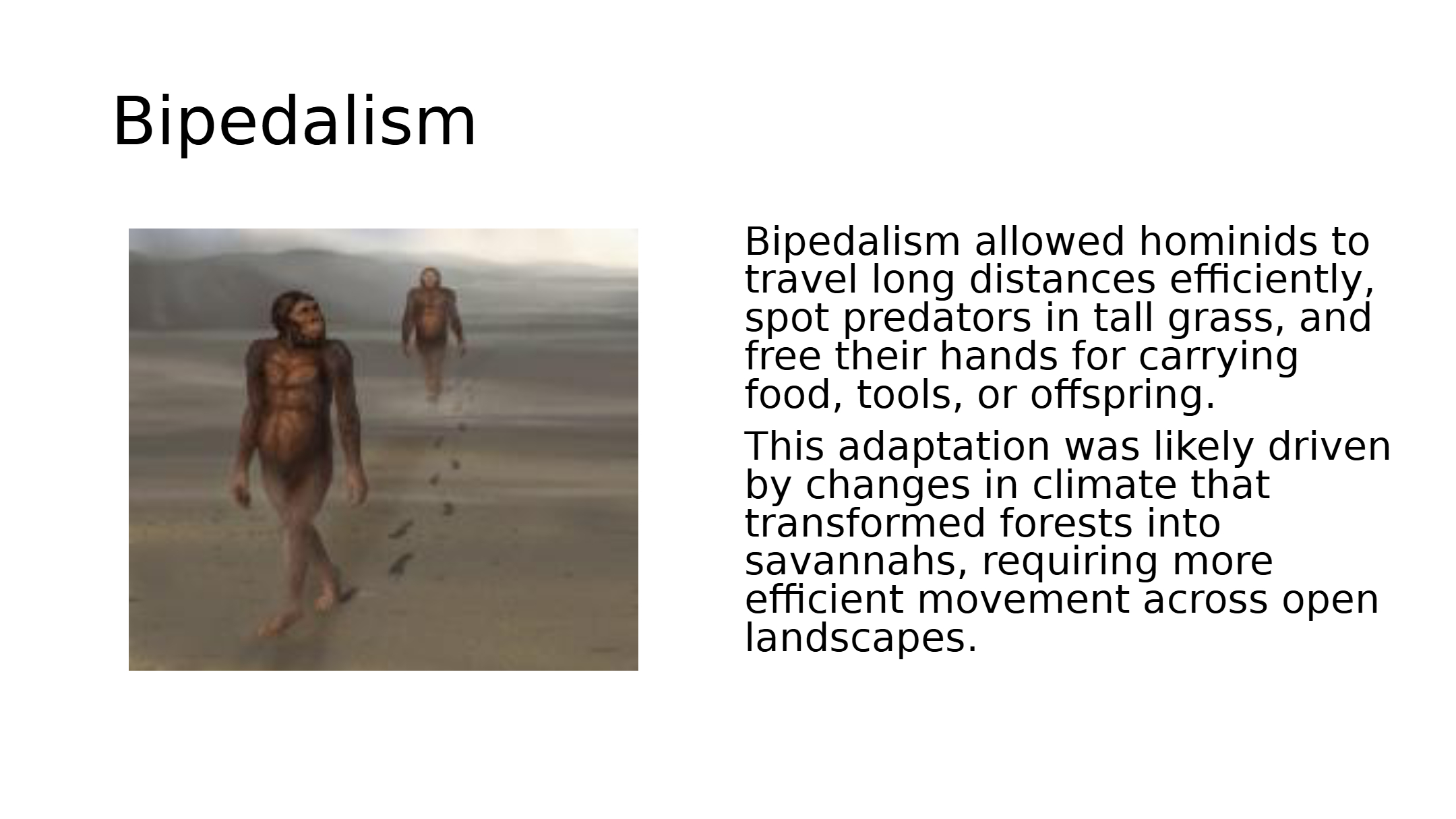
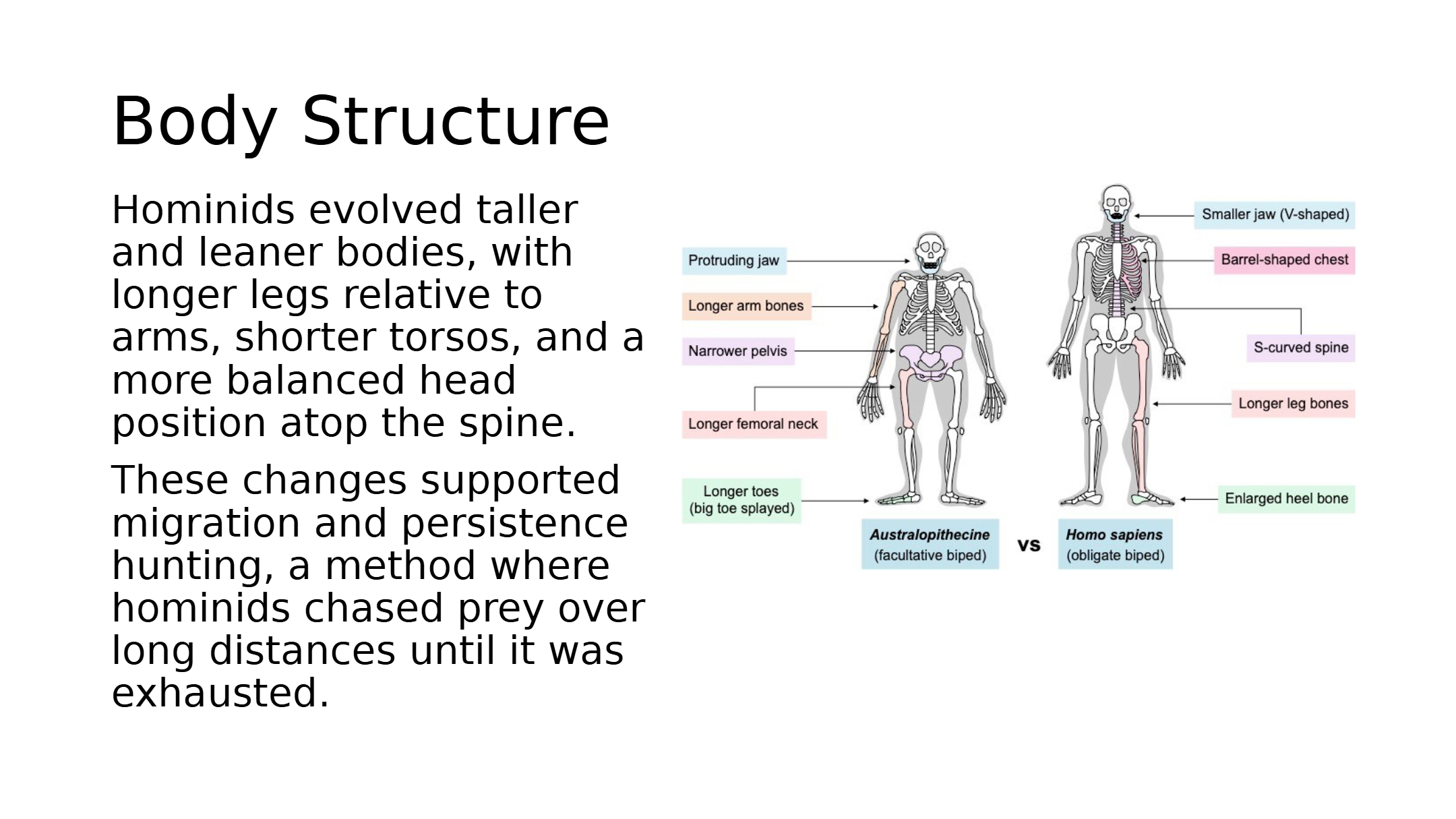
How did bipedalism benefit hominids in terms of survival and adaptation to changing environments?

1
Bipedalism hindered hominids by reducing their ability to climb trees.
2
Bipedalism had no impact on hominids' survival or adaptation.
3
Bipedalism made hominids more vulnerable to predators in open areas.
4
Bipedalism benefited hominids by improving mobility, enabling tool use, and enhancing visibility for survival in changing environments.

12

media

13

media

14

Multiple Choice

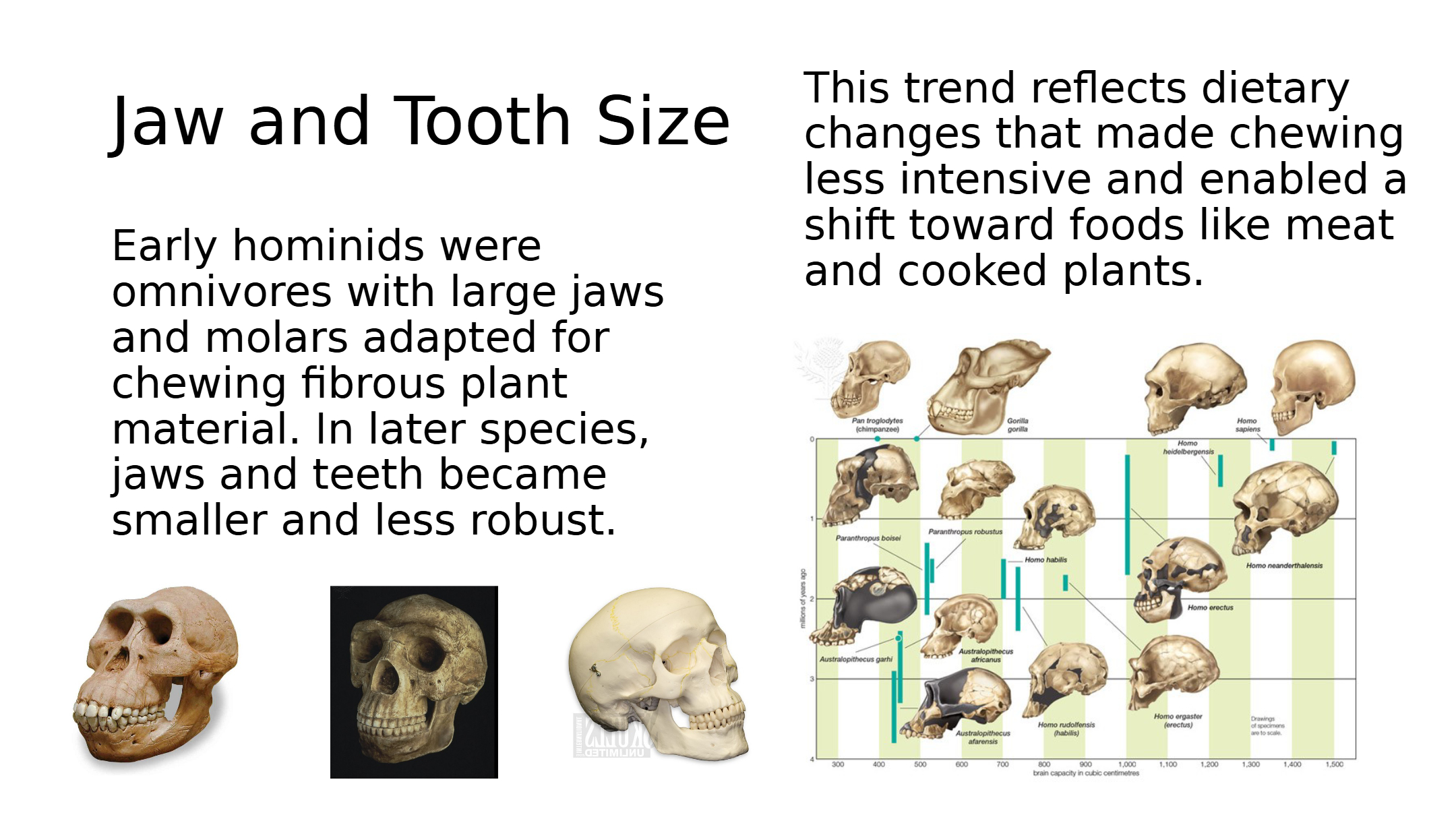
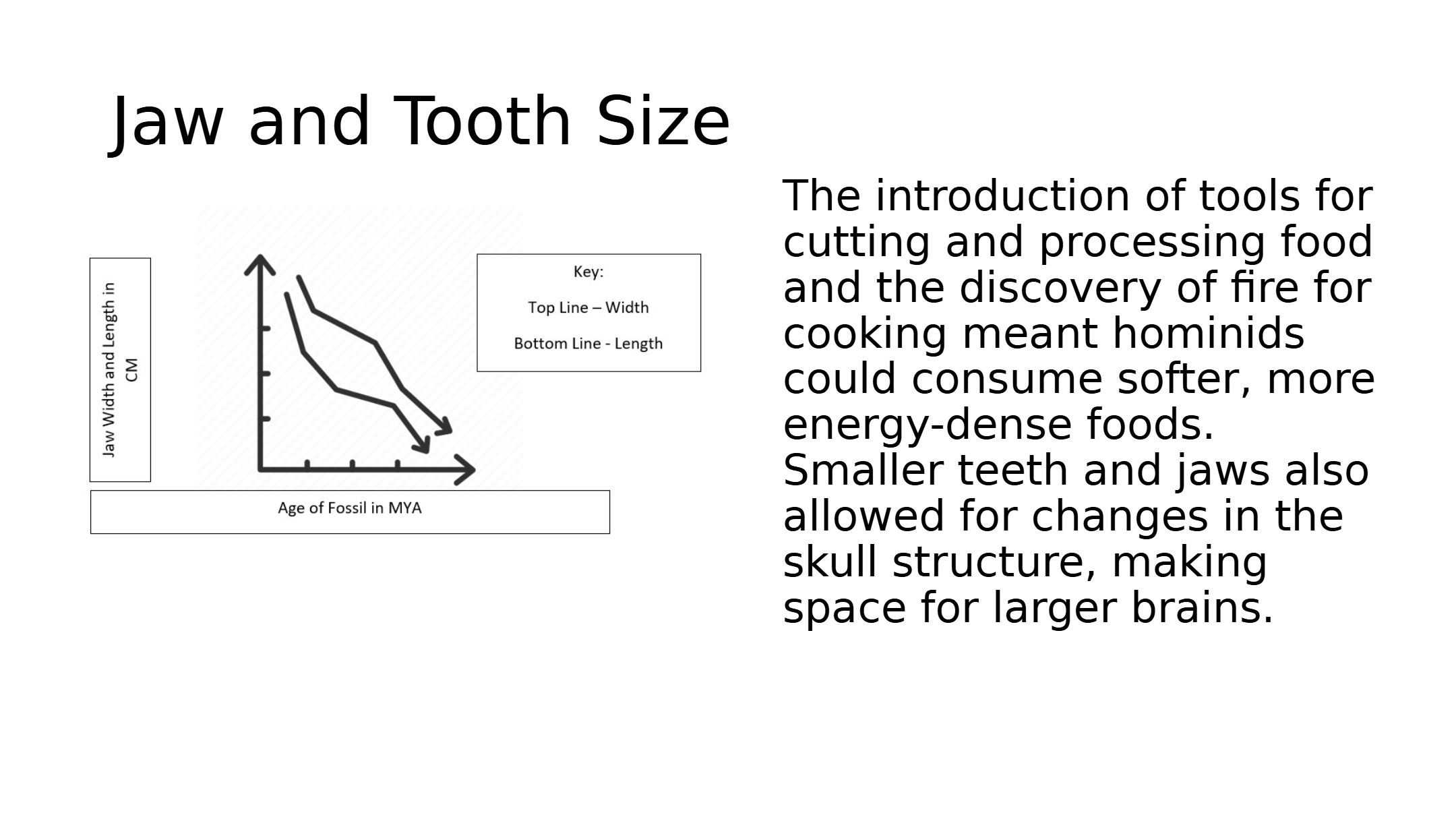
What dietary changes led to the reduction in jaw and tooth size in later hominid species?

1

Shift toward eating more meat and cooked plants.

2

Increase in consumption of raw fibrous plants.

3

Development of larger molars for chewing tough material.

4

Adoption of a strictly vegetarian diet.

15

media

16

media

17

Multiple Choice

How did the introduction of tools and the discovery of fire influence the evolution of jaw and tooth size in hominids?

1

They caused jaws and teeth to become larger for tougher foods.

2

They led to smaller jaws and teeth due to softer, energy-dense foods.

3

They had no effect on jaw and tooth size.

4

They made jaws and teeth disappear completely.

18

Multiple Select

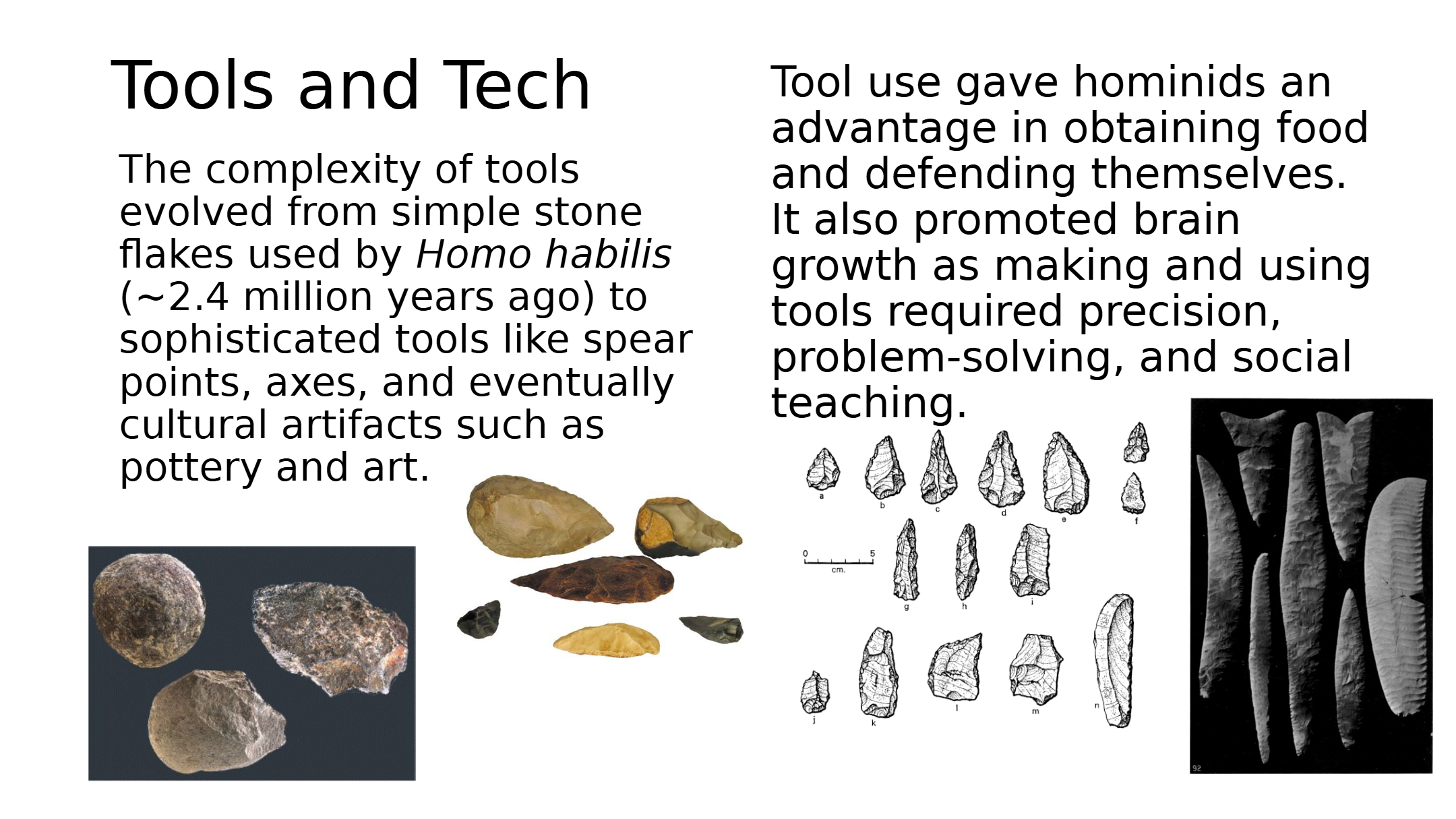
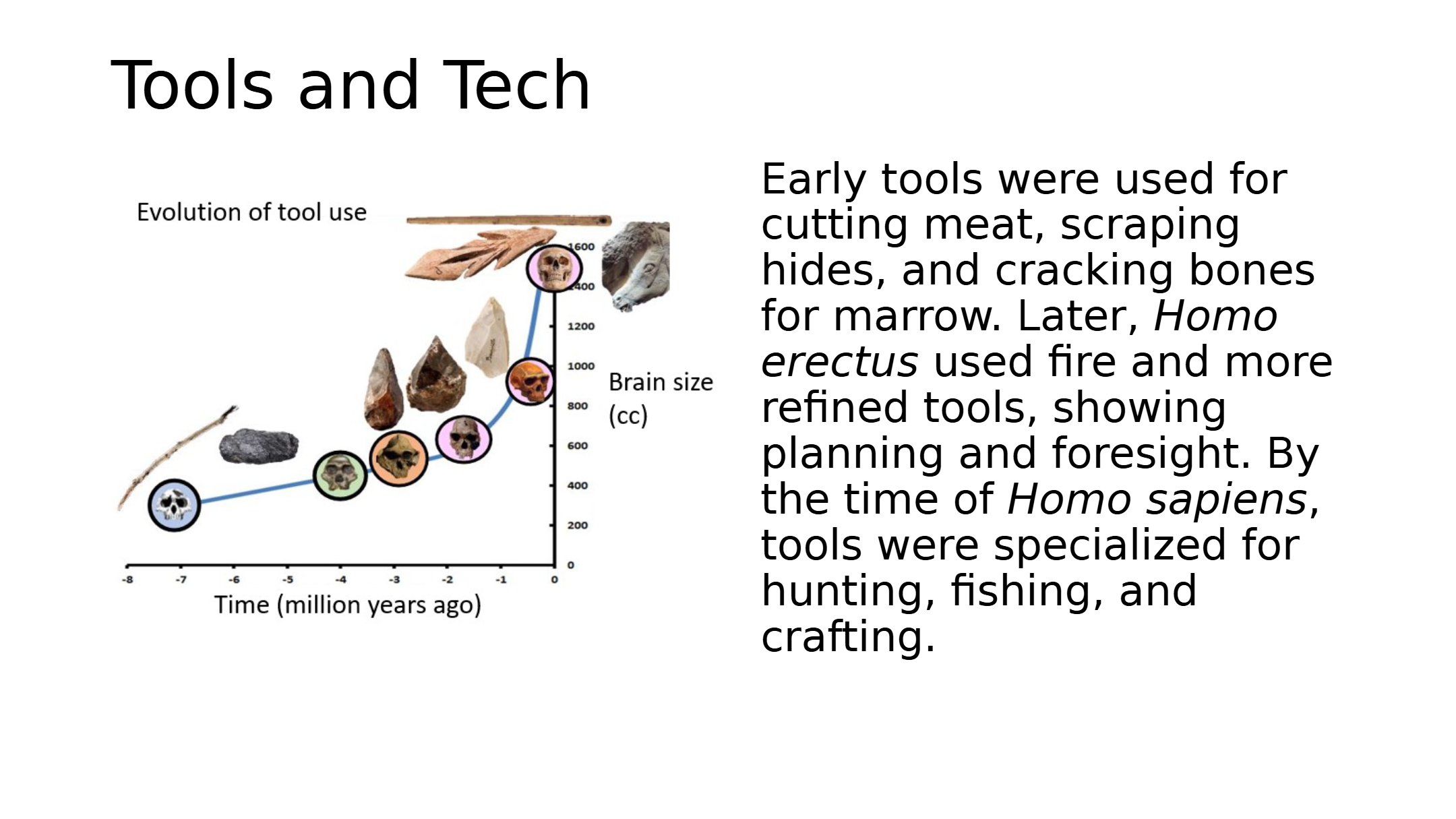
Which of the following were functions of early tools used by hominids(select all that apply)?

1

Cutting meat

2

Scraping hides

3

Cracking bones for marrow

4

Driving in cars

19

media

20

media

21

media

22

media

23

Multiple Choice

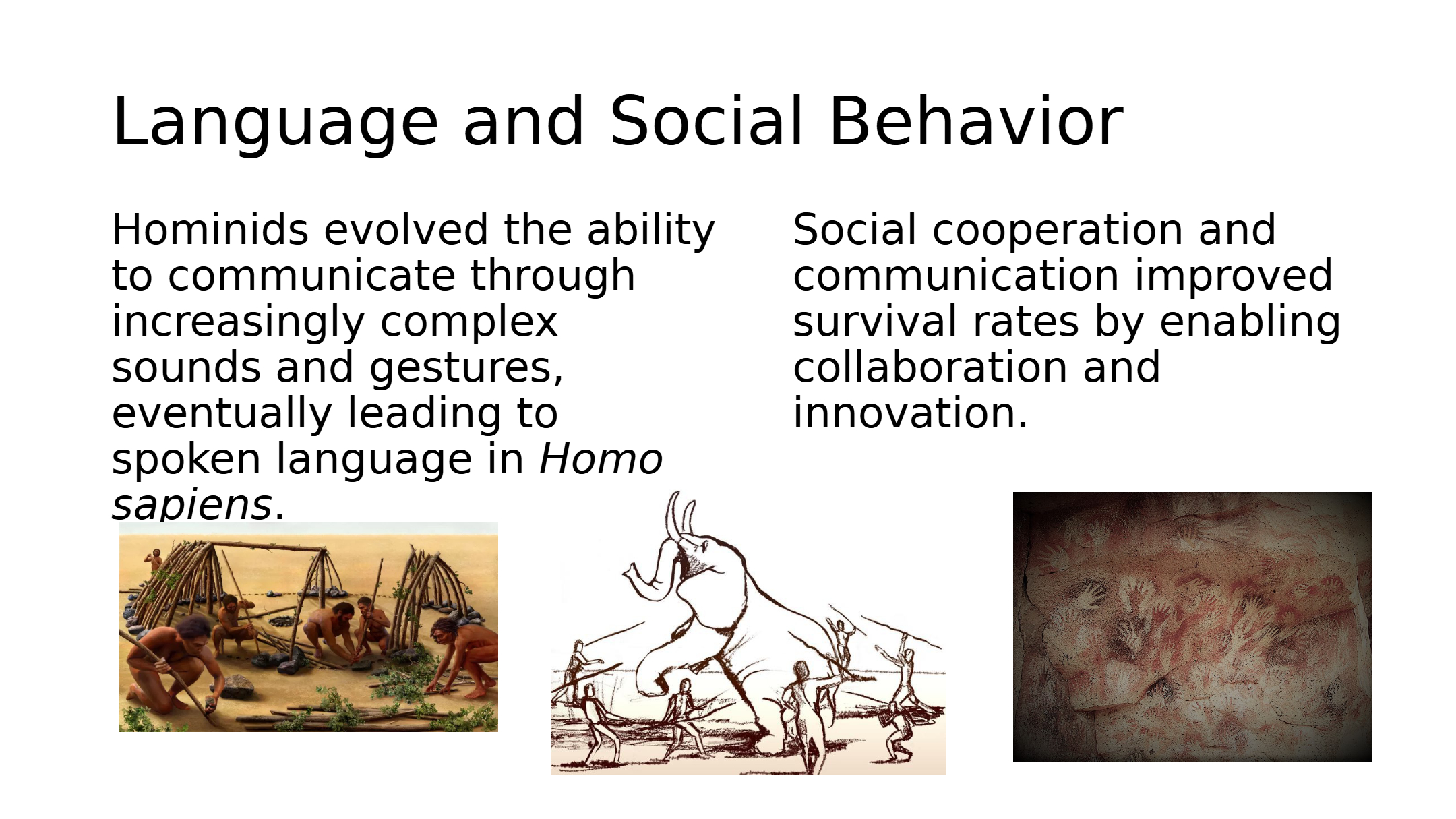
What role did language and social cooperation play in the survival and success of Homo sapiens?

1

It allowed for better hunting strategies and innovation.

2

It made them physically stronger than other species.

3

It reduced their need for tools.

4

It led to the extinction of other hominids.

24

Multiple Choice

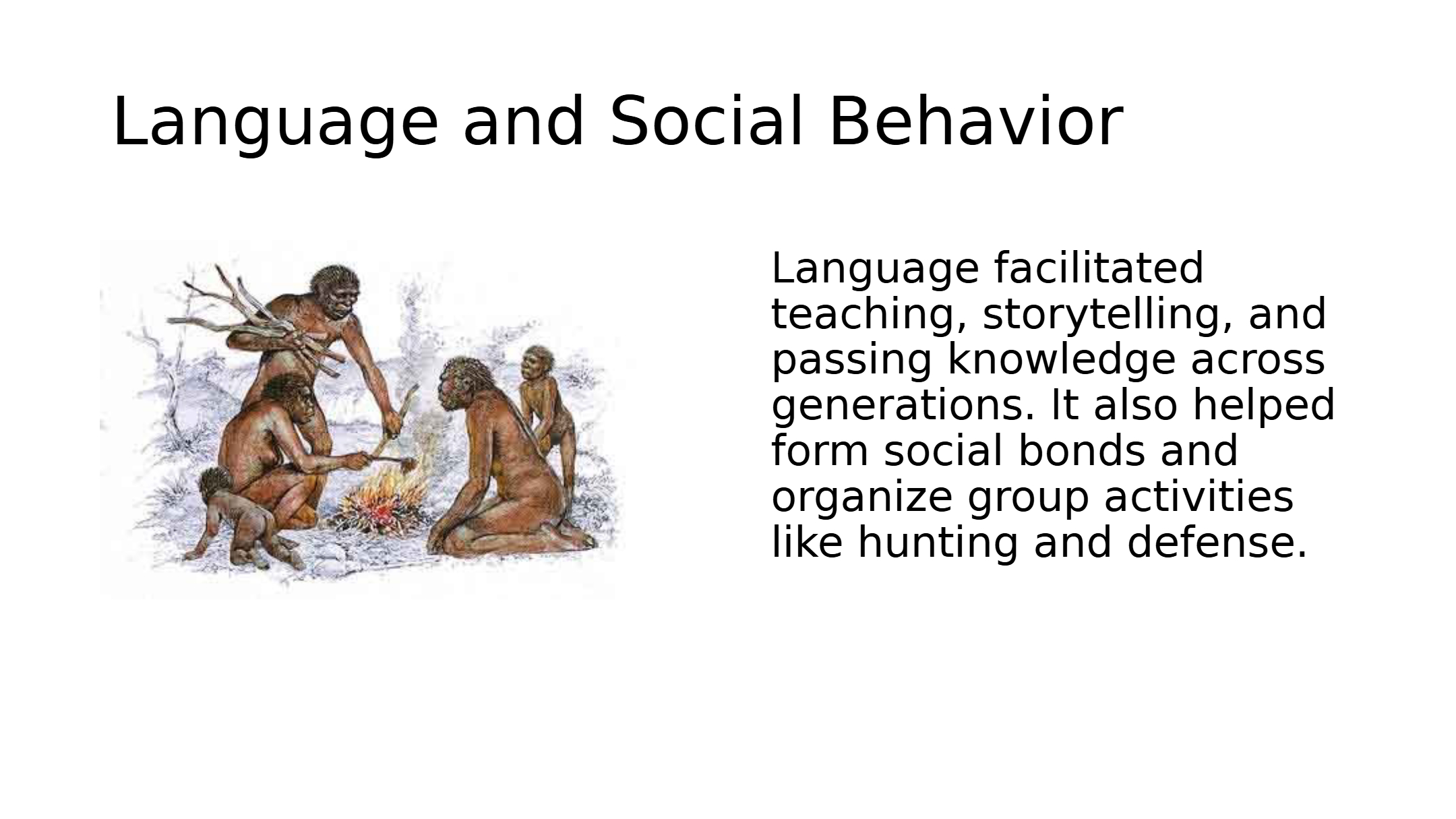
How did language contribute to the development of early human societies?

1

It facilitated teaching, storytelling, and passing knowledge across generations.

2

It made hunting and defense impossible.

3

It prevented social bonds from forming.

4

It discouraged group activities.

25

Multiple Choice

Question image

Below shows the skulls of different hominid species over time. On the far left is the most ancient hominid and on the right is the most recent species. These skulls have been arranged in chronological order from oldest to most recent. Use this diagram to answer the question that follows.

Which statement is an inference rather than an observation?

1

The oldest skull has a smaller braincase than the most recent skull.

2

The jaw size decreases in skulls that are more recent.

3

Hominids likely developed more complex behaviors as brain size increased.

4

The brow ridge is more prominent in the oldest skull compared to the most recent skull.

26

Multiple Choice

Which characteristic was the main factor that contributed to the development and use of tools by early hominids?

1

Increasing jaw and teeth size

2

Increasing language skills and culture

3

Increasing population of hominids

4

Increasing brain size and bipedalism

27

Multiple Choice

Question image

Use the graphs below that demonstrate changes in hominid brain size and jaw size over time to answer the following question. Paleontologists take various measurements from fossils to shed light on hominid evolution. Paleontologists use cranial capacity to determine brain size. They use tooth size to determine jaw size. Which of the following is an accurate analysis of the graphs as time moves closer to present day?

1

There is an inverse relationship between brain size and jaw size. Brain size is increasing as jaw size is decreasing.

2

There is an inverse relationship between brain size and jaw size in hominids. Brain size is decreasing as jaw size is increasing.

3

There is a direct relationship between brain size and jaw size in hominids. Brain size is increasing as jaw size is increasing.

4

There is a direct relationship between brain size and jaw size in hominids. Brain size is decreasing as jaw size is decreasing.

28

media

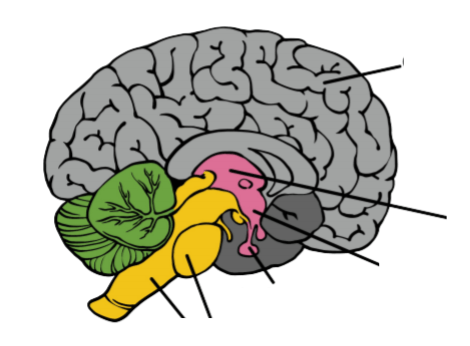
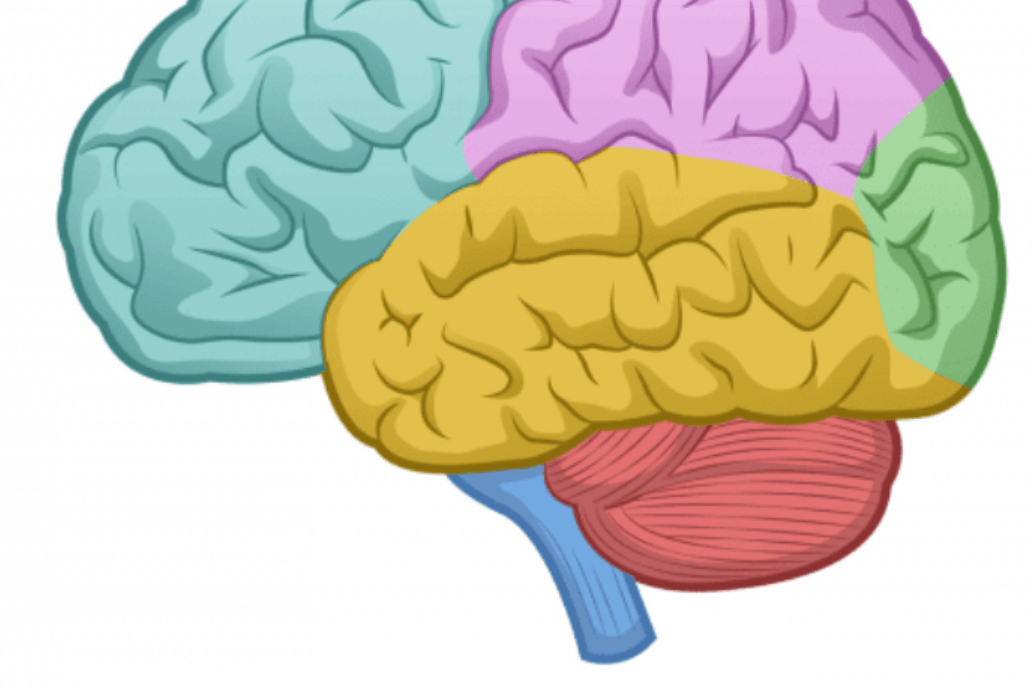
Label the structures of the brain from the diagram provided.

​You are NOT responsible for labeling the precentral and postcentral gyrus or the central sulcus (they are not part of our curriculum in biology )

29

Multiple Choice

Question image
1
Cerebrum
2
Cerebellum
3
Brain Stem
4
Diencephalon

30

Multiple Choice

Question image

Label A is

1

medulla oblongata

2

pons

3

brain stem

4

spinal cord

31

Multiple Choice

Question image

Label the medulla oblongata

1

A

2

B

3

C

4

D

32

Multiple Choice

Question image
Which letter on the illustration represents the temporal lobe
1
A
2
B
3
C
4
D

33

Multiple Choice

What is the location of the frontal lobe in the brain?

1

Back of the brain, near the base of the skull

2

Left side of the brain, near the ear

3

Front of the brain, just behind the forehead

4

Top of the brain, near the crown of the head

34

Multiple Choice

The occipital lobe is located at the back of which part of the brain?

1

brain stem

2

cerebellum

3

frontal lobe

4

cerebrum

35

Multiple Choice

Question image

What structure is grey in this picture?

1

Cerebrum

2

Cerebellum

3

Brain Stem

36

Multiple Choice

Question image

What structure is blue in this picture?

1

Cerebrum

2

Cerebellum

3

Brain Stem

37

Labelling

Label the following parts of the brain by dragging to its correct location.

Drag labels to their correct position on the image

brain stem

occipital lobe

temporal lobe

parietal lobe

frontal lobe

cerebellum

38

Reflection:

Which hominid evolutionary trend do you think had the greatest impact on the success of Homo sapiens, and why?


Answer in the space provided on your handout

Trends in Hominid Evolution

Show answer

Auto Play

Slide 1 / 38

SLIDE