

ICS 700 Lesson 7

Presentation
•
Science
•
Professional Development
•
Practice Problem
•
Medium

Cecilia Ogle
Used 1+ times
FREE Resource
27 Slides • 19 Questions
1
2
3
4
Multiple Choice
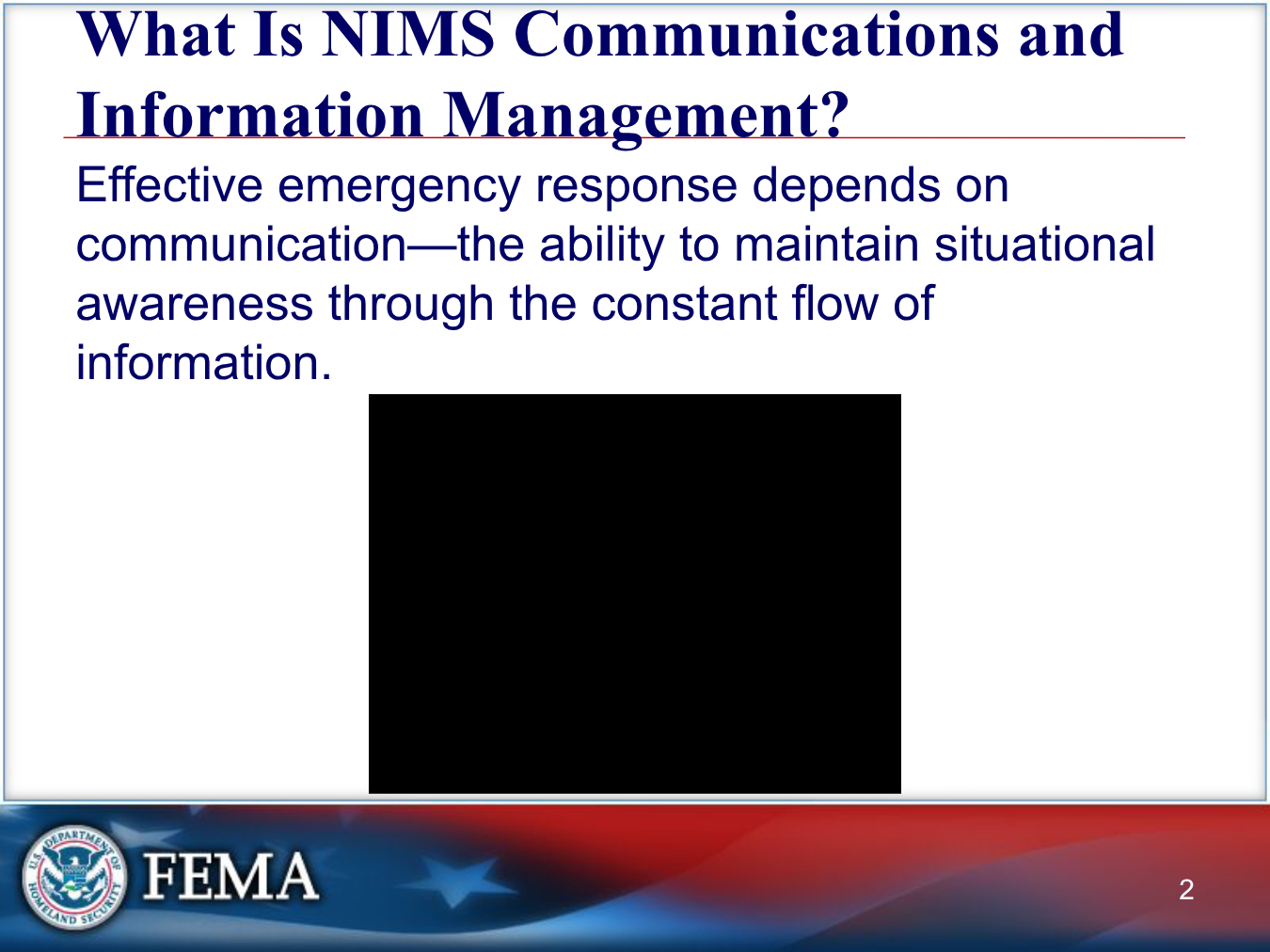
Which of the following is NOT one of the four key communications and information systems principles that support incident management?
Interoperability
Reliability
Portability
Accessibility
5
6
Open Ended
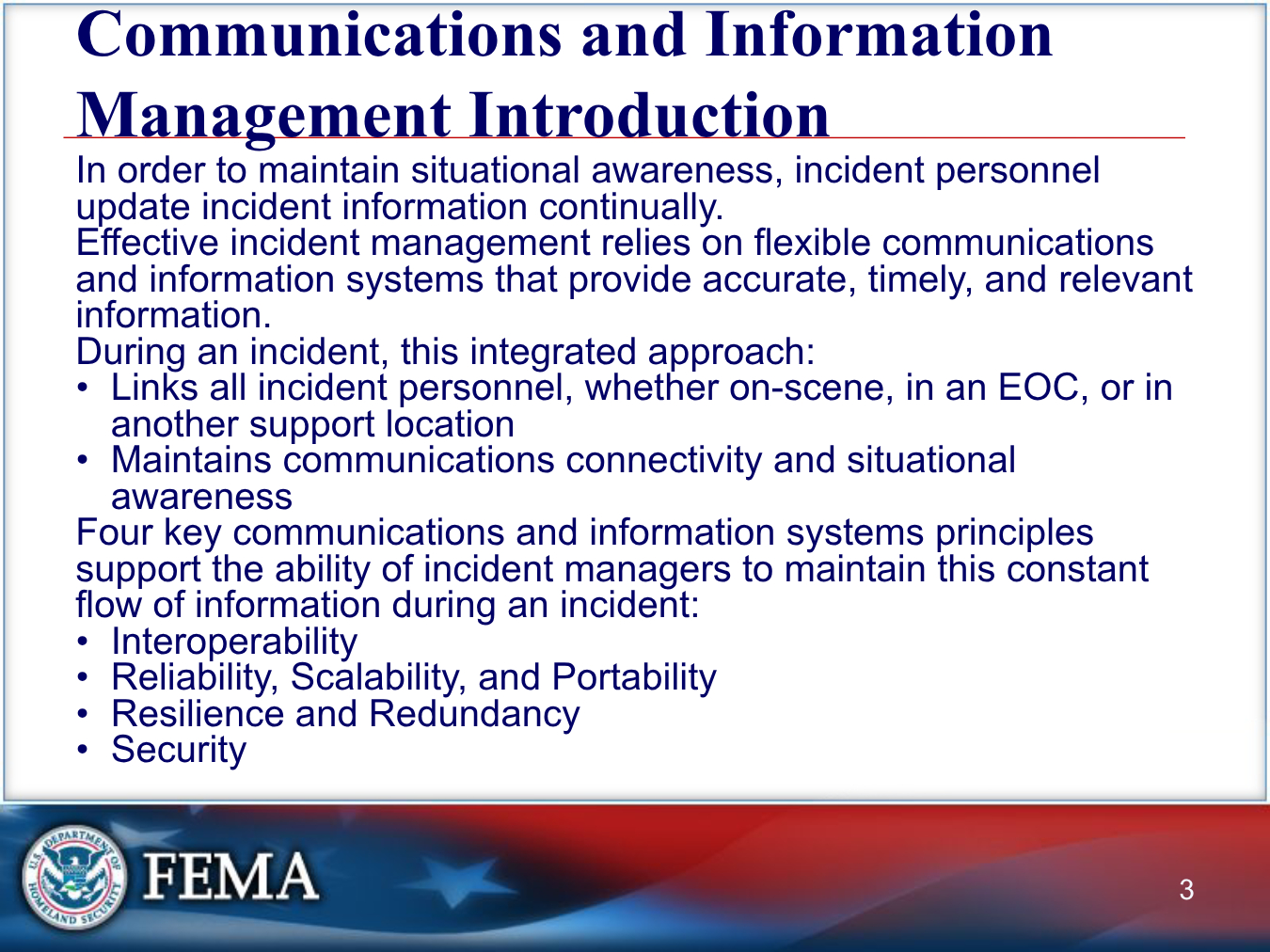
Explain how interoperability in communications systems benefits emergency management and response personnel.
7
8
9
10
11
12
Multiple Choice
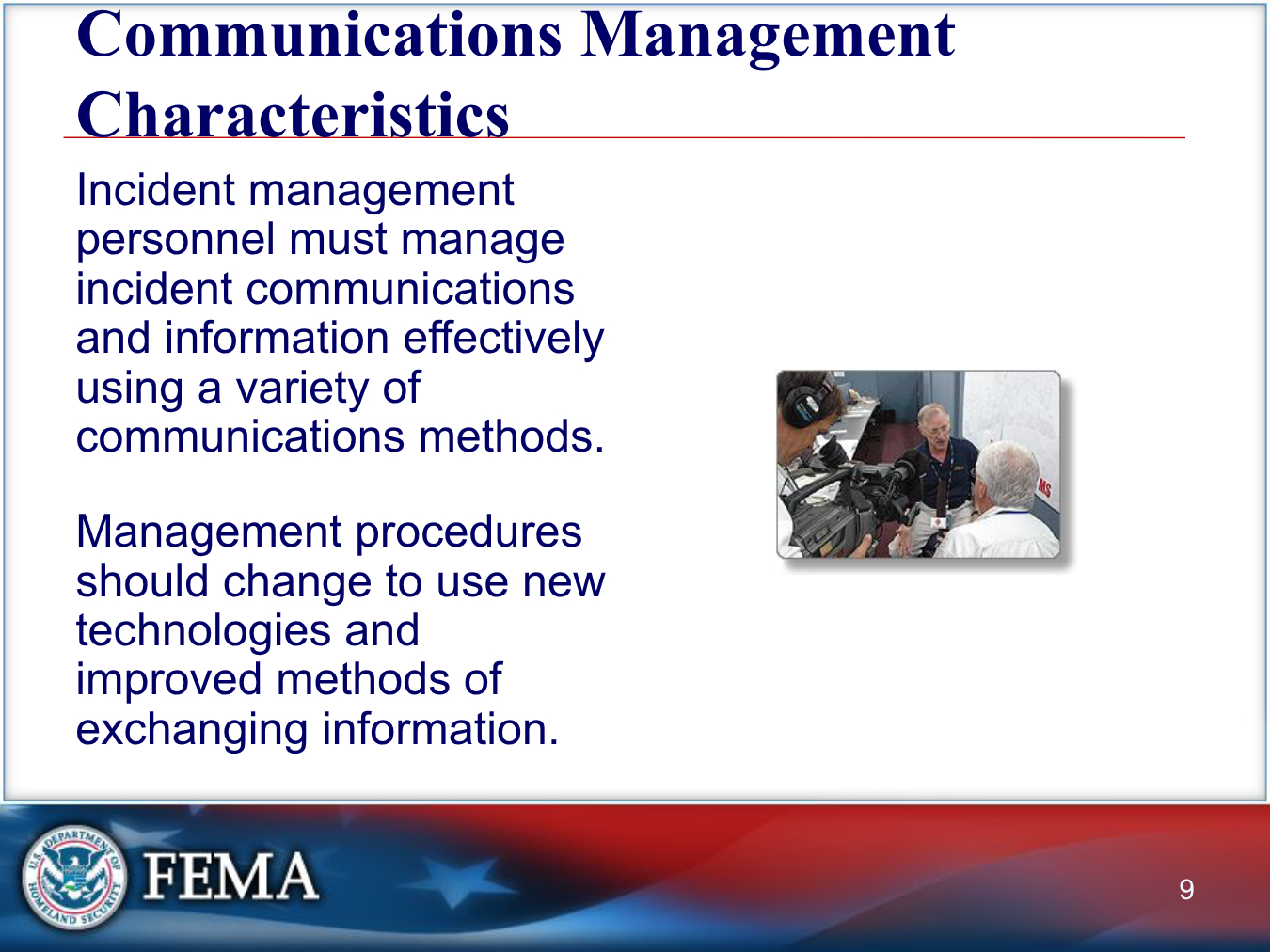
Which of the following is NOT a characteristic of effective communications management in incident management?
Using a variety of communications methods
Changing management procedures to use new technologies
Ignoring new methods of exchanging information
Managing incident communications and information effectively
13
14
Open Ended
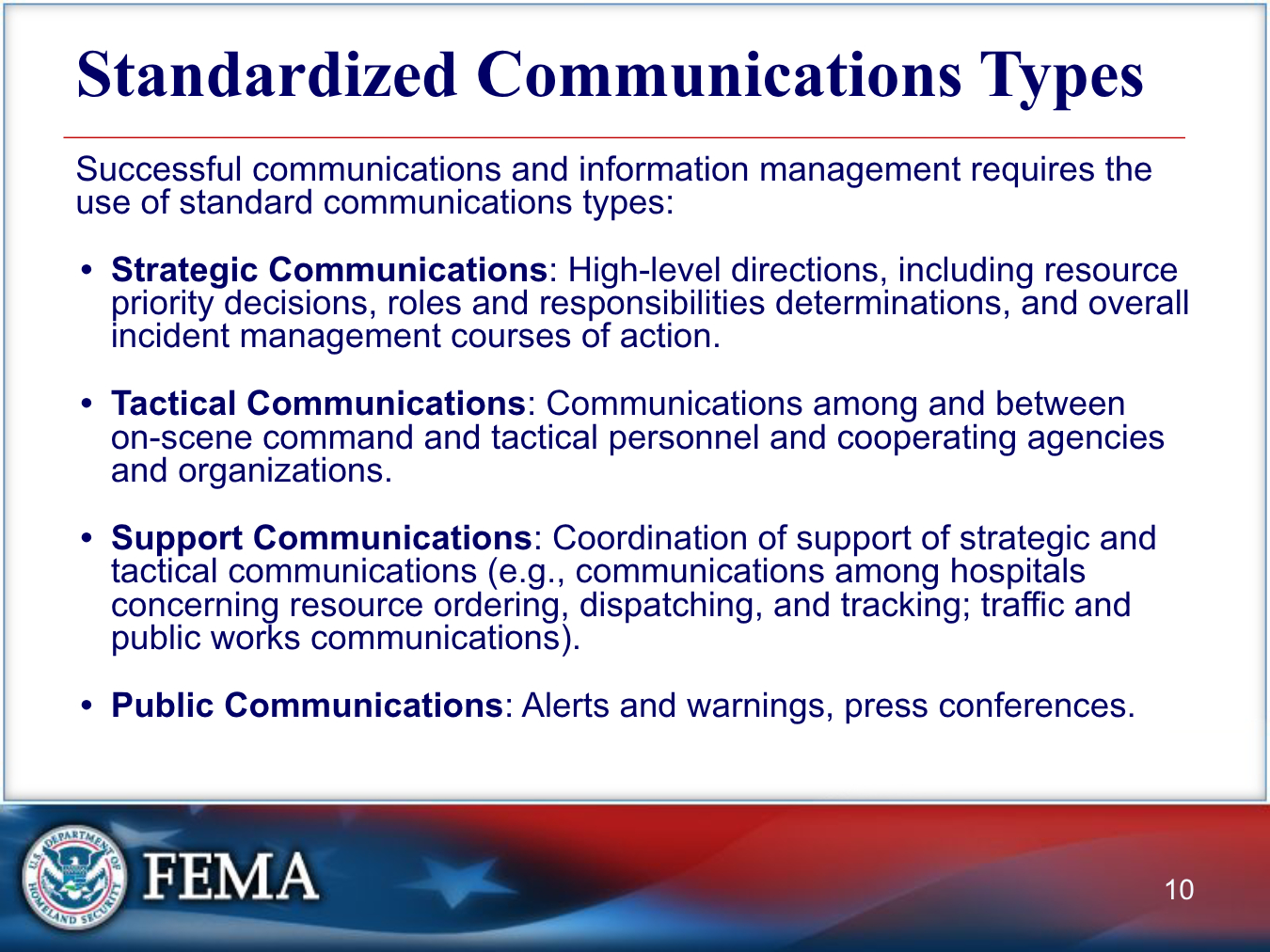
Explain the differences between strategic, tactical, support, and public communications in incident management.
15
16
Multiple Choice
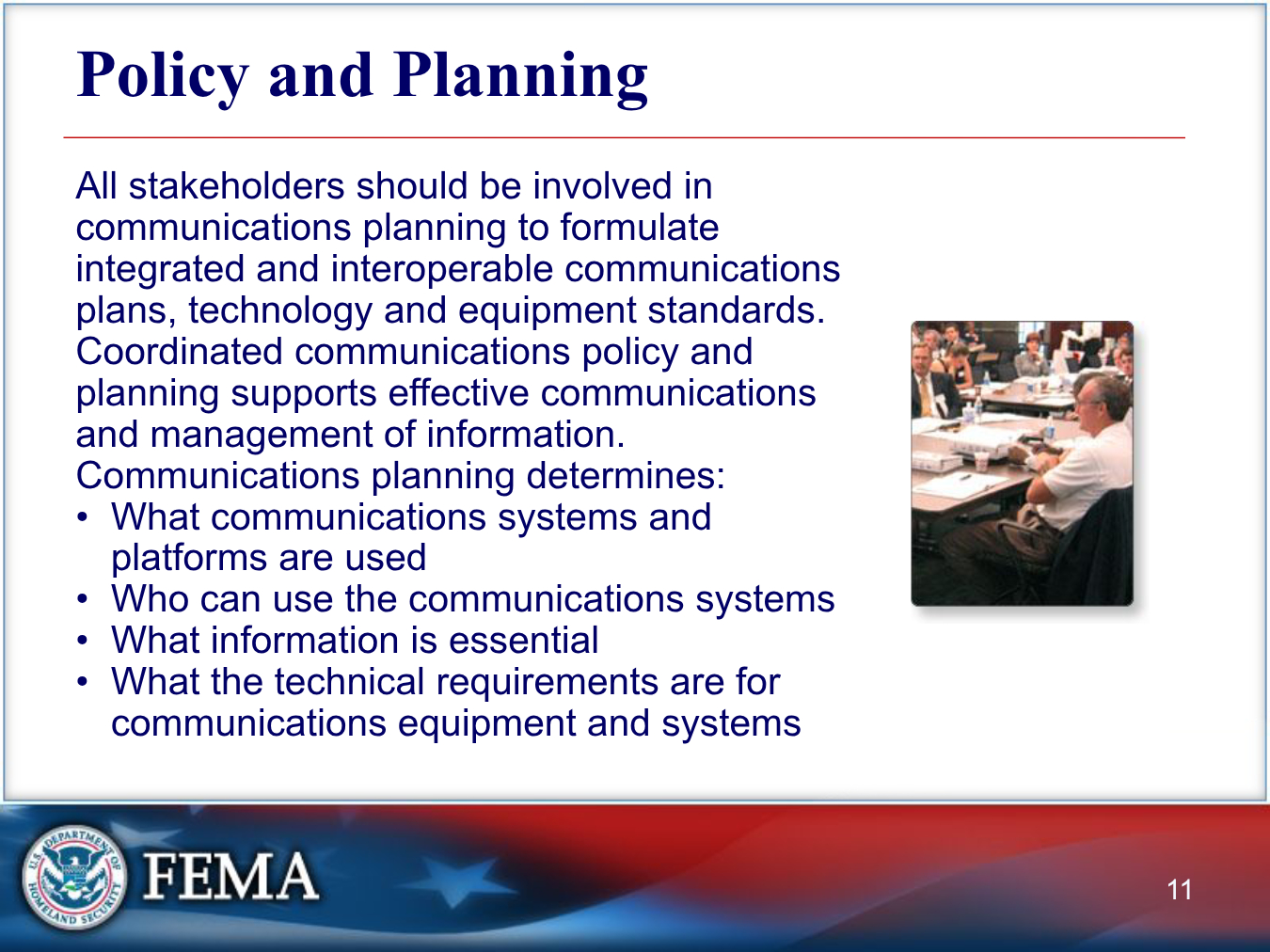
Which aspects are determined during communications planning?
What communications systems and platforms are used
Who can use the communications systems
What information is essential
All of the above
17
18
Fill in the Blanks
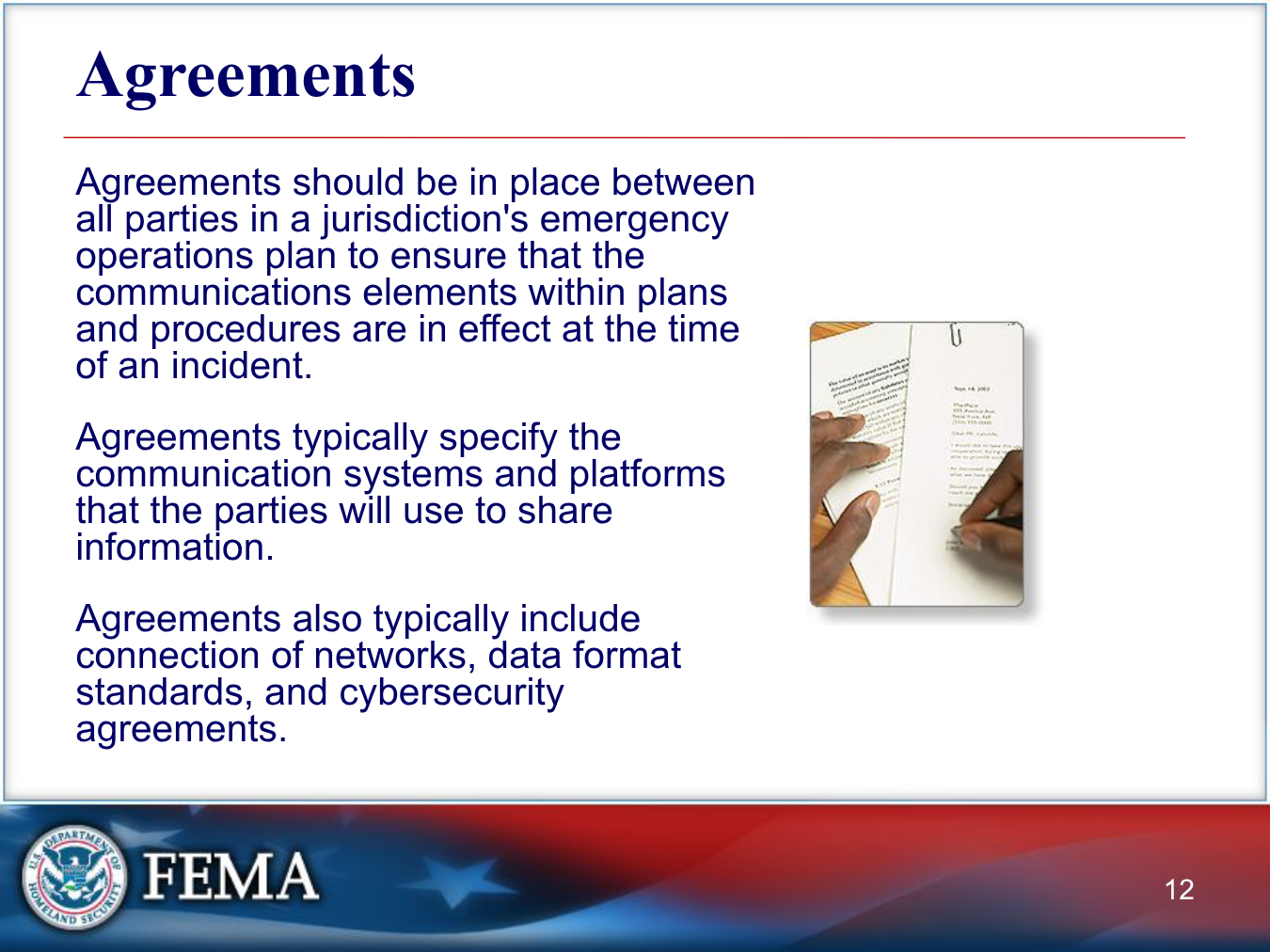
Agreements in emergency operations plans typically include connection of networks, data format standards, and
Type answer...
19
20
Multiple Choice
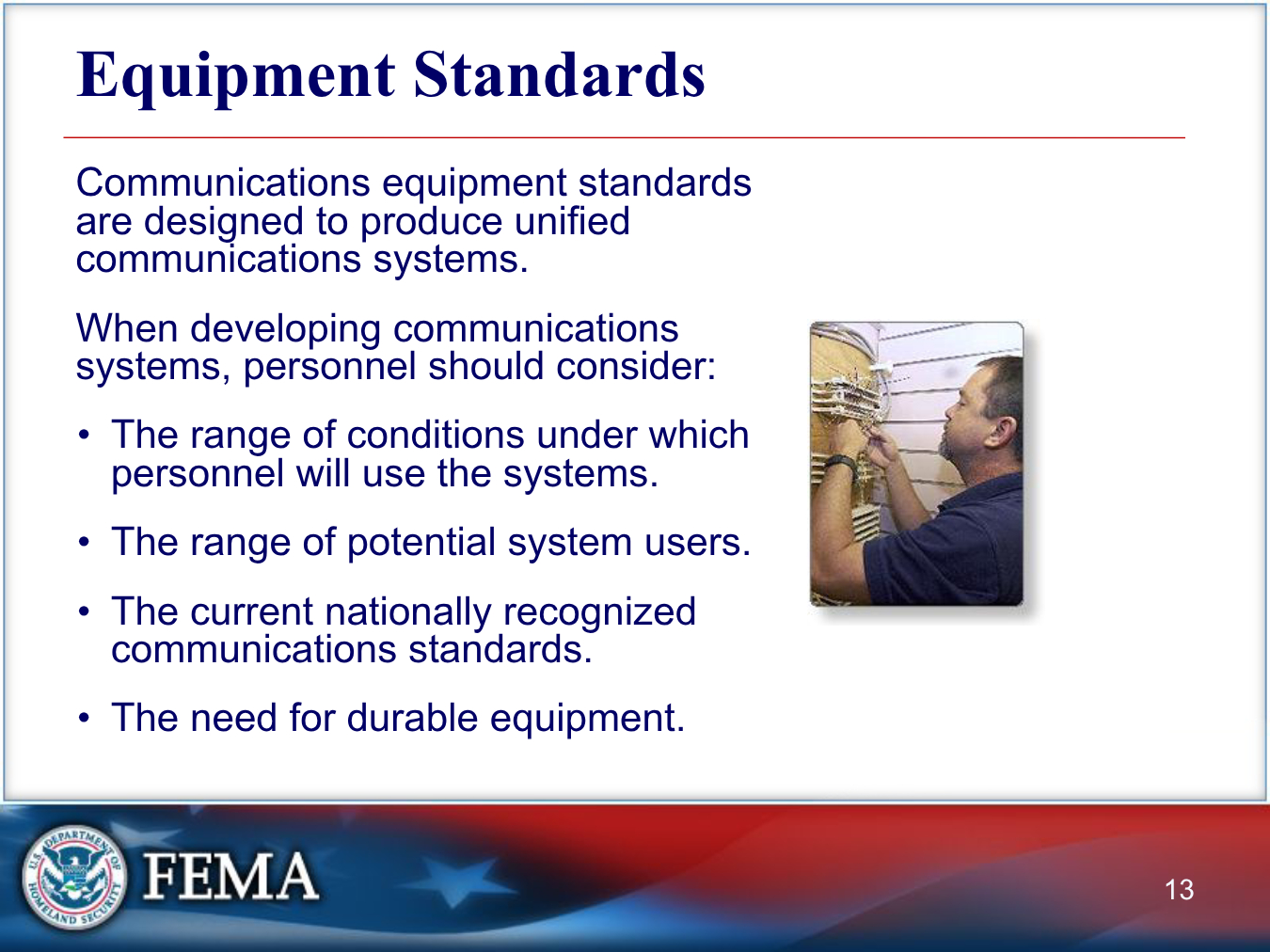
When developing communications systems, personnel should consider which of the following?
The range of conditions under which personnel will use the systems
The range of potential system users
The current nationally recognized communications standards
All of the above
21
22
Multiple Select
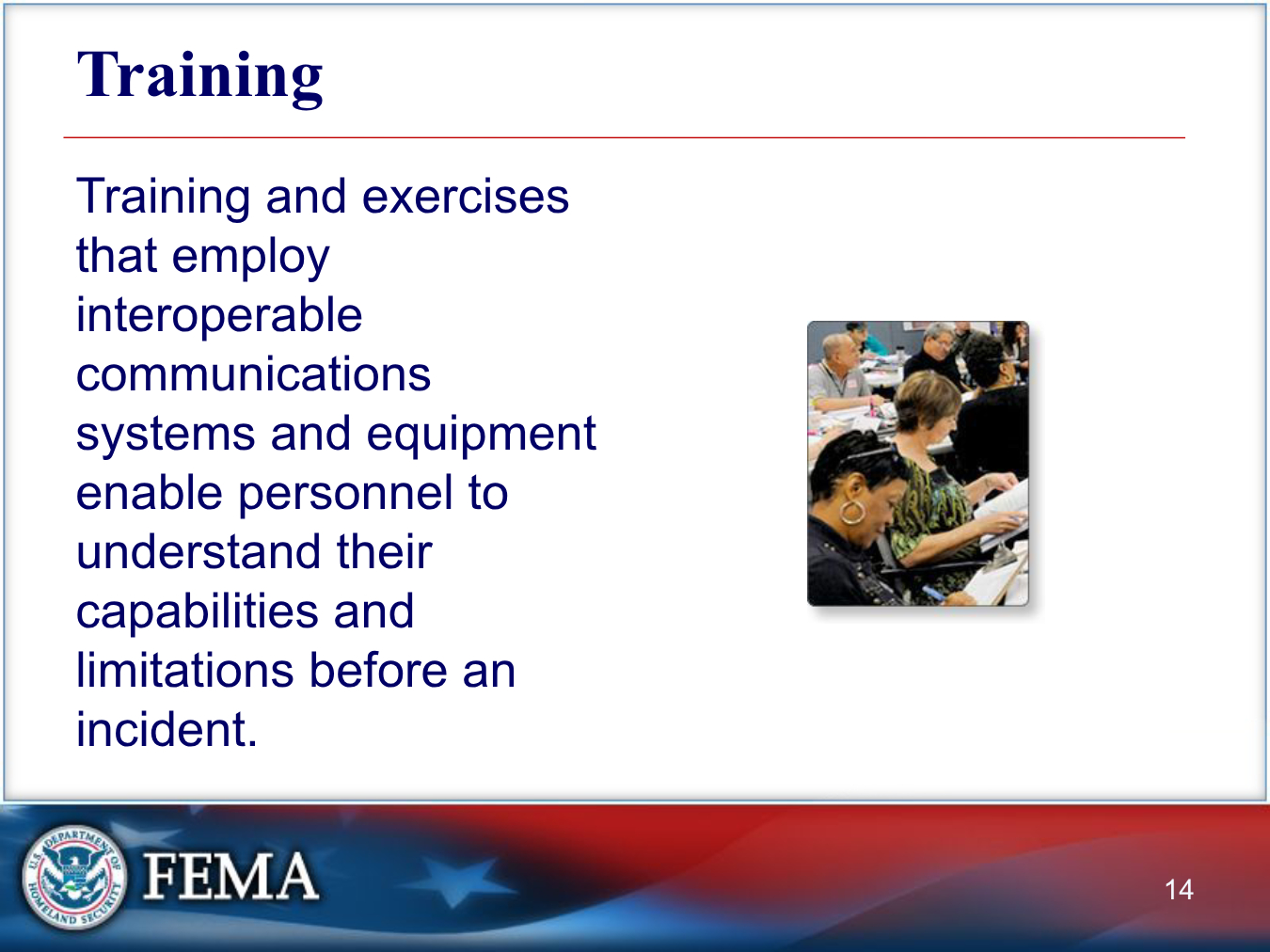
Select all that apply: What are the benefits of training and exercises that employ interoperable communications systems and equipment?
Enable personnel to understand their capabilities
Help personnel recognize their limitations
Prepare personnel before an incident
Increase equipment costs
23
24
Multiple Select
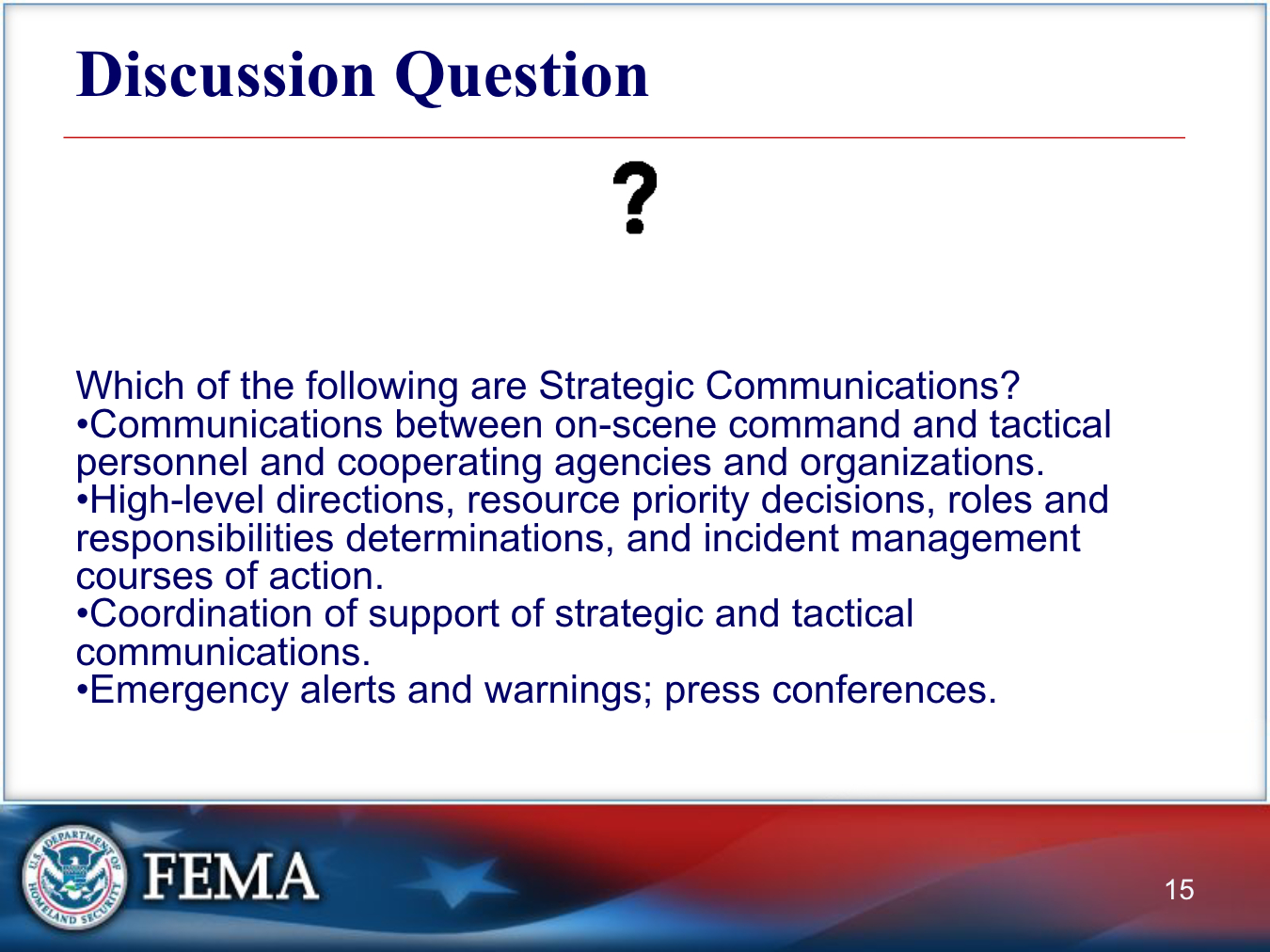
Which of the following are considered Strategic Communications?
Communications between on-scene command and tactical personnel and cooperating agencies and organizations.
High-level directions, resource priority decisions, roles and responsibilities determinations, and incident management courses of action.
Coordination of support of strategic and tactical communications.
Emergency alerts and warnings; press conferences.
25
26
Open Ended
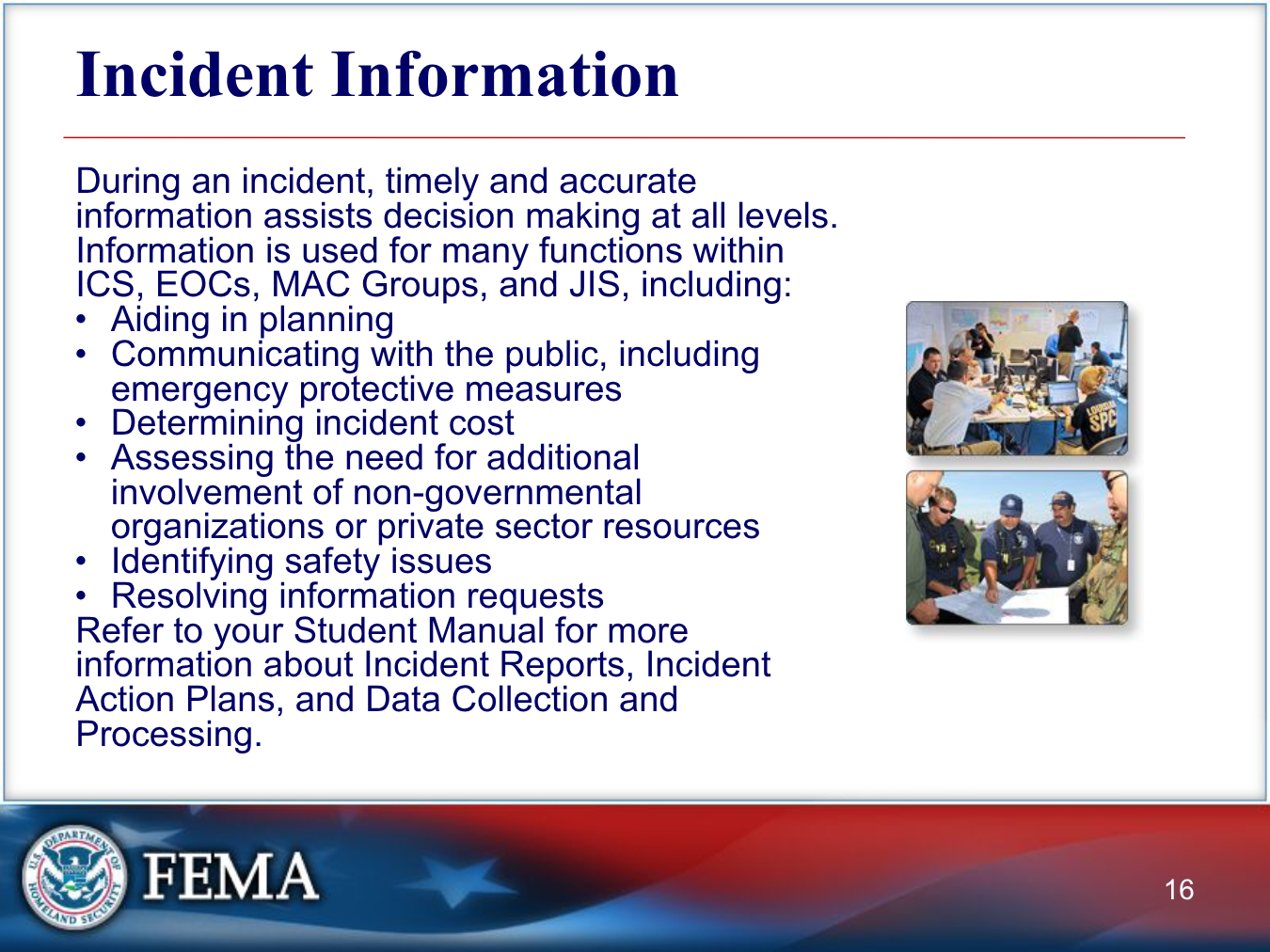
Explain how timely and accurate incident information supports decision making during an emergency.
27
28
29
30
31
32
Multiple Choice
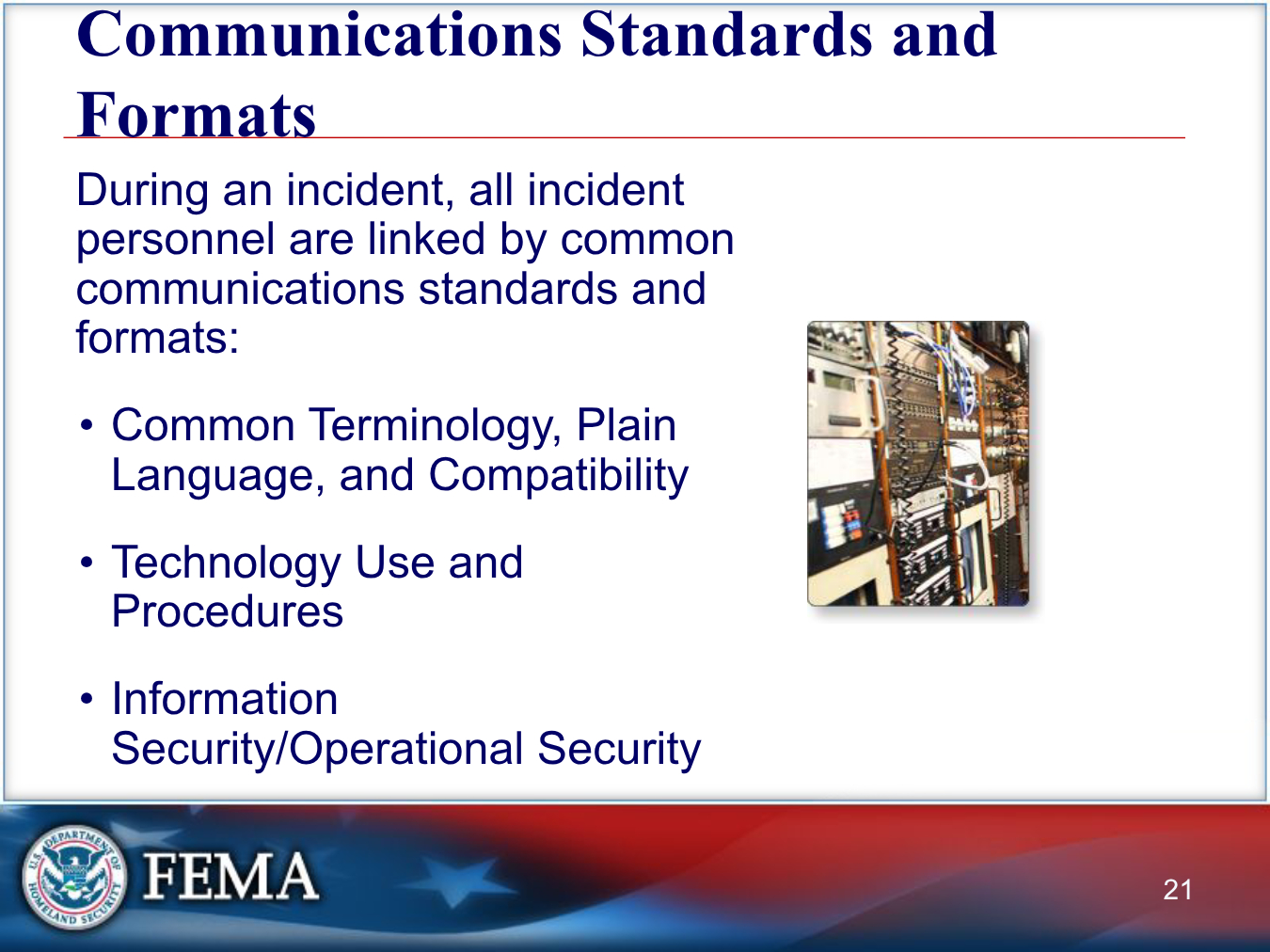
Which of the following is NOT a key element of communications standards and formats during an incident?
Common Terminology, Plain Language, and Compatibility
Technology Use and Procedures
Information Security/Operational Security
Incident Command Structure
33
34
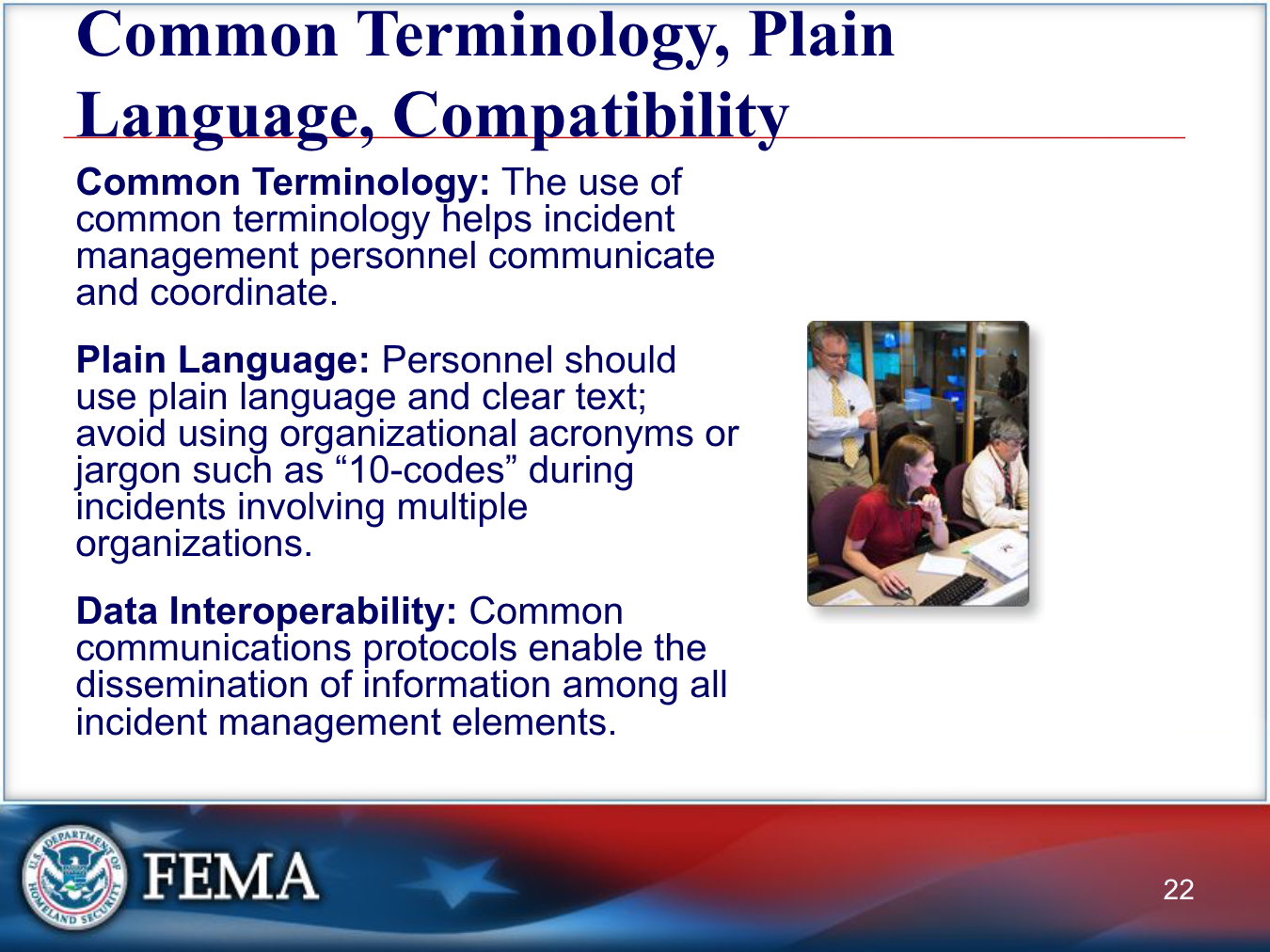
Open Ended
Explain how common terminology, plain language, and data interoperability contribute to effective incident management communication.
35
36
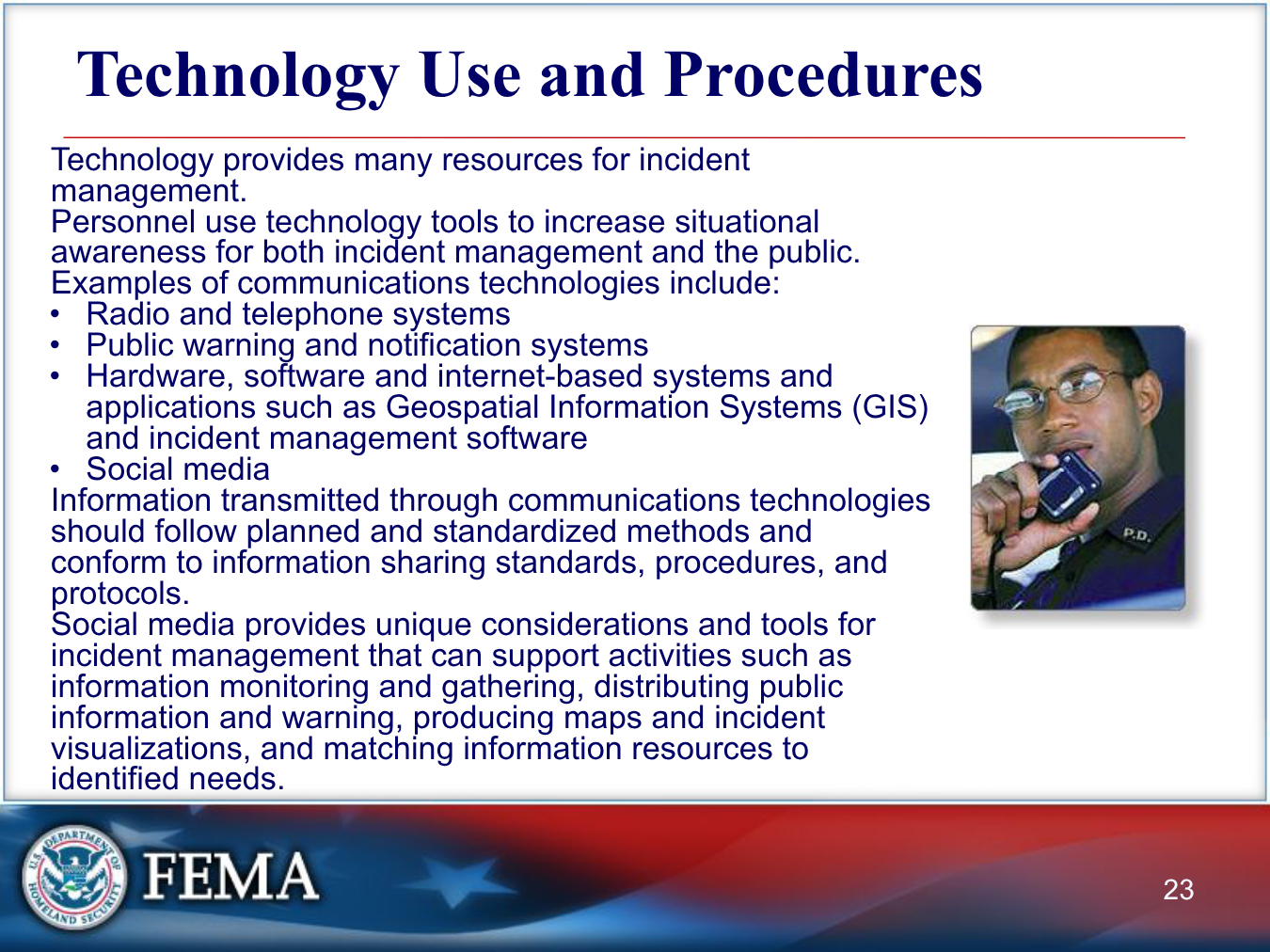
Multiple Choice
Which of the following are examples of communications technologies used in incident management?
Radio and telephone systems
Public warning and notification systems
Geospatial Information Systems (GIS) and incident management software
All of the above
37
38
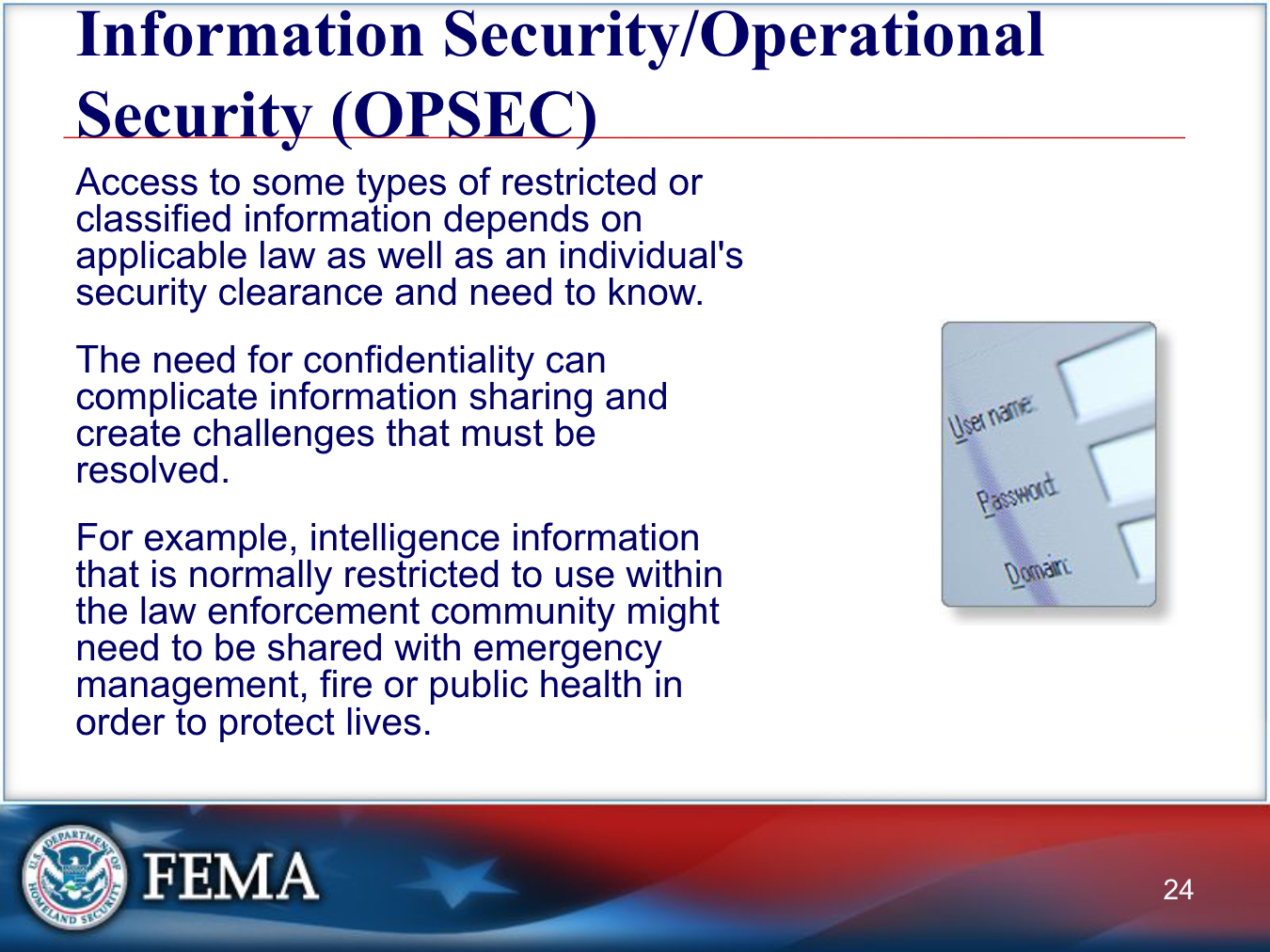
Fill in the Blanks
Access to restricted or classified information depends on applicable law as well as an individual's
Type answer...
39
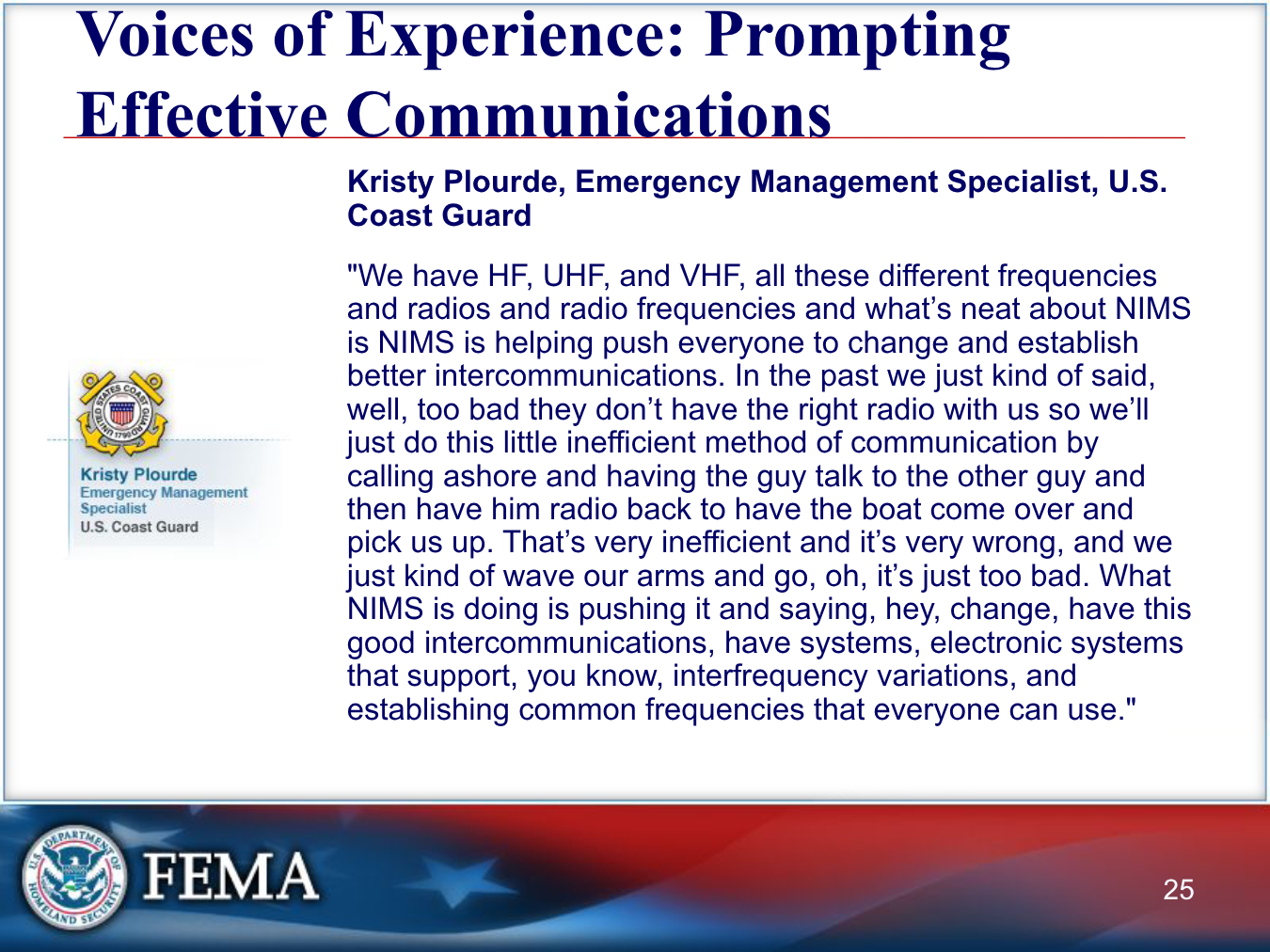
40
Open Ended
According to Kristy Plourde, what is one major benefit of NIMS in improving communications among emergency personnel?
41
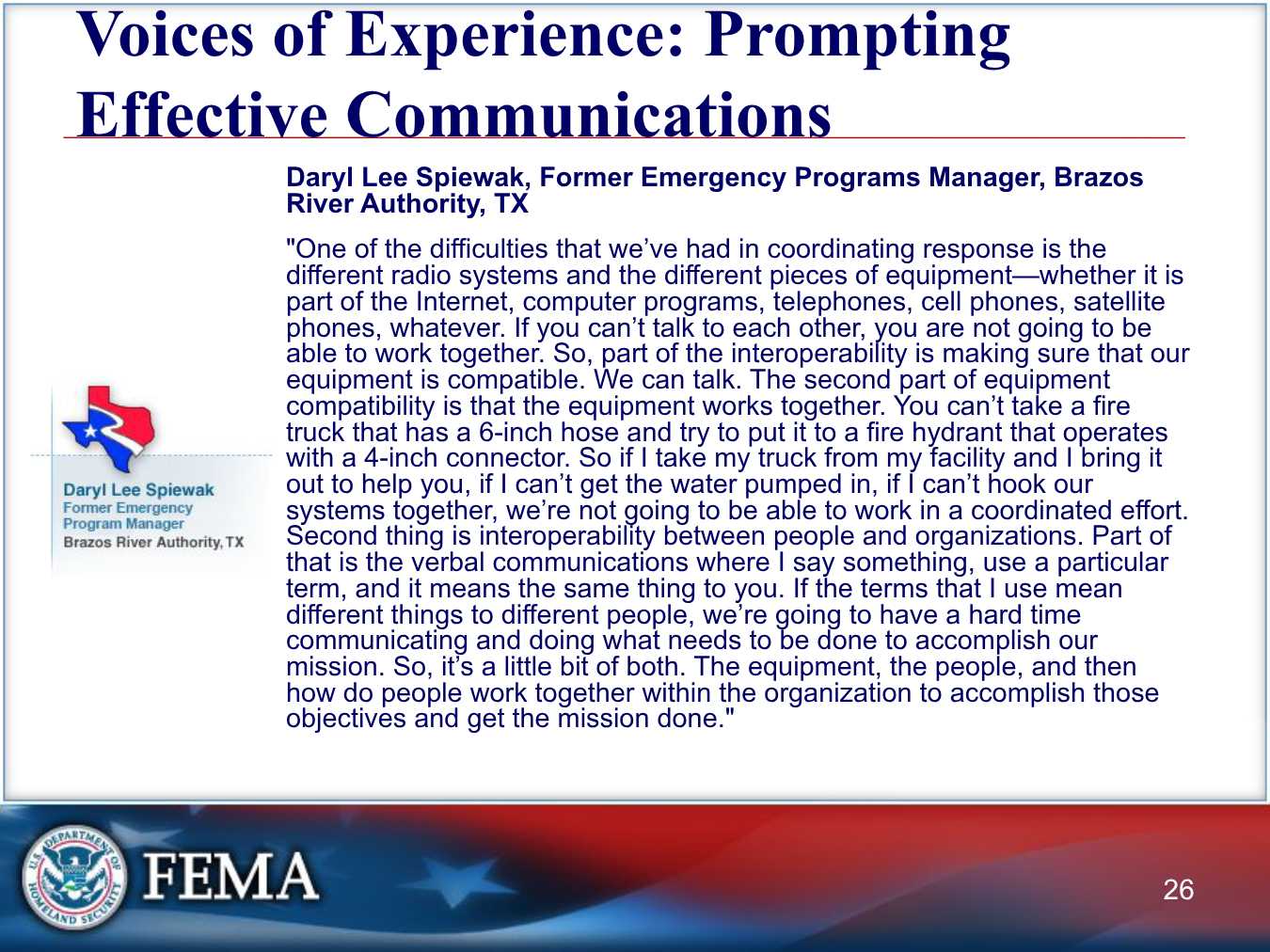
42
Multiple Choice
Based on the experiences shared by Daryl Lee Spiewak, what are two main challenges in coordinating response efforts among different organizations?
Lack of compatible equipment and differences in terminology
Insufficient funding and lack of training
Poor leadership and unclear objectives
Limited access to technology and resources
43
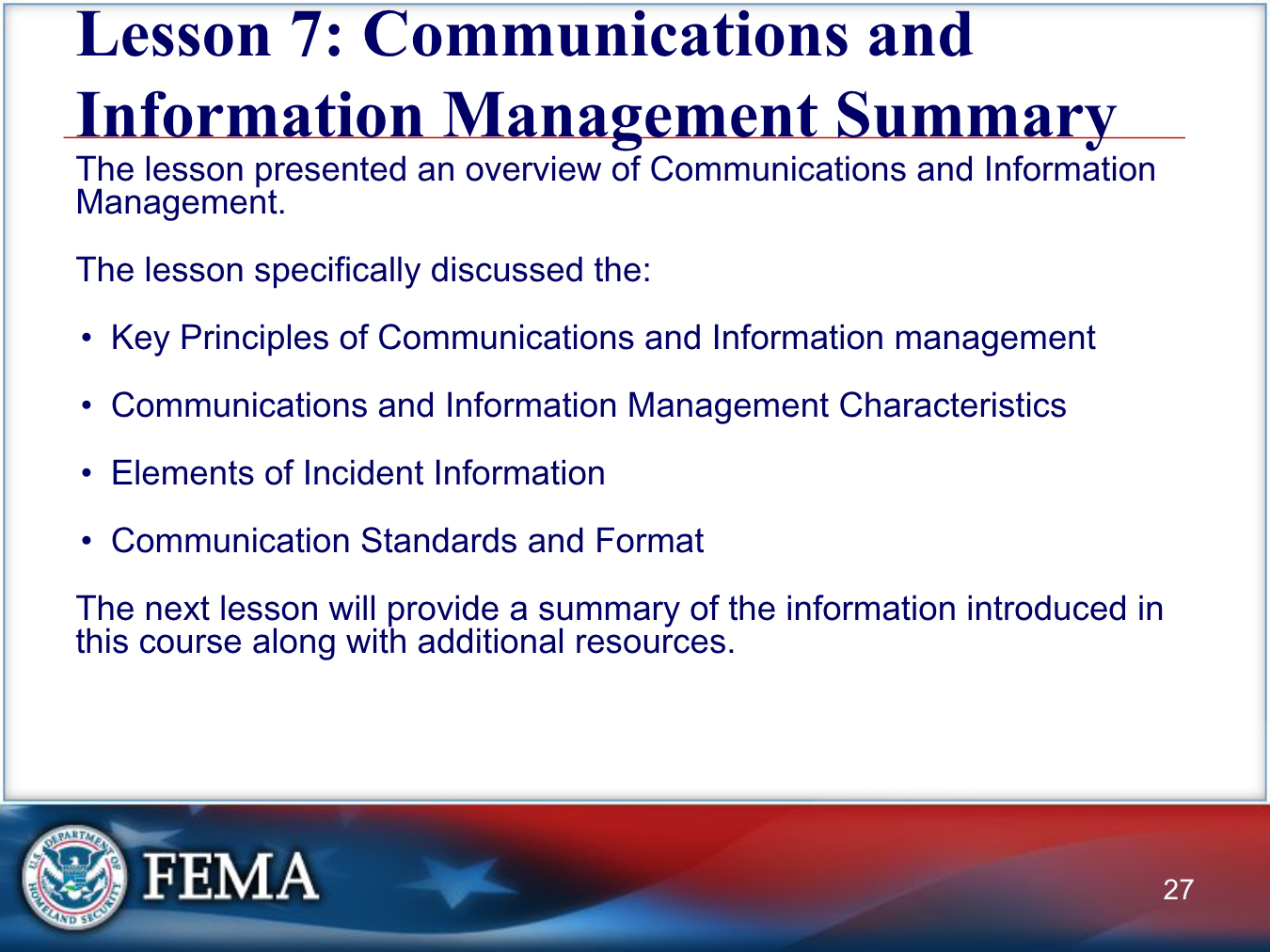
44
Open Ended
Reflecting on today's lesson, what aspect of communications and information management do you feel is most important for effective incident response, and why?
45
Multiple Choice
Why is effective communication crucial during emergency response situations according to NIMS Communications and Information Management?
It helps maintain situational awareness through constant information flow.
It reduces the need for emergency responders.
It eliminates the need for planning.
It ensures only one person is informed.
46
Multiple Choice
Which of the following topics was NOT specifically discussed in Lesson 7: Communications and Information Management?
Key Principles of Communications and Information management
Elements of Incident Information
Communication Standards and Format
Emergency Evacuation Procedures
Show answer
Auto Play
Slide 1 / 46
SLIDE
Similar Resources on Wayground

40 questions
Unit 14 - Types of Human Tissue
Presentation
•
KG - University
42 questions
Grade 2 - Unit 5, 6, 7
Presentation
•
KG
41 questions
The Nervous System
Presentation
•
University
39 questions
Personal Development Part 1
Presentation
•
Professional Development
42 questions
COMPARATIVE AND SUPERLATIVE
Presentation
•
Professional Development
42 questions
T2 C1 Learning Guide AY2324.pdf
Presentation
•
KG - Professional Dev...
38 questions
GEd 109 STS Finals Reviewer
Presentation
•
University
41 questions
Untitled Lesson
Presentation
•
KG
Popular Resources on Wayground
10 questions
Safety Day 2026 – Student Review

Quiz
•
9th Grade
21 questions
Continents and Oceans
Quiz
•
6th Grade
20 questions
Parts of Speech
Quiz
•
5th Grade
16 questions
Subject & Predicate
Quiz
•
5th Grade
25 questions
Multiplication Facts
Quiz
•
5th Grade
12 questions
Map Skills
Quiz
•
3rd Grade
22 questions
Continents and Oceans
Quiz
•
5th Grade
15 questions
Rounding Decimals
Quiz
•
5th Grade