

Topic 4 Lesson 4 Origins of Buddhism Notes

Presentation
•
Social Studies
•
6th Grade
•
Practice Problem
•
Easy

Joseph Lanzarone
Used 1+ times
FREE Resource
40 Slides • 27 Questions
1

2
3
Open Ended
Why do you think oral traditions and written texts are important in preserving the teachings of religious leaders like the Buddha?
4
5
Multiple Choice
Where was Siddhartha Gautama most likely born?
Present day Nepal
Present day India
Present day China
Present day Thailand
6

7
Open Ended
How did Siddhartha’s upbringing influence his early understanding of life and suffering?
8

9
Multiple Select
Which of the following did Siddhartha see on his rides outside the palace?
An old man
A sick man
A dead man
A wealthy merchant
10

11
Fill in the Blanks
Siddhartha decided to search for the same sense of
Type answer...
12

13
Multiple Choice
What did the Hindu gurus teach Siddhartha about life?
It is a cycle of birth, death, and rebirth
It ends with death
It is full of suffering only
It is controlled by fate
14

15
Open Ended
Why did Siddhartha decide that extreme asceticism was not the path to truth?
16
17
Multiple Choice
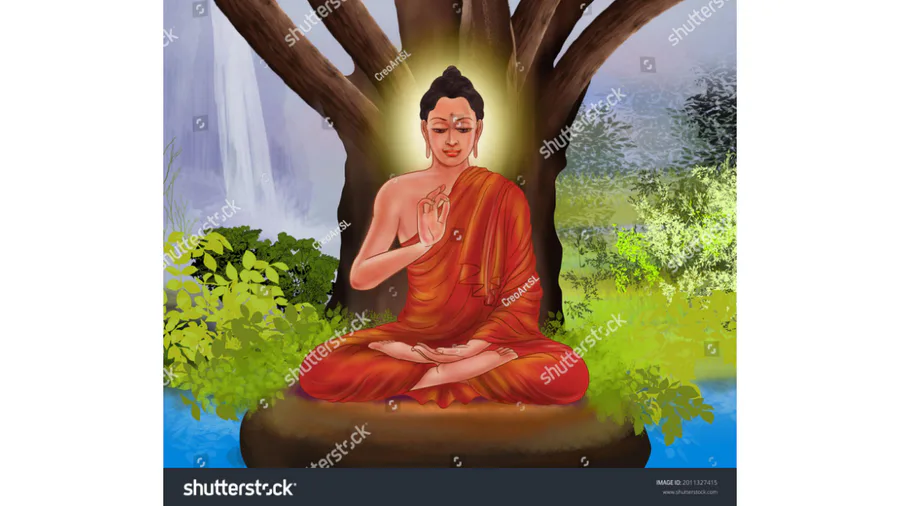
What is the significance of the Bodhi Tree in Siddhartha's journey to enlightenment?
It was where Siddhartha was born
It was where Siddhartha meditated and achieved enlightenment
It was where Siddhartha taught his first lesson
It was where Siddhartha met his followers
18
19

20
Open Ended
Describe the process Siddhartha went through to achieve enlightenment and how it changed his identity.
21
22
Fill in the Blanks
The Buddha traveled across India for
Type answer...
23

24
Multiple Choice
Which of the following statements about karma is correct?
Karma means a person's actions have consequences in present and future lives
Karma means being lucky
Karma is only about punishment
Karma is a type of meditation
25
Multiple Choice
According to Buddhist beliefs, what did the Buddha understand after gaining enlightenment?
How to become wealthy
Why people suffer and how to escape the cycle of death and rebirth
How to rule a kingdom
How to perform rituals
26

27
Open Ended
Explain how the cartoon in the last image represents the concept of karma.
28

29
Multiple Choice
Which belief did the Buddha reject that was central to Hinduism?
The existence of a permanent soul
The importance of social roles
The practice of meditation
The belief in karma
30

31
Multiple Select
Which of the following did the Buddha NOT believe in?
The existence of any god
Specific varna roles
The importance of good and bad actions
The practice of rituals
32
Open Ended
How did the Buddha's beliefs about the 'self' and the soul differ from traditional Hindu beliefs?
33

34
Fill in the Blanks
The Buddha advised people to follow the '
Type answer...
35
36

37
Multiple Choice
According to Buddhism, what must a person accept to follow the Middle Way?
The Four Noble Truths
The concept of karma
The worship of gods
The caste system
38

39
Open Ended
Explain the significance of the Four Noble Truths in the path to enlightenment according to Buddhist teachings.
40

41
Multiple Choice
Which of the following best explains the difference between selfish desires and desires for others, according to the 2nd Noble Truth?
Selfish desires lead to suffering, while desires for others do not.
All desires lead to suffering.
Desires for others are always wrong.
Selfish desires are always good.
42

43
Multiple Choice
According to the 3rd and 4th Noble Truths, what is the way to overcome suffering?
By accumulating wealth
By following the Eightfold Path
By ignoring desires
By seeking revenge
44

45
Open Ended
Summarize the main message of the Four Noble Truths as presented in the images.
46

47
Open Ended
Explain why the Buddha believed the Eightfold Path was open to anyone, regardless of caste.
48

49
Fill in the Blanks
The Eightfold Path is divided into three main qualities: Wisdom, Morality (ethics), and
Type answer...
50

51
Multiple Select
Which of the following are steps included in the Noble Eightfold Path?
Right Understanding
Right Wealth
Right Mindfulness
Right Speech
52

53

54

55

56
57
58

59

60

61

62

63
64
65

66
Multiple Choice
According to the lesson, most of what we know about the Buddha comes from:
Archaeological discoveries
Buddhist texts and writings
Paintings and sculptures
Historical government records
67
Open Ended
Based on what you learned about the origins and beliefs of Buddhism, what is one aspect of Buddhist culture or belief that you found most interesting or enduring?
Show answer
Auto Play
Slide 1 / 67
SLIDE
Similar Resources on Wayground

59 questions
Yo go verbs & Tener
Presentation
•
7th Grade
63 questions
SPEED and VELOCITY
Presentation
•
7th Grade
61 questions
Unit 5 Russia and Eurasian Republics
Presentation
•
6th Grade
59 questions
Civil War
Presentation
•
7th Grade
61 questions
Unit 8b Cortes & the Aztecs
Presentation
•
7th Grade
61 questions
G.6. - CELLS (2021)
Presentation
•
6th Grade
59 questions
Summary DI ELA 6 22-23
Presentation
•
6th Grade
68 questions
Europe's Environmental Issues
Presentation
•
6th Grade
Popular Resources on Wayground
10 questions
How much do you know about our Portrait of an Eagle?

Quiz
•
10th Grade
10 questions
Fast Food Slogans
Quiz
•
6th - 8th Grade
21 questions
Continents and Oceans
Quiz
•
6th Grade
20 questions
Parts of Speech
Quiz
•
5th Grade
16 questions
Subject & Predicate
Quiz
•
5th Grade
25 questions
Multiplication Facts
Quiz
•
5th Grade
12 questions
Map Skills
Quiz
•
3rd Grade
22 questions
Continents and Oceans
Quiz
•
5th Grade
Discover more resources for Social Studies
10 questions
Exploring the Age of Exploration: Key Events and Figures

Interactive video
•
6th - 10th Grade
13 questions
13 Colonies Map Quiz
Quiz
•
6th - 8th Grade
12 questions
7 Continents and 5 Major Oceans
Quiz
•
6th Grade
10 questions
Pillars of Free Enterprise
Quiz
•
6th - 8th Grade
26 questions
QA 1 Review
Quiz
•
6th - 8th Grade
8 questions
Geography of Mesopotamia
Presentation
•
6th Grade
10 questions
Exploring the 13 Colonies Regions
Interactive video
•
6th - 10th Grade
20 questions
Latitude and Longitude Practice
Quiz
•
6th Grade