

The Beginning of Indian Civilization

Presentation
•
Geography
•
6th Grade
•
Practice Problem
•
Medium

Meenakshi Prashar
Used 2+ times
FREE Resource
22 Slides • 33 Questions
1

2
Multiple Choice

This image shows evidence of what characteristic of a civilization?
(you could argue a few characteristics, which is the best choice)
presence of cities
located near rivers
writing
shared values
3

4
Multiple Choice
Which revolution lead to the development of civilization in Mesopotamia?
Paleolithic
Neolithic
Industrial
Commercial
5
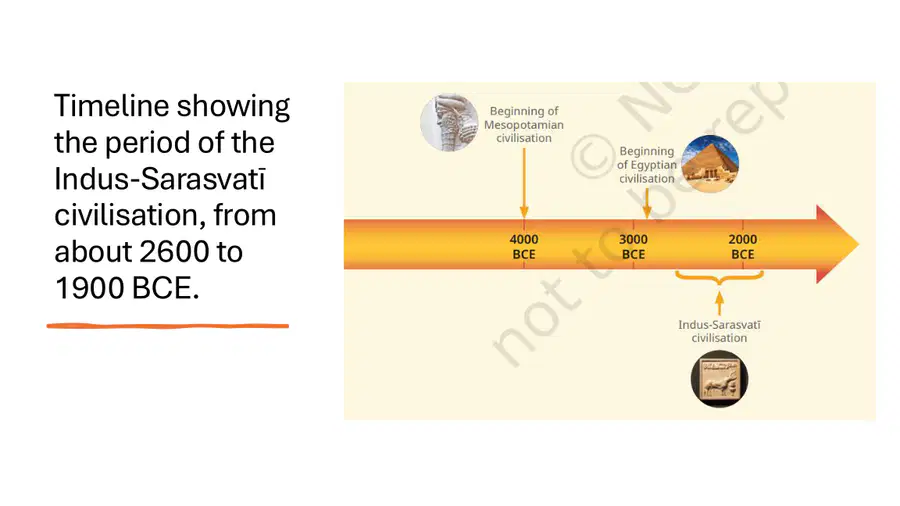
6
Multiple Choice
What period does the Indus-Sarasvati civilization cover according to the timeline?
2600 to 1900 BCE
4000 to 3000 BCE
3000 to 2000 BCE
2000 to 1000 BCE
7
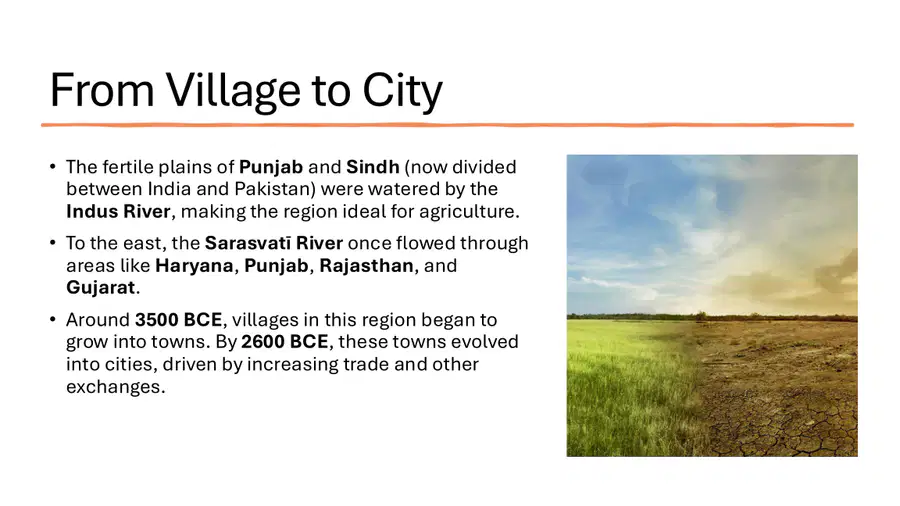
8
Multiple Choice
What rivers contributed to the agricultural development of the Punjab and Sindh regions?
Indus River
Ganges River
Sarasvati River
Brahmaputra River
9
10
Multiple Choice
Why do scholars believe that the Indus Valley had a highly developed civilization?
buildings with mud bricks
Its cities show a high level of well planned cities
extensive sewer systems and indoor plumbing
All options are correct
11
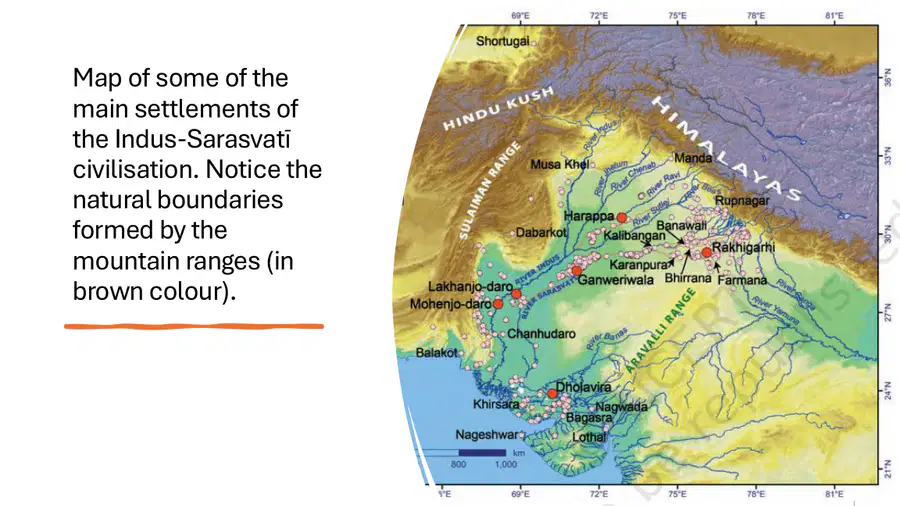
12
Multiple Choice
What are the natural boundaries formed by the mountain ranges in the Indus-Sarasvati civilization map?
Himalayas
Sulaiman Range
Hindu Kush
All of the above
13
14
Multiple Choice
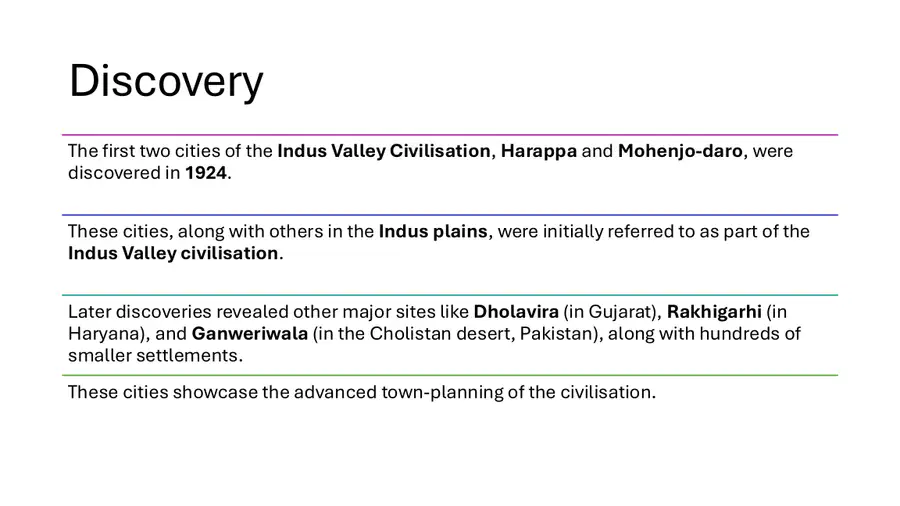
What were the first two cities of the Indus Valley Civilisation discovered in 1924?
Harappa and Mohenjo-daro
Dholavira and Rakhigarhi
Ganweriwala and Harappa
Mohenjo-daro and Dholavira
15
16
Multiple Choice
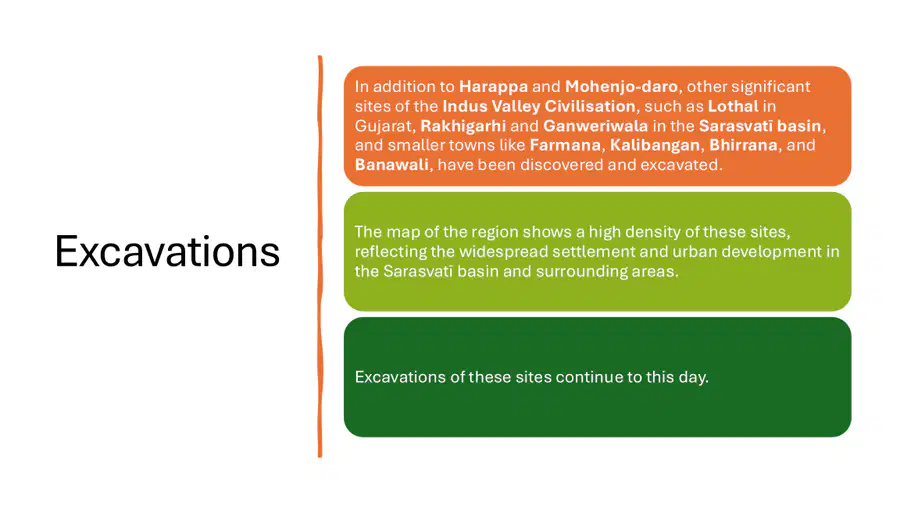
Which of the following sites is NOT mentioned as part of the Indus Valley Civilisation?
Harappa
Mohenjo-daro
Lothal
Delhi
17
18
Multiple Choice
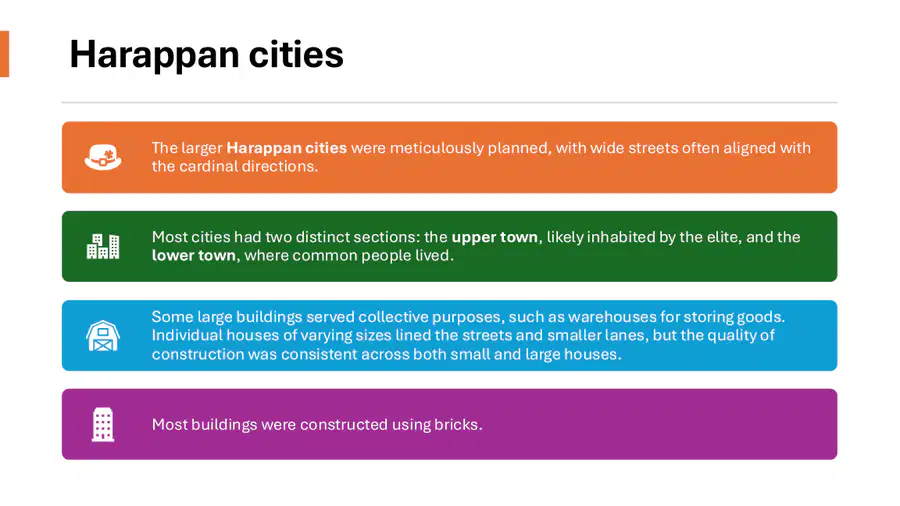
What were the two distinct sections of most Harappan cities?
Upper town and lower town
East town and West town
North town and South town
Central town and outer town
19
20
Multiple Choice
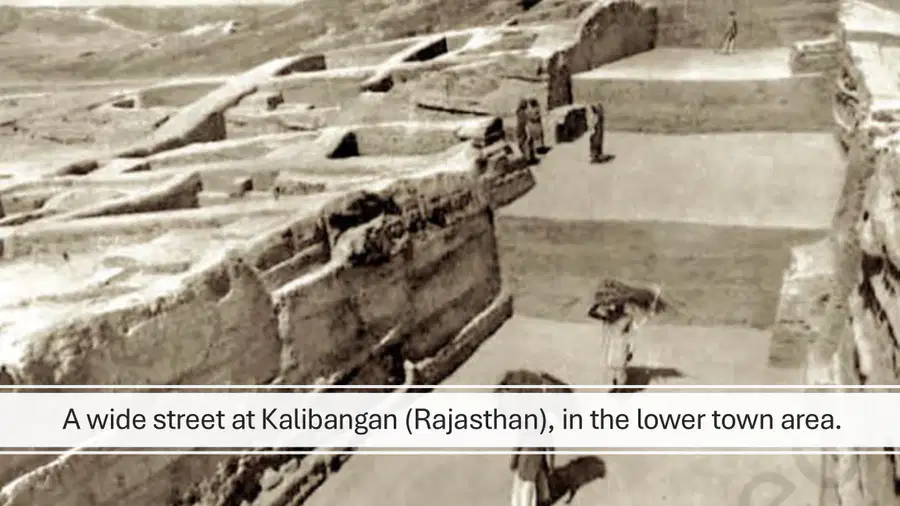
What does the image depict about the layout of Kalibangan in Rajasthan?
A narrow street
A wide street
A river
A forest
21
22
Multiple Choice
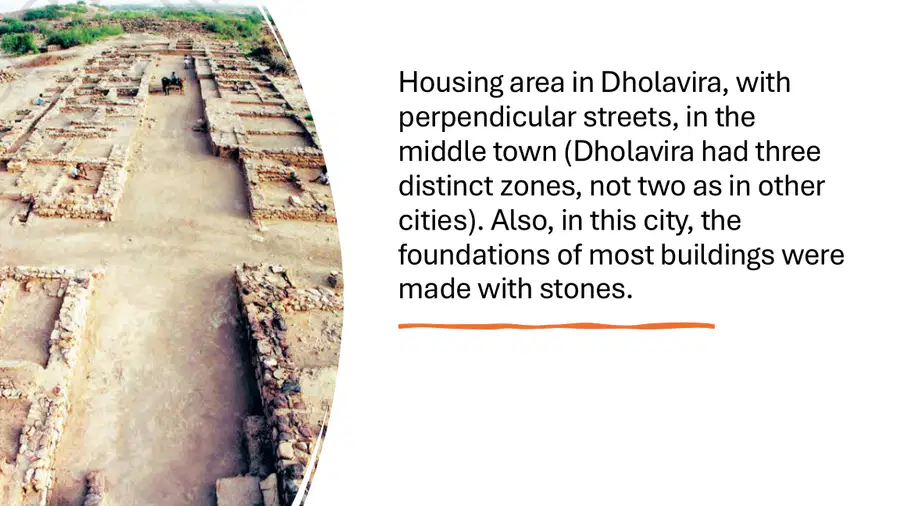
What are the distinct features of the housing area in Dholavira as described in the image?
Three distinct zones
Two distinct zones
Circular streets
Wooden foundations
23
24
Multiple Choice
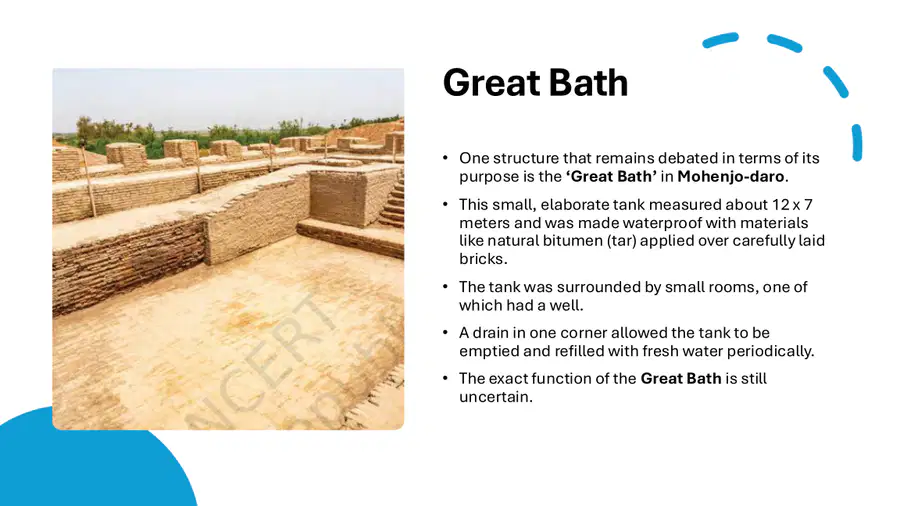
What was the purpose of the Great Bath in Mohenjo-daro?
Religious rituals
Public bathing
Storage of water
Waste disposal
25
26
Multiple Choice
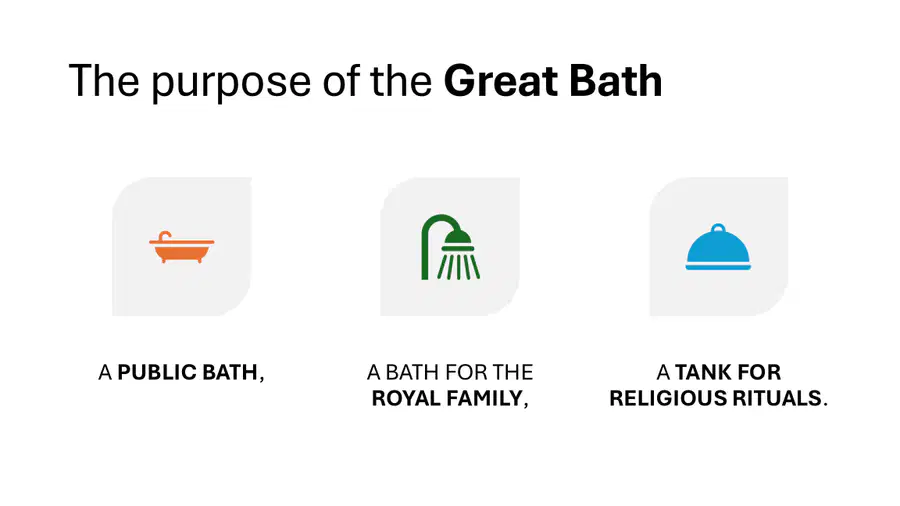
What are the three purposes of the Great Bath as mentioned in the image?
A public bath
A bath for the royal family
A tank for religious rituals
A private spa
27
Multiple Choice
What is the name of the tank discovered at Mohen-jo-daro?
Taj Mahal
Spice Hole
Disneyland
Great Bath
28
29
Multiple Choice
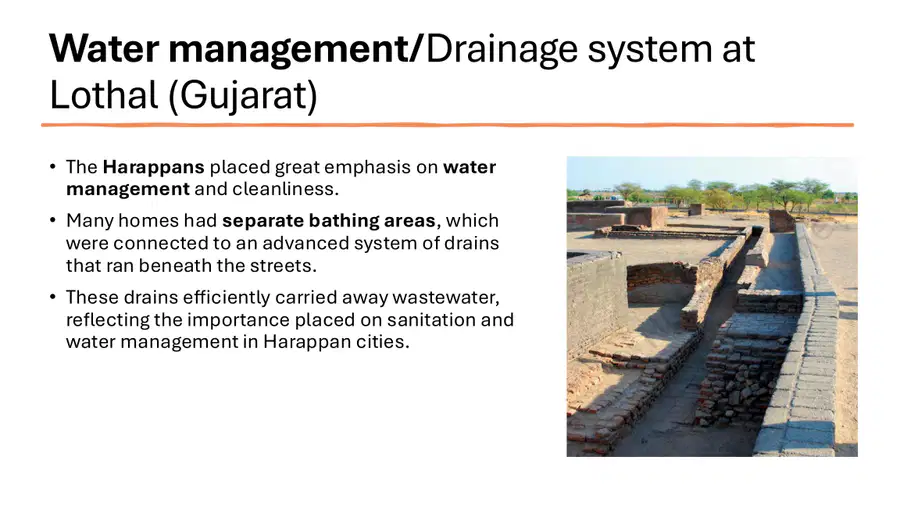
What was the significance of water management in Harappan cities like Lothal?
It was not important
It ensured cleanliness
It was only for bathing
It was a luxury
30
Multiple Choice
Luna and Kai are curious about how ancient farmers managed to bring water to their crops. They built dams, channels, canals, and ditches to help their fields thrive. What is this important farming technique called?
irrigation
nomads
ziggurat
scribes
31
Multiple Choice
Building dams, channels, canals, and ditches to bring water to crops
irrigation
nomads
ziggurat
scribes
32
Multiple Choice
Discovery of streets arranged in a grid-like pattern and a system of pipes for moving water in Harappa and Mohenjo-Daro suggest that these ancient river valley citities in South Asia had...
subsistence based economies
polytheistic beliefs
organized governments
rigid social classes
33
34
Multiple Choice
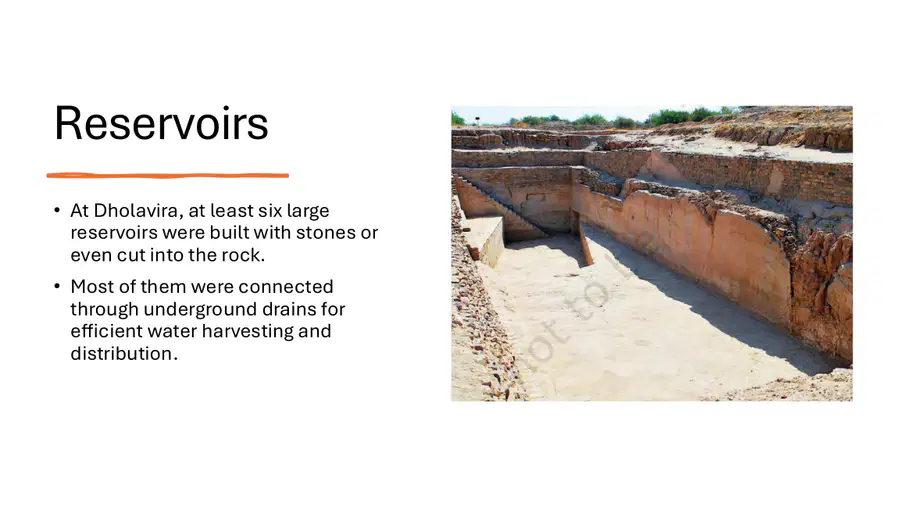
What were the main features of the reservoirs built at Dholavira?
They were built with bricks
They were connected through underground drains
They were only for irrigation
They were used for storage of food
35
36
Multiple Choice
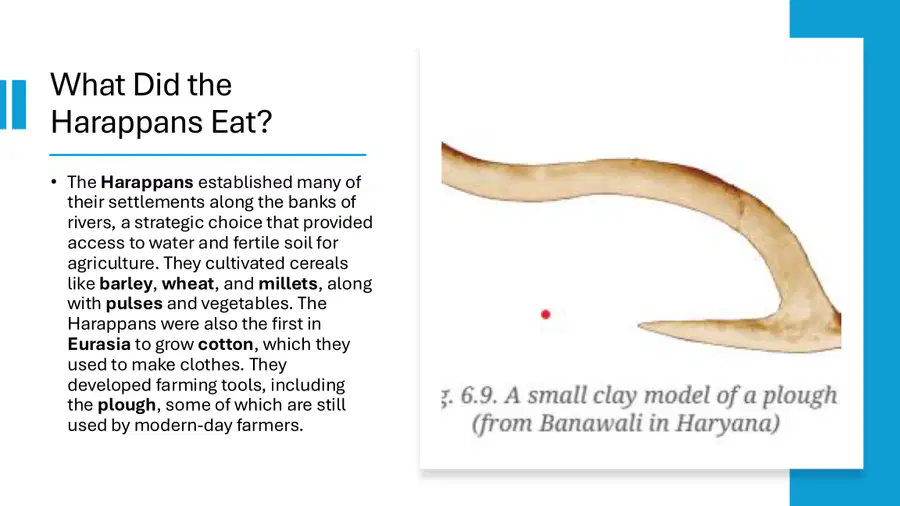
What were the main crops cultivated by the Harappans?
Rice
Barley
Corn
Oats
37
38
Multiple Choice
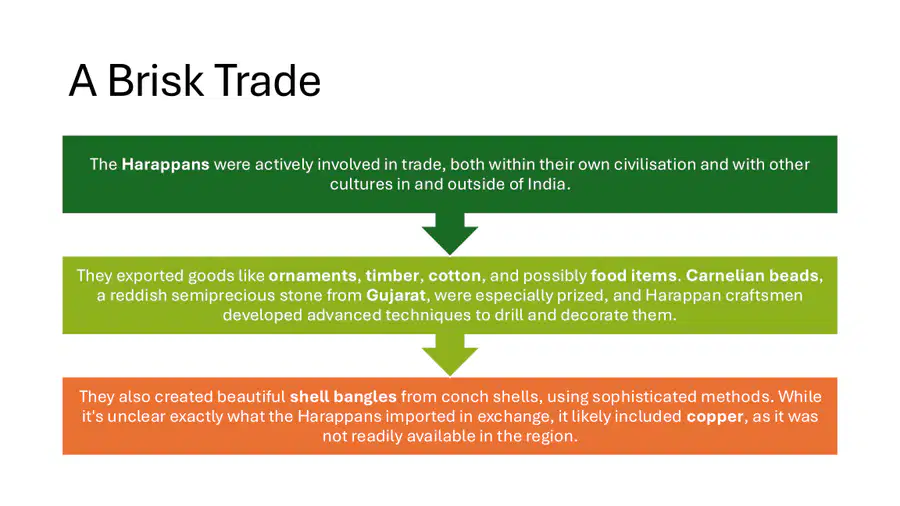
What goods did the Harappans export?
Ornaments
Copper
Shell bangles
Timber
39
Multiple Choice
What cloth did the Harappan traders supply to Egypt?
Silk Cloth
Muslin Cloth
Lycra Cloth
Polycotton Cloth
40
Multiple Choice

41
42
Multiple Choice
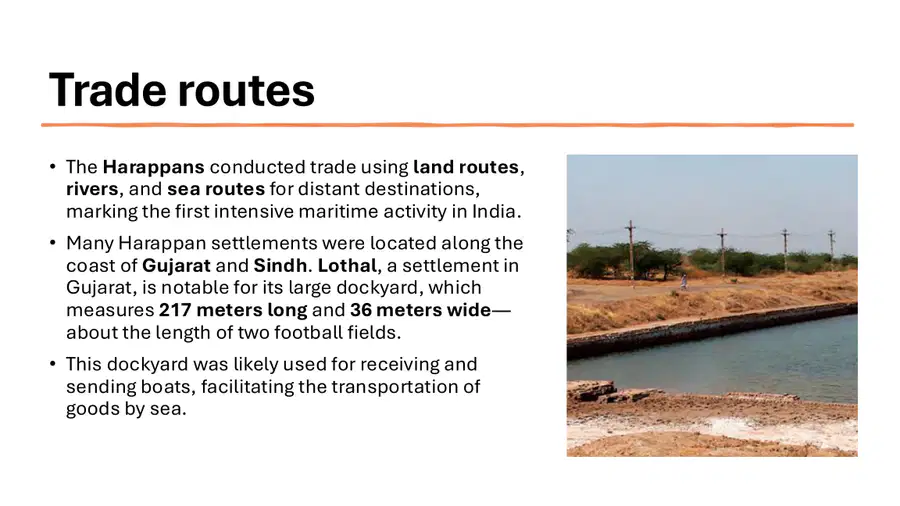
What were the primary trade routes used by the Harappans?
Land routes
Air routes
Rail routes
Space routes
43
44
Multiple Choice
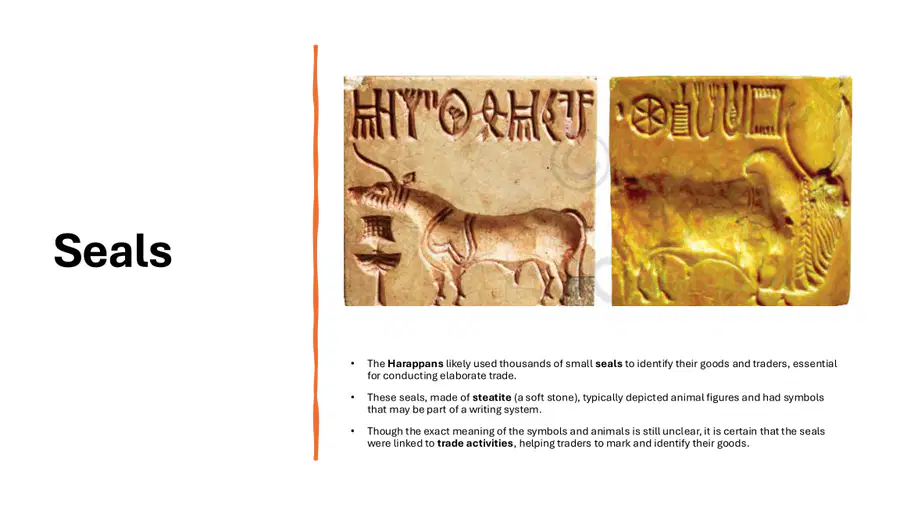
What were the seals used for by the Harappans?
To identify goods and traders
To create art
To write letters
To make jewelry
45
Multiple Choice
46
Multiple Choice
Consider the following statement:
1. After independence, most of the Harappan civilisation centres went over to Pakistan.
2. The Harappan script has been deciphered.
3. Rulers had an important role in Harappan civilisation.
4. Dead were buried in Harappa.
Which of the above is correct statement?
1, 2, 3
2, 3, 4
1, 3, 4
1, 2, 4
47
Multiple Choice
The seals were used by traders to
Purchase goods
Keep as income
Stamp their papers
Stamp their goods
48
Multiple Choice
The seals of the Harappa were mainly ________ shaped.
hexagon
square
circle
rectangle
49
50
Multiple Choice
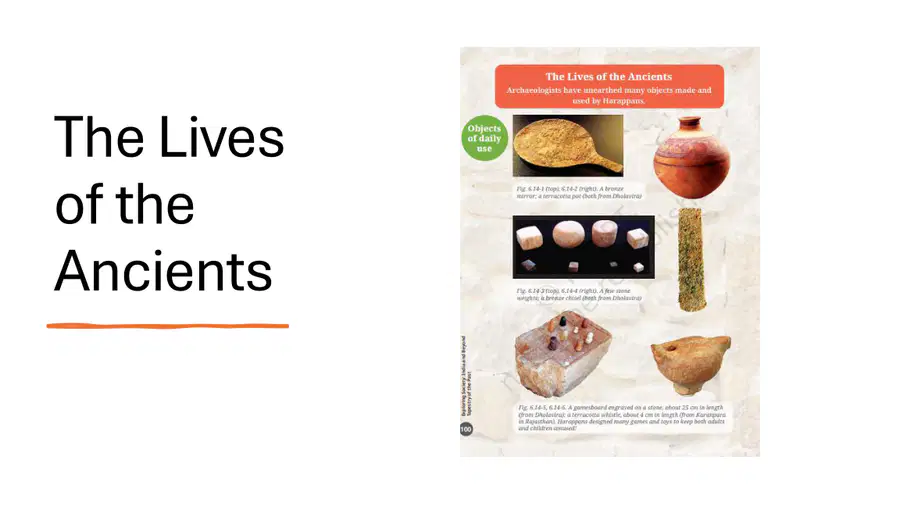
What types of objects were used by the Harappans as shown in the image?
Bronze mirror
Terracotta pot
Stone weights
All of the above
51
52
Multiple Choice
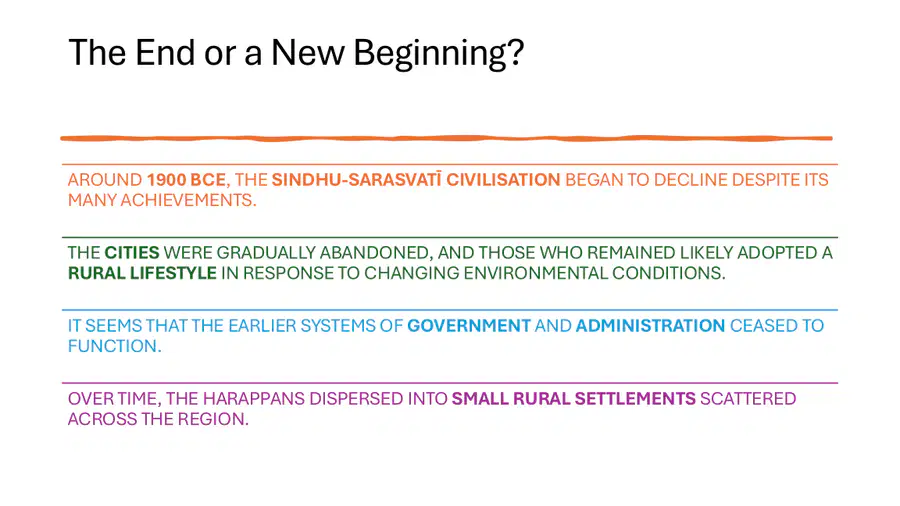
What were the main reasons for the decline of the Sindhu-Sarasvati civilization around 1900 BCE?
Environmental changes
Invasion by foreign powers
Economic collapse
Cultural stagnation
53
54
Multiple Choice
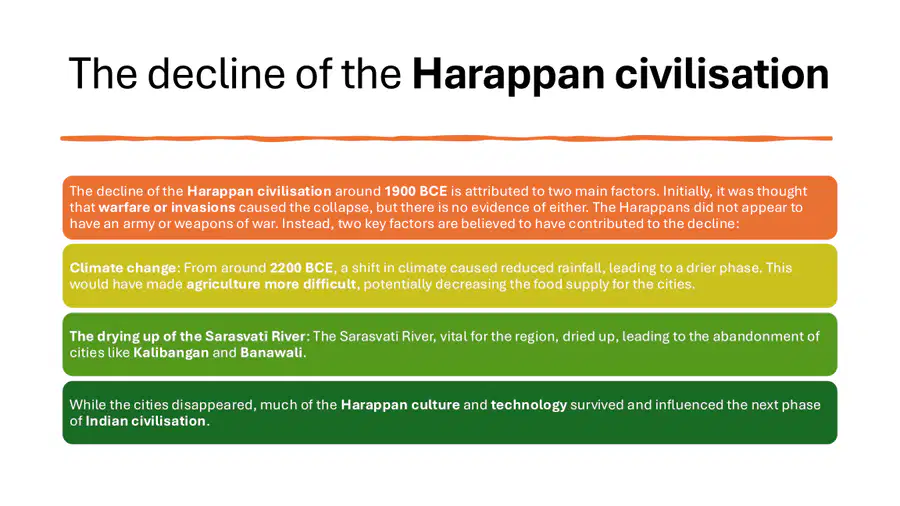
What were the two main factors attributed to the decline of the Harappan civilization?
Warfare and invasions
Climate change and drying up of rivers
Natural disasters and foreign invasions
Economic decline and social unrest
55
Poll
How confident do you feel about this topic now?
Show answer
Auto Play
Slide 1 / 55
SLIDE
Similar Resources on Wayground

47 questions
ACAP Review 6th grade math
Presentation
•
6th Grade
48 questions
Preview of 6.3.10
Presentation
•
6th Grade
51 questions
Verbs and Verb Phrases (Verb #1)
Presentation
•
6th Grade
51 questions
Solar Radiation
Presentation
•
6th Grade
52 questions
Density lesson
Presentation
•
6th Grade
51 questions
7A La Ropa Vocabulario
Presentation
•
KG
47 questions
Age of Contact-Lesson
Presentation
•
7th Grade
Popular Resources on Wayground
11 questions
Hallway & Bathroom Expectations

Quiz
•
6th - 8th Grade
10 questions
HCS SCI 03 Summer School Assessment 2
Quiz
•
3rd Grade
11 questions
Home Scope
Quiz
•
7th - 8th Grade
12 questions
2026 TAP Technology in the Classroom
Presentation
•
Professional Development
15 questions
HCS SCI 05 Summer School Assessment 2 Review
Quiz
•
5th Grade
15 questions
HCS SCI 04 Summer School Review 2
Quiz
•
4th Grade
59 questions
Geometry Unit 3 Review
Quiz
•
9th - 12th Grade
14 questions
FAST ELA READING SMAPLE TEST MATERIALS

Passage
•
3rd Grade