

Bài thuyết trình chưa có tiêu đề

Presentation
•
Science
•
University
•
Practice Problem
•
Hard

Thoa Nguyen
FREE Resource
30 Slides • 26 Questions
1

2
Multiple Choice
Which of the following statements best describes a great circle on the celestial sphere?
A circle on the celestial sphere that passes through its center, dividing it into two equal halves.
A small circle that does not pass through the center of the celestial sphere.
A line connecting the North and South celestial poles.
A circle that represents the orbit of the Moon around the Earth.
3
Open Ended
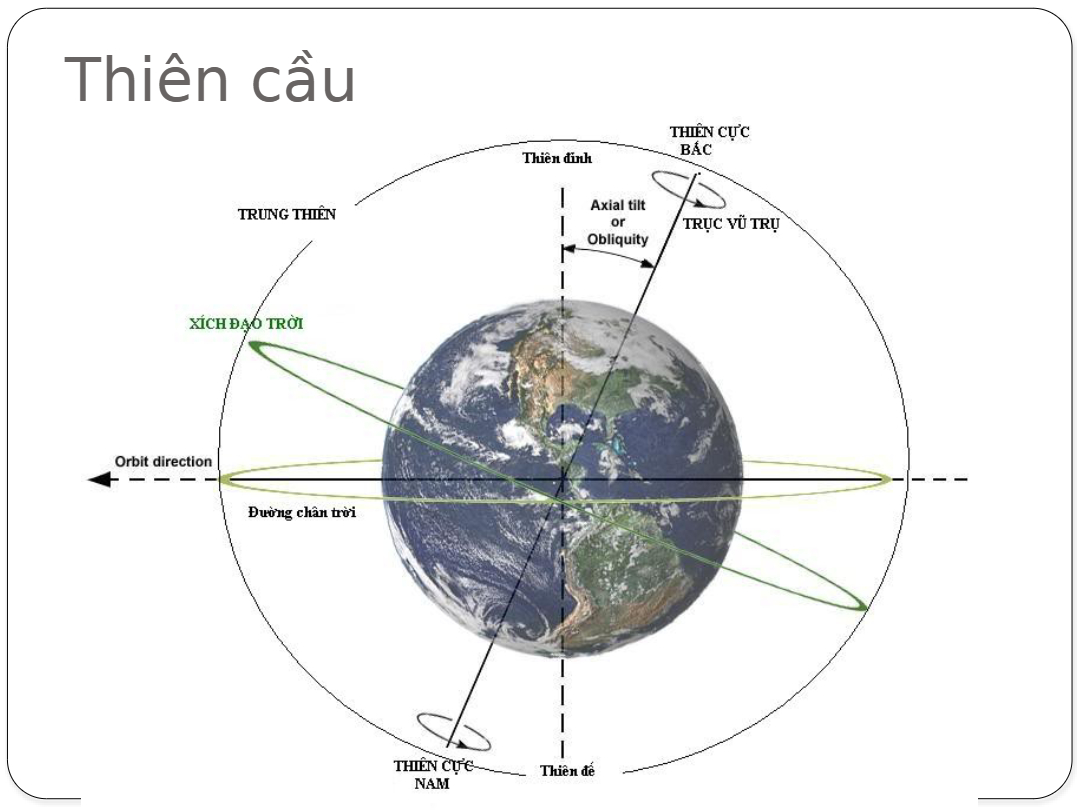
Why is understanding the celestial sphere important for studying the movement of celestial bodies?
4
5
6
Multiple Choice
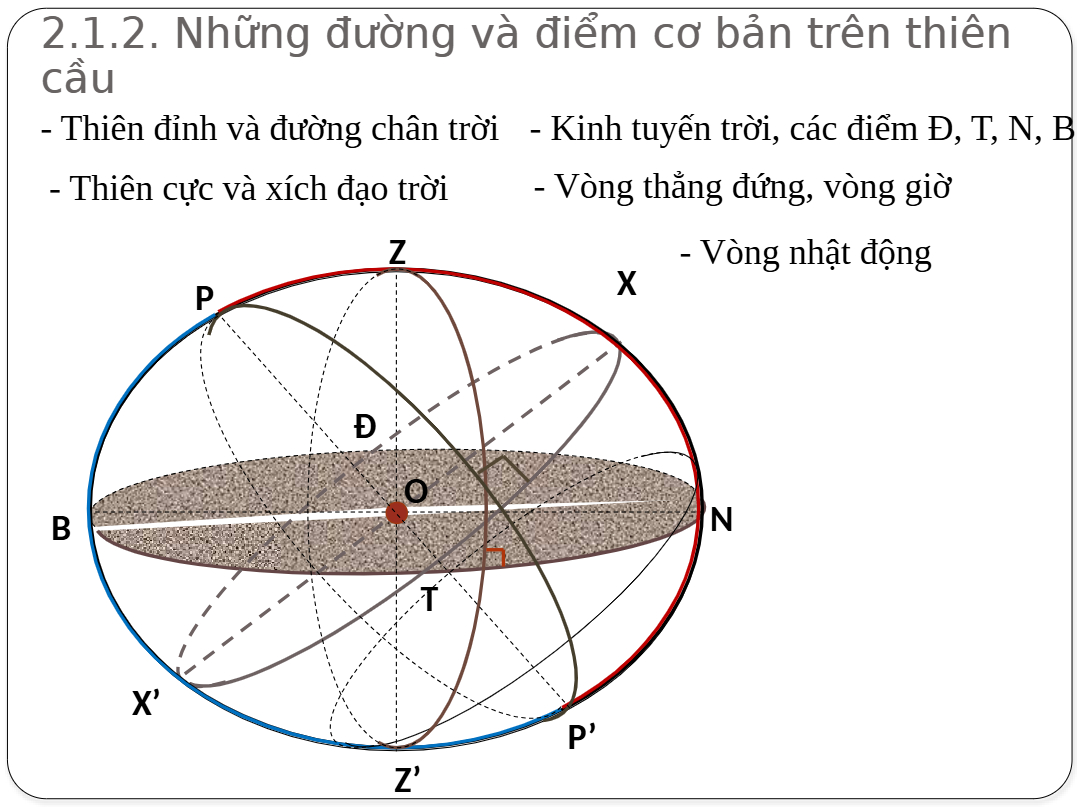
Which of the following are basic lines and points on the celestial sphere as shown in the diagram?
Zenith and horizon
Celestial pole and celestial equator
Hour circle and hour angle
All of the above
7
8
Open Ended
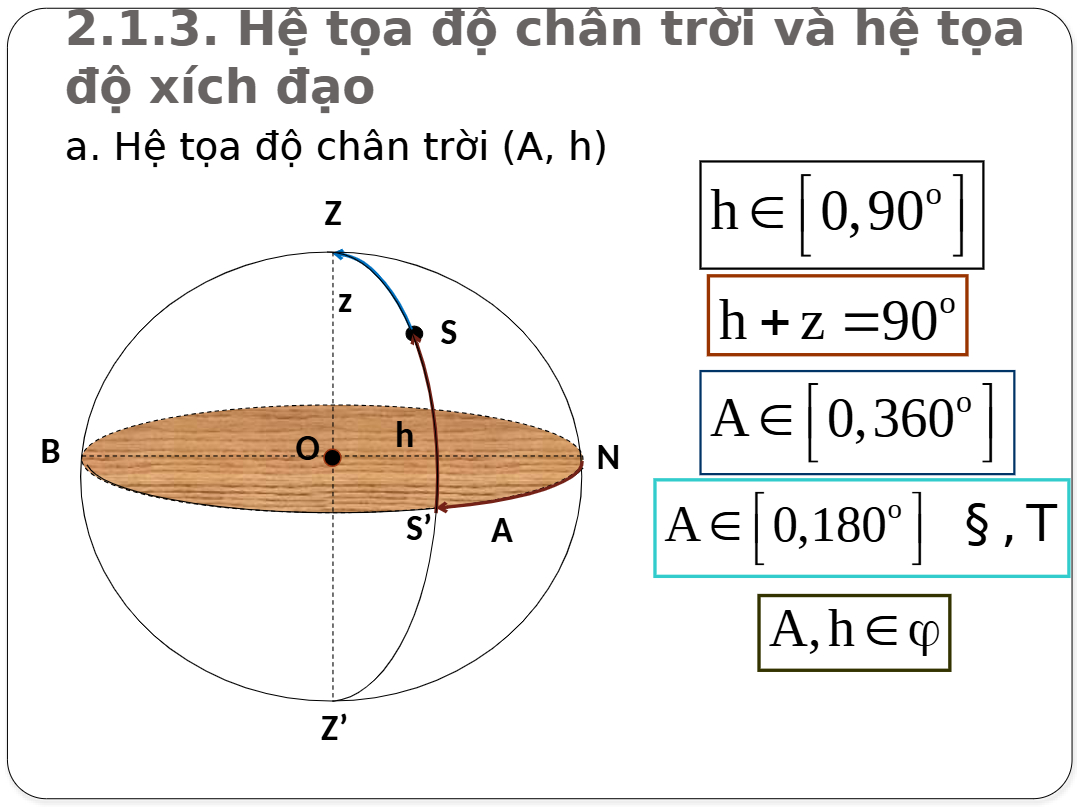
Explain the relationship between altitude (h) and zenith distance (z) in the horizontal coordinate system.
9
10
Multiple Choice
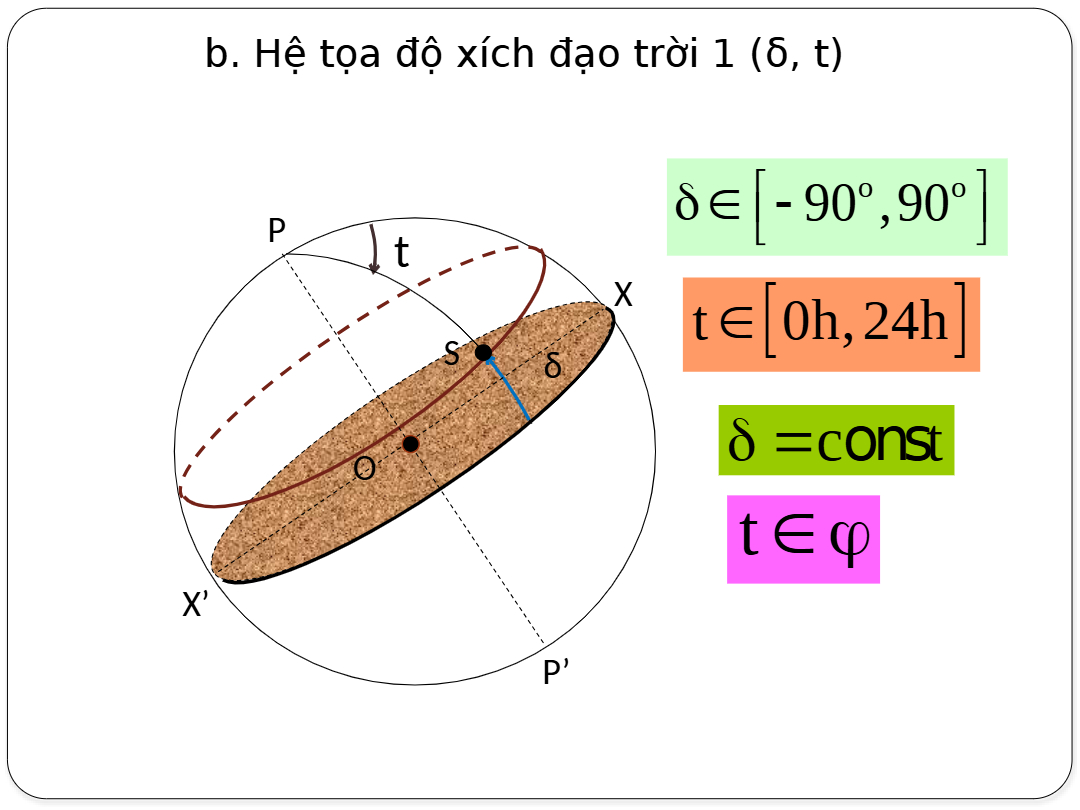
Which of the following statements about the equatorial coordinate system 1 (δ, t) is correct?
Declination δ ranges from -180° to 180°
Hour angle t ranges from 0h to 12h
Declination δ is constant for a given star
t does not depend on the observer's longitude
11
12
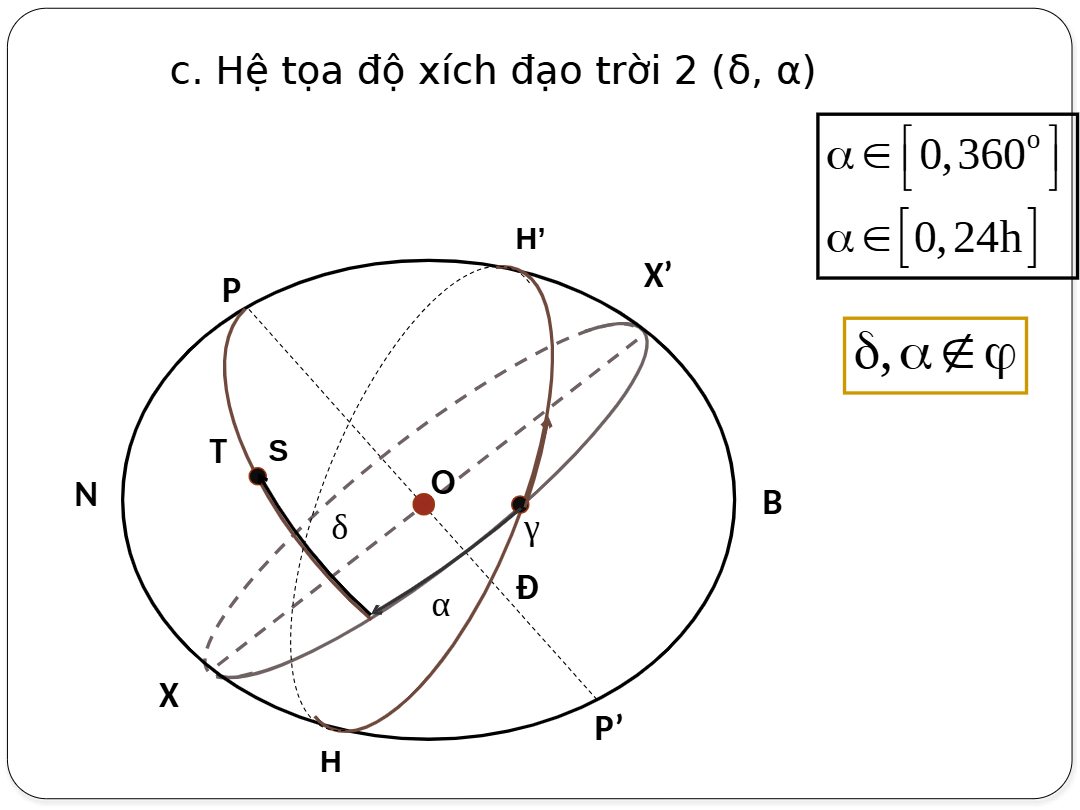
Fill in the Blanks
In the equatorial coordinate system 2 (δ, α), what is the range of right ascension α?
Type answer...
13
14
15
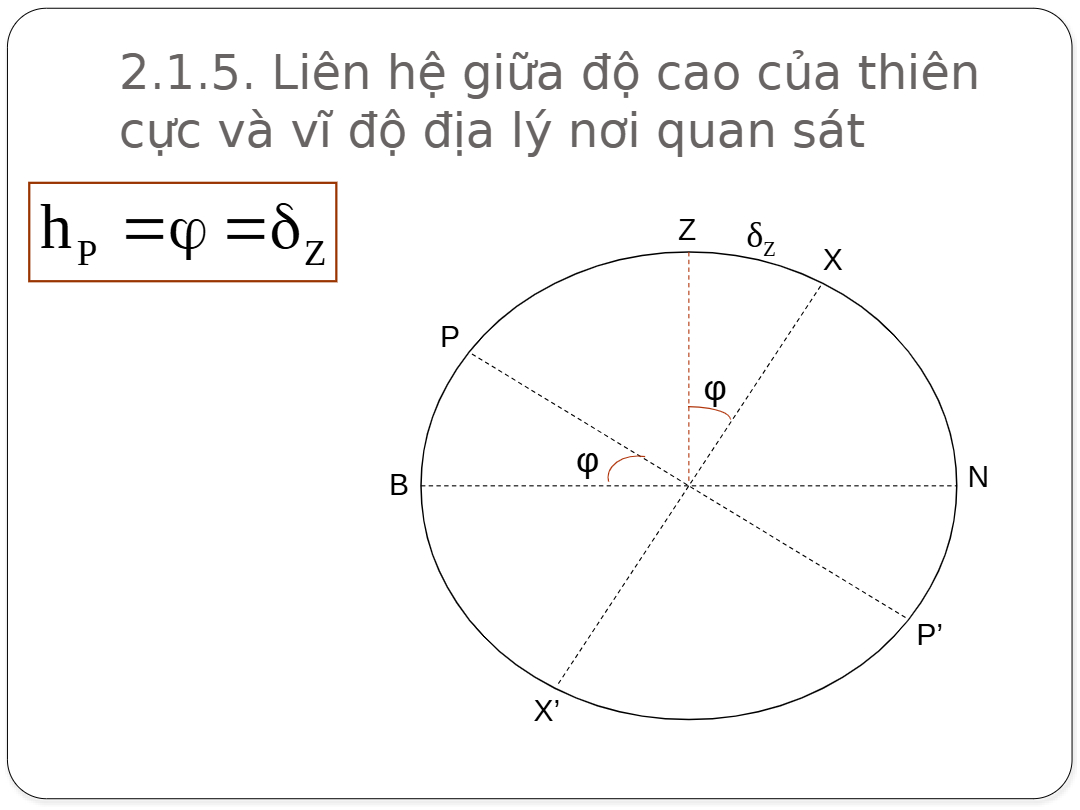
Fill in the Blanks
The altitude of the celestial pole (h_P) at the observer's location is equal to the
Type answer...
16
17
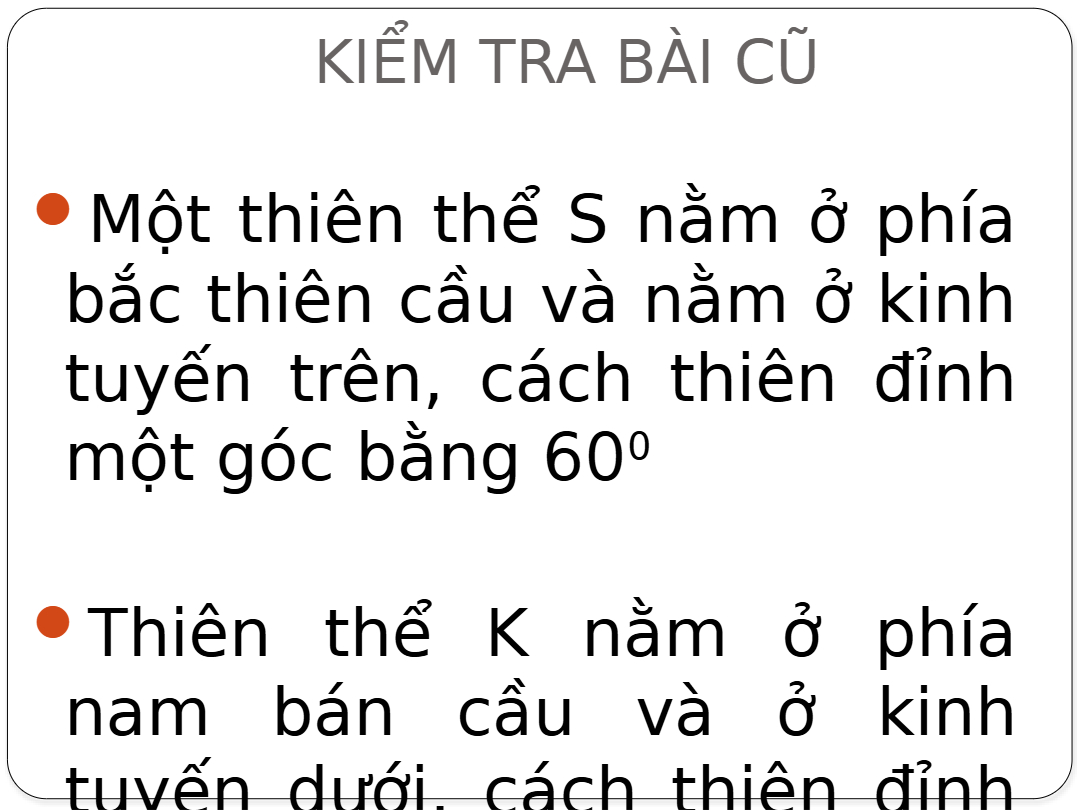
Multiple Choice
Given a celestial body S in the northern celestial hemisphere at the upper meridian, 60 degrees from the zenith, and a celestial body K in the southern hemisphere at the lower meridian, what is the angular distance from the zenith for each?
S: 60°, K: 120°
S: 30°, K: 60°
S: 60°, K: 60°
S: 90°, K: 90°
18

19
20
Multiple Choice
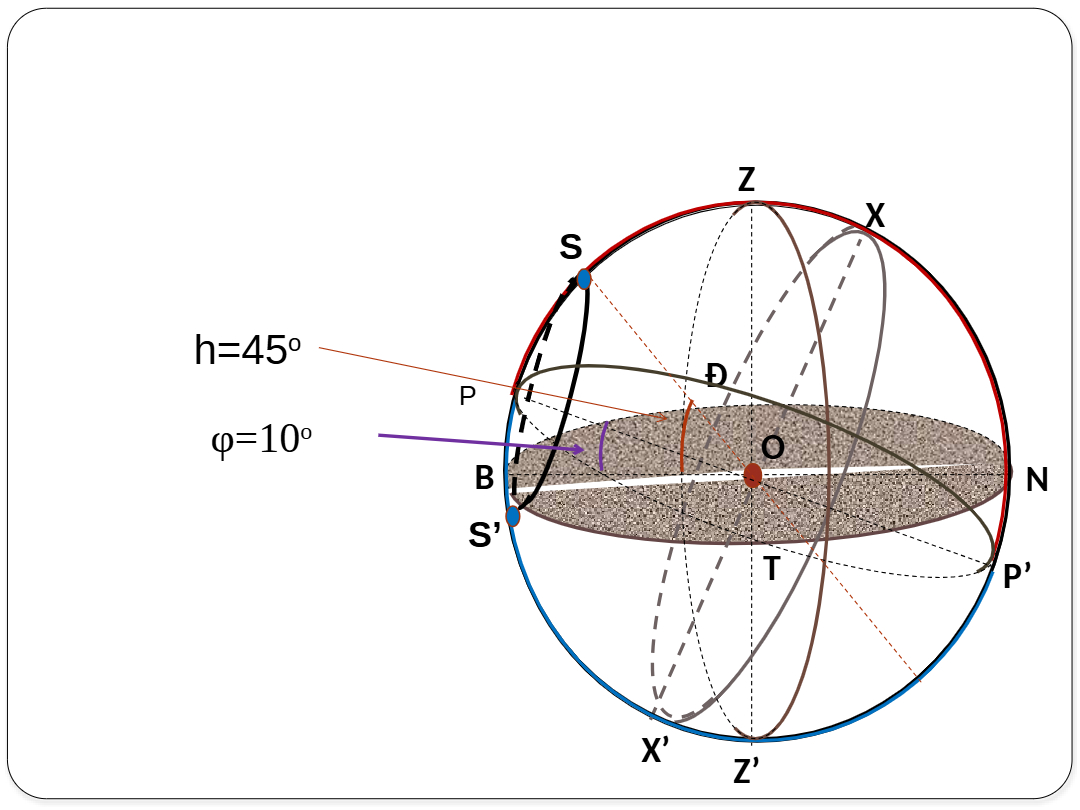
If the vertical axis is tilted by 10° relative to the horizon at the observation site, and a celestial body S passes through the upper meridian at an altitude of 45°, what is the position of S on the celestial sphere?
At 45° above the horizon, 10° from the celestial pole
At 55° above the horizon, 10° from the celestial pole
At 35° above the horizon, 10° from the celestial pole
At 45° above the horizon, 20° from the celestial pole
21
22
Fill in the Blanks
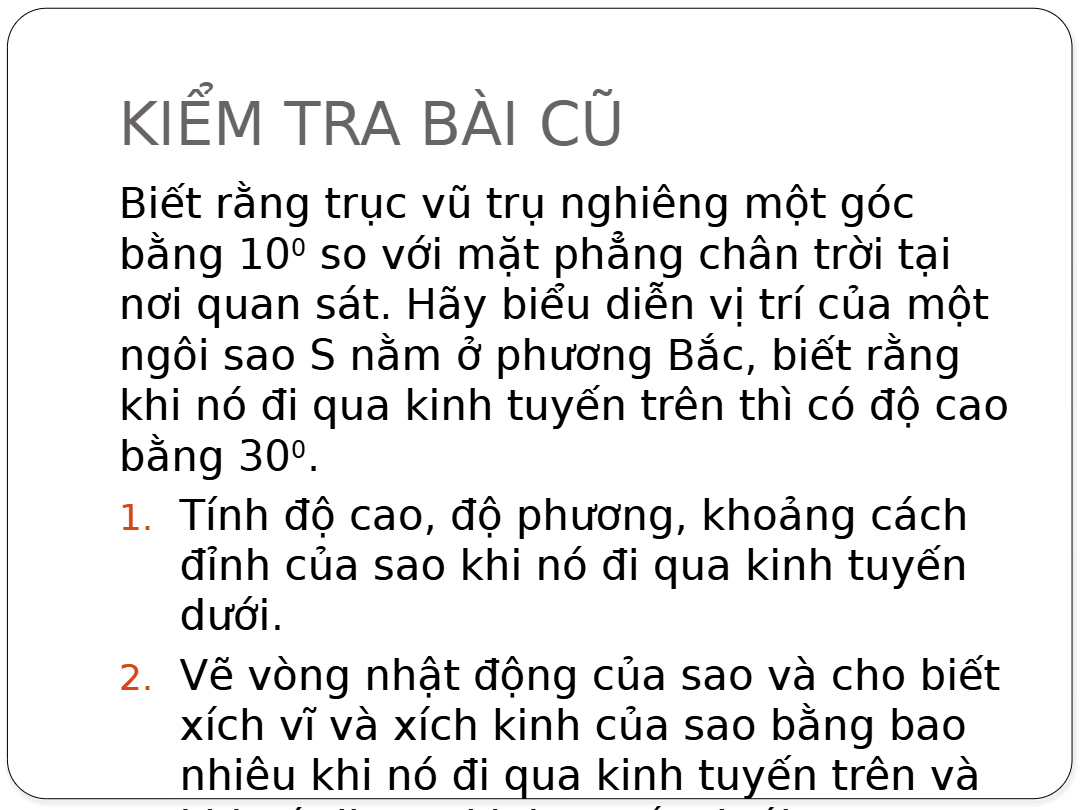
Calculate the altitude, azimuth, and zenith distance of a star S in the northern direction when it passes through the lower meridian, given that its altitude at the upper meridian is 30° and the vertical axis is tilted by 10°.
Type answer...
23
24
Open Ended
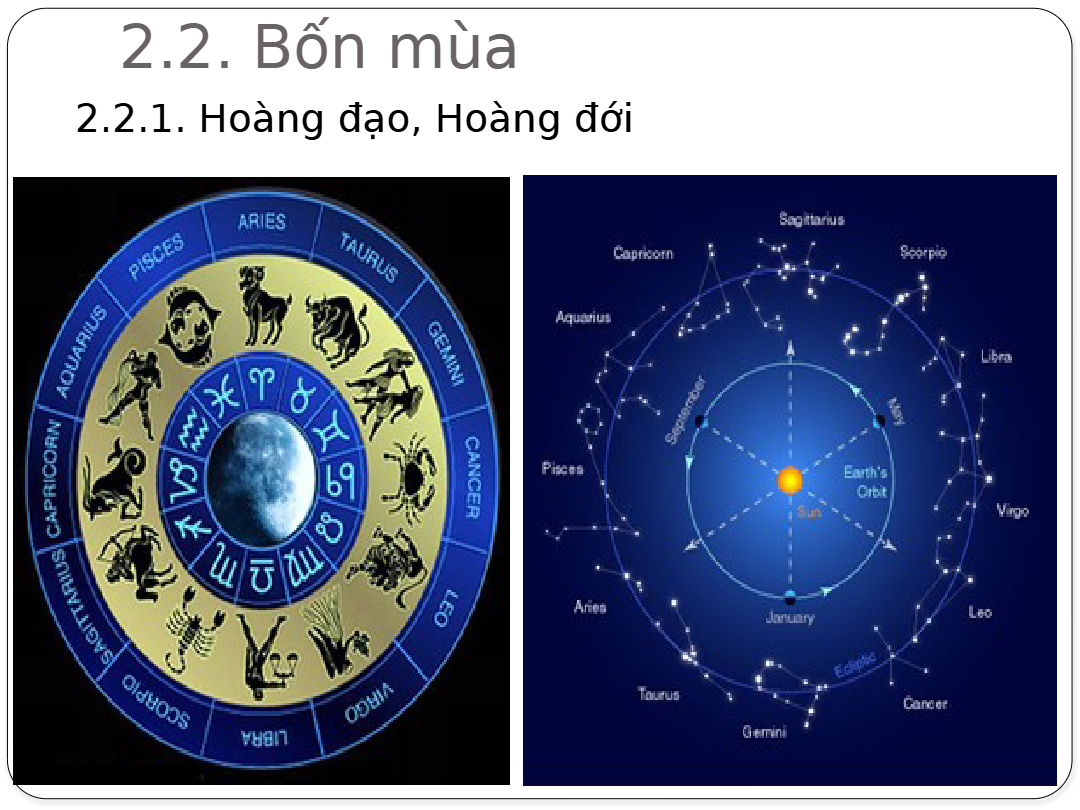
What is the significance of the zodiac and the ecliptic in astronomy?
25
26
Open Ended
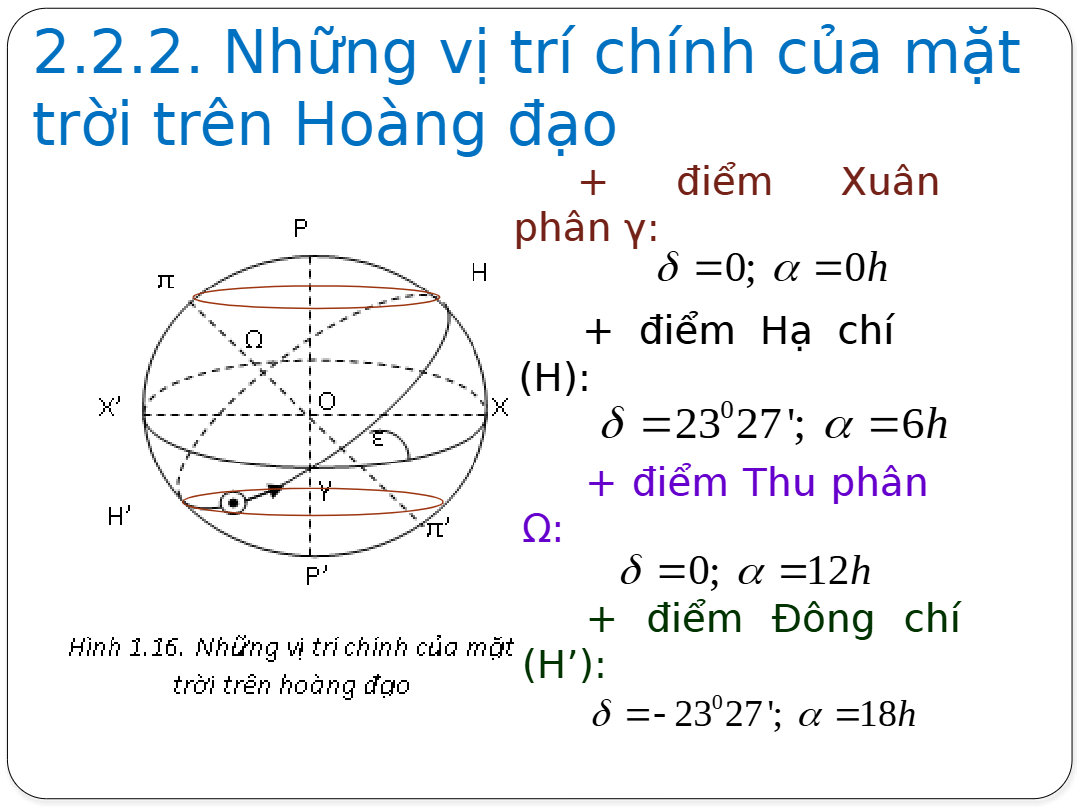
Explain how the positions of the Sun at the equinoxes and solstices affect the seasons on Earth.
27
Multiple Choice
Which of the following are the main positions of the Sun on the ecliptic?
Vernal equinox, Summer solstice, Autumnal equinox, Winter solstice
Spring, Summer, Autumn, Winter
North pole, South pole, Equator, Meridian
Pisces, Aries, Taurus, Gemini
28
29
Multiple Choice
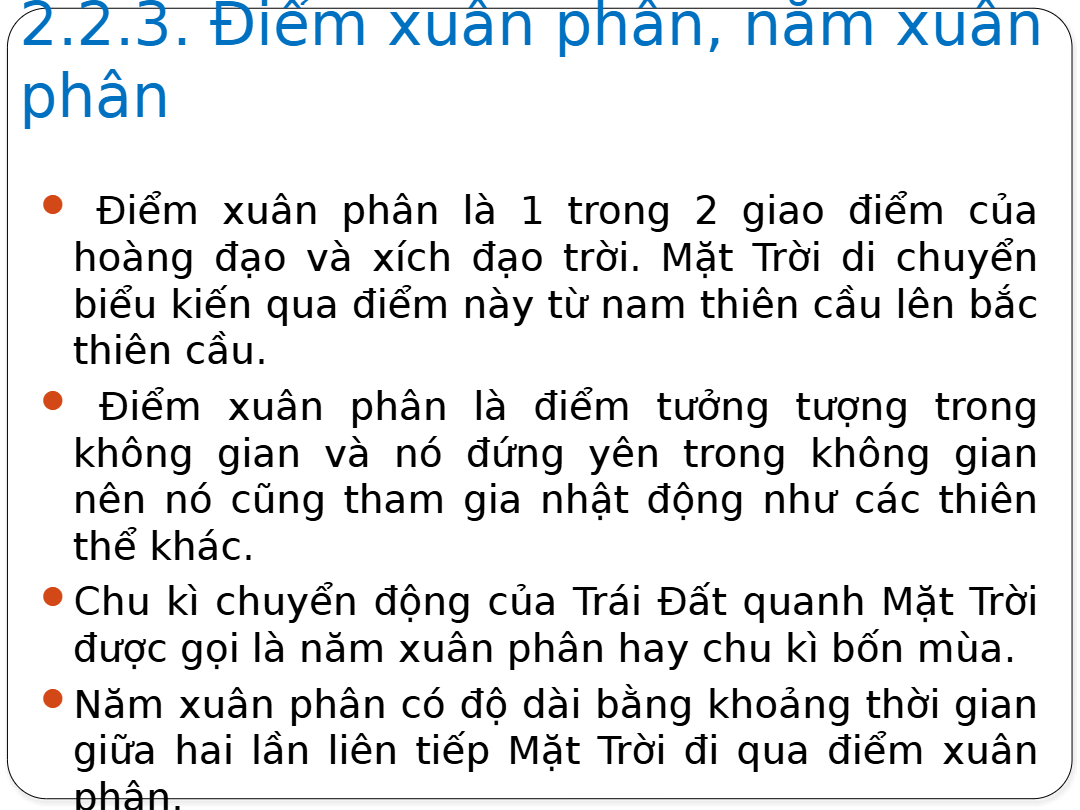
Why is the cycle of Earth's movement around the Sun called the 'vernal equinox year' or the 'four-season cycle'?
Because it only includes spring and summer.
Because it is measured by the time between two consecutive passages of the Sun through the vernal equinox point.
Because it is based on lunar cycles.
Because it is the shortest cycle in astronomy.
30
Multiple Choice
What is the significance of the vernal equinox point in the movement of the Sun across the celestial sphere?
It marks the beginning of winter.
It is one of the two intersection points of the ecliptic and celestial equator.
It is the point where the Sun is farthest from the Earth.
It is the point where the Sun sets earliest.
31
32
Open Ended
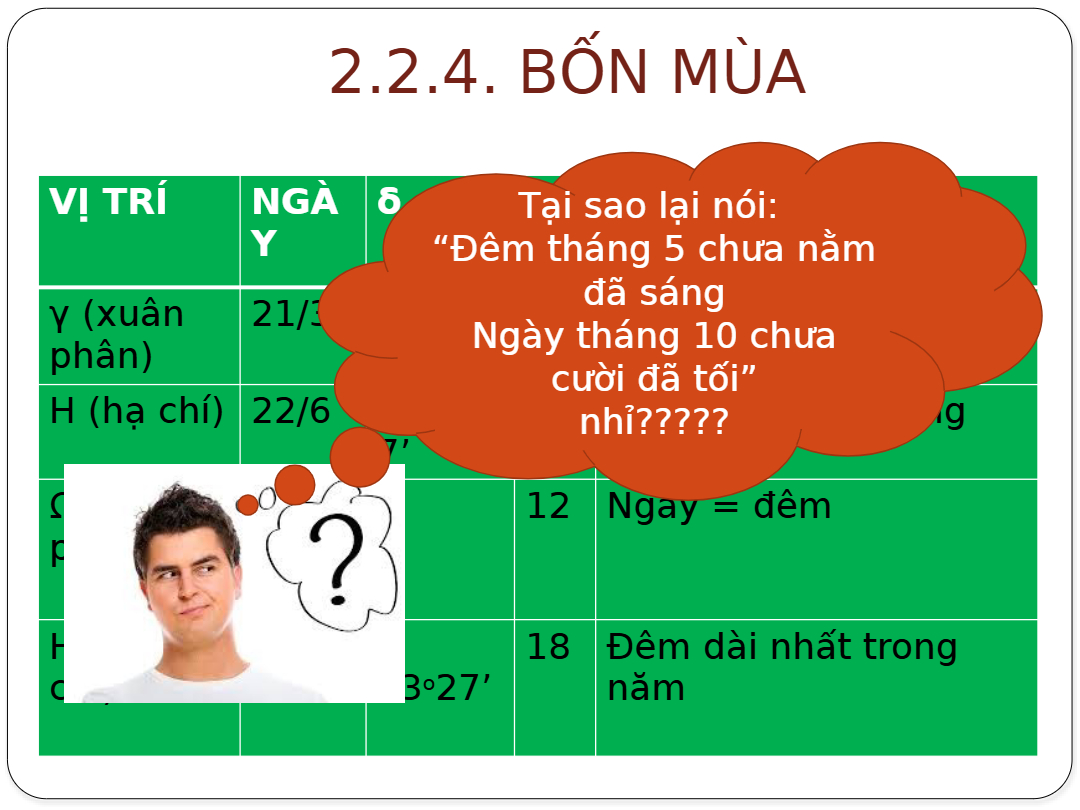
Why do people say: 'In May, the night hasn't ended but the day has already begun. In October, the day hasn't smiled but the night has already fallen'?
33
34
Fill in the Blanks
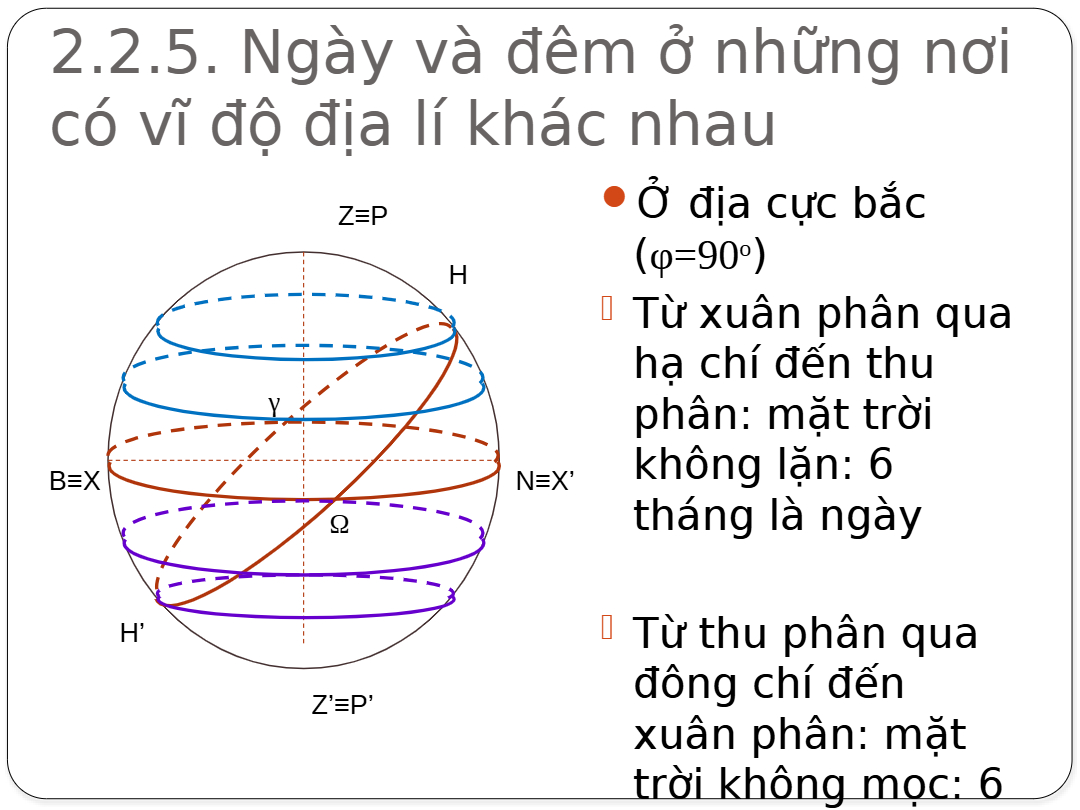
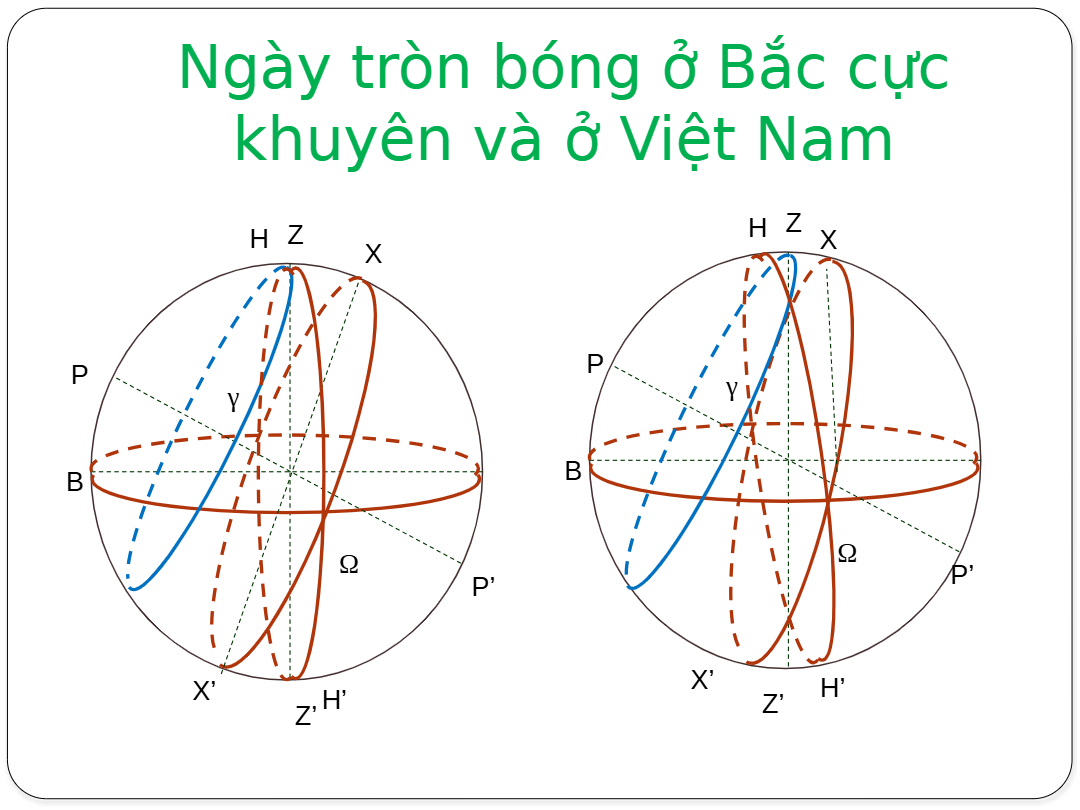
Fill in the blank: At the North Pole, from the vernal equinox to the autumnal equinox, the Sun does not set for
Type answer...
35
36
Multiple Select
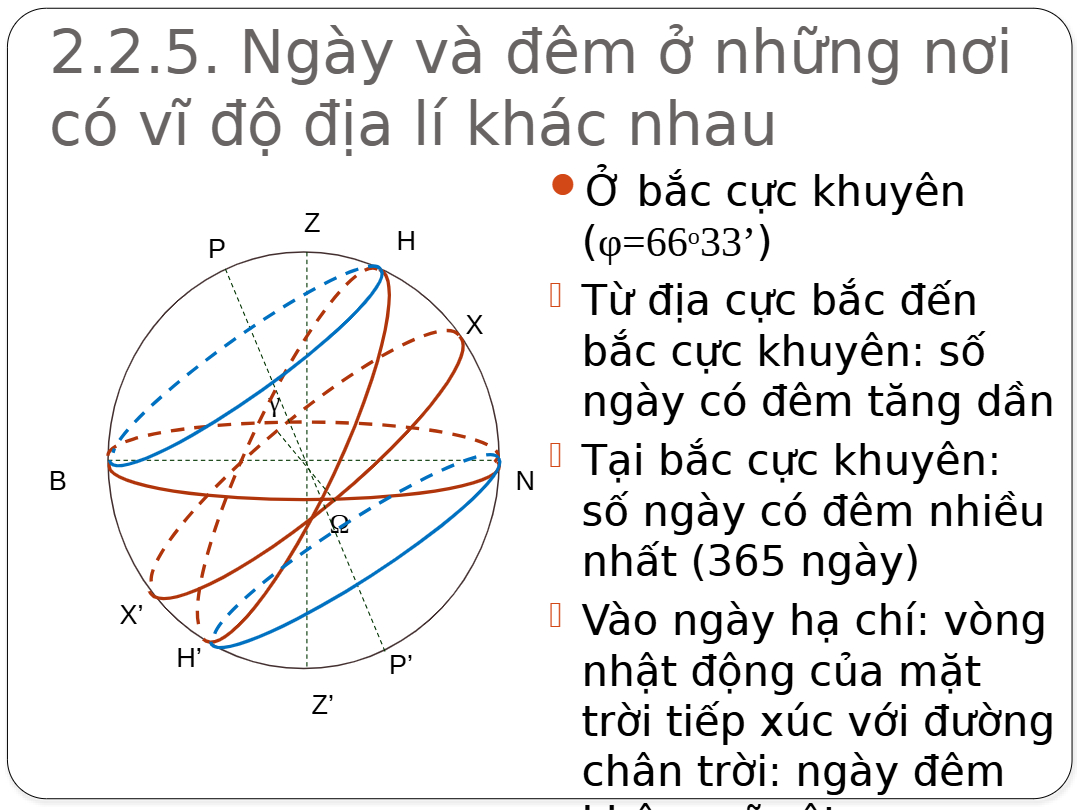
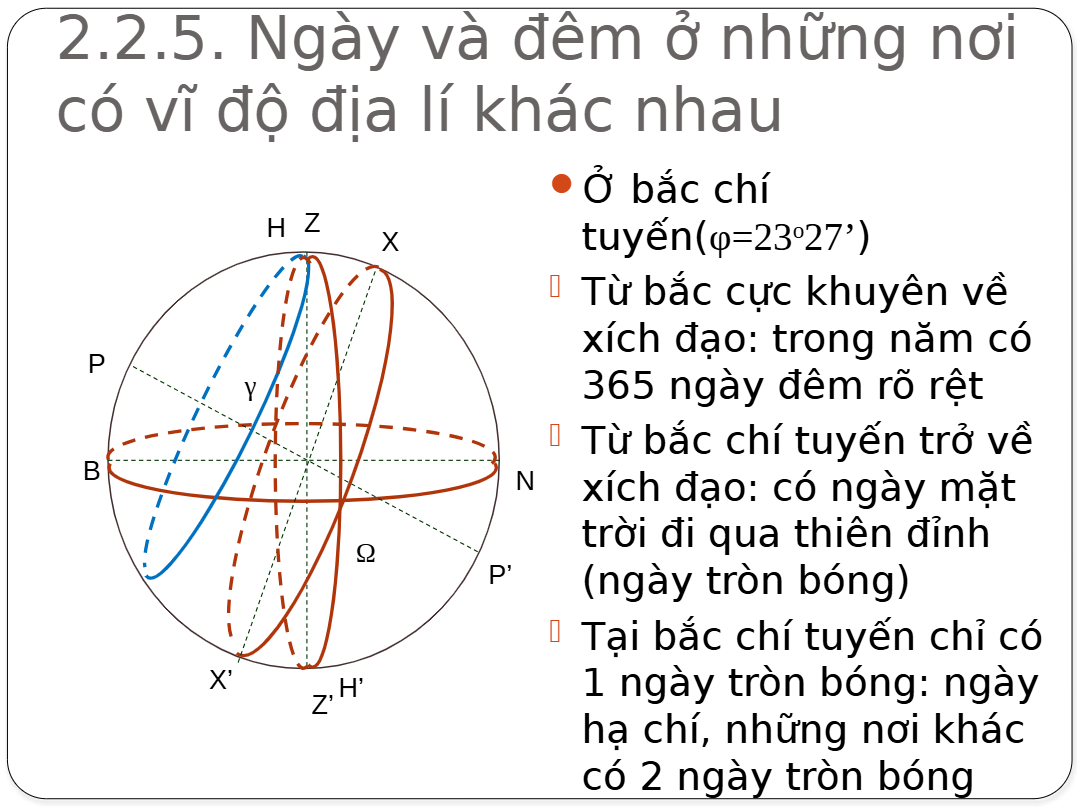
Which of the following statements are true about the Arctic Circle (66°33')?
The number of days with night increases as you move from the North Pole to the Arctic Circle.
At the Arctic Circle, there are 365 days of night.
During the summer solstice, the Sun's path touches the horizon, resulting in both day and night.
The Arctic Circle experiences only one day of continuous sunlight.
37
38
39

40
Multiple Choice
Which of the following instruments is NOT used to measure time?
Sundial
Hourglass
Thermometer
Alarm clock
41
42
Fill in the Blanks
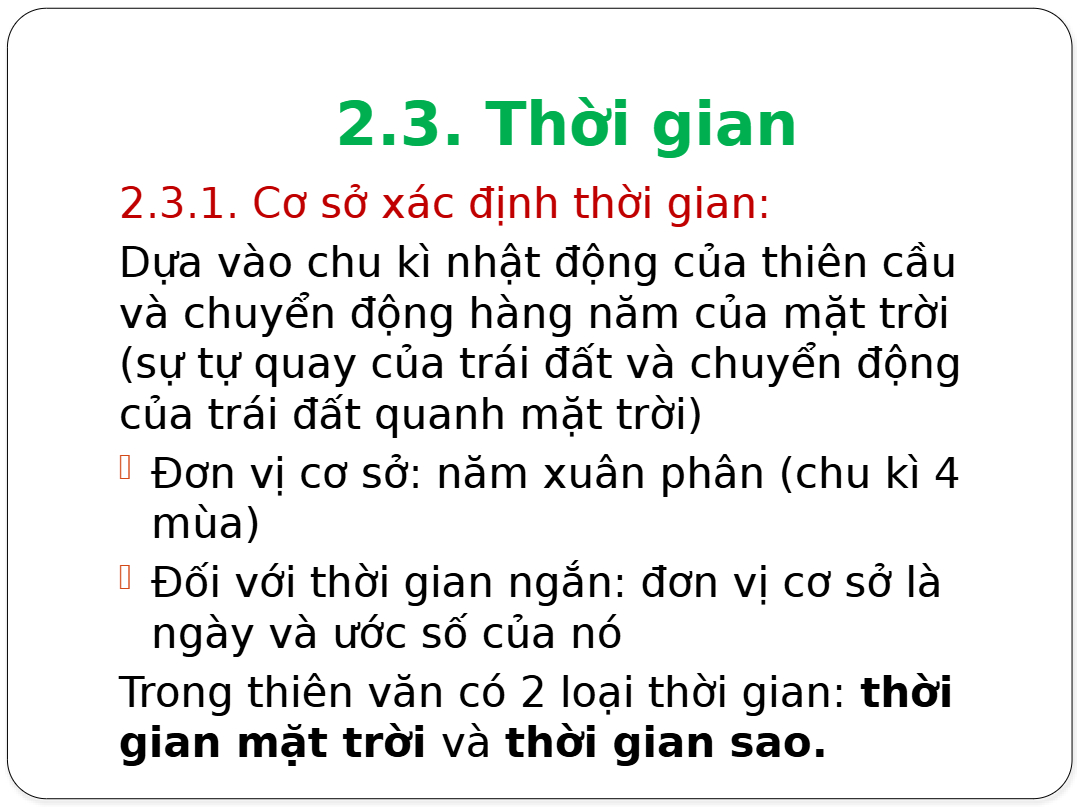
Fill in the blank: The basic unit for short periods of time in astronomy is the
Type answer...
43
44
Open Ended
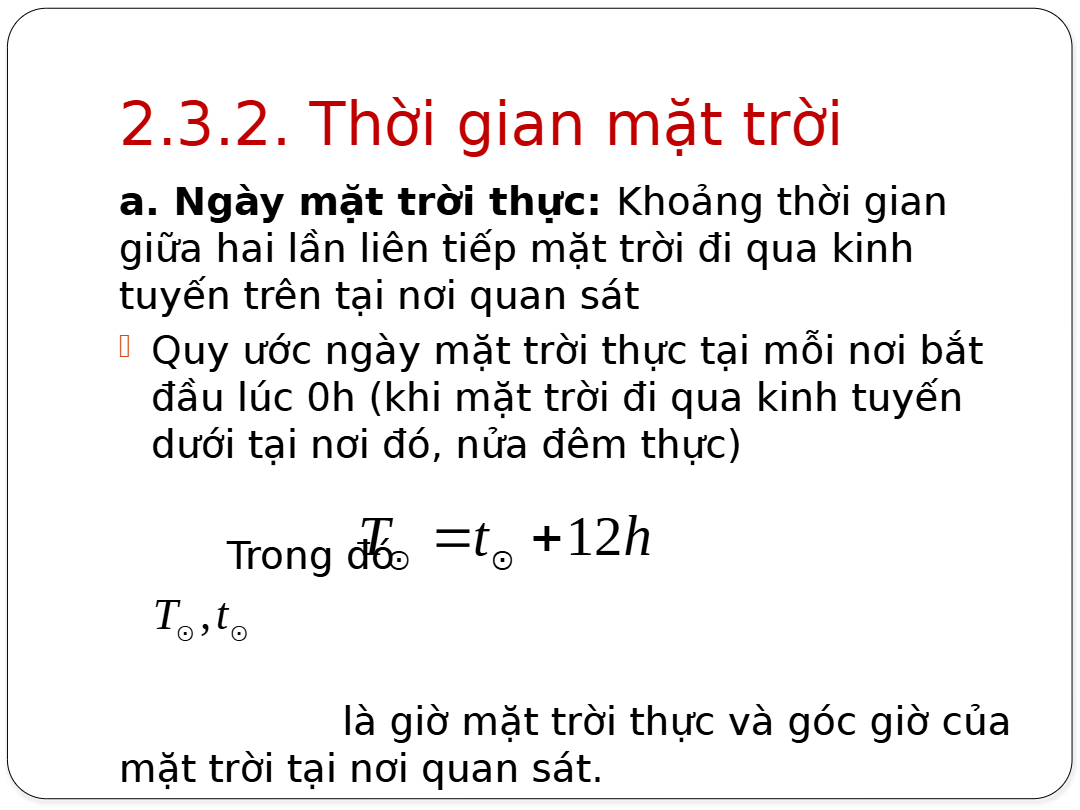
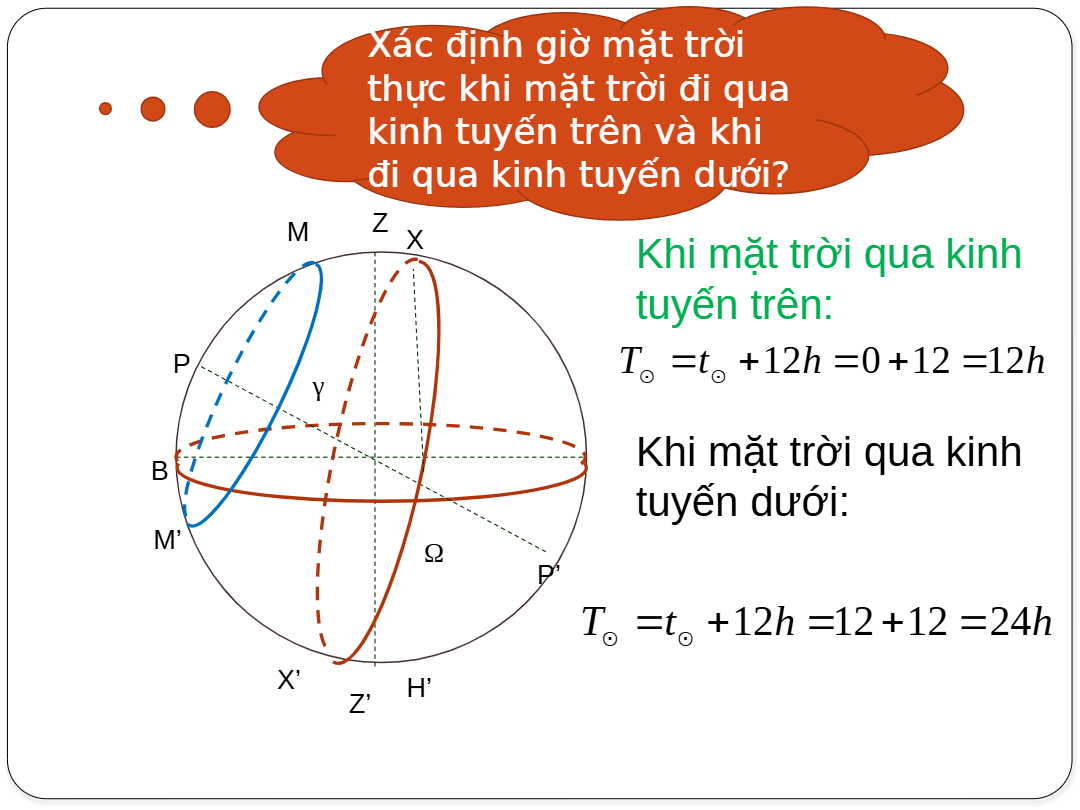
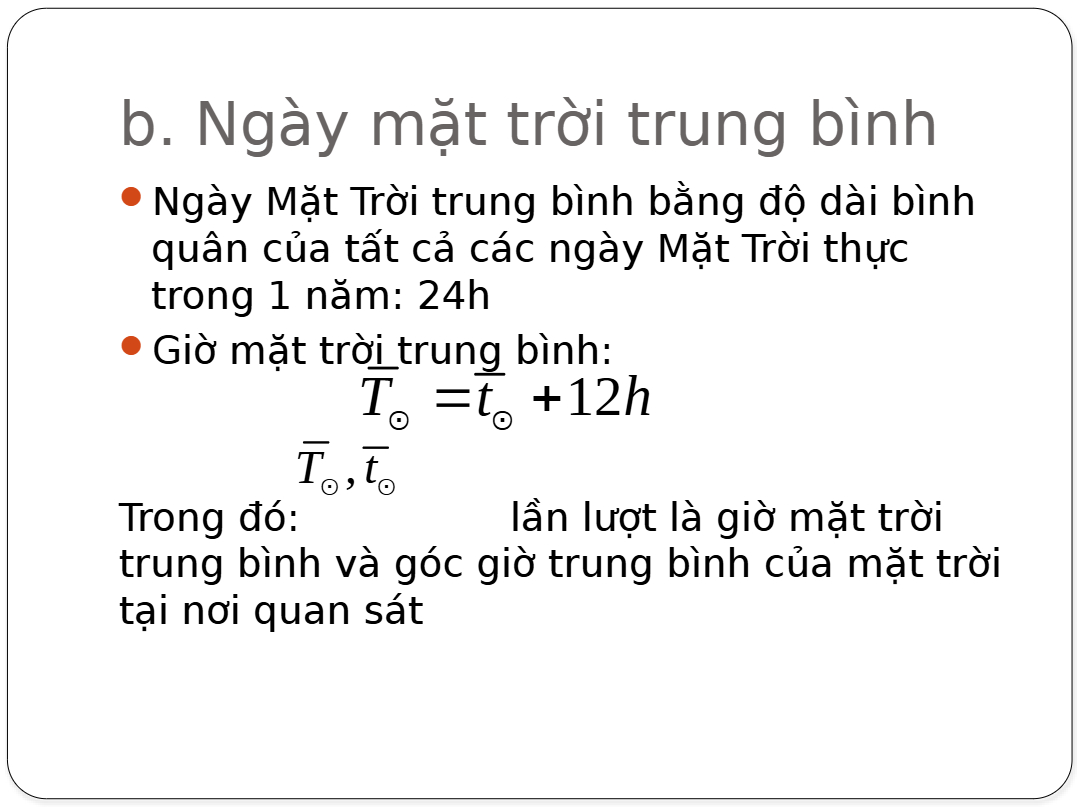
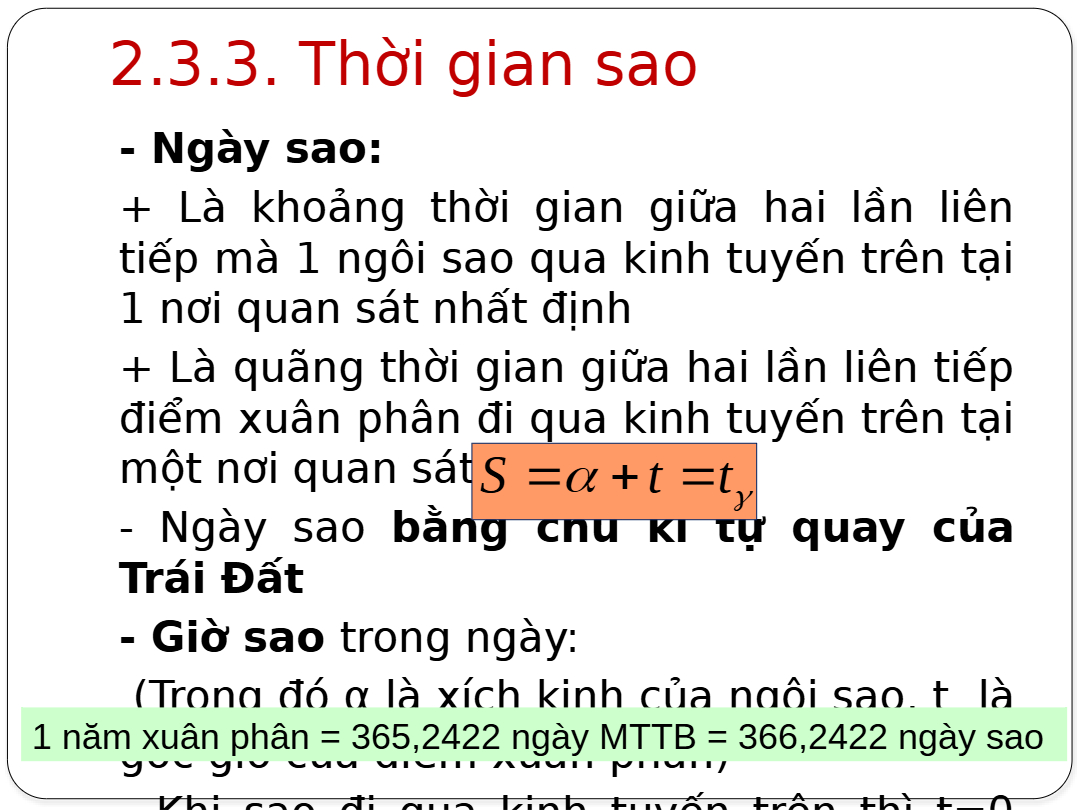
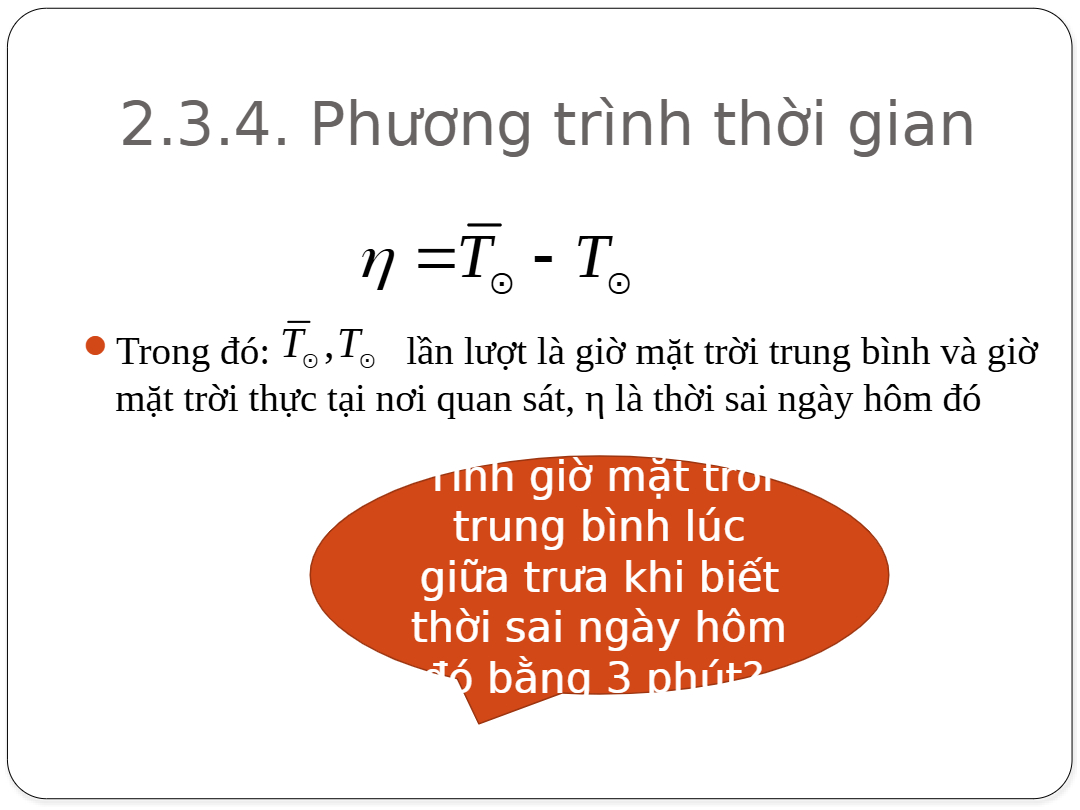
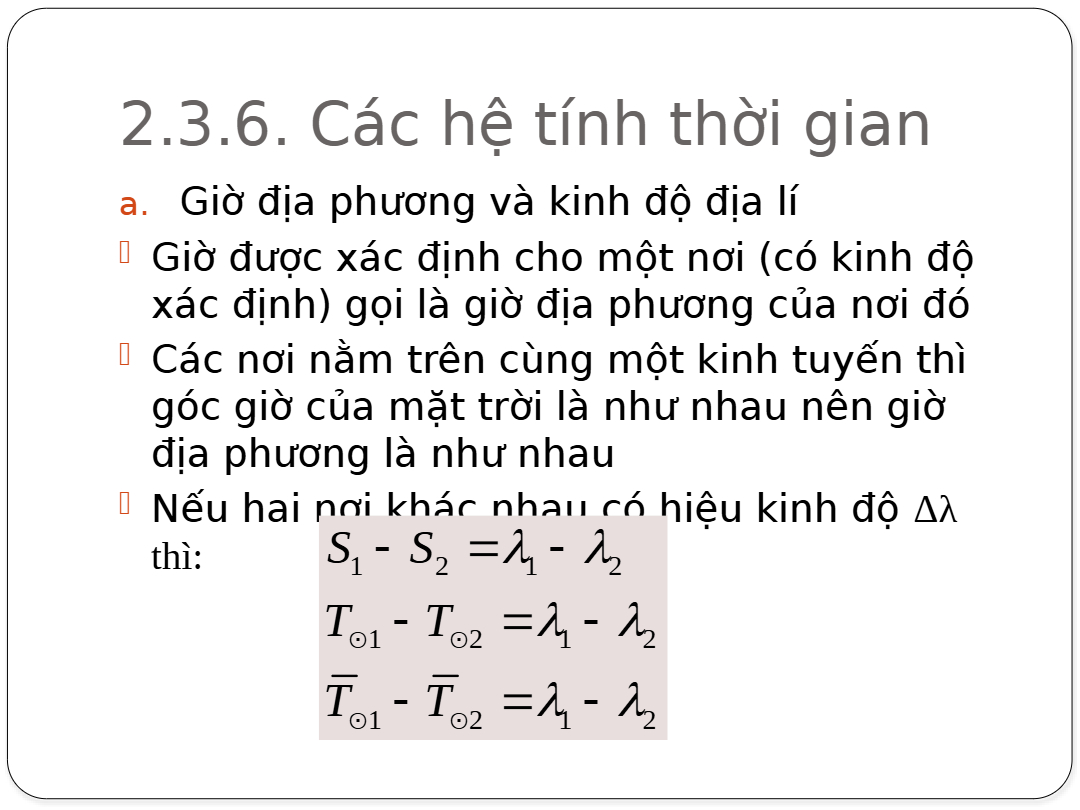
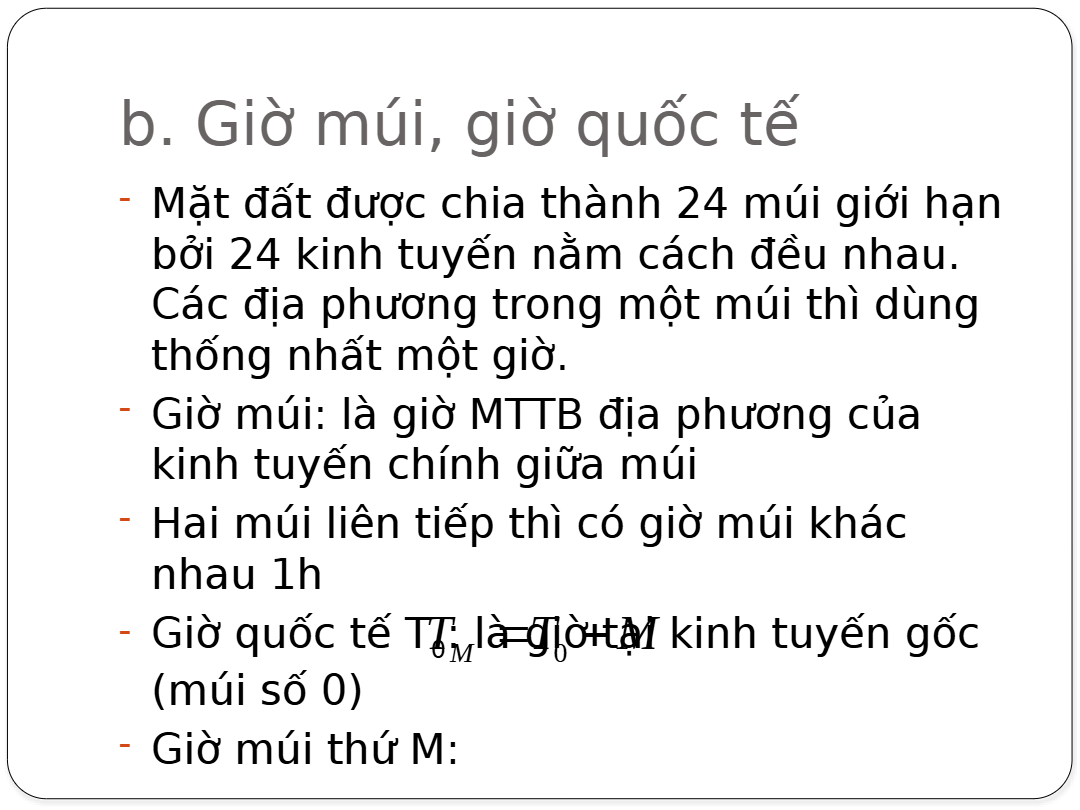
Based on the images and text, explain the difference between 'thời gian mặt trời' (solar time) and 'thời gian sao' (sidereal time).
45
46

47
Multiple Select
Select all factors that cause the length of a true solar day to change during the year.
Earth's elliptical orbit around the Sun
Earth's axial tilt
The Moon's gravitational pull
The Sun's rotation
48
Multiple Choice
Which of the following statements about 'ngày mặt trời thực' (true solar day) is correct?
It is always exactly 24 hours long.
It varies throughout the year due to Earth's orbit and tilt.
It is measured by atomic clocks.
It is the same as a sidereal day.
49
50
Open Ended
Describe how the average solar day ('ngày mặt trời trung bình') is determined and its significance in timekeeping.
51
52
53
54
55
Open Ended
How does understanding the concept of the celestial sphere help you explain the apparent motion of stars in the sky?
56
Multiple Choice
What is a great circle on the celestial sphere?
A circle that passes through the center of the celestial sphere
A small circle on the celestial sphere
A circle that does not pass through the center of the celestial sphere
A circle that is parallel to the celestial equator
Show answer
Auto Play
Slide 1 / 56
SLIDE
Similar Resources on Wayground

54 questions
Community Health Week 1 FA 25
Presentation
•
University
53 questions
Environmental Systems- CH6 Biomes
Presentation
•
12th Grade - University
53 questions
05 Wonders of the Sky-Eclipses
Presentation
•
12th Grade - University
52 questions
DSF - 07 Digital Forensics
Presentation
•
University
55 questions
Forms of Business Ownership
Presentation
•
University
52 questions
1 - Atmospheric Composition - ES
Presentation
•
12th Grade
51 questions
Motivation science presentation
Presentation
•
KG
50 questions
Presentasi Tanpa Judul
Presentation
•
KG - University
Popular Resources on Wayground
21 questions
Continents and Oceans

Quiz
•
6th Grade
20 questions
Parts of Speech
Quiz
•
5th Grade
16 questions
Subject & Predicate
Quiz
•
5th Grade
25 questions
Multiplication Facts
Quiz
•
5th Grade
12 questions
Map Skills
Quiz
•
3rd Grade
22 questions
Continents and Oceans
Quiz
•
5th Grade
15 questions
Rounding Decimals
Quiz
•
5th Grade
20 questions
Brand Labels
Quiz
•
5th - 12th Grade
Discover more resources for Science
20 questions
Disney Trivia
Quiz
•
University
10 questions
Spanish Greetings and Goodbyes!
Presentation
•
6th Grade - University
20 questions
Preterito vs. Imperfecto
Quiz
•
KG - University
15 questions
TOEFL Structure - TEST 2
Quiz
•
University
25 questions
Cell Transport
Quiz
•
KG - University
40 questions
Flags of the World
Quiz
•
KG - Professional Dev...
4 questions
Exit ticket for the end of class: Spotlight
Quiz
•
KG - Professional Dev...
12 questions
Hurricane or Tornado
Quiz
•
3rd Grade - University