

8.7 - Motivations for Imperialism

Presentation
•
Social Studies
•
9th - 12th Grade
•
Practice Problem
•
Hard

Cole Ferguson
Used 1+ times
FREE Resource
14 Slides • 0 Questions
1
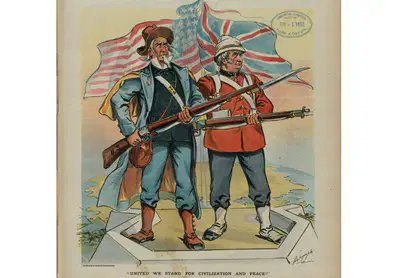
Motivations for Imperialism
2
On This Day in History! (2/13)
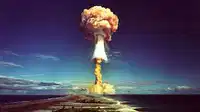
On this day in 1960, France became the fourth nation with nuclear bomb capabilities.
1960 - France becomes Nuclear
On this day in 1996, Tupac Shakur released his final album "All Eyez on Me".
1996 - Tupac's last album

3
Today!
Today we will:
identify motivations for imperialism in the Age of Imperialism
differentiate between spheres of influence, protectorates, and colonies
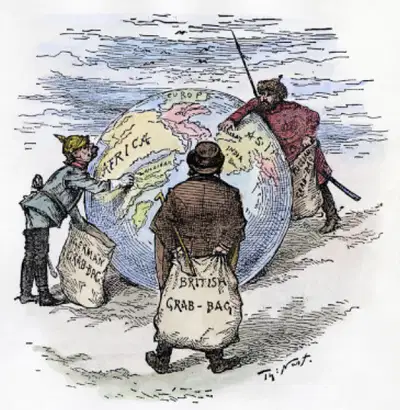
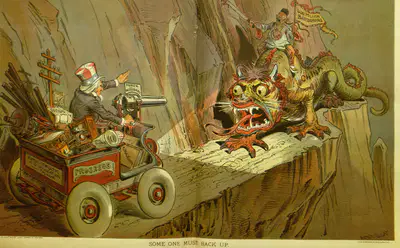
analyze how a political cartoon shows motivations for imperialism
Riddle! - What has 13 hearts but no other organs?
4
A deck of cards!

5
Vocabulary
Age of Imperialism - industrial countries sought to gain control and influence over non-industrial countries
colony - places formally controlled by a foreign country
imperialism - the practice of a country taking political or military control of another country
protectorate - places where local rulers remained in place, but foreign states had a large amount of control
specialization - occurs when a person, business, or country focuses on producing one product or a few specific products or resources
spheres of influence - places where a foreign country claimed power but did not have formal political leadership
6
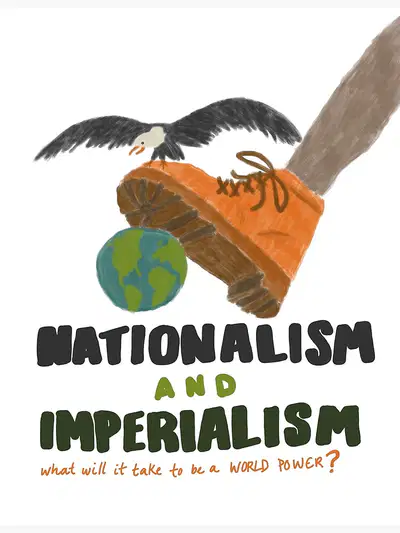
Imperialism & Nationalism
Unit 8 is about both Imperialism and Nationalism
Everything that was on the quiz yesterday entails the Nationalism part of Unit 8
Today we begin the Imperialism part of unit 8.
7
Imperialism
Economic motivations caused industrializing countries to look abroad for their own gain:
◦ Other countries could provide markets to sell mass-produced goods.
◦ Other parts of the world had valuable natural resources and raw materials that were useful in the production of goods.A desire for resources was a major part of the growth of imperialism.
The Age of Imperialism had begun.
8
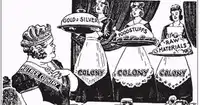
Specialization
Specialization occurs when a person, business, or country focuses on producing one product or a few specific products or resources.
Specialization caused countries’ economies to become more intertwined. Industrial countries often depended on other countries for raw materials.
Some non-industrial countries had plentiful raw materials, and their economies became dependent on selling those materials to industrial countries.
As industrial countries relied more on other countries, they sometimes turned to imperialism to meet their wants. By controlling other countries, they would gain greater control of economic activity and could ensure they would receive the resources they desired.
9
10
Methods of Control
Methods imperial countries used to control other places:
Spheres of influence were places where a foreign country claimed power but did not have formal political leadership. You learned about spheres of influence when you studied the Contact Period; in the 1500s and 1600s, European countries controlled trade in parts of Southeast Asia, though local rulers remained in charge.
Protectorates were places where local rulers remained in place, but foreign states had a large amount of control. The stronger, foreign states agreed to protect the weaker states from other foreign powers. In the 1800s, Britain and France established protectorates in African states, such as Tunisia, as a step toward colonizing them.
Colonies were places formally controlled by a foreign country. For example, from the Contact Period until the Age of Revolutions, Spain and Portugal controlled parts of Latin America. Out of these three methods of imperial influence, colonies gave imperialist countries the highest level of control.
11
Nationalism & Imperialism
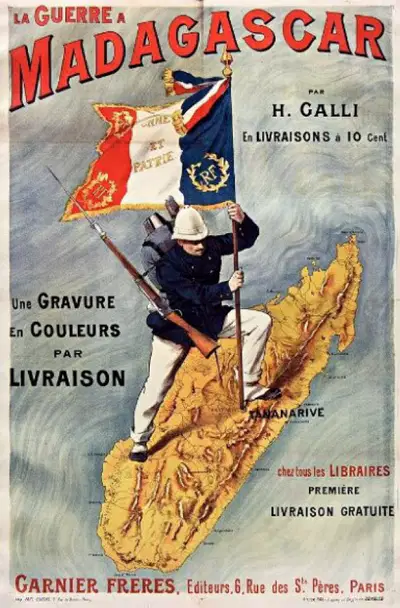
Nationalism caused some people to want their nation to become more powerful and carry higher status in the world.
They thought imperial expansion would help their nation increase its power by growing in size and controlling more resources.
A nationalist only cares about their country's success, and did not care how imperialist expansion harmed other groups.
12
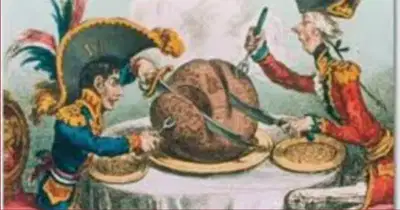
Spreading the West
Many Europeans and Americans of European descent believed their ways of living were better than the customs of other places, such as Africa and Asia.
They believed it was their responsibility to spread Western customs to these places. Missionaries often traveled to colonized places to spread Christianity.
Watch video in Edio.
13
Imperialism Cartoon
14
Tuesday!
Tuesday we will learn about European Imperialism in African and Southwest Asia
If you have any questions please ask!
Have a great 3-day weekend!
Motivations for Imperialism
Show answer
Auto Play
Slide 1 / 14
SLIDE
Similar Resources on Wayground

10 questions
Heredity and Environment
Presentation
•
9th - 12th Grade
11 questions
Long & Short Term Goals
Presentation
•
9th - 12th Grade
11 questions
Origin of Life - Scientific Contributions
Presentation
•
9th - 12th Grade
10 questions
The Basics of the Nervous System
Presentation
•
9th - 12th Grade
10 questions
What is the GI Bill?
Presentation
•
9th - 12th Grade
10 questions
Mass Media & Public Opinion
Presentation
•
9th - 12th Grade
9 questions
Northwest Territory & Shay's Rebellion
Presentation
•
8th - 12th Grade
10 questions
A Brief History of Psychology
Presentation
•
9th - 12th Grade
Popular Resources on Wayground
11 questions
Hallway & Bathroom Expectations

Quiz
•
6th - 8th Grade
10 questions
HCS SCI 03 Summer School Assessment 2
Quiz
•
3rd Grade
11 questions
Home Scope
Quiz
•
7th - 8th Grade
12 questions
2026 TAP Technology in the Classroom
Presentation
•
Professional Development
15 questions
HCS SCI 05 Summer School Assessment 2 Review
Quiz
•
5th Grade
15 questions
HCS SCI 04 Summer School Review 2
Quiz
•
4th Grade
59 questions
Geometry Unit 3 Review
Quiz
•
9th - 12th Grade
14 questions
FAST ELA READING SMAPLE TEST MATERIALS

Passage
•
3rd Grade