

The Caste System in India

Presentation
•
History
•
6th - 8th Grade
•
Practice Problem
•
Medium

Kaitlyn McCrory
Used 2+ times
FREE Resource
17 Slides • 15 Questions
1
2
3
Multiple Choice
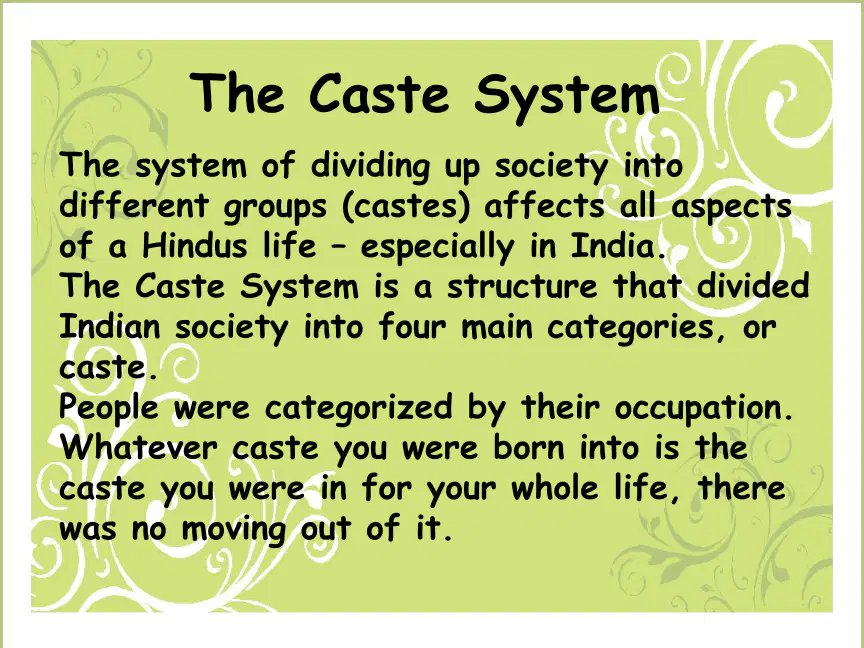
Which of the following best describes the main purpose of the caste system in Indian society?
To divide society into groups based on occupation
To allow people to change their social status easily
To promote equality among all citizens
To encourage people to choose their own caste
4
Multiple Choice
How do you think the caste system influenced the daily lives and opportunities of people in India?
5
6
Multiple Choice
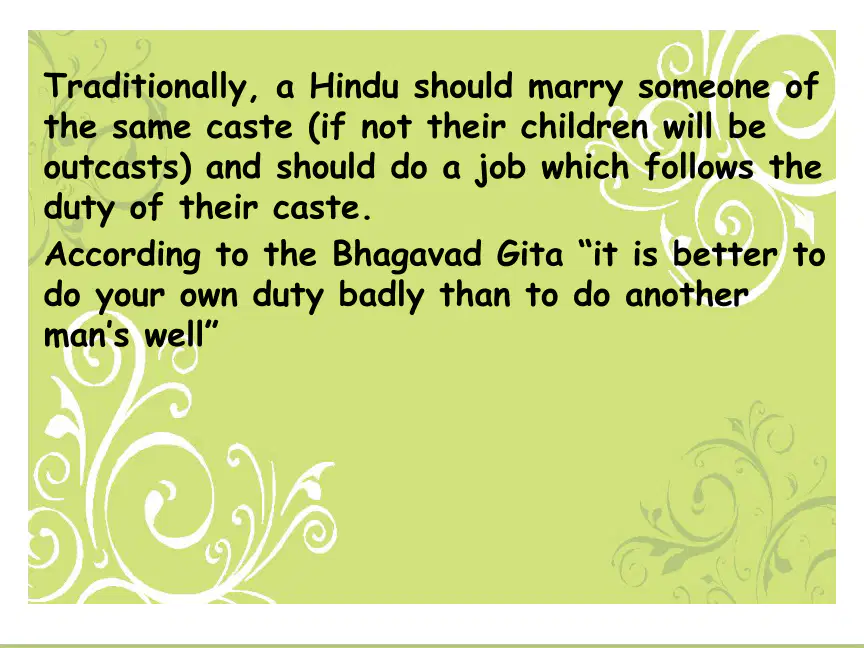
According to the Bhagavad Gita, why is it considered better to do your own duty badly than to do another man's well?
Because personal duty is valued over perfection in another's duty
Because doing another man's duty is forbidden
Because it leads to social advancement
Because it is easier to do your own duty
7
8
9
Multiple Choice
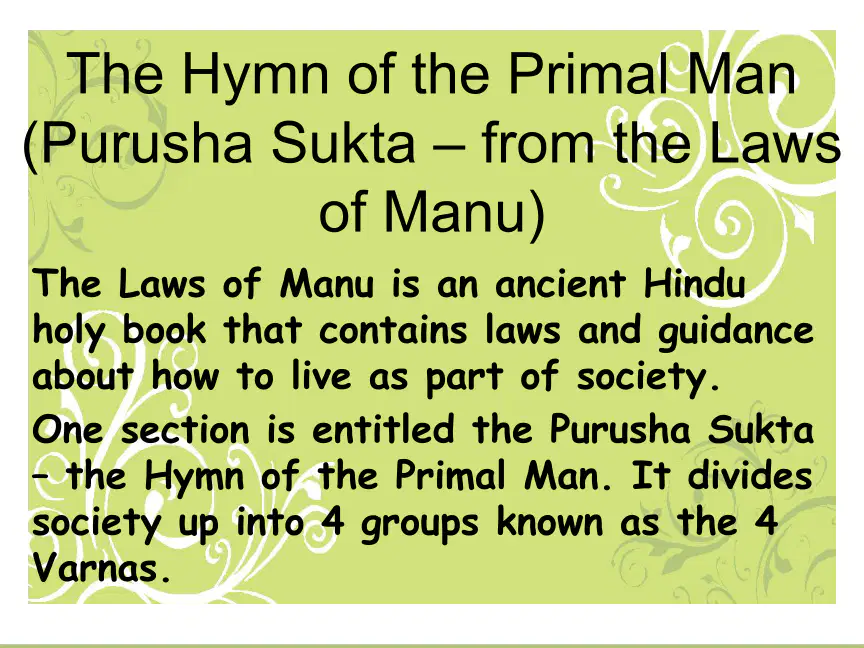
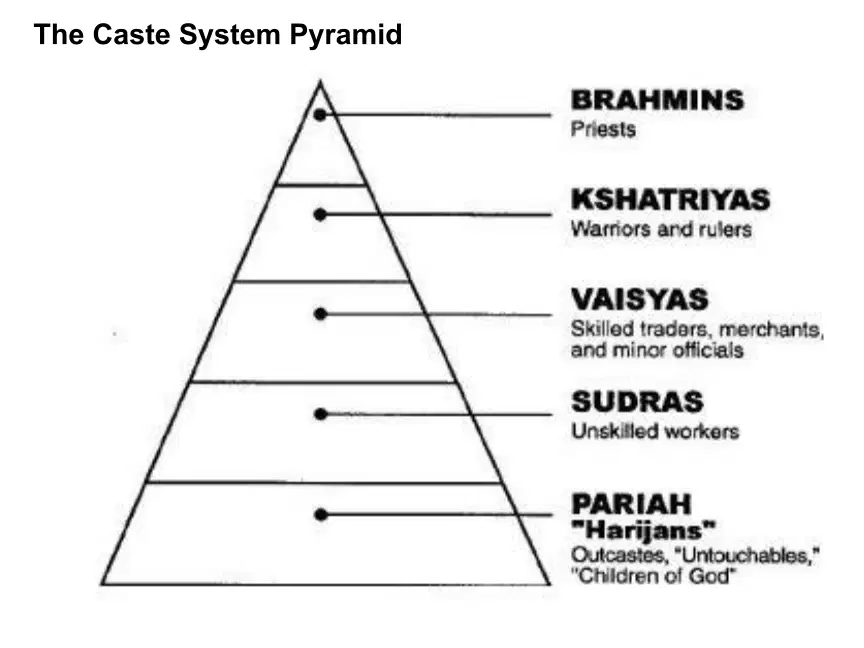
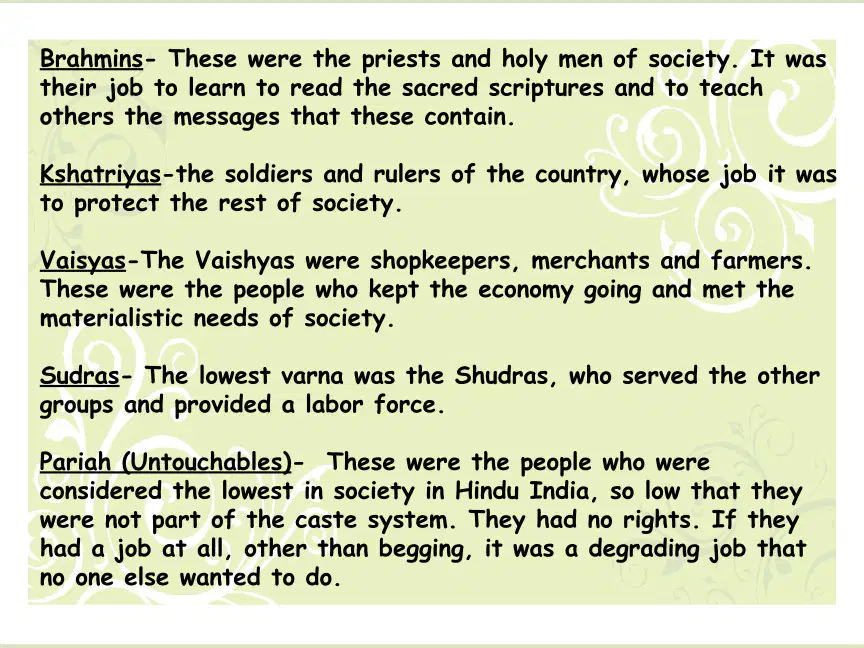
What are the four groups (Varnas) described in the Laws of Manu, and what roles do they play in society?
10
11
Multiple Choice
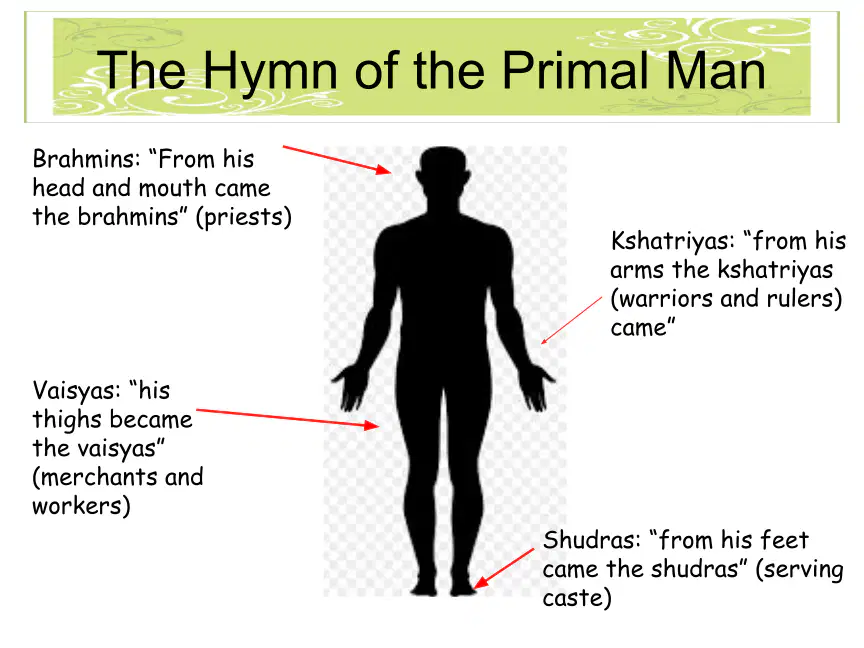
From which part of the Primal Man did the Sudras originate according to the Hymn of the Primal Man?
12
13
Multiple Select
Select all castes that are considered part of the traditional Hindu caste system (excluding outcastes).
Brahmins
Kshatriyas
Vaishyas
Pariah
14
15
Multiple Choice
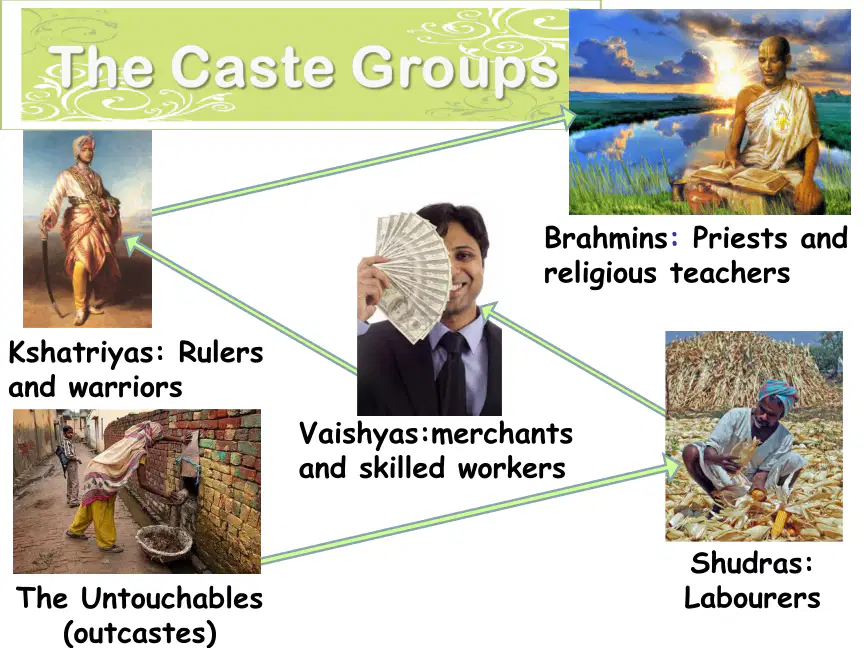
Explain the social and economic roles of the Vaishyas in Hindu society.
16
Multiple Choice
Which caste is associated with priests and religious teachers in the Hindu caste system?
Brahmins
Kshatriyas
Vaishyas
Sudras
17
18
Multiple Choice
What tasks do you think might be classed as 'polluting'? Who do you think does these tasks?
19
20
21

22
Multiple Choice
Which of the following is often used to identify a person's jati in traditional Hindu society?
First name
Surname
Occupation
Place of birth
23
24
Multiple Choice
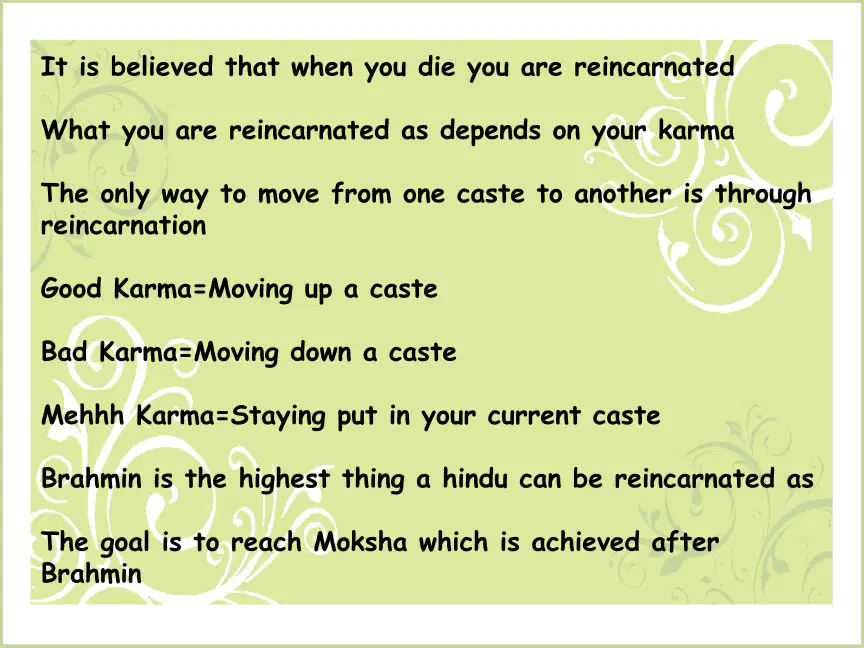
According to Hindu beliefs, what is the only way to move from one caste to another?
Marriage
Education
Reincarnation
Migration
25

26
Multiple Choice
Moksha is achieved by overcoming ___ and desires.
27
28
Multiple Choice
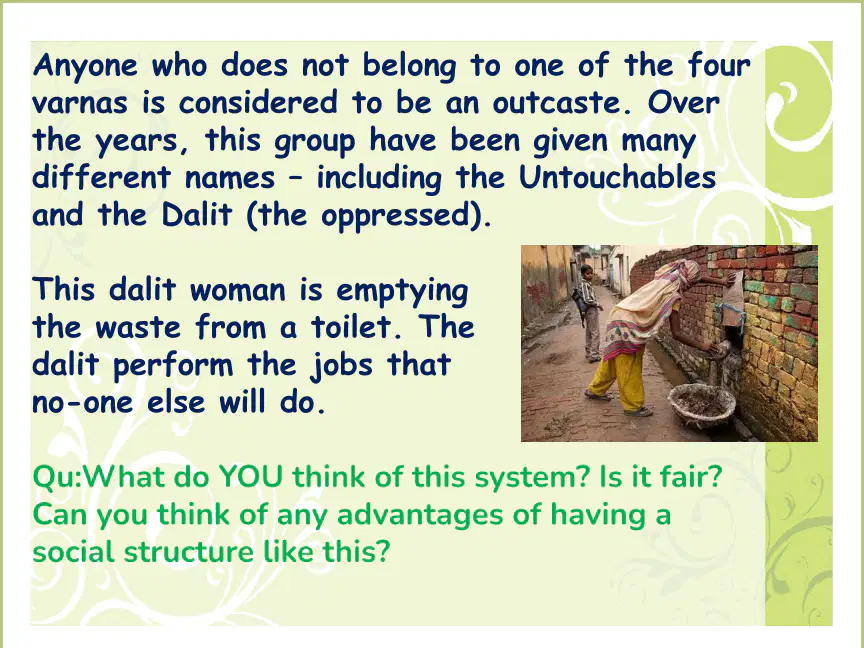
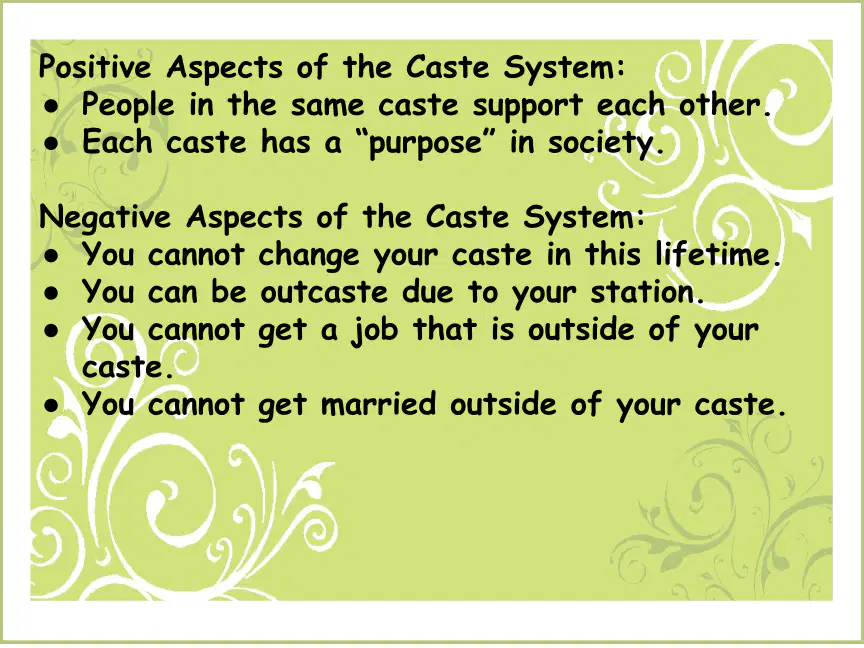
Which of the following is a negative aspect of the caste system according to the images?
People in the same caste support each other.
Each caste has a purpose in society.
You cannot change your caste in this lifetime.
Each caste has equal opportunities.
29
30
Multiple Choice
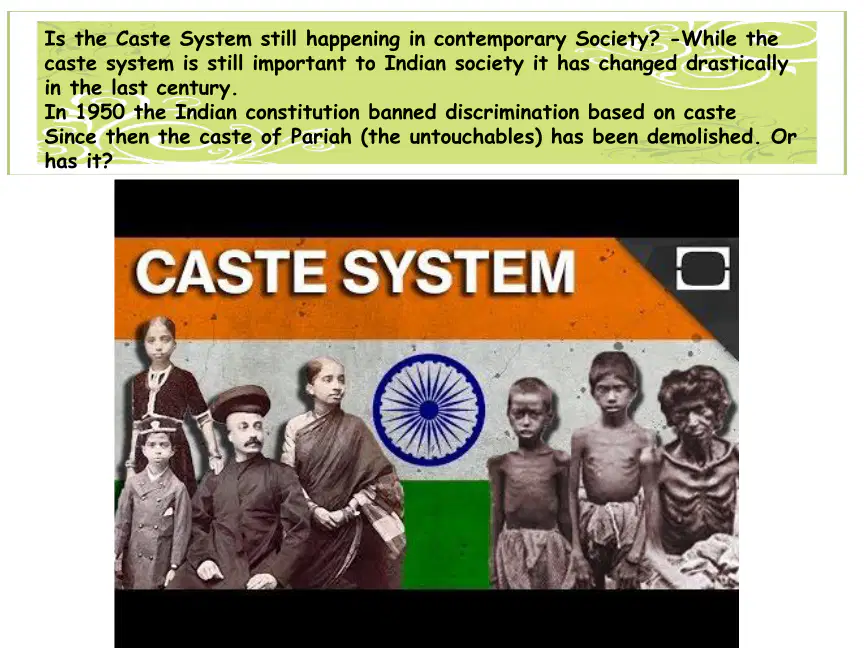
How did the Indian constitution address caste-based discrimination in 1950, and what impact did it have on the caste of Pariah (the untouchables)?
31
32
Multiple Select
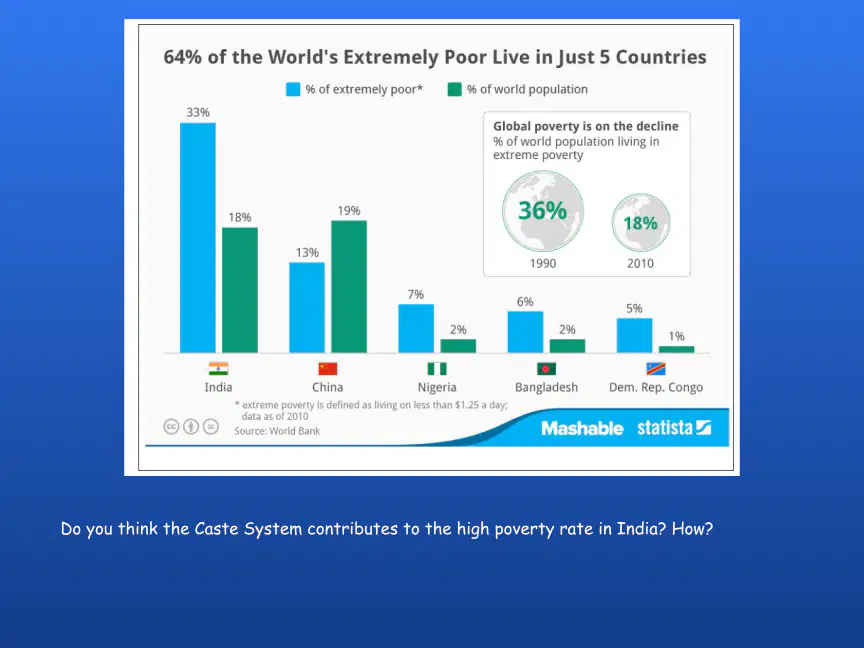
According to the chart, which countries have more than 10% of their population living in extreme poverty?
India
China
Nigeria
Bangladesh
Show answer
Auto Play
Slide 1 / 32
SLIDE
Popular Resources on Wayground

15 questions
Grade 3 Simulation Assessment 1

Quiz
•
3rd Grade
22 questions
HCS Grade 4 Simulation Assessment_1 2526sy
Quiz
•
4th Grade
16 questions
Grade 3 Simulation Assessment 2
Quiz
•
3rd Grade
19 questions
HCS Grade 5 Simulation Assessment_1 2526sy
Quiz
•
5th Grade
17 questions
HCS Grade 4 Simulation Assessment_2 2526sy
Quiz
•
4th Grade
20 questions
Equivalent Fractions
Quiz
•
3rd Grade
24 questions
HCS Grade 5 Simulation Assessment_2 2526sy
Quiz
•
5th Grade
20 questions
Math Review
Quiz
•
3rd Grade
Discover more resources for History
23 questions
Mock Social Studies STAAR Review 2024
Quiz
•
8th Grade
20 questions
SS8H3 TEST PREP
Quiz
•
8th Grade
20 questions
CG5 - Juvy Justice GMAS
Quiz
•
8th Grade
20 questions
CG2 - Legislative Branch Review
Quiz
•
8th Grade
13 questions
H6 GMAS Prep - Recon
Quiz
•
8th Grade
14 questions
CG3 - Executive Branch Review
Quiz
•
8th Grade
18 questions
CG1 TEST PREP
Quiz
•
8th Grade
20 questions
SS8H2 Test Prep
Quiz
•
8th Grade