
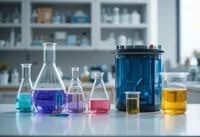
MATERIAL DE LABORATORIO

Presentation
•
Chemistry
•
Vocational training
•
Practice Problem
•
Hard

Carmen Valle Marcos
FREE Resource
7 Slides • 24 Questions
1
2
Open Ended
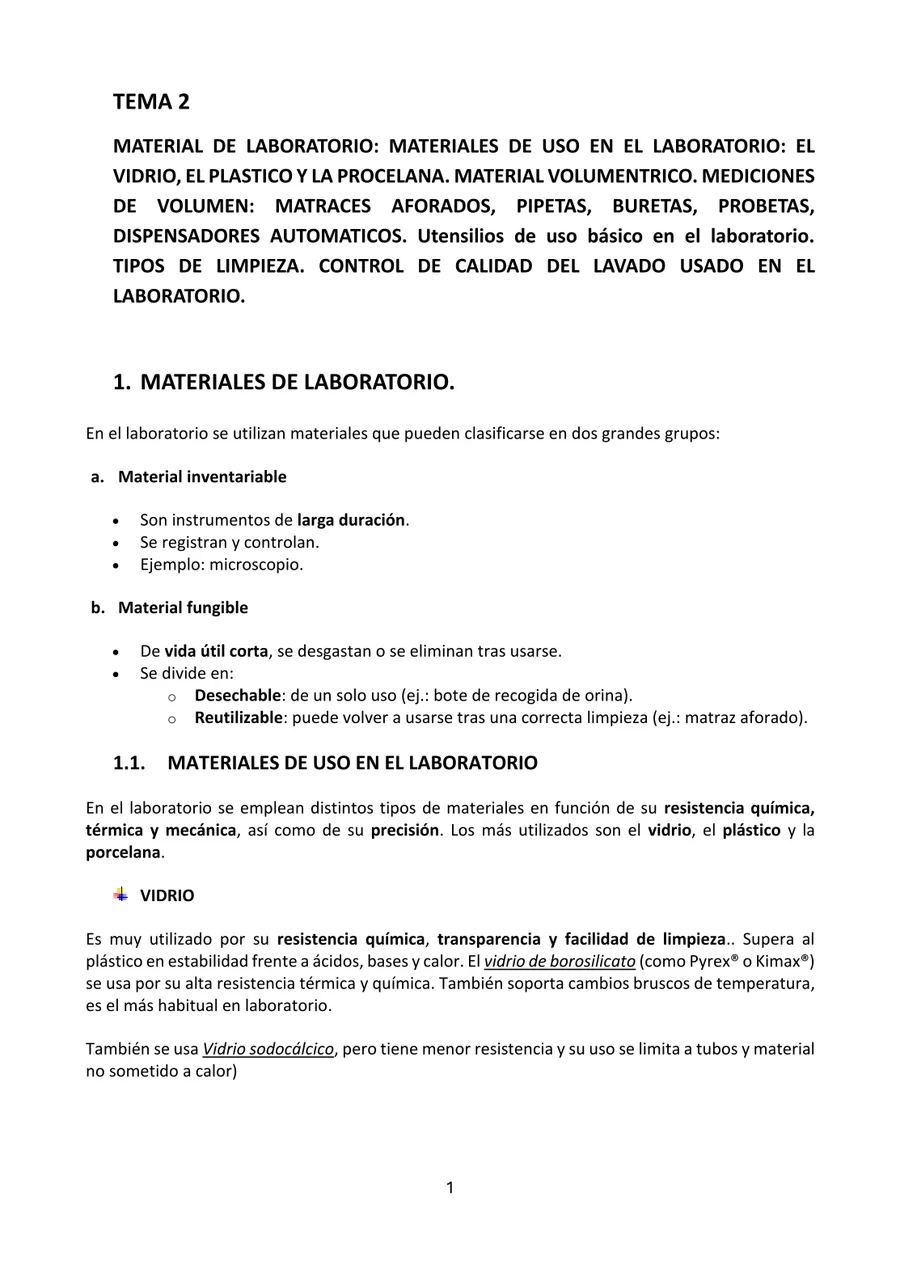
Explain the difference between 'material inventariable' and 'material fungible' in laboratory settings.
3
Fill in the Blanks
Type answer...
4
Multiple Choice
What is the primary use of borosilicate glass in the laboratory?
High thermal resistance
Low cost
Single-use
Chemical reactivity
5
Multiple Choice
What are the two main categories of laboratory materials mentioned in the text?
Inventariable
Fungible
Disposable
Reusable
6
7
Multiple Choice
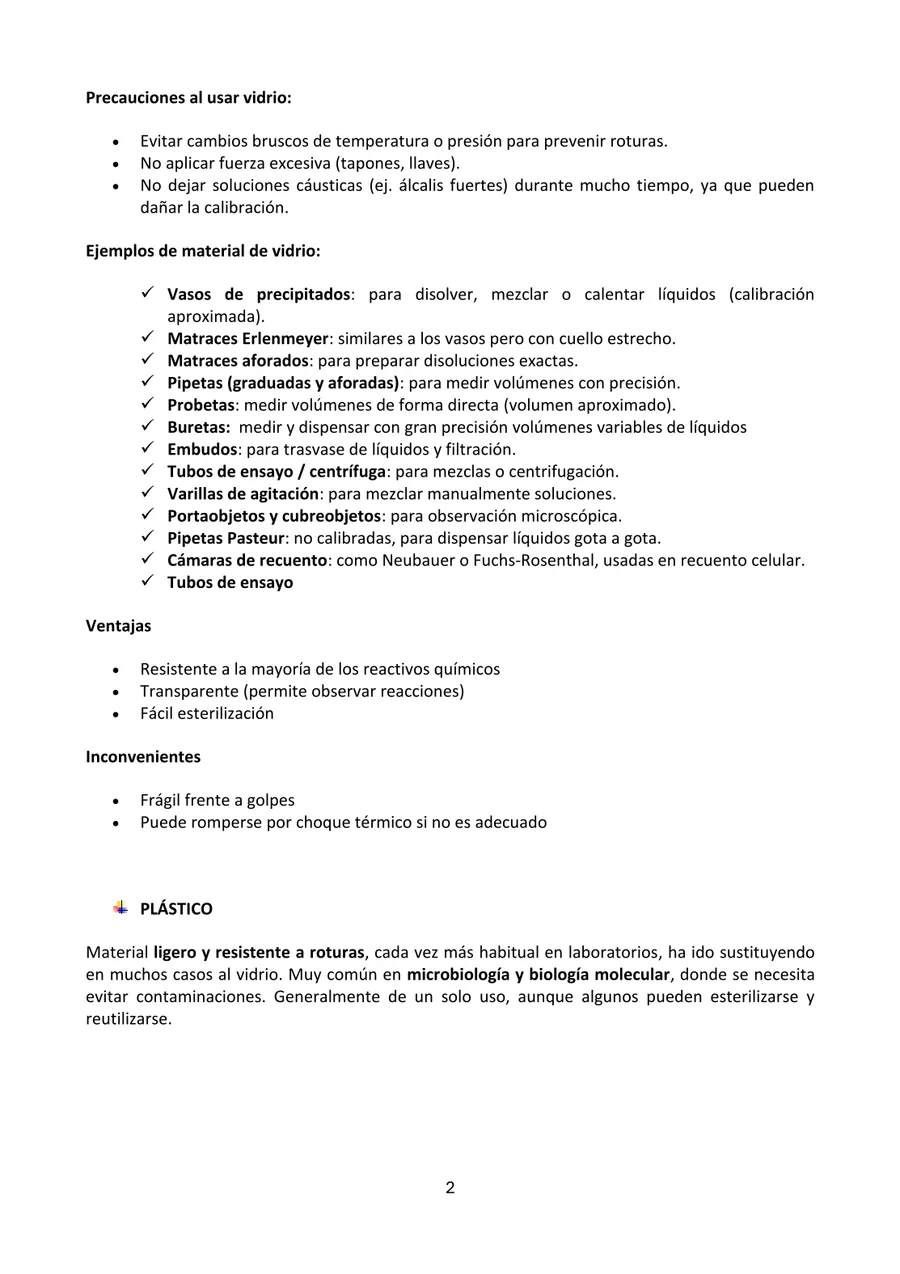
What is the primary use of plastic materials in laboratories?
For chemical reactions
For microbiology and molecular biology
For glassware replacement
For heating solutions
8
Multiple Choice
What are the disadvantages of using glass materials in laboratories?
Fragile against impacts
Can break due to thermal shock
Requires careful handling
All of the above
9
Multiple Choice
What are the advantages of using glass materials in laboratory settings?
Resistant to most chemical reagents
Transparent for observing reactions
Easy to sterilize
All of the above
10
11
Open Ended
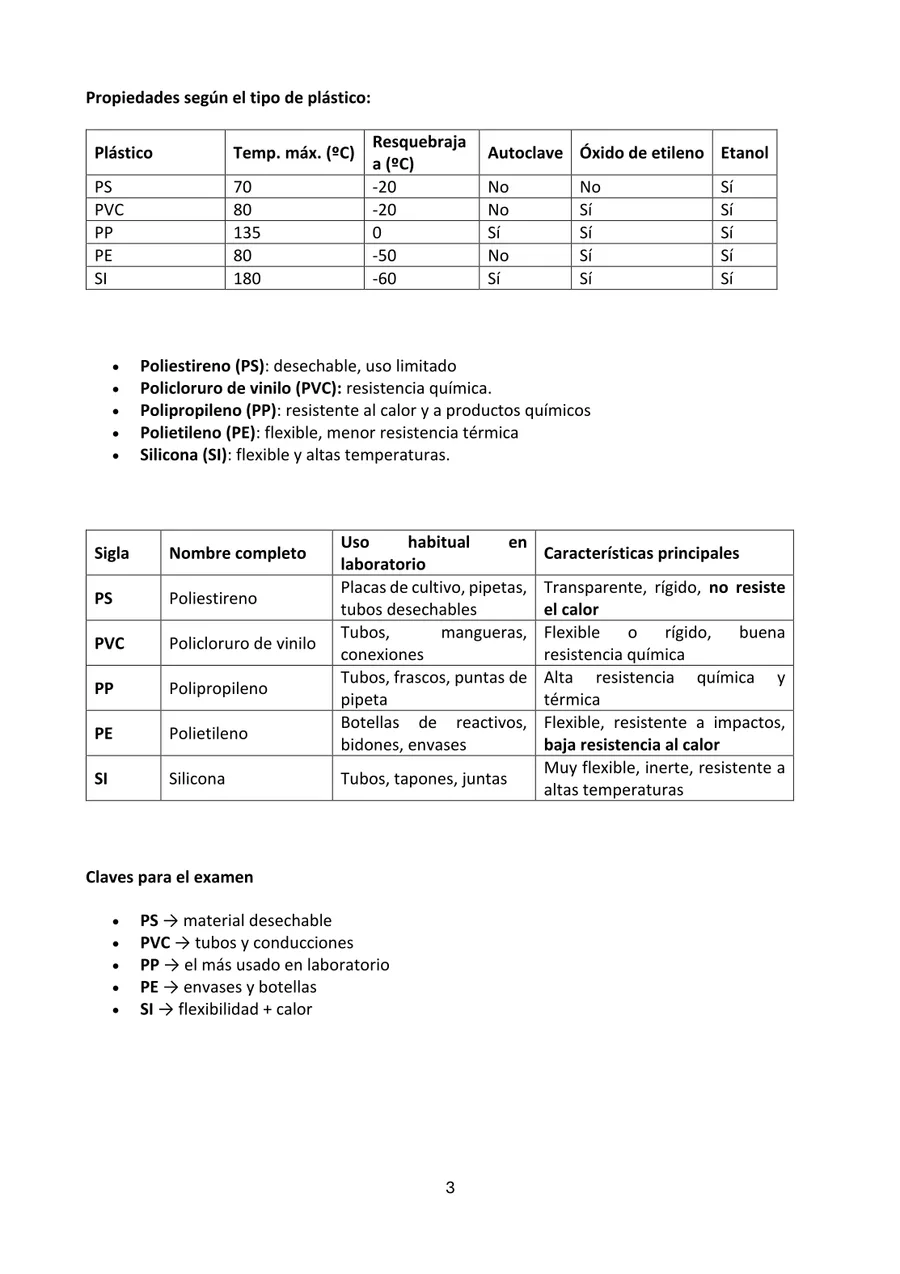
What are the main characteristics of Polipropileno (PP) as mentioned in the table?
12
Fill in the Blanks
Type answer...
13
Multiple Choice
Which type of plastic is described as flexible and resistant to high temperatures?
Poliestireno (PS)
Polipropileno (PP)
Silicona (SI)
Polietileno (PE)
14
Multiple Choice
What are the maximum temperature limits for the different types of plastics listed in the table?
70 °C for PS
80 °C for PVC
135 °C for PP
180 °C for SI
15
16
Open Ended
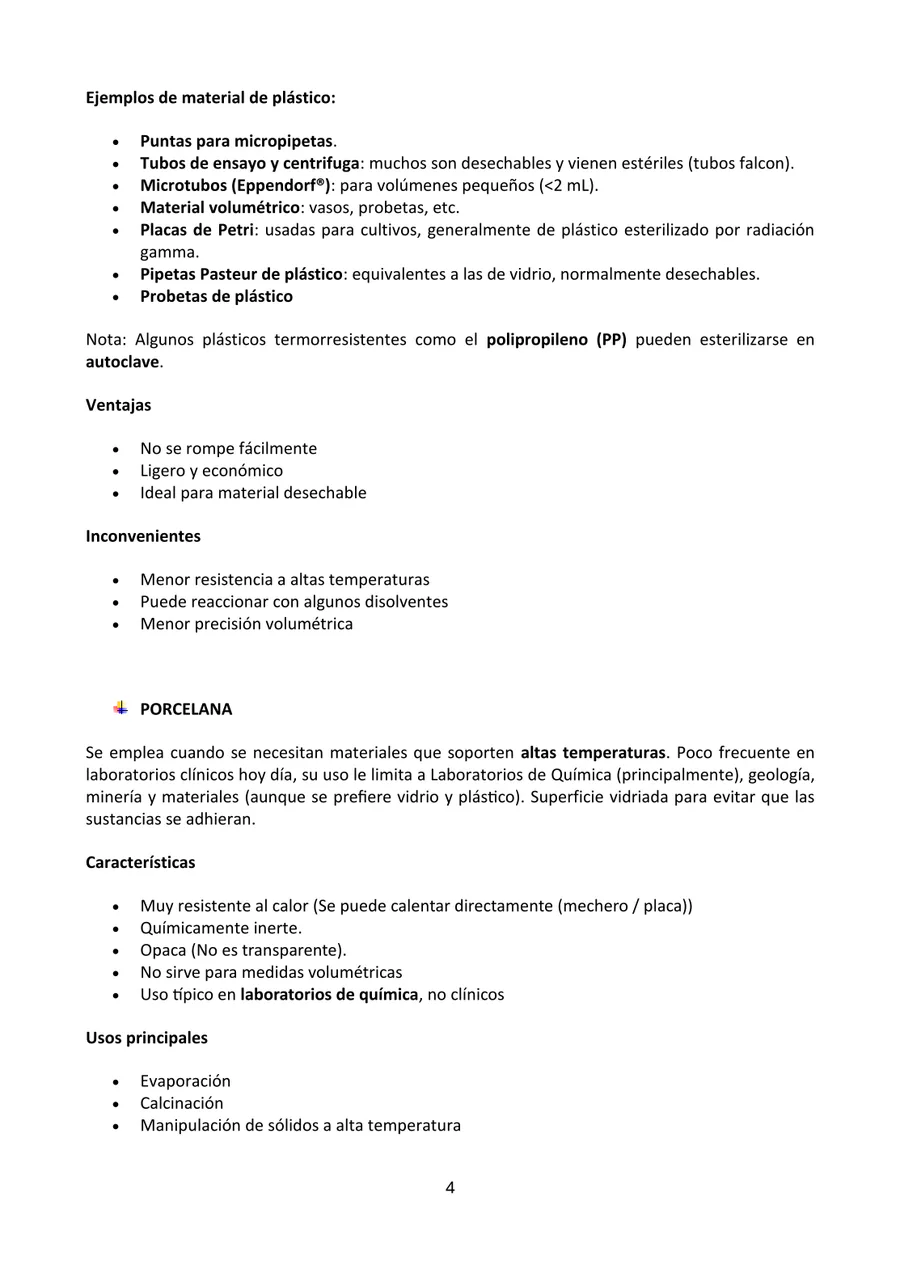
List the main uses of porcelain in laboratories.
17
Multiple Choice
What is the primary use of porcelain in laboratory settings?
For low-temperature experiments
For high-temperature applications
For measuring liquids
For disposable materials
18
Multiple Choice
What are the disadvantages of using plastic materials in laboratories?
They can react with some solvents
They are very resistant to high temperatures
They are ideal for laboratory use
They are not lightweight
19
Multiple Choice
What are the advantages of using plastic materials in laboratory settings?
They are fragile
They are heavy
They are ideal for disposable materials
They are expensive
20
21
Multiple Choice
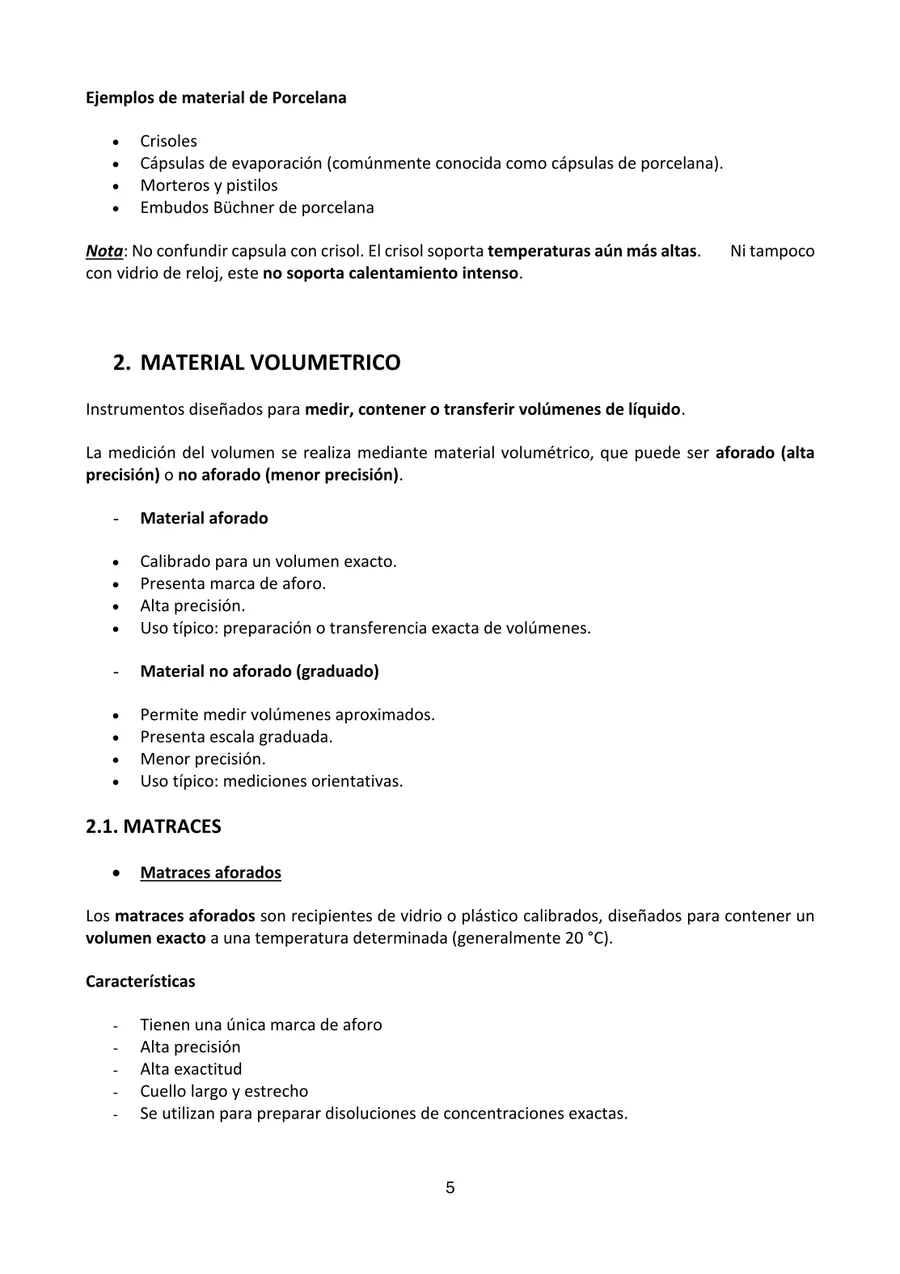
What are the characteristics of calibrated volumetric flasks?
They have a single calibration mark
They are used for approximate measurements
They have a wide neck
They are made of metal
22
23
Open Ended
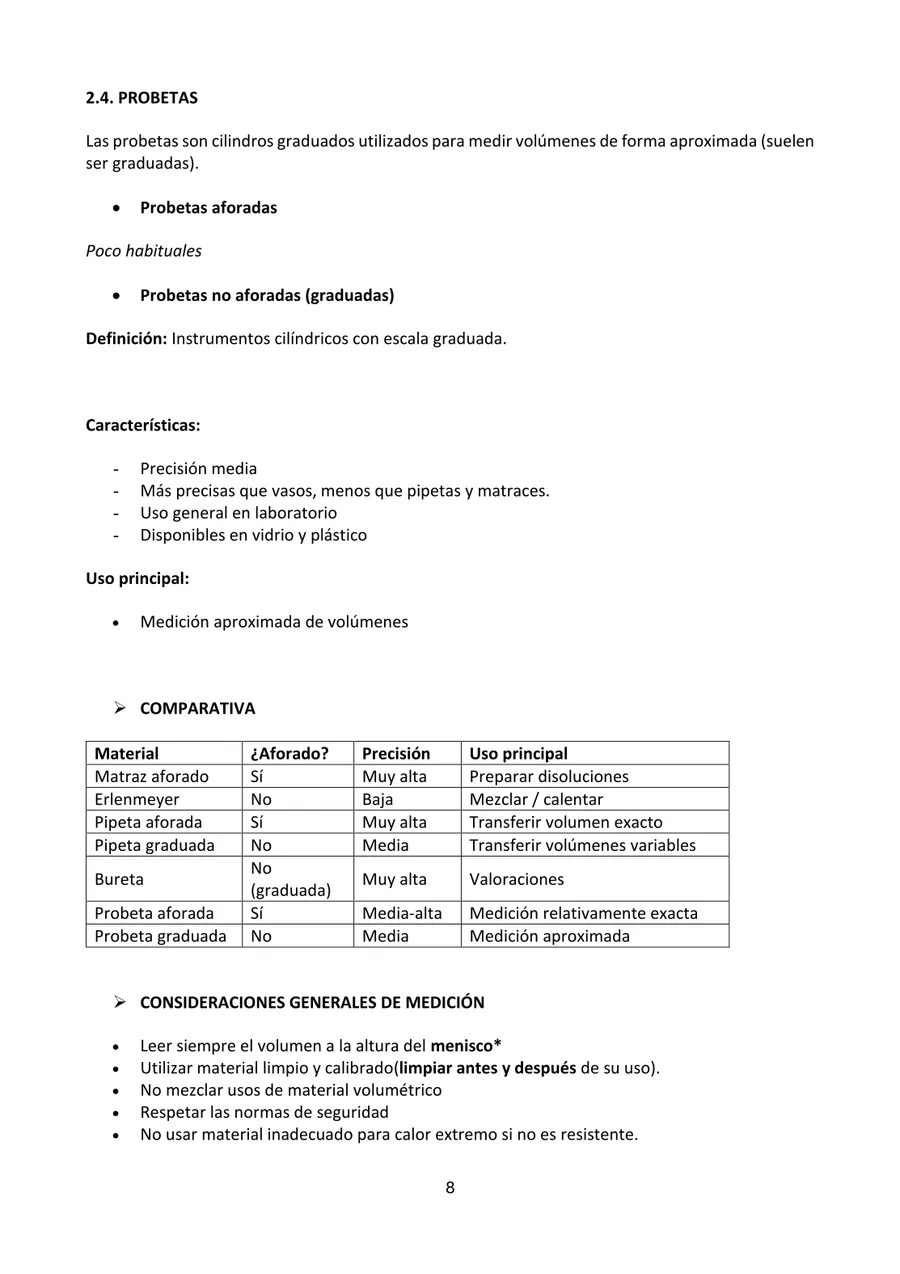
What is the difference in precision between graduated and non-graduated cylinders?
24
Fill in the Blanks
Type answer...
25
Multiple Choice
What is the primary use of graduated cylinders?
Measuring exact volumes
Preparing solutions
Measuring approximate volumes
Transferring variable volumes
26
Multiple Choice
What are the characteristics of graduated cylinders used for measuring volumes?
Medium precision
Less precise than beakers
Available in glass and plastic
Used for exact volume transfer
27
28
Fill in the Blanks
Type answer...
29
Multiple Choice
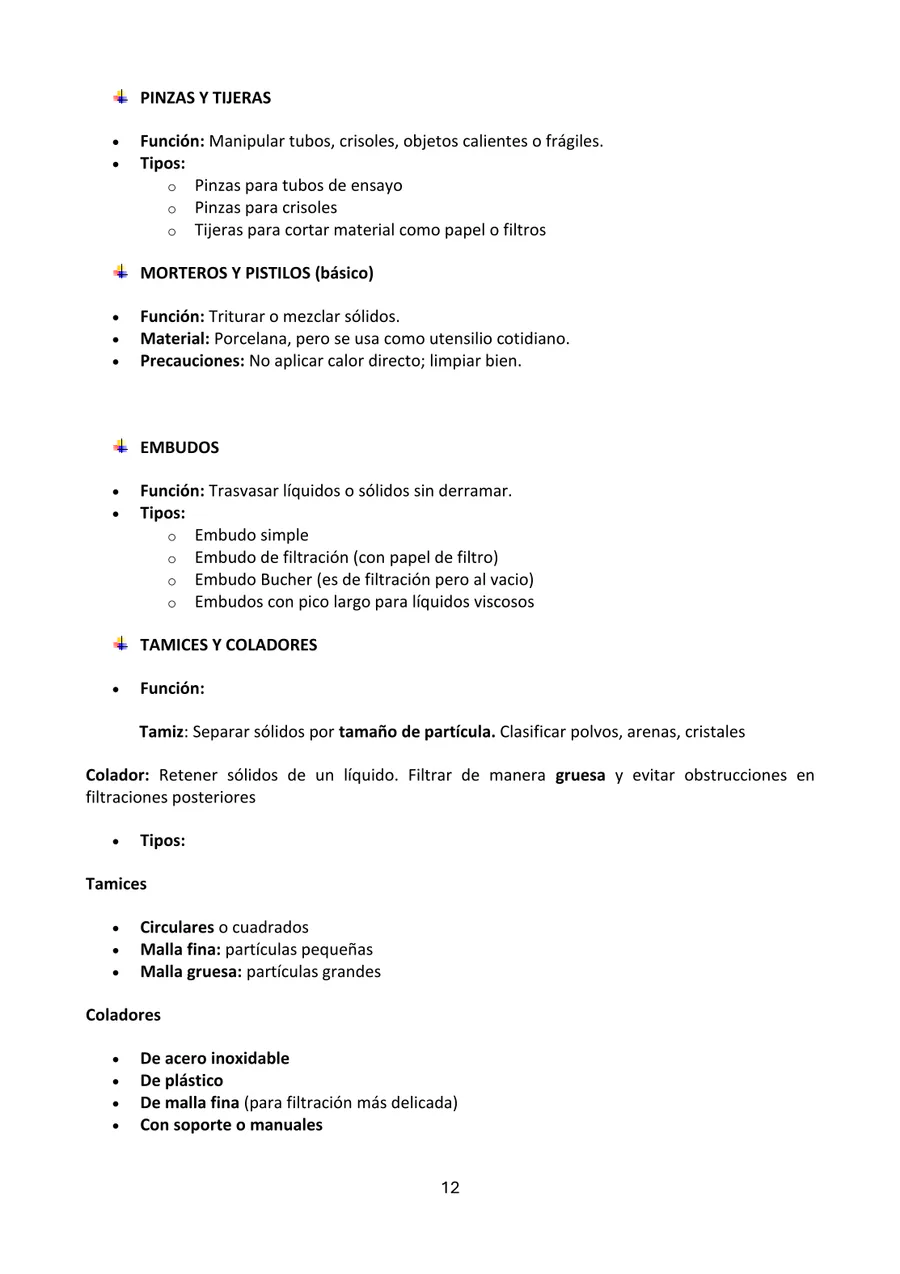
What are the types of mortars and pestles mentioned?
Wooden and plastic
Porcelain and glass
Metal and ceramic
Porcelain and everyday utensils
30
Multiple Choice
What is the function of a funnel in laboratory settings?
To mix solids
To separate liquids
To transfer liquids or solids without spilling
To crush solids
31
Poll
¿Qué tan seguro te sientes acerca de este tema ahora?
Show answer
Auto Play
Slide 1 / 31
SLIDE
Popular Resources on Wayground

15 questions
Grade 3 Simulation Assessment 1

Quiz
•
3rd Grade
22 questions
HCS Grade 4 Simulation Assessment_1 2526sy
Quiz
•
4th Grade
16 questions
Grade 3 Simulation Assessment 2
Quiz
•
3rd Grade
19 questions
HCS Grade 5 Simulation Assessment_1 2526sy
Quiz
•
5th Grade
17 questions
HCS Grade 4 Simulation Assessment_2 2526sy
Quiz
•
4th Grade
20 questions
Equivalent Fractions
Quiz
•
3rd Grade
24 questions
HCS Grade 5 Simulation Assessment_2 2526sy
Quiz
•
5th Grade
20 questions
Math Review
Quiz
•
3rd Grade