Search Header Logo
Comparative Anatomy

Comparative Anatomy

Assessment

Presentation

Science

6th - 8th Grade

Practice Problem

Easy

NGSS
HS-LS4-1, HS-LS4-4, HS-LS1-2

+1

Standards-aligned

Created by

Melissa Fiaschetti

Used 4+ times

FREE Resource

6 Slides • 8 Questions

1
media

2

Multiple Choice

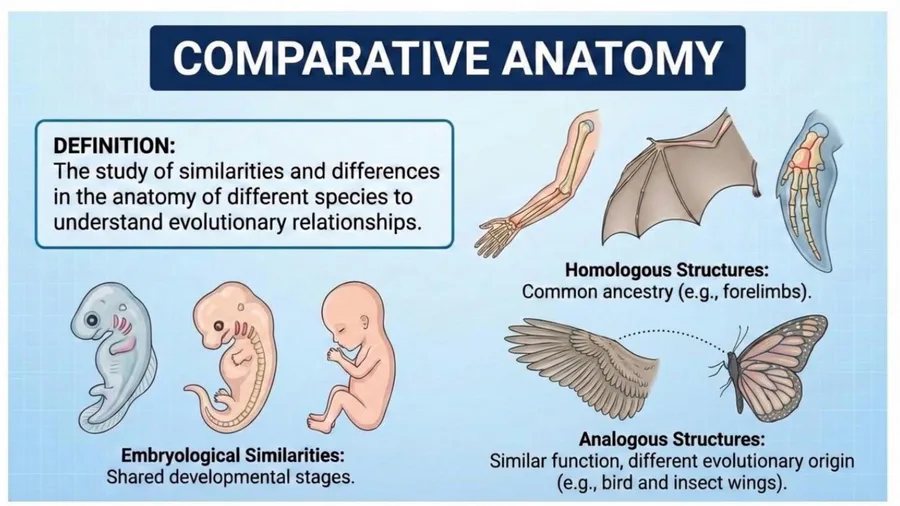
Why is it important to study similarities and differences in the anatomy of different species?

1

To understand evolutionary relationships

2

To identify species for classification

3

To discover new species

4

To learn about animal behavior

3

media

4

Fill in the Blanks

Type answer...

5

media

6

media

7

Open Ended

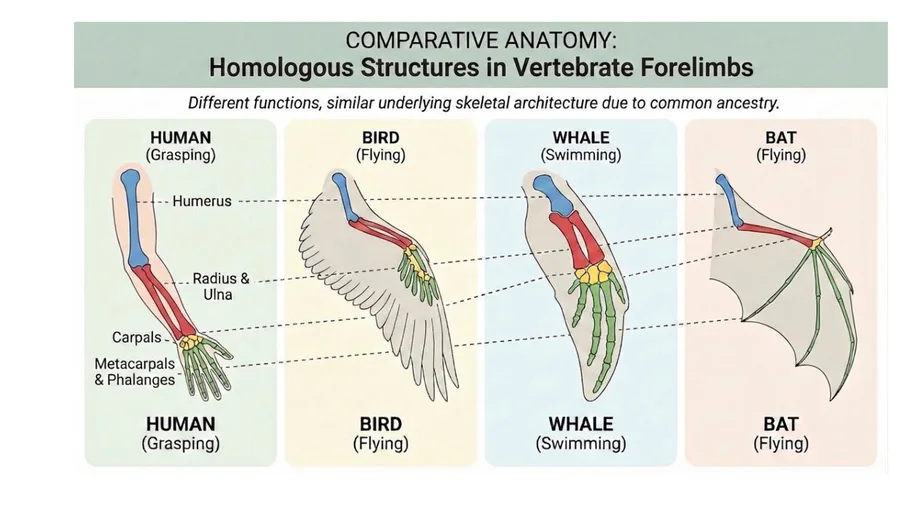
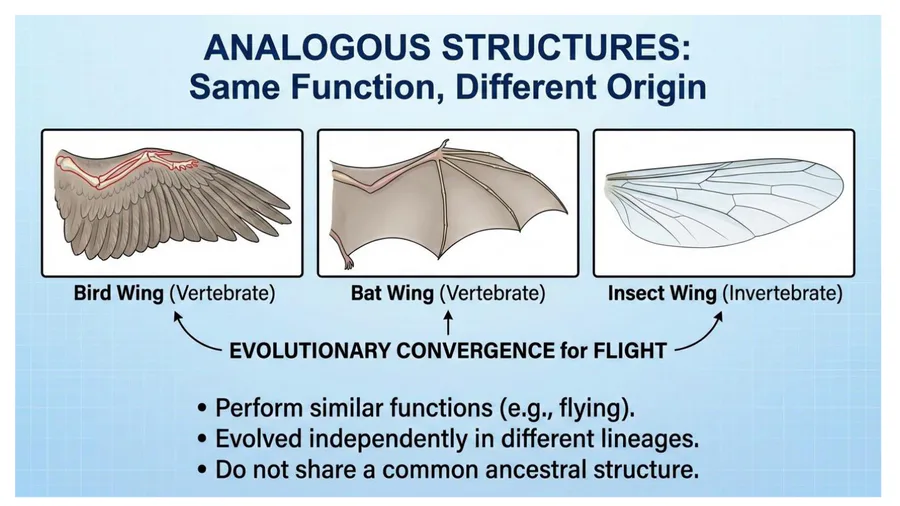
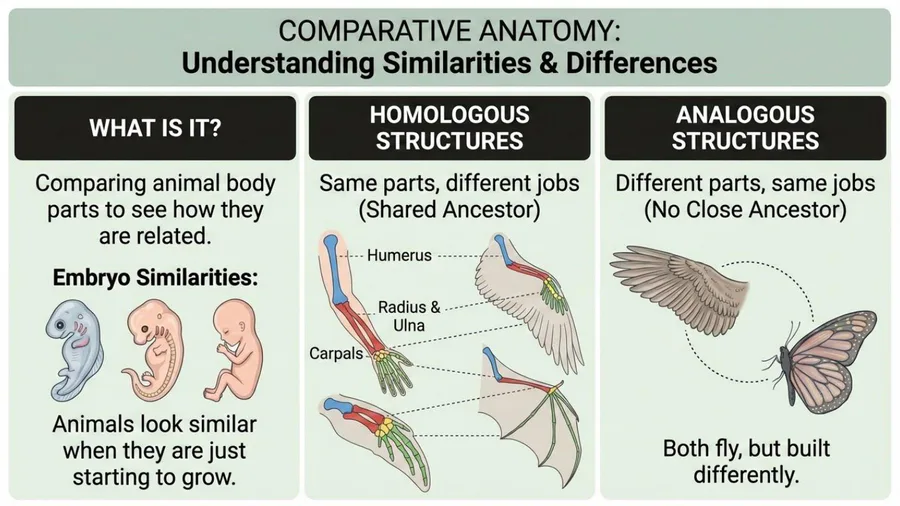
Explain the difference between homologous and analogous structures using examples from the images.

8

media

9

Multiple Select

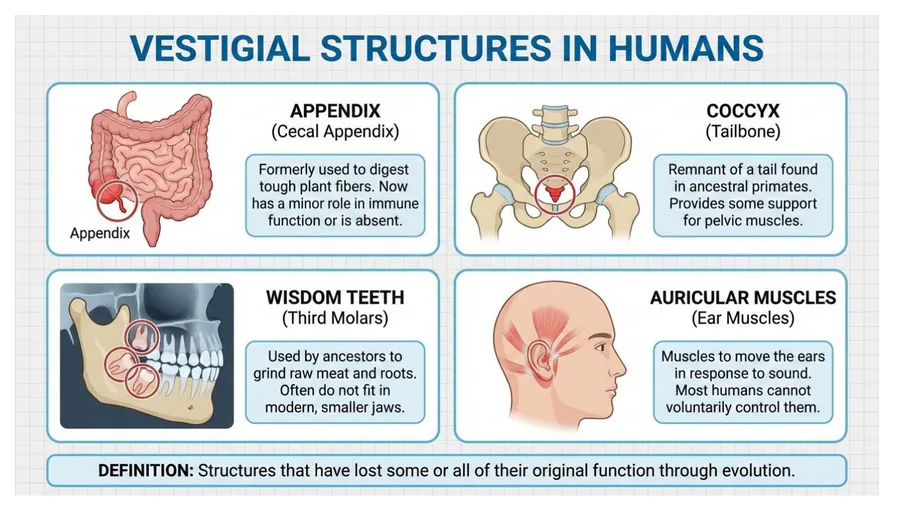
Which structures are considered vestigial in humans?

1

Appendix

2

Coccyx

3

Wisdom teeth

4

Auricular muscles

10

Multiple Choice

Which of the following is NOT a function of the human appendix as described in the image?

1

Digesting tough plant fibers

2

Providing support for pelvic muscles

3

Having a minor role in immune function

4

Being absent or having no function

11

media

12

Multiple Choice

Question image
The structures shown are_________
1
homologous
2
heterologous
3
analogous
4
vestigial

13

Multiple Choice

Question image
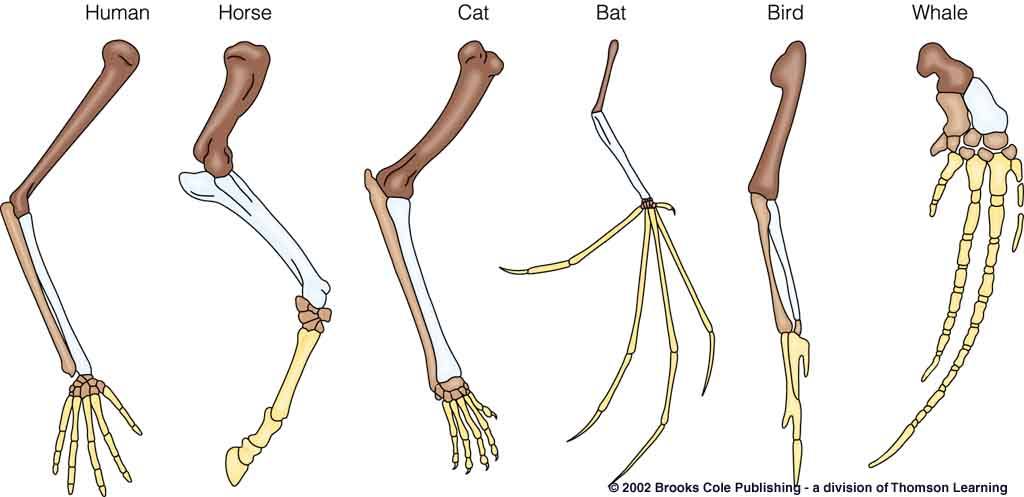
The similarities of the bones in the diagram provide evidence that---
1
The organisms shown lived in the same natural envionrment
2
The organisms shown may have developed from a common ancestor
3
The organisms shown have the same genetic diseases
4
All vertebrate species have identical forelimbs

14

Open Ended

What questions do you still have about comparative anatomy or would you like to learn more about any specific structures?

media

Show answer

Auto Play

Slide 1 / 14

SLIDE