

Introduction to Annuities and Future Value

Presentation
•
Mathematics
•
11th Grade
•
Practice Problem
•
Easy
+3
Standards-aligned

Annalyn Casipong
Used 1+ times
FREE Resource
21 Slides • 21 Questions
1

2

3
4
Multiple Choice
Which of the following best describes the difference between simple interest and compound interest?
Simple interest is calculated only on the initial amount, while compound interest is calculated on the initial amount plus accumulated interest.
Simple interest grows faster than compound interest over time.
Compound interest is only used for loans, not savings.
Simple interest is used for short-term investments, while compound interest is used for long-term investments.
5
Open Ended
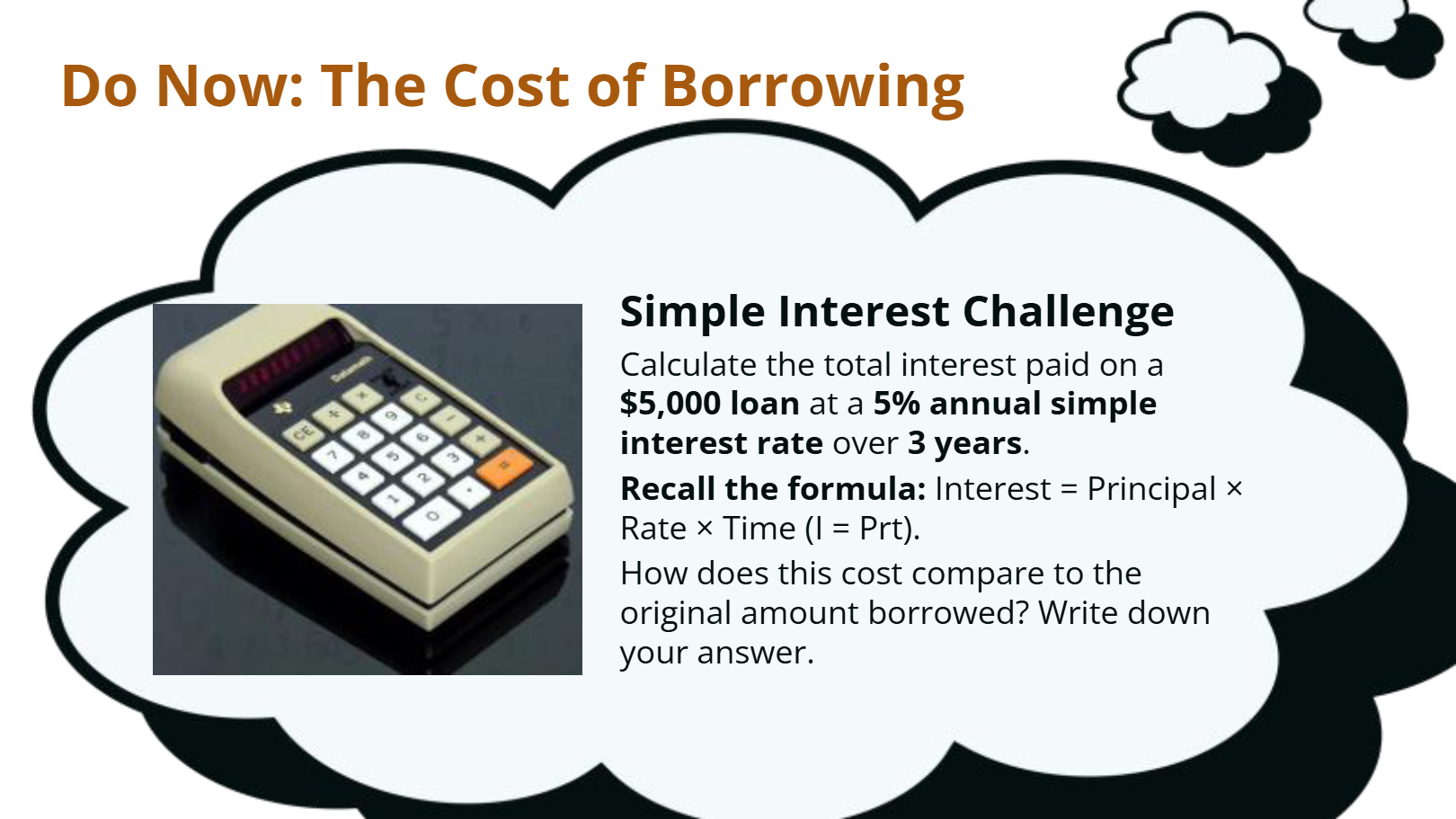
Calculate the total interest paid on a $5,000 loan at a 5% annual simple interest rate over 3 years. How does this cost compare to the original amount borrowed?
6
7

8

9
Open Ended
Why is understanding annuities and their future value important for individuals planning their financial future?
10
Multiple Choice
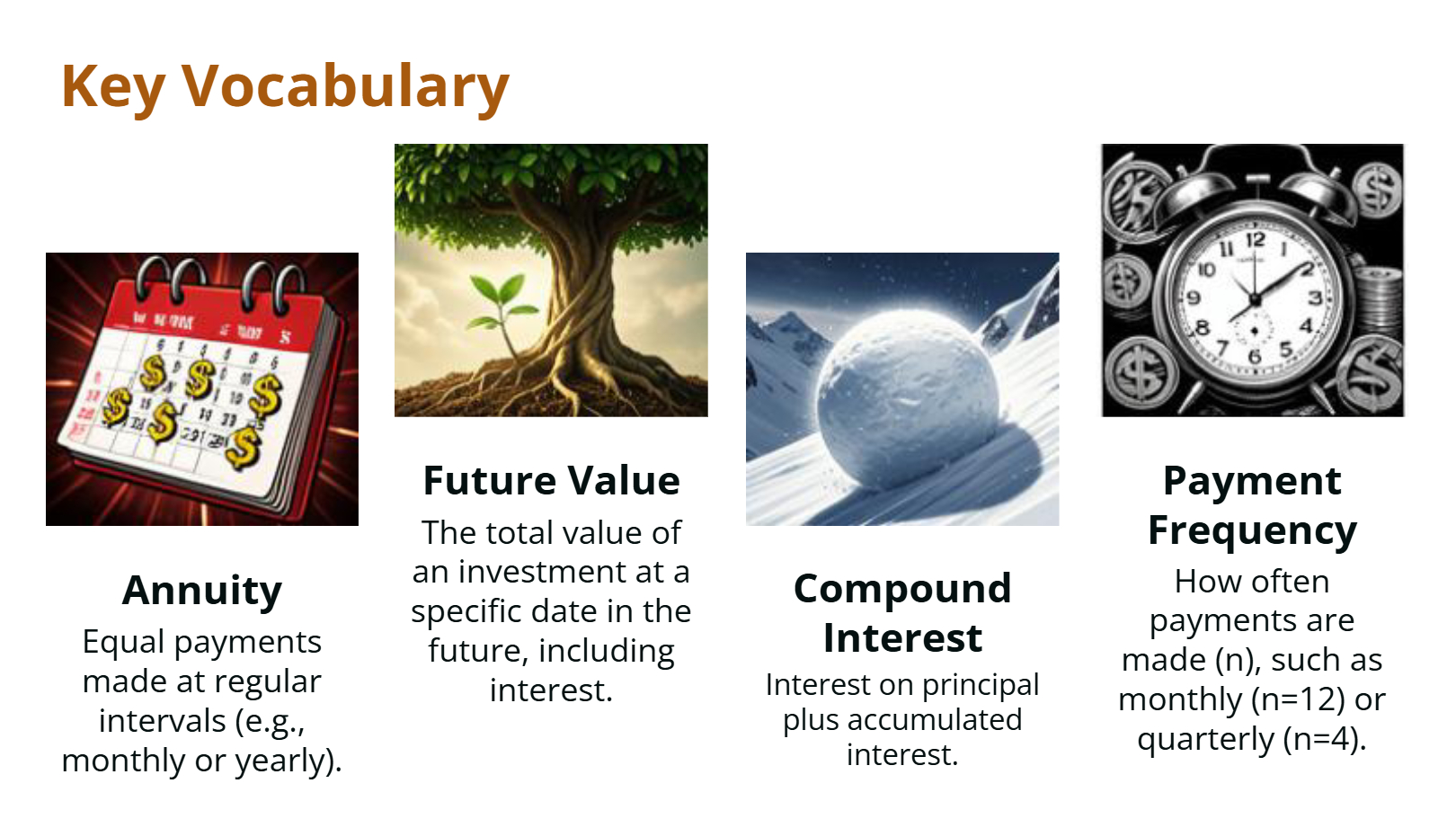
Which of the following best describes an annuity?
A single lump sum payment made once
Equal payments made at regular intervals
Interest earned on principal only
The total value of an investment at a specific date
11
12
Multiple Select
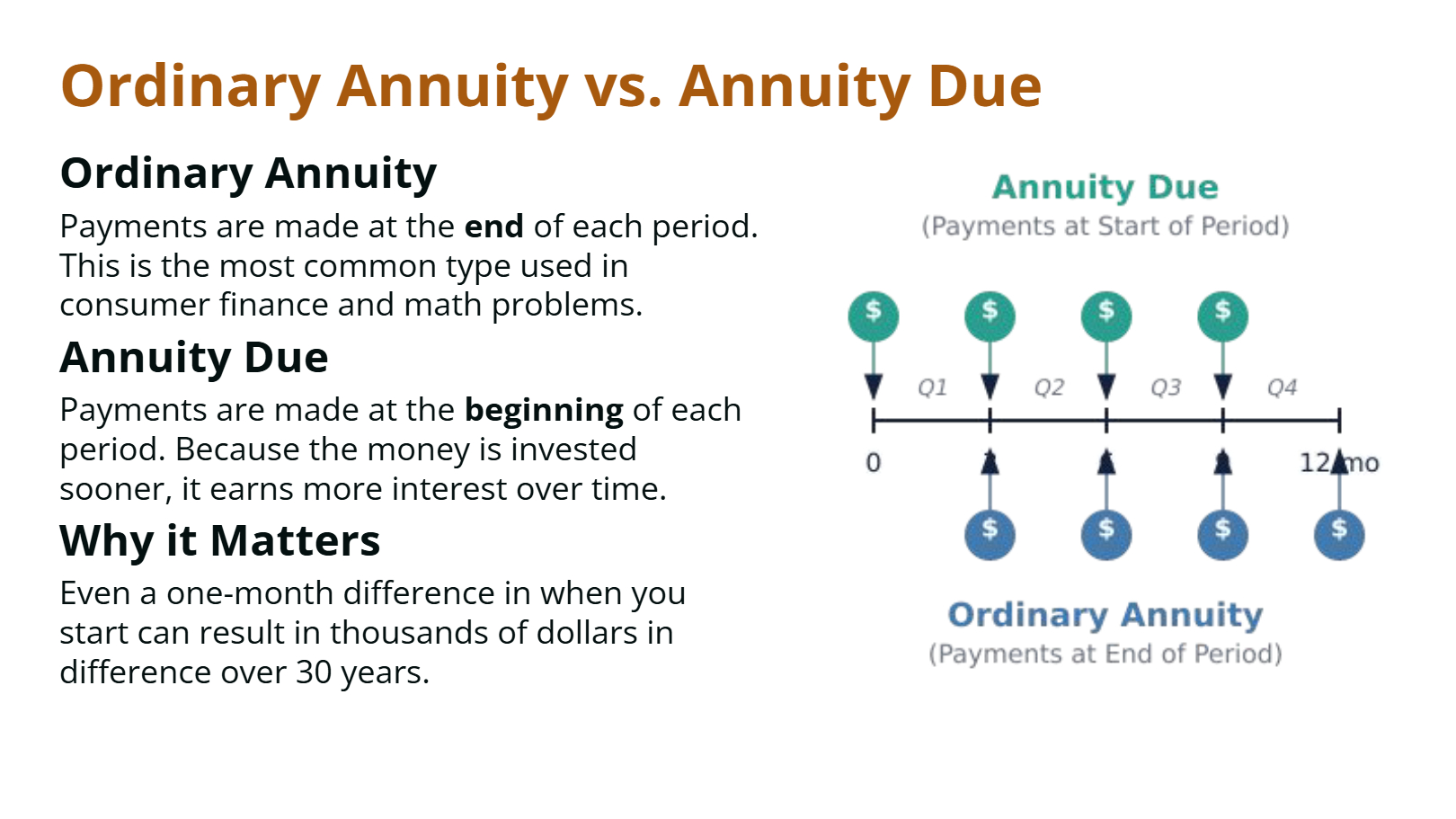
Which of the following statements about ordinary annuity and annuity due is/are correct?
Ordinary annuity payments are made at the end of each period.
Annuity due payments are made at the beginning of each period.
Ordinary annuity earns more interest than annuity due.
Annuity due earns more interest over time because payments are invested sooner.
13
14
Multiple Choice
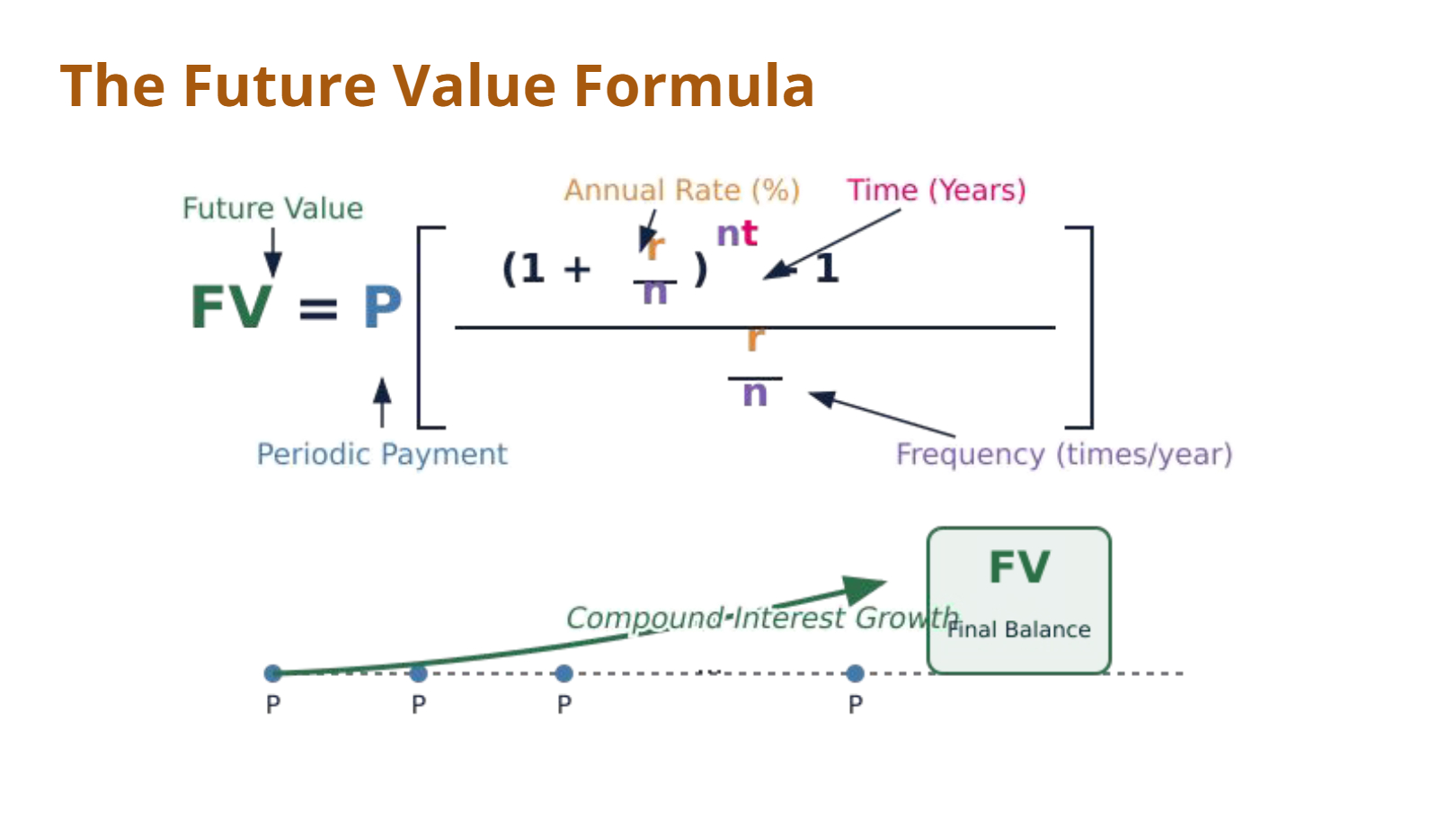
Which of the following factors will increase the future value of an annuity, assuming all other variables remain constant?
Increasing the periodic payment amount
Decreasing the interest rate
Reducing the number of payment periods
Making payments less frequently
15
Fill in the Blanks
Type answer...
16

17
Multiple Choice
Which variable in the monthly savings plan setup represents the interest rate?
P
r
n
t
18

19
Multiple Select
Which of the following are correct steps in calculating the future value of a retirement account with monthly contributions?
Identify variables such as payment, rate, frequency, and time
Calculate the periodic rate and total number of payments
Multiply the payment by the number of years only
Plug values into the future value formula
20
21
22
23
Multiple Choice
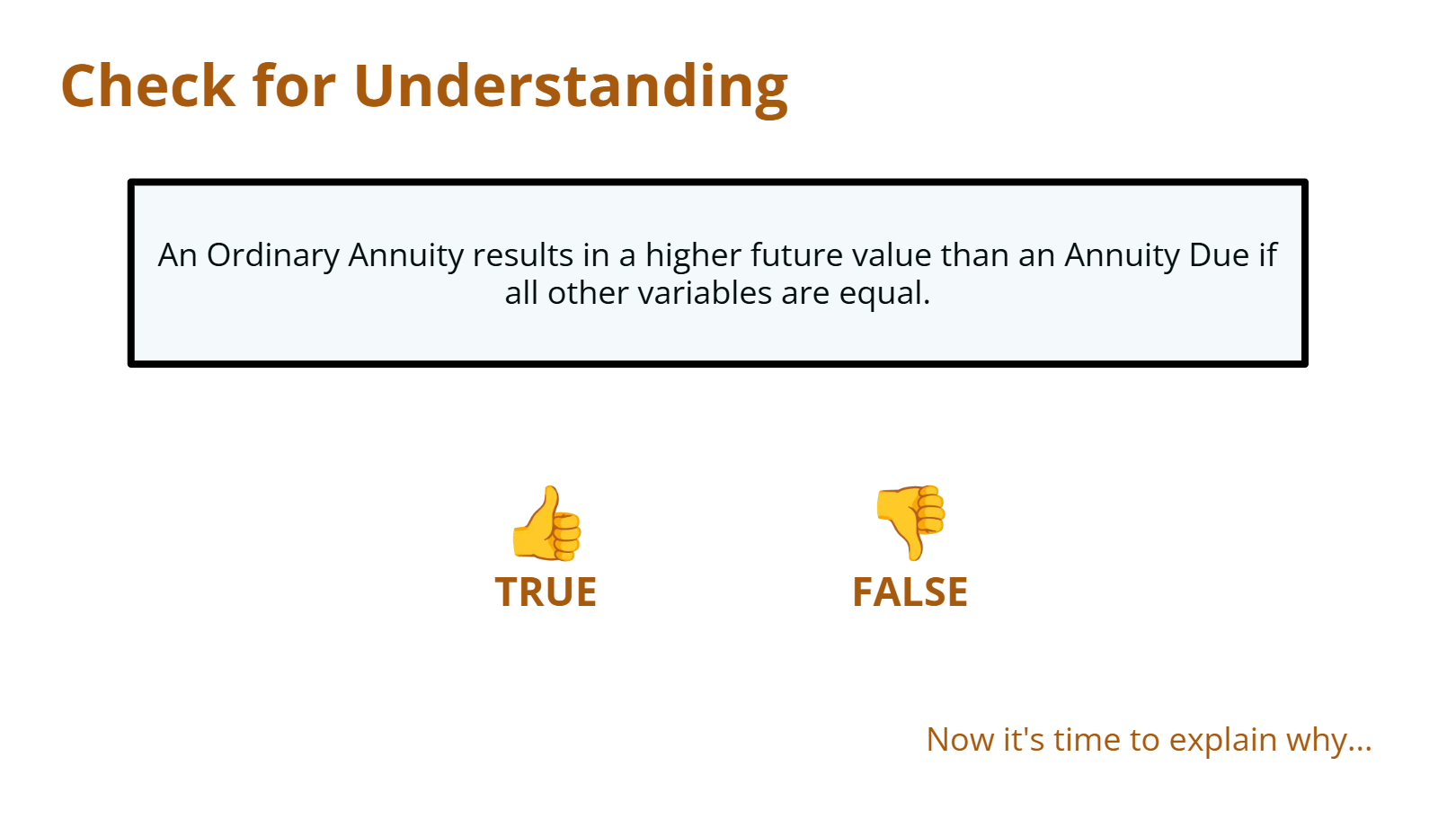
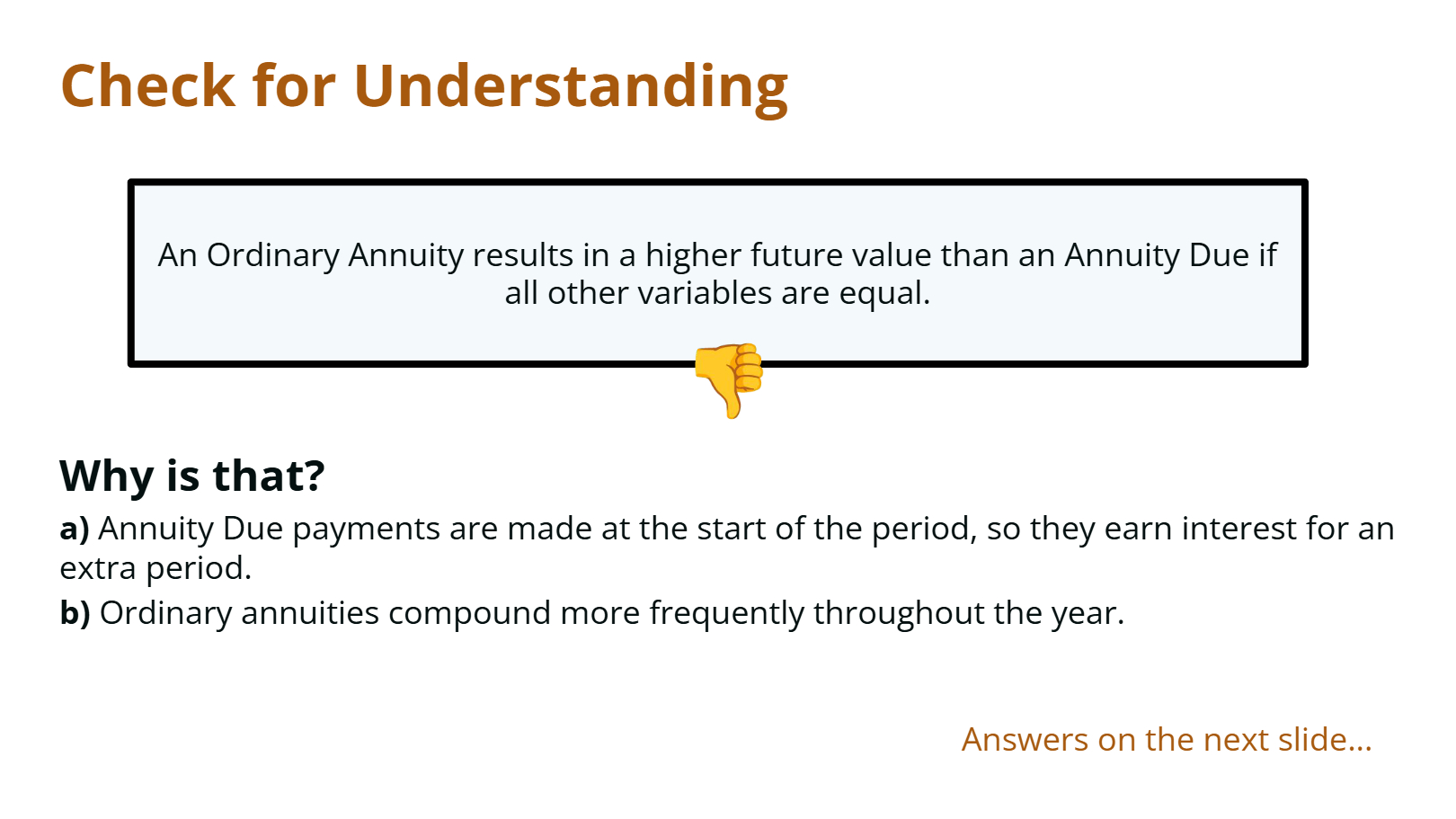
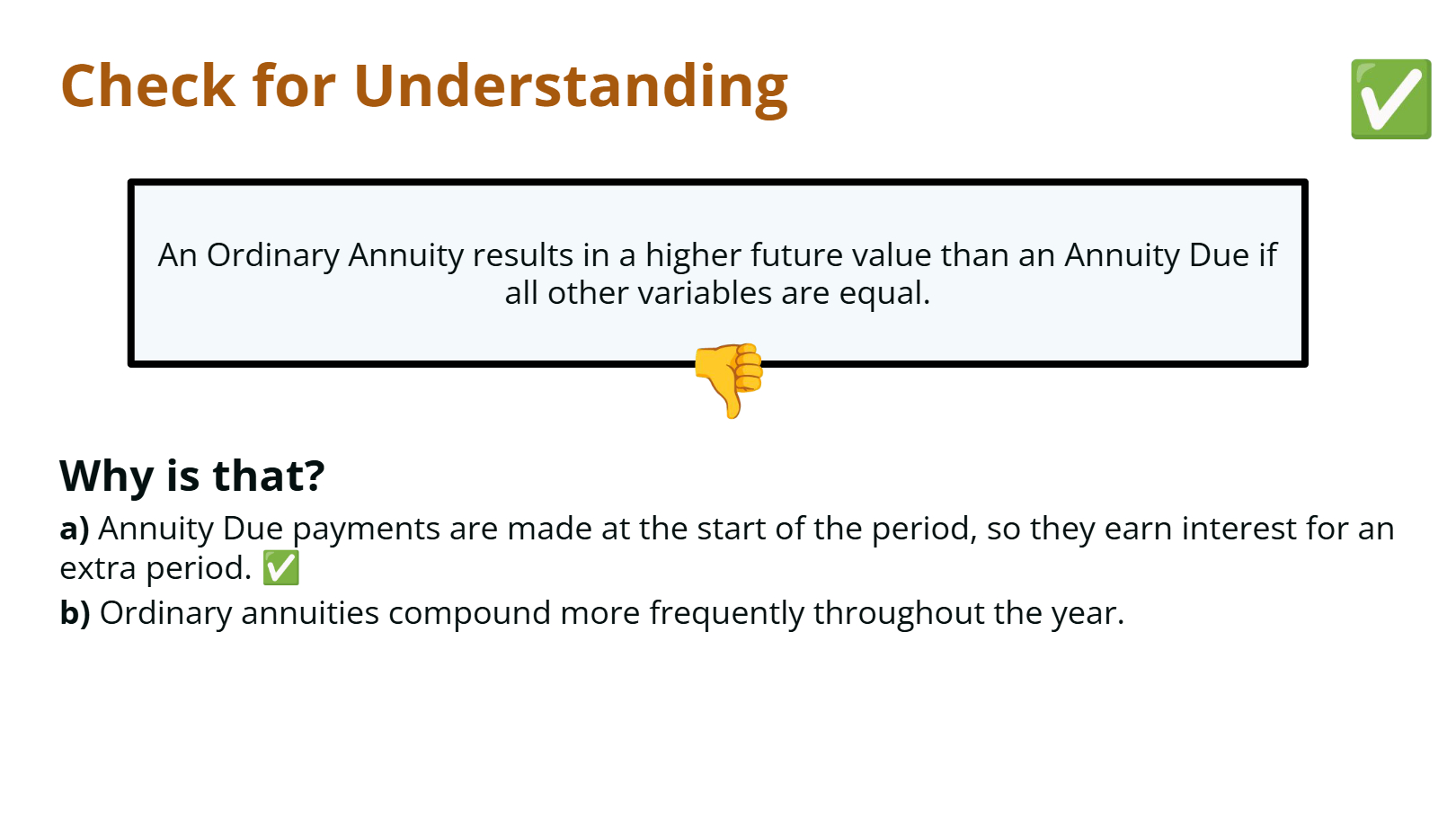
An Ordinary Annuity results in a higher future value than an Annuity Due if all other variables are equal. Why is this statement incorrect?
Because Annuity Due payments are made at the start of the period, earning interest for an extra period
Because Ordinary Annuities compound more frequently
Because Annuity Due payments are made at the end of the period
Because Ordinary Annuities have a higher payment amount
24
25
Open Ended
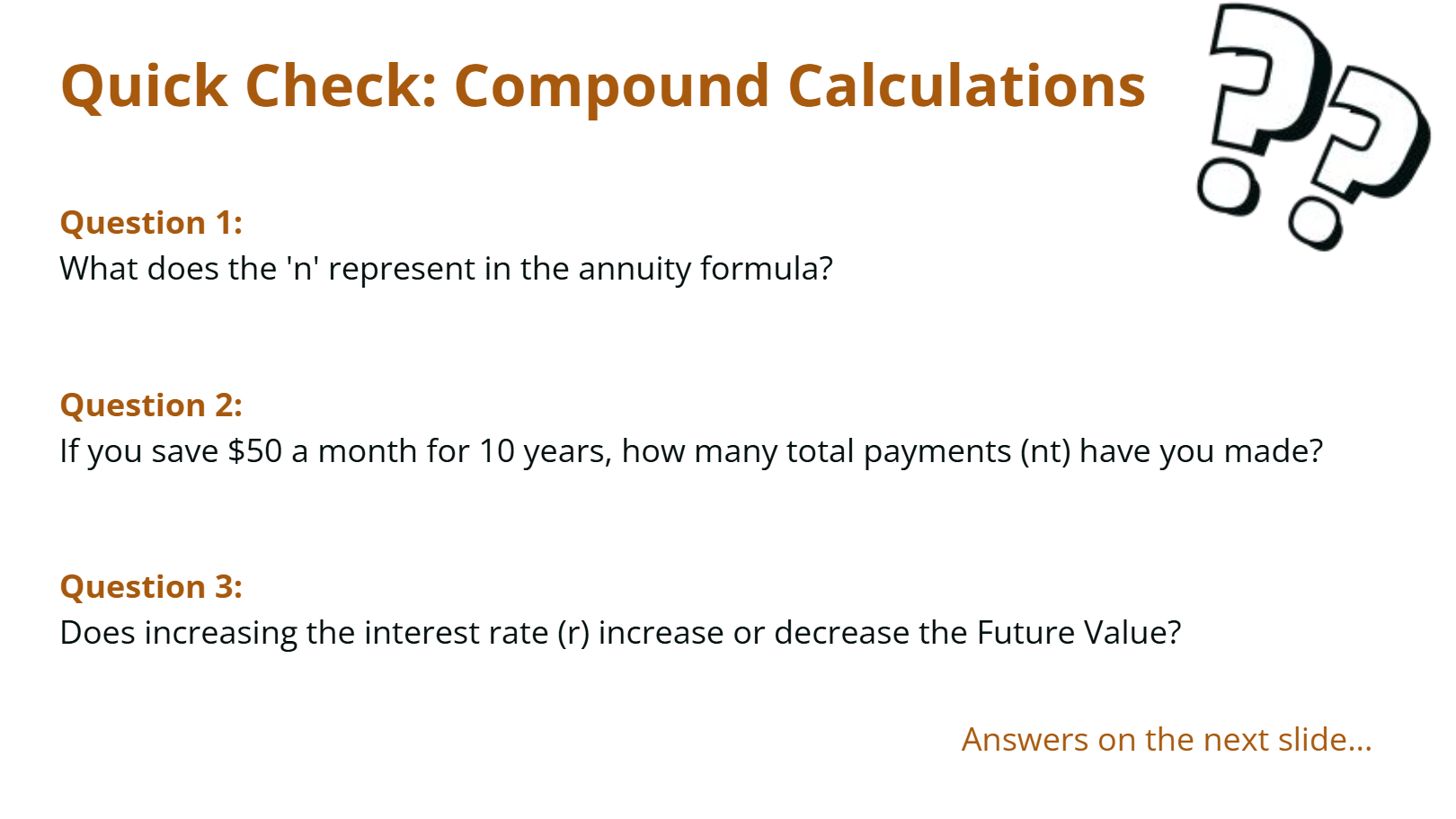
If you were to increase the interest rate (r) in the annuity formula, what would be the effect on the future value of your savings?
26
Fill in the Blanks
Type answer...
27
28
Fill in the Blanks
Type answer...
29
Multiple Choice
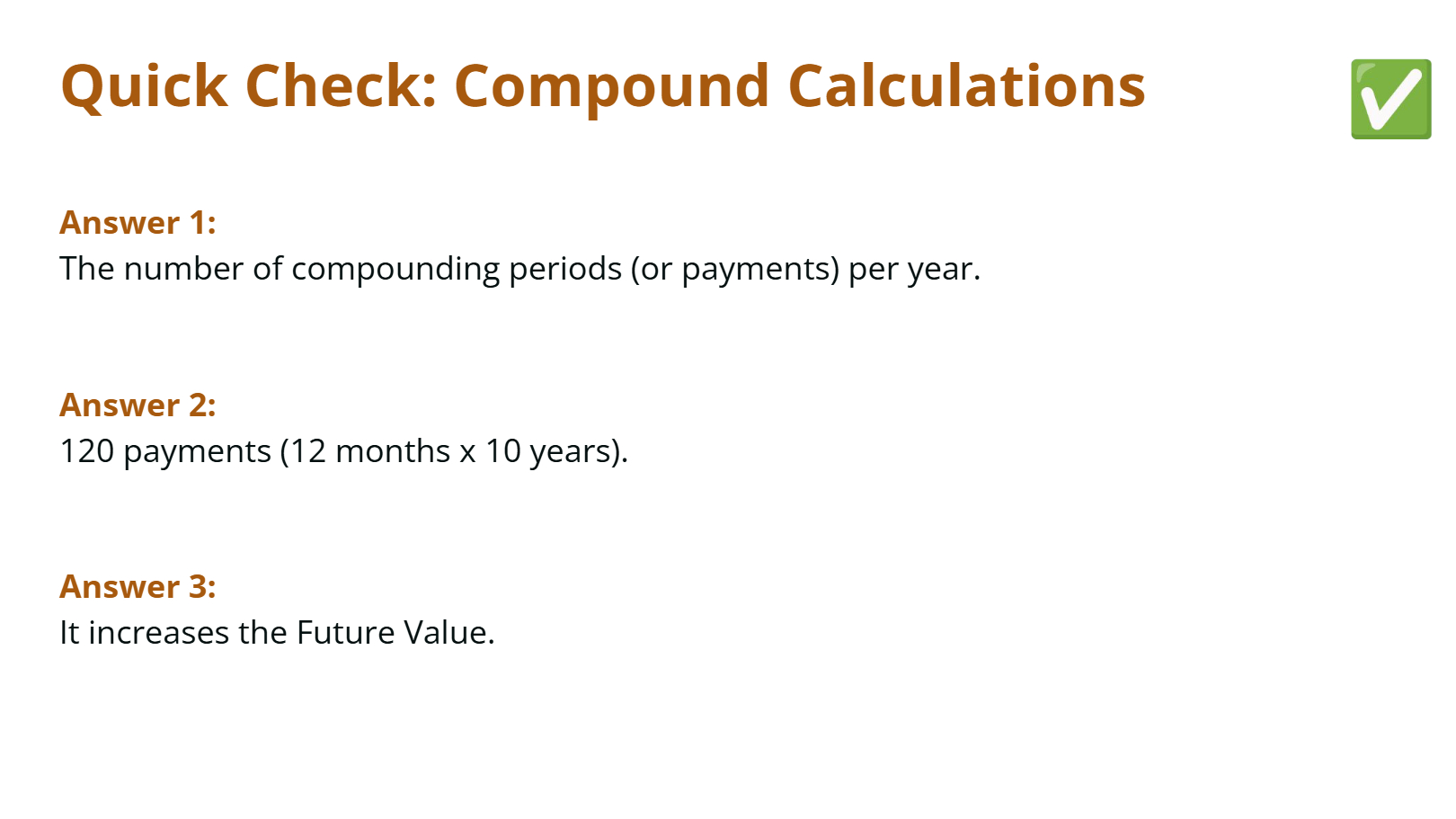
What is the effect of increasing the number of compounding periods per year on the future value of an investment?
It increases the future value.
It decreases the future value.
It has no effect on the future value.
It only affects the present value.
30

31

32
33
Multiple Select
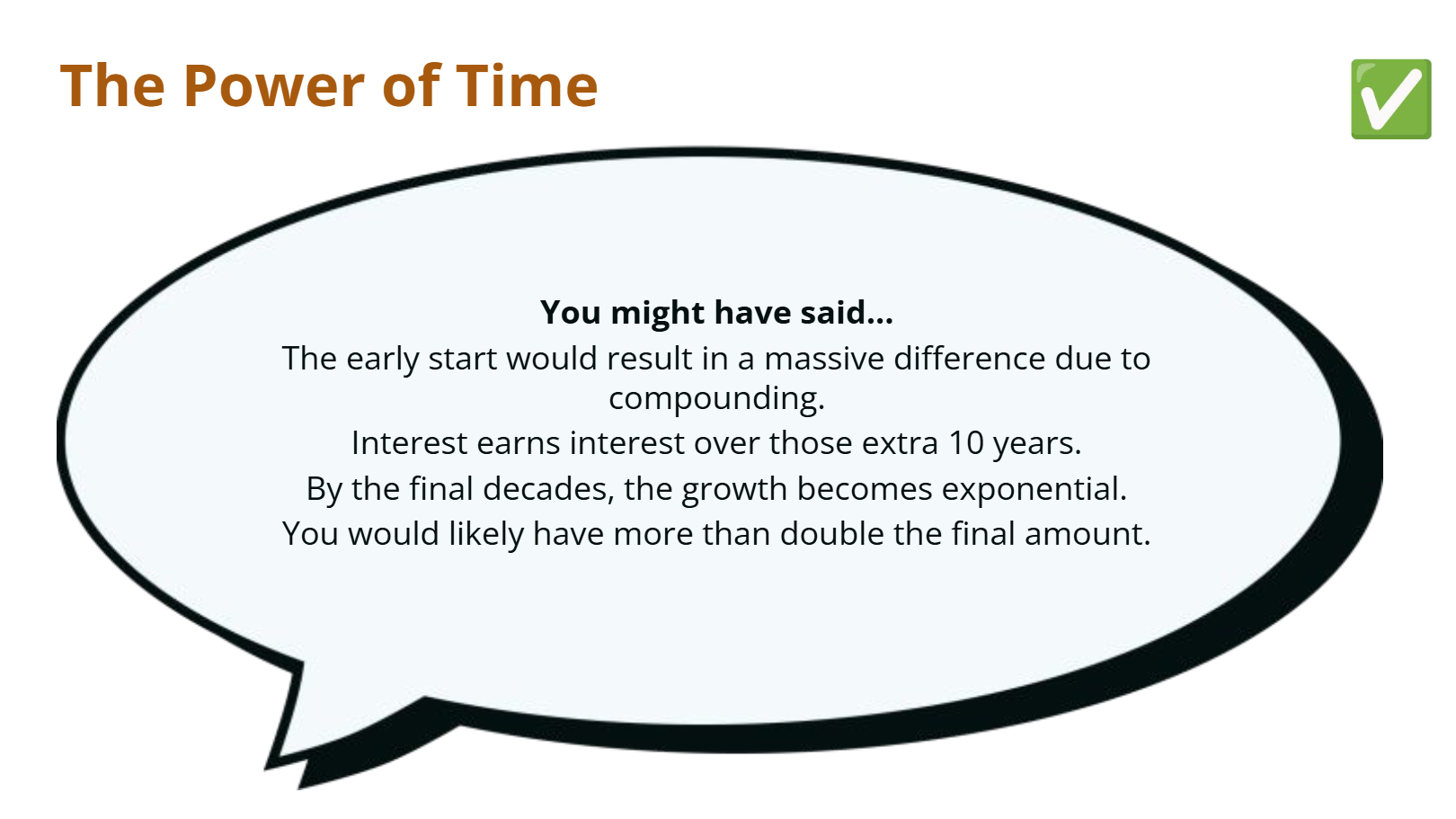
Which of the following statements about the power of compounding over time are correct?
Starting earlier allows your money to earn interest for more years.
Interest earns interest over time, leading to exponential growth.
The total amount saved is always doubled if you start 10 years earlier.
Growth becomes more significant in the later years due to compounding.
34
Open Ended
Explain how starting to save earlier in life can impact the total amount saved by retirement age, based on the concept of compounding.
35
36
37
Open Ended
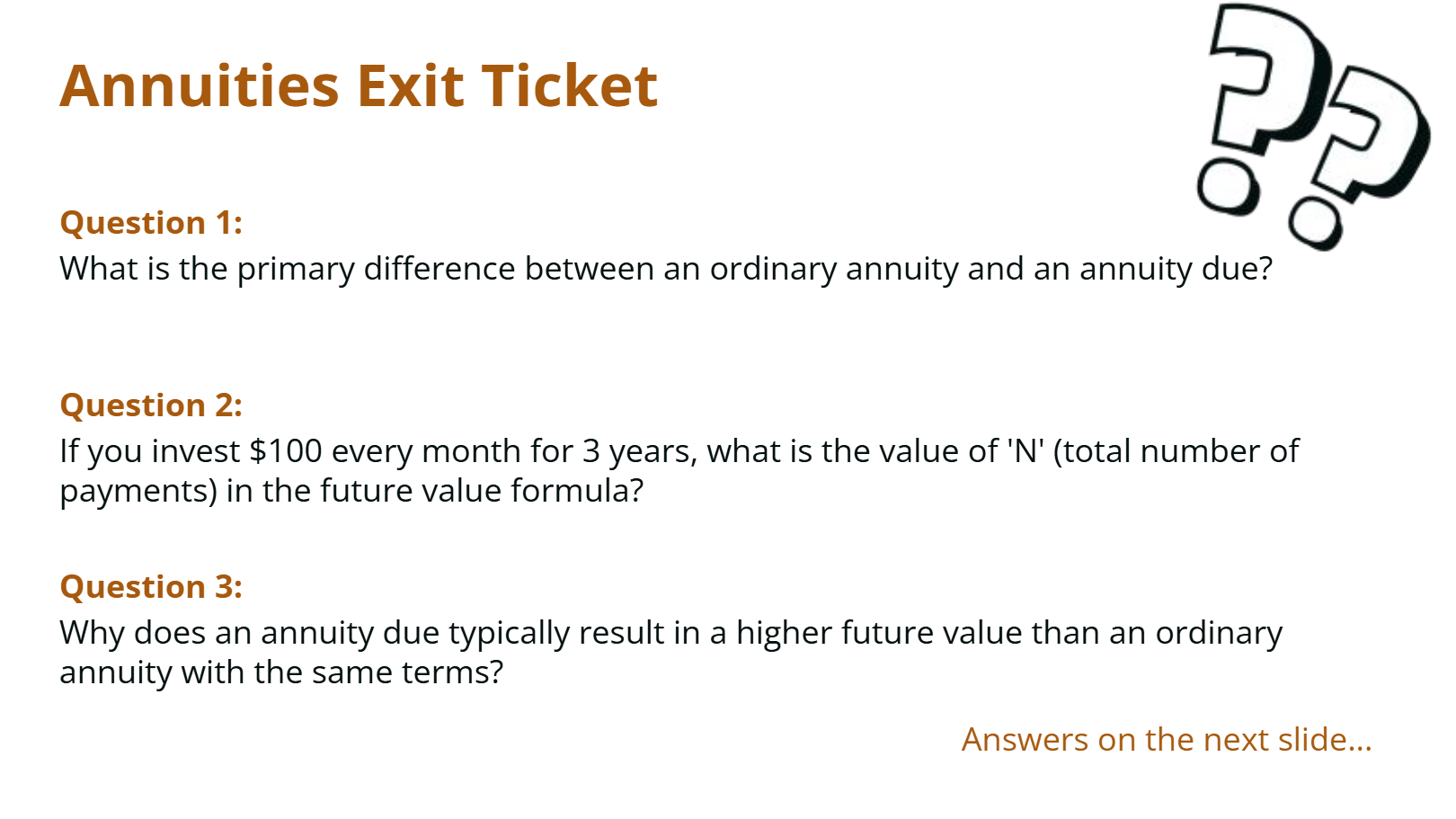
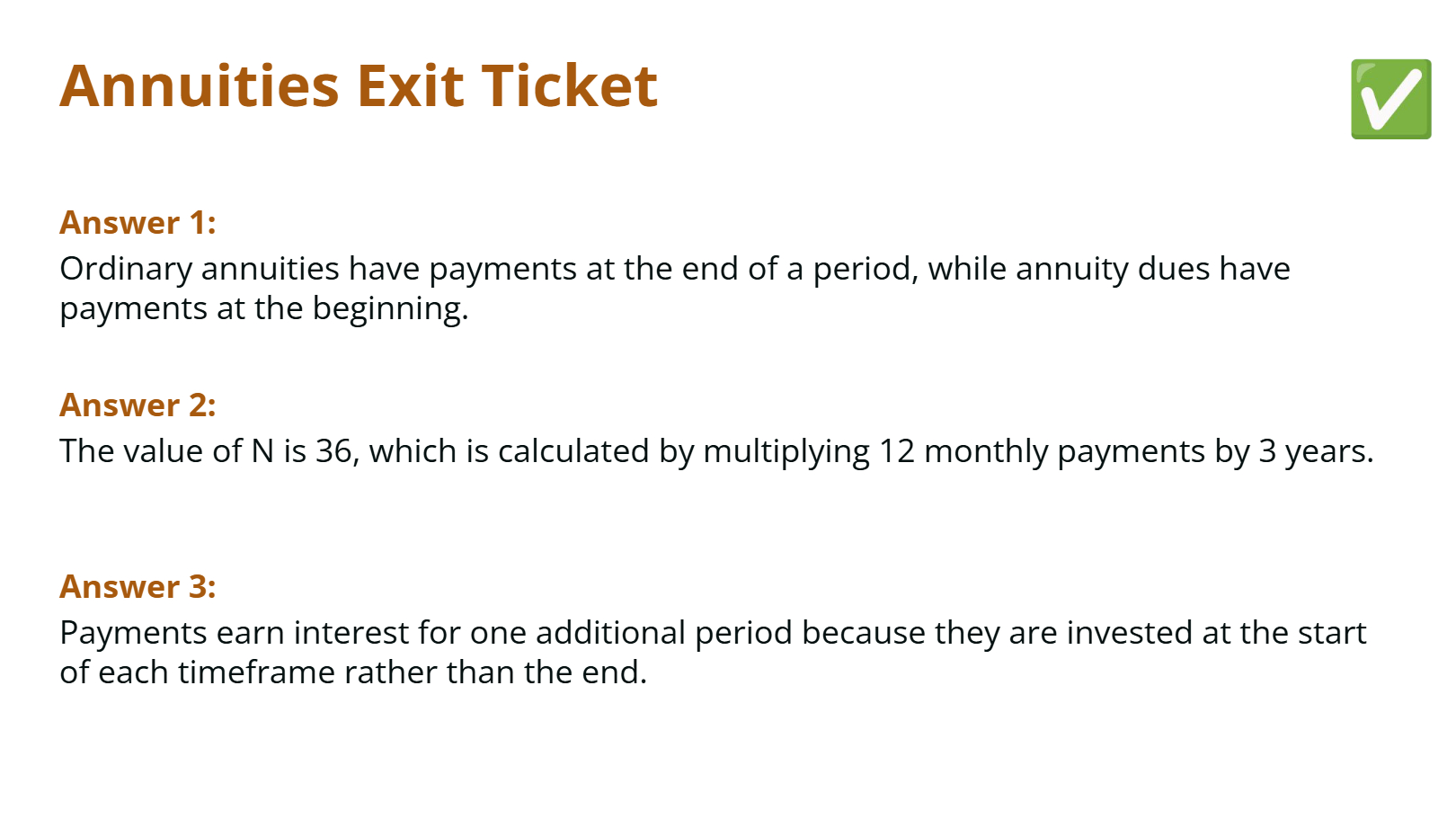
Compare and contrast an ordinary annuity and an annuity due in terms of payment timing and impact on future value.
38
Multiple Choice
If you invest $100 every month for 3 years, what is the value of 'N' (total number of payments) in the future value formula?
36
12
3
24
39

40
Multiple Choice
Which of the following best describes the purpose of the Future Value formula as mentioned in the lesson summary?
To predict long-term financial health
To calculate monthly loan payments
To determine the interest rate on savings
To compare different types of annuities
41
Fill in the Blanks
Type answer...
42
Open Ended
Reflecting on today's lesson about annuities and future value, what is one concept you found most interesting or would like to learn more about?
Show answer
Auto Play
Slide 1 / 42
SLIDE
Popular Resources on Wayground

19 questions
Naming Polygons

Quiz
•
3rd Grade
10 questions
Prime Factorization
Quiz
•
6th Grade
20 questions
Math Review
Quiz
•
3rd Grade
15 questions
Fast food
Quiz
•
7th Grade
20 questions
Main Idea and Details
Quiz
•
5th Grade
20 questions
Context Clues
Quiz
•
6th Grade
20 questions
Inferences
Quiz
•
4th Grade
19 questions
Classifying Quadrilaterals
Quiz
•
3rd Grade
Discover more resources for Mathematics
5 questions
A.EO.1-4 Quizizz Day 1
Quiz
•
9th - 12th Grade
5 questions
A.EO.1-4 Quizizz Day 2
Quiz
•
9th - 12th Grade
5 questions
A.EO.1-4 Quizizz Day 4
Quiz
•
9th - 12th Grade
20 questions
Basic Trig Ratios
Quiz
•
9th - 12th Grade
34 questions
NC Math 1 EOC Review
Quiz
•
9th - 11th Grade
18 questions
CCG Review - SA & V
Quiz
•
9th - 12th Grade
5 questions
Exit Ticket comparing linear, quad, exponential
Quiz
•
9th - 12th Grade
20 questions
Geometry Exam Review (Second Half)
Quiz
•
9th - 12th Grade