
5th Grade Physical and Chemical Changes
Authored by Britany Pressler
Chemistry
5th - 6th Grade
NGSS covered
Used 790+ times


AI Actions
Add similar questions
Adjust reading levels
Convert to real-world scenario
Translate activity
More...
About
This quiz comprehensively covers physical and chemical changes, acids and bases, solutions and mixtures, and chemical equations at a 5th grade level. Students need to understand the fundamental difference between physical changes (alterations in size, shape, or state without forming new substances) and chemical changes (reactions that create entirely new substances with different properties). The material requires mastery of key concepts including states of matter and phase transitions like sublimation, evaporation, and boiling; the pH scale with acids ranging from 0-6.99 and bases from 7.1-14; solution terminology including solute, solvent, and solubility; and basic chemical equation interpretation identifying reactants and products. Students must also recognize indicators of chemical reactions such as color changes, gas production, and heat or light release, while applying the law of conservation of mass and understanding that chemical changes are irreversible processes that form new substances with different chemical properties. Created by Britany Pressler, a Chemistry teacher in US who teaches grade 5 and 6. This quiz serves as an excellent formative assessment tool to gauge student understanding of foundational chemistry concepts before advancing to more complex topics in middle school science. Teachers can effectively use this resource for end-of-unit reviews, homework assignments to reinforce classroom learning, or as a diagnostic pre-assessment to identify knowledge gaps in physical science concepts. The varied question formats make it ideal for differentiated instruction and can support both individual practice and collaborative learning activities. This assessment aligns with NGSS 5-PS1-1 (developing models to describe matter composition), 5-PS1-3 (making observations of substances before and after interactions), and 5-PS1-4 (conducting investigations to determine if mixing substances results in new substances), providing teachers with data-driven insights into student mastery of these essential physical science standards.
Content View
Student View
52 questions
Show all answers
1.
MULTIPLE CHOICE QUESTION
3 mins • 1 pt
What is the change of state from a solid to a gas?
Tags
NGSS.MS-PS1-4
2.
MULTIPLE CHOICE QUESTION
30 sec • 1 pt
Which of these is not an example of a physical change?
3.
MULTIPLE CHOICE QUESTION
30 sec • 1 pt
Steel is an example of
4.
MULTIPLE CHOICE QUESTION
45 sec • 1 pt
What kind of properties can only be observed when a substance changes into a different substance?
Tags
NGSS.MS-PS1-2
5.
MULTIPLE CHOICE QUESTION
45 sec • 1 pt
Is bleaching your hair a physical or chemical change?
Tags
NGSS.MS-PS1-2
6.
MULTIPLE CHOICE QUESTION
45 sec • 1 pt
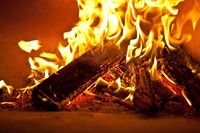
Is burning wood a chemical or physical change?
Tags
NGSS.MS-PS1-2
NGSS.MS-PS1-5
7.
MULTIPLE CHOICE QUESTION
45 sec • 1 pt
A change in the size, shape, or state of matter.
Tags
NGSS.MS-PS1-4
Access all questions and much more by creating a free account
Create resources
Host any resource
Get auto-graded reports

Continue with Google

Continue with Email

Continue with Classlink

Continue with Clever
or continue with

Microsoft
%20(1).png)
Apple

Others
Already have an account?


