
Honors Chemistry Chapter 6 Review
Chemistry
8th - 10th Grade
NGSS covered
Used 87+ times


AI Actions
Add similar questions
Adjust reading levels
Convert to real-world scenario
Translate activity
More...
About
This Honors Chemistry Chapter 6 Review focuses on chemical bonding, specifically ionic and covalent bonds, and is designed for high school students at the 9th-10th grade level. The quiz comprehensively assesses students' understanding of valence electrons, electron transfer and sharing mechanisms, Lewis dot structures, and the fundamental differences between ionic and covalent bonding. Students need to master several core concepts to succeed: determining valence electrons from periodic table groups, predicting ion formation based on electron gain or loss, understanding that ionic bonds form between metals and nonmetals through electron transfer while covalent bonds form between nonmetals through electron sharing, and applying the octet rule to explain atomic stability. The questions also require students to interpret Lewis structures, write correct molecular formulas, identify cations and anions in compounds, and understand electronegativity as the driving force behind chemical bonding. This quiz was created by a classroom teacher who designed it for students studying honors chemistry in grades 9-10. The comprehensive nature of this assessment makes it highly versatile for multiple instructional purposes throughout a chemical bonding unit. Teachers can use individual questions as warmup activities to activate prior knowledge about electron configurations, deploy sections as guided practice during lessons on ionic versus covalent bonding, or assign the complete quiz as homework to reinforce newly taught concepts. The mix of conceptual questions and application problems makes it particularly effective for formative assessment, allowing teachers to identify specific misconceptions about electron behavior, Lewis structures, or bond formation before summative evaluation. This quiz aligns with Next Generation Science Standards HS-PS1-1 and HS-PS1-2, which require students to use the periodic table to predict properties of elements and analyze chemical bonding patterns, while also supporting Common Core mathematical practices through formula writing and electron counting exercises.
Content View
Student View
35 questions
Show all answers
1.
MULTIPLE CHOICE QUESTION
1 min • 1 pt
How many valence electrons does calcium have?
Tags
NGSS.HS-PS1-1
NGSS.HS-PS1-2
2.
MULTIPLE CHOICE QUESTION
1 min • 1 pt
How many valence electrons does hydrogen have?
Tags
NGSS.HS-PS1-1
3.
MULTIPLE CHOICE QUESTION
1 min • 1 pt
When an atom loses an electron, it becomes a:
Tags
NGSS.HS-PS1-1
NGSS.HS-PS1-2
4.
MULTIPLE CHOICE QUESTION
10 sec • 1 pt
Which of the following is NOT a property of ionic compounds?
5.
MULTIPLE CHOICE QUESTION
1 min • 1 pt
Ionic compounds are formed when one or more valence electrons are transferred from _____
Tags
NGSS.HS-PS1-1
NGSS.HS-PS1-2
6.
MULTIPLE CHOICE QUESTION
1 min • 1 pt
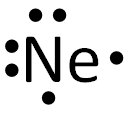
This is a correct dot diagram for neon (Ne)
Tags
NGSS.HS-PS1-1
7.
MULTIPLE CHOICE QUESTION
1 min • 1 pt

This could be the dot diagram of
Tags
NGSS.HS-PS1-1

Access all questions and much more by creating a free account
Create resources
Host any resource
Get auto-graded reports

Continue with Google

Continue with Email

Continue with Classlink

Continue with Clever
or continue with

Microsoft
%20(1).png)
Apple

Others
Already have an account?

