
SN1, SN2, E1, and E2
Chemistry
11th Grade - University
NGSS covered
Used 1K+ times


AI Actions
Add similar questions
Adjust reading levels
Convert to real-world scenario
Translate activity
More...
About
This quiz covers substitution and elimination reaction mechanisms in organic chemistry, specifically focusing on SN1, SN2, E1, and E2 pathways. The content is appropriate for grade 11-12 students who are studying advanced organic chemistry concepts. Students need a solid understanding of reaction mechanisms, carbocation stability, nucleophiles and electrophiles, steric hindrance effects, and solvent polarity influences on reaction pathways. The questions assess students' ability to predict which mechanism will predominate based on substrate structure (primary, secondary, or tertiary halides), reaction conditions, and the nature of nucleophiles or bases. Students must understand that primary halides favor SN2 mechanisms due to reduced steric hindrance, while tertiary halides favor SN1 mechanisms because of stable carbocation formation. Additionally, students need to recognize how protic solvents stabilize carbocations in SN1 reactions, while aprotic solvents favor SN2 reactions by not solvating nucleophiles as strongly. This quiz was created by a classroom teacher who designed it for students studying organic chemistry reaction mechanisms in grades 11-12. The assessment serves as an excellent tool for formative evaluation, allowing teachers to gauge student comprehension of complex mechanistic concepts before moving to more advanced organic chemistry topics. It works effectively as a review exercise after instruction on reaction mechanisms, as homework to reinforce classroom learning, or as a warm-up activity to activate prior knowledge before exploring new reaction types. The quiz format encourages students to apply theoretical knowledge to practical scenarios, helping them develop the analytical skills necessary for predicting reaction outcomes in organic synthesis. This assessment aligns with chemistry standards that emphasize understanding reaction mechanisms, molecular interactions, and the relationship between molecular structure and chemical behavior, supporting students' development of higher-order thinking skills in organic chemistry.
Content View
Student View
16 questions
Show all answers
1.
MULTIPLE CHOICE QUESTION
20 sec • 1 pt
A primary halide will likely react with a ______ mechanism
2.
MULTIPLE CHOICE QUESTION
10 sec • 1 pt

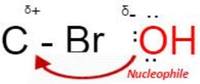
The reaction mechanism shown below is
Tags
NGSS.HS-PS1-2
3.
MULTIPLE CHOICE QUESTION
20 sec • 1 pt

Which reaction would most likely occur?
Tags
NGSS.HS-PS1-2
4.
MULTIPLE CHOICE QUESTION
20 sec • 1 pt

Which reaction would most likely occur?
Tags
NGSS.HS-PS1-2
5.
MULTIPLE CHOICE QUESTION
10 sec • 1 pt

The reaction mechanism shown below is
Tags
NGSS.HS-PS1-2
6.
MULTIPLE CHOICE QUESTION
1 min • 1 pt

Solvent affects substitution reaction. SN1 reaction is favored by
7.
MULTIPLE CHOICE QUESTION
1 min • 1 pt

Which reaction is most likely going to occur?
Tags
NGSS.HS-PS1-2


Access all questions and much more by creating a free account
Create resources
Host any resource
Get auto-graded reports

Continue with Google

Continue with Email

Continue with Microsoft
or continue with

%20(1).png)
Apple

Others
Already have an account?

