
Orbital Diagram Practice
Authored by Kalynn Mitchell
Chemistry
11th Grade
NGSS covered
Used 673+ times


AI Actions
Add similar questions
Adjust reading levels
Convert to real-world scenario
Translate activity
More...
About
This quiz focuses on atomic structure and electron configuration, specifically targeting orbital diagrams and the fundamental principles governing electron placement in atoms. The material is appropriate for 11th-grade chemistry students who are learning about quantum mechanical models of the atom. Students need to understand the hierarchical organization of electron shells and subshells, recognize the maximum electron capacity for s orbitals (2 electrons) and p orbitals (6 electrons), and master the three fundamental rules: the Aufbau Principle (electrons fill lowest energy orbitals first), Hund's Rule (electrons occupy orbitals singly before pairing), and the Pauli Exclusion Principle (maximum two electrons per orbital with opposite spins). The questions require students to interpret orbital diagrams visually, translate between electron configurations and element identification, count electrons from given configurations, and identify violations of electron configuration rules. Created by Kalynn Mitchell, a Chemistry teacher in the US who teaches grade 11. This quiz serves as an excellent formative assessment tool for students mastering electron configuration concepts, allowing teachers to quickly identify misconceptions about orbital filling patterns and electron counting. The variety of question formats makes it versatile for multiple instructional purposes: as a warm-up activity to activate prior knowledge, as guided practice during direct instruction, as homework reinforcement, or as a review before summative assessments. Teachers can use individual questions to target specific learning gaps or deploy the entire quiz to comprehensively evaluate student understanding. This assessment directly supports NGSS HS-PS1-1 (developing models to predict properties of substances) and aligns with common state chemistry standards focusing on atomic structure and periodic trends, providing measurable data on student progress toward understanding how electron arrangement determines chemical behavior.
Content View
Student View
25 questions
Show all answers
1.
MULTIPLE CHOICE QUESTION
5 mins • 1 pt

Which element is pictured?
Tags
NGSS.HS-PS1-1
2.
MULTIPLE CHOICE QUESTION
5 mins • 1 pt
What is the maximum capacity for an orbital?
Tags
NGSS.HS-PS1-1
3.
MULTIPLE CHOICE QUESTION
5 mins • 1 pt
Maximum number of electrons that can be placed in an s orbital.
4.
MULTIPLE CHOICE QUESTION
5 mins • 1 pt
The maximum number of electrons that can be placed in an p orbital.
5.
MULTIPLE CHOICE QUESTION
5 mins • 1 pt
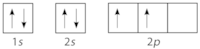
This orbital diagram represents:
Tags
NGSS.HS-PS1-1
NGSS.HS-PS1-2
6.
MULTIPLE CHOICE QUESTION
5 mins • 1 pt
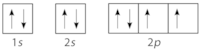
This orbital diagram represents:
Tags
NGSS.HS-PS1-1
7.
MULTIPLE CHOICE QUESTION
5 mins • 1 pt
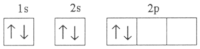
What is incorrect about this orbital diagram?
Tags
NGSS.HS-PS1-1

Access all questions and much more by creating a free account
Create resources
Host any resource
Get auto-graded reports

Continue with Google

Continue with Email

Continue with Classlink

Continue with Clever
or continue with

Microsoft
%20(1).png)
Apple

Others
Already have an account?

