
S5E1 Destructive Constructive Forces
5th Grade
•35 Qs

Similar activities
Natural Science - Energy
5th Grade
•30 Qs
13.3-13.4 Review
5th - 7th Grade
•37 Qs
Genetics Basic Quiz # 1
5th - 9th Grade
•30 Qs
ECOGRAFIA TRIVIA FINAL
1st - 12th Grade
•30 Qs
Magnetism
4th - 5th Grade
•31 Qs
Body Systems Review
5th Grade
•36 Qs
Newton's laws check up
3rd - 5th Grade
•36 Qs
States of Matter
5th Grade
•30 Qs

S5E1 Destructive Constructive Forces

Quiz
•
Science
•
5th Grade
•
Medium
+9
Standards-aligned
Used 41+ times
FREE Resource

Enhance your content in a minute
35 questions
Show all answers
1.
MULTIPLE CHOICE QUESTION
3 mins • 1 pt
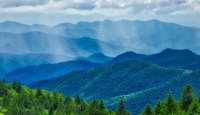
What type of process most likely created the mountain chain seen here?
Volcanic eruptions created the mountains over millions of years.
Tectonic plates pushed together forcing one plate under the other and then pushing the land upward.
Earthquakes broke the earth into pieces and parts of it fell into cracks between faults.
A river flowed through the land and created the valleys between the mountains making them appear taller.
Tags
NGSS.MS-ESS2-2
2.
MULTIPLE CHOICE QUESTION
3 mins • 1 pt

A seismograph tells us what information about an earthquake?
How deep within the earth the earthquake occurred.
How far a tsunami will travel
How much damage the earthquake caused
How strong the earthquake is
Tags
NGSS.MS-ESS3-2
3.
MULTIPLE CHOICE QUESTION
3 mins • 1 pt
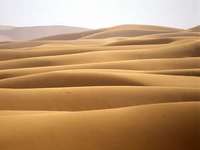
Sand dunes can be viewed in the picture. What is the best way to simulate the formation of sand dunes?
Use a hair dryer to blow sand into piles showing how wind can deposit sand in new locations.
Use ice to move sand from one place to another the way that a glacier would on the earth's surface.
Use water and sand to show how water can move sand from one place to another through the process of erosion.
Use sand and a shaky table to show how earthquakes can move parts of the earths surface.
Tags
NGSS.MS-ESS2-1
NGSS.MS-ESS2-2
4.
MULTIPLE CHOICE QUESTION
3 mins • 1 pt
How can plants cause the weathering of rocks?
roots can grow into or near rocks causing the rocks to break down over a period of time.
plants can chemically break down rocks using photosynthesis
plant roots can use the rocks as a source of nutrients and break them down over time
plants can release water vapor into the air that causes the rocks to break down over time.
Tags
NGSS.4-ESS2-1
5.
MULTIPLE CHOICE QUESTION
3 mins • 1 pt
What does it mean to restore a beach?
Replace the sand on the beach.
Move the sand from one beach to another
Building a wall on the beach to keep wind and water away
Leave all of the seashells and other items on the beach instead of picking them up.
Tags
NGSS.MS-ESS3-3
NGSS.MS-ETS1-1
6.
MULTIPLE CHOICE QUESTION
3 mins • 1 pt
Richter scales are used to measure
the size of a volcanic eruptions
the strength of a tornado
the magnitude of an earthquake
the power of flood waters flowing over land
7.
MULTIPLE CHOICE QUESTION
3 mins • 1 pt
Which of the following landforms are created over a long period of time?
Mountains and Canyons
Landslides and Sand dunes
Ponds and Mountains
Volcanic eruptions
Tags
NGSS.MS-ESS2-2


Access all questions and much more by creating a free account
Create resources
Host any resource
Get auto-graded reports

Continue with Google

Continue with Email

Continue with Classlink

Continue with Clever
or continue with

Microsoft
%20(1).png)
Apple

Others
Already have an account?
Similar Resources on Wayground
30 questions
Food Chains & Webs - 5th grade
Quiz
•
5th Grade
40 questions
Types of Energy
Quiz
•
4th - 8th Grade
36 questions
Stars
Quiz
•
4th - 5th Grade
30 questions
E5 2nd Period Exam Review
Quiz
•
5th Grade
31 questions
energy in earths atmosphere
Quiz
•
5th - 8th Grade
30 questions
Cells
Quiz
•
5th Grade
30 questions
Exploring Matter and Magnetism
Quiz
•
5th Grade
30 questions
First Term Test - General revision - Science 5 - (NS- T. Joyce)
Quiz
•
5th Grade
Popular Resources on Wayground
15 questions
Fractions on a Number Line
Quiz
•
3rd Grade
20 questions
Equivalent Fractions
Quiz
•
3rd Grade
25 questions
Multiplication Facts
Quiz
•
5th Grade
22 questions
fractions
Quiz
•
3rd Grade
20 questions
Main Idea and Details
Quiz
•
5th Grade
20 questions
Context Clues
Quiz
•
6th Grade
15 questions
Equivalent Fractions
Quiz
•
4th Grade
20 questions
Figurative Language Review
Quiz
•
6th Grade
Discover more resources for Science
20 questions
The Water Cycle
Quiz
•
5th Grade
20 questions
Weathering, Erosion, Deposition
Quiz
•
5th Grade
20 questions
Food Chains and Food Webs Review
Quiz
•
5th Grade
21 questions
Solar System Review
Quiz
•
5th Grade
20 questions
Food Webs
Quiz
•
5th Grade
18 questions
Acquired Trait and Inherited Trait
Quiz
•
5th Grade
20 questions
Food Chains & Food Webs
Quiz
•
5th - 7th Grade
19 questions
Mixtures and Solutions
Quiz
•
5th Grade