
Unit 1B Practice Test Accelerated Science
Authored by Jennifer Hignite
Science
7th Grade
NGSS covered
Used 1+ times


AI Actions
Add similar questions
Adjust reading levels
Convert to real-world scenario
Translate activity
More...
Content View
Student View
93 questions
Show all answers
1.
MULTIPLE CHOICE QUESTION
15 mins • 1 pt
Protons and neutrons are found in the center of the atom called the:
nucleus
neutron
shell
cell
Answer explanation
Protons and neutrons are located in the nucleus, which is the central part of the atom. The other options, shell and cell, do not refer to the center of the atom. The neutron is part of the nucleus, but is not the only subatomic particle found in the nucleus.
2.
MULTIPLE CHOICE QUESTION
15 mins • 1 pt
What is the sum of an atom's protons and neutrons called?
atom
atomic theory
atomic mass
atomic number
Answer explanation
The sum of an atom's protons and neutrons is called the atomic mass. This value reflects the total number of these particles in the nucleus, distinguishing it from the atomic number, which counts only protons.
3.
MULTIPLE CHOICE QUESTION
15 mins • 1 pt
The _____ is based on the number of protons in the nucleus of the atom or the number of electrons in the electron shell(s).
atomic structure
periodic table of the elements
atomic number
atomic mass
Answer explanation
The atomic number is defined as the number of protons in the nucleus of an atom or the number of electrons in the electron shell(s). It uniquely identifies an element and determines its position in the periodic table, making 'atomic number' the correct choice.
Tags
NGSS.HS-PS1-1
4.
MULTIPLE CHOICE QUESTION
15 mins • 1 pt

What does the 1.00794 stand for?
Hydrogen
atomic number
atomic mass
atomic explosion
Answer explanation
The value 1.00794 represents the atomic mass of hydrogen. It is not the atomic number, which is 1, nor does it relate to atomic explosion.
Tags
NGSS.MS-PS1-1
5.
MULTIPLE CHOICE QUESTION
15 mins • 1 pt
An atom with atomic number 6 would have how many protons
6
12
3
cannot be determined
Answer explanation
An atom's atomic number indicates the number of protons it has. Since the atomic number 6 corresponds to carbon, it has 6 protons. Therefore, the correct answer is 6.
6.
MULTIPLE CHOICE QUESTION
15 mins • 1 pt
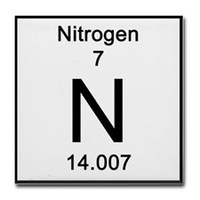
What is the number of protons that the element in this image contain?
14
7
15
18
Answer explanation
The element in the image is nitrogen, which has an atomic number of 7. This means it contains 7 protons, making the correct answer 7.
Tags
NGSS.MS-PS1-1
7.
MULTIPLE CHOICE QUESTION
15 mins • 1 pt
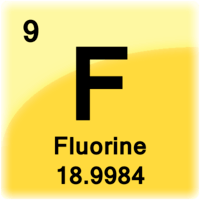
What is the atomic mass of Fluorine?
9
18
17
19
Answer explanation
The atomic mass of fluorine (F) is approximately 19 atomic mass units. This value reflects rounding the atomic mass to the nearest whole number, making 19 the correct answer.
Access all questions and much more by creating a free account
Create resources
Host any resource
Get auto-graded reports

Continue with Google

Continue with Email

Continue with Microsoft
or continue with

%20(1).png)
Apple

Others
By signing up, you agree to our Terms of Service & Privacy Policy
Already have an account?


