
AP Unit 3 Quiz IMF and Solids
Authored by David Vala
Chemistry
11th - 12th Grade
NGSS covered
Used 5+ times


AI Actions
Add similar questions
Adjust reading levels
Convert to real-world scenario
Translate activity
More...
Content View
Student View
35 questions
Show all answers
1.
MULTIPLE CHOICE QUESTION
2 mins • 1 pt
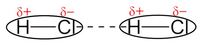
Which type of IMF is responsible for the attraction pictured above?
Dipole-Dipole Interaction
Ion-Dipole Interaction
Hydrogen Bonds
Covalent Bond
Ionic Bond
Tags
NGSS.HS-PS1-3
2.
MULTIPLE CHOICE QUESTION
2 mins • 1 pt
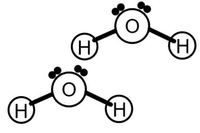
Which type of IMF is responsible for the attraction pictured above?
Dipole-Dipole Interaction
Ion-Dipole Interaction
Hydrogen Bonds
Covalent Bond
Ionic Bond
Tags
NGSS.HS-PS1-3
3.
MULTIPLE CHOICE QUESTION
2 mins • 1 pt
Intermolecular forces are attractions between ______.
Cations and anions
Atoms within a molecule
Neighboring molecules
Protons and electrons
4.
MULTIPLE CHOICE QUESTION
2 mins • 1 pt
Intermolecular forces are responsible for which of the following properties?
State of matter
Color
Odor
Conductivity
Tags
NGSS.HS-PS1-3
5.
MULTIPLE CHOICE QUESTION
2 mins • 1 pt
For which of the following would hydrogen bonding occur between molecules?


6.
MULTIPLE CHOICE QUESTION
2 mins • 1 pt
The strength of temporary dipoles:
Tags
NGSS.HS-PS1-3
7.
MULTIPLE CHOICE QUESTION
2 mins • 1 pt
Which IMF contains a temporary dipole?
Access all questions and much more by creating a free account
Create resources
Host any resource
Get auto-graded reports

Continue with Google

Continue with Email

Continue with Classlink

Continue with Clever
or continue with

Microsoft
%20(1).png)
Apple

Others
Already have an account?


