
Cell Transport Review S1 2021.22
Authored by William Jacks
Biology
9th - 12th Grade
NGSS covered
Used 15+ times


AI Actions
Add similar questions
Adjust reading levels
Convert to real-world scenario
Translate activity
More...
Content View
Student View
45 questions
Show all answers
1.
MULTIPLE CHOICE QUESTION
5 mins • 1 pt
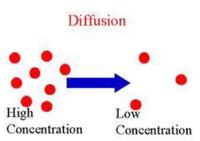
The movement of particles from an area of high to low concentration is known as--
Passive Transport
Active Transport
2.
MULTIPLE CHOICE QUESTION
5 mins • 1 pt
What is it called when large molecules move across the cell membrane from an area of high concentration to an area of low concentration through a protein channel?
Diffusion
Osmosis
Active Transport
Facilitated Diffusion
3.
MULTIPLE CHOICE QUESTION
5 mins • 1 pt
How does a cell maintain homeostasis?
By controlling what enters and leaves the cell
Flexibility
Protective barrier
Structure and support
Tags
NGSS.HS-LS1-3
4.
MULTIPLE CHOICE QUESTION
5 mins • 1 pt
Cell membrane transport that occurs without energy is called--
active transport
endocytosis
passive transport
exocytosis
5.
MULTIPLE CHOICE QUESTION
5 mins • 1 pt
What is the name of the process in which small molecules move from an area of high concentration to an area of low concentration across the cell membrane
Diffusion
Osmosis
Active Transport
Facilitated Diffusion
6.
MULTIPLE CHOICE QUESTION
5 mins • 1 pt
What is the difference between active and passive transport?
7.
MULTIPLE CHOICE QUESTION
5 mins • 1 pt
The movement of molecules from low to high is known as
simple diffusion
facilitated diffusion
active transport
osmosis
Access all questions and much more by creating a free account
Create resources
Host any resource
Get auto-graded reports

Continue with Google

Continue with Email

Continue with Classlink

Continue with Clever
or continue with

Microsoft
%20(1).png)
Apple

Others
Already have an account?

