
Cell Theory, Animal Cells and Plant Cells
Authored by Kelly Harrison
Science
6th - 8th Grade
NGSS covered
Used 218+ times


AI Actions
Add similar questions
Adjust reading levels
Convert to real-world scenario
Translate activity
More...
Content View
Student View
21 questions
Show all answers
1.
MULTIPLE CHOICE QUESTION
30 sec • 5 pts

What is NOT a part of cell theory:
all cells come from existing cells
all cells have a nucleus
all living things are made of cells
cells are basic unit of structure and function in living things
Tags
NGSS.MS-LS1-2
NGSS.MS-LS1-1
2.
MULTIPLE CHOICE QUESTION
2 mins • 5 pts
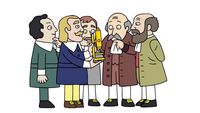
Robert Hooke, Anton van Leeuwenhoek, Theodor Schwann, Rudolf Virchow, and Matthias Schliden were all responsible for what theory?
Tags
NGSS.MS-LS1-2
NGSS.MS-LS1-1
NGSS.MS-LS1-3
3.
MULTIPLE CHOICE QUESTION
5 mins • 5 pts

An Amoeba is a unicellular, animal-like protist that lives in ponds and streams. According to cell theory, where did this cell come from?
Tags
NGSS.MS-LS1-1
4.
MULTIPLE CHOICE QUESTION
5 mins • 5 pts

What tool do you use to view the cells?
Tags
NGSS.MS-LS1-2
NGSS.MS-LS1-1
5.
MULTIPLE CHOICE QUESTION
5 mins • 5 pts
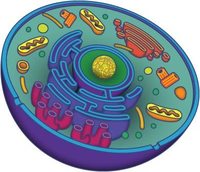
All living things are made up of...
Tags
NGSS.MS-LS1-2
NGSS.MS-LS1-1
6.
MULTIPLE CHOICE QUESTION
5 mins • 5 pts
What is the basic structural and functional unit of all living things?
Tags
NGSS.MS-LS1-2
NGSS.MS-LS1-1
7.
MULTIPLE CHOICE QUESTION
30 sec • 5 pts

How are unicellular organisms different from multicellular organisms?
Tags
NGSS.MS-LS1-2
NGSS.MS-LS1-1


Access all questions and much more by creating a free account
Create resources
Host any resource
Get auto-graded reports

Continue with Google

Continue with Email

Continue with Microsoft
or continue with

%20(1).png)
Apple

Others
Already have an account?


