
Prokaryotic and Eukaryotic Cells
Authored by Mary Rush
Science
6th - 8th Grade
NGSS covered
Used 421+ times


AI Actions
Add similar questions
Adjust reading levels
Convert to real-world scenario
Translate activity
More...
Content View
Student View
25 questions
Show all answers
1.
MULTIPLE SELECT QUESTION
30 sec • 1 pt
What 3 cell parts are found in PLANT cells, but not animal cells? (Check all that apply.)
Cell Wall
Large Vacuole
Mitochondria
Chloroplast
Nucleus
2.
MULTIPLE SELECT QUESTION
15 mins • 1 pt

What distinguishes a plant cell from an animal cell? (How do you tell them apart) Hint: There's 3 ways (Check all 3)
Large Central Vacuole
Mitochondria
Cell Wall
Ribosomes
Chloroplasts
Tags
NGSS.MS-LS1-2
3.
MULTIPLE CHOICE QUESTION
45 sec • 1 pt

These are passageways in the cell that carry proteins from one part of the cell to another.
Golgi body
endoplasmic reticulum
ribosome
lysosome
Tags
NGSS.MS-LS1-2
4.
MULTIPLE CHOICE QUESTION
2 mins • 1 pt

Which type of cell came first?
Tags
NGSS.MS-LS1-1
NGSS.MS-LS4-1
5.
MULTIPLE CHOICE QUESTION
5 mins • 1 pt
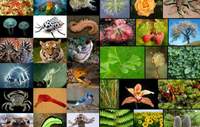
What is one way in which all living things on Earth are alike?
All living things have hair.
All living things are made of cells and come from other cells.
The cells of all living things have chloroplast.
All living things eat other organisms for nutrition.
Tags
NGSS.MS-LS1-2
NGSS.MS-LS1-1
6.
MULTIPLE CHOICE QUESTION
30 sec • 1 pt
This organelle forms passageways in which proteins and other materials are carried from one part of the cell to another like a road:
Chloroplast
Nucleus
ER
Ribosomes
Tags
NGSS.MS-LS1-2
7.
MULTIPLE CHOICE QUESTION
30 sec • 1 pt
Which of the following is NOT part of the cell theory?
All living things are composed of cells.
All cells are produced from other cells.
All cells have a nucleus and chloroplasts.
Cells are the basic unit of structure and function in living things.

Access all questions and much more by creating a free account
Create resources
Host any resource
Get auto-graded reports

Continue with Google

Continue with Email

Continue with Microsoft
or continue with

%20(1).png)
Apple

Others
By signing up, you agree to our Terms of Service & Privacy Policy
Already have an account?


