
Unit 2 Exam: Cell Structure and Transport
Authored by ASHLEY PARK
Biology
9th - 12th Grade
NGSS covered
Used 10+ times


AI Actions
Add similar questions
Adjust reading levels
Convert to real-world scenario
Translate activity
More...
Content View
Student View
70 questions
Show all answers
1.
MULTIPLE CHOICE QUESTION
2 mins • 1 pt

What best describes the solution the cell is in?
Hypotonic Solution
Hypertonic Solution
Isotonic Solution
None of the above
Tags
NGSS.HS-LS1-3
2.
MULTIPLE CHOICE QUESTION
2 mins • 1 pt
Which of the following are NOT found in animal cells?
chloroplasts and cytoplasm
chloroplasts and cell wall
cell wall and cell membrane
mitochondria and nucleus
Tags
NGSS.HS-LS1-5
3.
MULTIPLE CHOICE QUESTION
2 mins • 1 pt
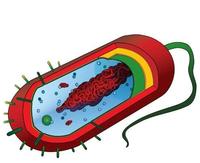
What characteristic defines this organism as a prokaryotic cell?
Ability to move
Ability to respond to stimuli
Having a nucleus
Lacking of membrane-bound organelles
Tags
NGSS.MS-LS1-1
4.
MULTIPLE CHOICE QUESTION
2 mins • 1 pt
What is the function of the cell membrane, in ALL living organisms?
5.
MULTIPLE CHOICE QUESTION
2 mins • 1 pt

What type of transport is occurring in Part C of the diagram shown?
6.
MULTIPLE CHOICE QUESTION
2 mins • 4 pts
What is facilitated diffusion?
7.
MULTIPLE CHOICE QUESTION
2 mins • 4 pts
What is something that prokaryotic and eukaryotic cells have in common?


Access all questions and much more by creating a free account
Create resources
Host any resource
Get auto-graded reports

Continue with Google

Continue with Email

Continue with Microsoft
or continue with

%20(1).png)
Apple

Others
By signing up, you agree to our Terms of Service & Privacy Policy
Already have an account?


