
Enlightenment & Revolutions
Authored by Horwath Kevin
Social Studies
12th Grade
Used 4+ times


AI Actions
Add similar questions
Adjust reading levels
Convert to real-world scenario
Translate activity
More...
Content View
Student View
13 questions
Show all answers
1.
MULTIPLE CHOICE QUESTION
30 sec • 1 pt
During the 18th century, what concept regarding birth and social status did some European thinkers begin to question?
The idea that one's birth determined their wealth
The idea that one's birth determined their class and fate
The idea that one's birth determined their intelligence
The idea that one's birth determined their rights as a citizen
2.
MULTIPLE CHOICE QUESTION
45 sec • 1 pt
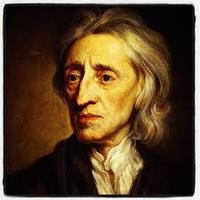
Enlightenment philosopher who believed people had natural rights of life, liberty, and property.
3.
MULTIPLE CHOICE QUESTION
30 sec • 1 pt
What did thinkers increasingly apply to human institutions during the Enlightenment, as influenced by the Scientific Revolution?
Tradition
Religion
Reason and rationality
Divine Right
4.
MULTIPLE CHOICE QUESTION
30 sec • 1 pt
How did Montesquieu suggest the powers of the state should be divided?
Into religious, military, and civilian branches
Into legislative, executive, and judicial branches
Into federal, state, and local governments
Into monarchy, aristocracy, and democracy
5.
MULTIPLE CHOICE QUESTION
30 sec • 1 pt
What was Voltaire's stance on state religion?
He believed it was essential for maintaining social order.
He argued that religion should be a protected private practice.
He thought state religion was necessary for economic prosperity.
He supported state religion as a means to promote tolerance.
6.
MULTIPLE CHOICE QUESTION
30 sec • 1 pt
What concept did Rousseau advocate that was related to the authority of the state?
The divine right of kings.
The general will as the ultimate entity and authority.
Individualism and personal freedom.
The separation of church and state.
7.
MULTIPLE CHOICE QUESTION
30 sec • 1 pt
What was a common characteristic of the American, French, and Latin-American Revolutions as inspired by Enlightenment ideals?
They were conflicts that maintained the existing monarchies.
They were conflicts that resulted in the establishment of constitutional republics protecting individual rights.
They were peaceful transitions without any conflict.
They were movements that reinforced the power of the clergy and nobility.
Access all questions and much more by creating a free account
Create resources
Host any resource
Get auto-graded reports

Continue with Google

Continue with Email

Continue with Classlink

Continue with Clever
or continue with

Microsoft
%20(1).png)
Apple

Others
Already have an account?
Similar Resources on Wayground

10 questions
Classical Conditioning

Quiz
•
10th Grade - University
10 questions
LESSON 2 - HISTORICAL DEVELOPMENT OF SOCIO, ANTHRO, AND POL SCI
Quiz
•
12th Grade
15 questions
Mass Movements
Quiz
•
10th - 12th Grade
15 questions
H & P Geography of India
Quiz
•
10th - 12th Grade
16 questions
Government Quiz 4 Study Guide
Quiz
•
12th Grade
17 questions
Economics Quiz
Quiz
•
12th Grade
10 questions
Black Inventors
Quiz
•
3rd Grade - University
12 questions
Selective Incorporation
Quiz
•
12th Grade
Popular Resources on Wayground
15 questions
Fractions on a Number Line
Quiz
•
3rd Grade
10 questions
Probability Practice
Quiz
•
4th Grade
15 questions
Probability on Number LIne
Quiz
•
4th Grade
20 questions
Equivalent Fractions
Quiz
•
3rd Grade
25 questions
Multiplication Facts
Quiz
•
5th Grade
22 questions
fractions
Quiz
•
3rd Grade
6 questions
Appropriate Chromebook Usage

Lesson
•
7th Grade
10 questions
Greek Bases tele and phon
Quiz
•
6th - 8th Grade
Discover more resources for Social Studies
16 questions
USHC 4.8 Immigration and Urbanization
Quiz
•
9th - 12th Grade
16 questions
SBAC Practice HSS26
Quiz
•
9th - 12th Grade
64 questions
USHC 4 Key Terms 22-23
Quiz
•
11th Grade - University
7 questions
World Civ Unit 5 Vocab
Quiz
•
12th Grade
36 questions
Unit 5 Key Terms
Quiz
•
11th Grade - University
27 questions
Unit 2- Constitution Quiz
Quiz
•
9th - 12th Grade
10 questions
SSCG4b
Lesson
•
9th - 12th Grade
15 questions
Unit 6A WWI Vocab
Quiz
•
12th Grade