
Enlightenment & Revolutions
12th Grade
•13 Qs

Similar activities
History of Madagascar
3rd Grade - University
•18 Qs
3/7 Thu Articles 4-7 Review Reading
12th Grade
•16 Qs
akuntansik (akuntansi asik)
12th Grade
•15 Qs
Social Control & Deviance (Ch. 7)
9th - 12th Grade
•15 Qs
Political Parties and Interest Groups
12th Grade
•10 Qs
Atlantic Slave Trade Context Quiz
9th - 12th Grade
•10 Qs
Archaeology
1st - 12th Grade
•10 Qs
Moche
5th - 12th Grade
•11 Qs

Enlightenment & Revolutions

Quiz
•
Social Studies
•
12th Grade
•
Practice Problem
•
Medium

Horwath Kevin
Used 4+ times
FREE Resource

Enhance your content in a minute
13 questions
Show all answers
1.
MULTIPLE CHOICE QUESTION
30 sec • 1 pt
During the 18th century, what concept regarding birth and social status did some European thinkers begin to question?
The idea that one's birth determined their wealth
The idea that one's birth determined their class and fate
The idea that one's birth determined their intelligence
The idea that one's birth determined their rights as a citizen
2.
MULTIPLE CHOICE QUESTION
45 sec • 1 pt
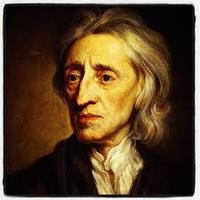
Enlightenment philosopher who believed people had natural rights of life, liberty, and property.
3.
MULTIPLE CHOICE QUESTION
30 sec • 1 pt
What did thinkers increasingly apply to human institutions during the Enlightenment, as influenced by the Scientific Revolution?
Tradition
Religion
Reason and rationality
Divine Right
4.
MULTIPLE CHOICE QUESTION
30 sec • 1 pt
How did Montesquieu suggest the powers of the state should be divided?
Into religious, military, and civilian branches
Into legislative, executive, and judicial branches
Into federal, state, and local governments
Into monarchy, aristocracy, and democracy
5.
MULTIPLE CHOICE QUESTION
30 sec • 1 pt
What was Voltaire's stance on state religion?
He believed it was essential for maintaining social order.
He argued that religion should be a protected private practice.
He thought state religion was necessary for economic prosperity.
He supported state religion as a means to promote tolerance.
6.
MULTIPLE CHOICE QUESTION
30 sec • 1 pt
What concept did Rousseau advocate that was related to the authority of the state?
The divine right of kings.
The general will as the ultimate entity and authority.
Individualism and personal freedom.
The separation of church and state.
7.
MULTIPLE CHOICE QUESTION
30 sec • 1 pt
What was a common characteristic of the American, French, and Latin-American Revolutions as inspired by Enlightenment ideals?
They were conflicts that maintained the existing monarchies.
They were conflicts that resulted in the establishment of constitutional republics protecting individual rights.
They were peaceful transitions without any conflict.
They were movements that reinforced the power of the clergy and nobility.
Access all questions and much more by creating a free account
Create resources
Host any resource
Get auto-graded reports

Continue with Google

Continue with Email

Continue with Classlink

Continue with Clever
or continue with

Microsoft
%20(1).png)
Apple

Others
Already have an account?
Similar Resources on Wayground
10 questions
Social Science
Quiz
•
8th Grade - University
15 questions
How Hong Kong Became a British Colony
Quiz
•
4th Grade - University
10 questions
Tổng hợp KT
Quiz
•
KG - University
16 questions
Society and Culture 2010-2011
Quiz
•
12th Grade
10 questions
Information processing - Sports coaching
Quiz
•
12th Grade
10 questions
Dinamika Penduduk Benua Asia
Quiz
•
9th - 12th Grade
10 questions
Quiz on Freedom fighters
Quiz
•
8th - 12th Grade
10 questions
Técnicas creativas
Quiz
•
10th Grade - University
Popular Resources on Wayground
15 questions
Fractions on a Number Line
Quiz
•
3rd Grade
20 questions
Equivalent Fractions
Quiz
•
3rd Grade
25 questions
Multiplication Facts
Quiz
•
5th Grade
54 questions
Analyzing Line Graphs & Tables
Quiz
•
4th Grade
22 questions
fractions
Quiz
•
3rd Grade
20 questions
Main Idea and Details
Quiz
•
5th Grade
20 questions
Context Clues
Quiz
•
6th Grade
15 questions
Equivalent Fractions
Quiz
•
4th Grade
Discover more resources for Social Studies
18 questions
Early civil rights and African Americans
Quiz
•
9th - 12th Grade
20 questions
Unit 7.1 The Industrial Revolution
Quiz
•
9th - 12th Grade
13 questions
USHC 3 to North and South Advantages
Quiz
•
11th - 12th Grade
30 questions
AP Psychology: Social Psychology (4.1-4.3) Quiz
Quiz
•
12th Grade
52 questions
Unit 2 Economics (Micro and Market Structures)
Quiz
•
11th - 12th Grade
73 questions
AP Psychology - Developmental Psychology
Quiz
•
10th - 12th Grade
15 questions
PFLE: Unit 2 Review
Quiz
•
12th Grade
30 questions
Full test Unit 4: Industrial Revolution
Quiz
•
9th - 12th Grade