
Biomes and Symbiosis
Authored by Roland Yumang
Science
NGSS covered
Used 3+ times


AI Actions
Add similar questions
Adjust reading levels
Convert to real-world scenario
Translate activity
More...
Content View
Student View
10 questions
Show all answers
1.
MULTIPLE CHOICE QUESTION
1 min • 1 pt
Some shrimp and crab live and capture food from within the tentacles of giant anemones.
Mutualism
Parasitism
Commensalism
Tags
NGSS.MS-LS2-2
2.
MULTIPLE CHOICE QUESTION
3 mins • 1 pt
A pearlfish spends the day inside the alimentary tract, or intestines of a sea cucumber. The fish emerges from the sea cucumber at night to feed on small crustaceans. The pearlfish gets a safe place to live. The sea cucumber does not gain anything from the relationship, nor is it harmed.
Mutualism
Parasitism
Commensalism
3.
MULTIPLE CHOICE QUESTION
3 mins • 1 pt
A cymothoid isopod lives inside the mouth of a snapper fish. The isopod severs blood vessels in the fish's tongue, causing the tongue to atrophy and degenerate. The isopod then hooks its pereopods, or legs, to the base of the fish's tongue, essentially replacing the tongue. The isopod stays there for the rest of its life, feeding on blood, mucus, and stray pieces of food from the fish.
Mutualism
Parasitism
Commensalism
4.
MULTIPLE CHOICE QUESTION
30 sec • 1 pt
The siboglinid tube worm, found at deep-sea hydrothermal vents and cold seeps, has no digestive tract. It relies on symbiotic bacteria that live in the tube worm's tissues. The bacteria oxidize hydrogen sulfide or methane for the worm.
Mutualism
Parasitism
Commensalism
Tags
NGSS.MS-LS2-2
5.
MULTIPLE CHOICE QUESTION
30 sec • 1 pt
Imperial shrimp attach themselves to sea cucumbers and get transported by their host to a large area of potential food with only a minimal expenditure of energy. They have been observed getting off their host cucumber to feed in productive areas and then getting back on for a ride to the next spot.
Mutualism
Parasitism
Commensalism
Tags
NGSS.MS-LS2-2
6.
MULTIPLE CHOICE QUESTION
1 min • 1 pt

Type of forest biome near the equator; receives a lot of rain; temperatures are warm all year.
Tags
NGSS.MS-LS1-6
NGSS.MS-LS2-3
7.
MULTIPLE CHOICE QUESTION
1 min • 1 pt

Which biome is the driest?


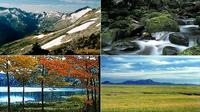
Access all questions and much more by creating a free account
Create resources
Host any resource
Get auto-graded reports

Continue with Google

Continue with Email

Continue with Classlink

Continue with Clever
or continue with

Microsoft
%20(1).png)
Apple

Others
Already have an account?


