
IG Bio 2: Specialised Cells and Sizes of Specimens Quiz
Authored by Jeffrey Reed
Biology
9th - 12th Grade


AI Actions
Add similar questions
Adjust reading levels
Convert to real-world scenario
Translate activity
More...
Content View
Student View
20 questions
Show all answers
1.
MULTIPLE CHOICE QUESTION
5 mins • 1 pt

A student is required to record observations of as many structures as possible in a plant leaf. The student first observes the leaf with only her eyes and then with a microscope.The student claims that a microscope is better to observe the cells in the leaf.
Which evidence would best support the student's claim?
The cells of the leaf are too dark to be seen without the special lighting a microscope provides.
The cells of the leaf are too small to be seen without the magnification a microscope provides.
The cells of the leaf are too close together to be seen without using a microscope.
The cells of the leaf are too far away to be seen without using a microscope.
2.
MULTIPLE CHOICE QUESTION
2 mins • 1 pt
What do all living organisms have in common?
They all reproduce sexually.
They are all made of cells.
They all need blood to stay alive.
They are all made from chlorophyll.
3.
MULTIPLE CHOICE QUESTION
2 mins • 1 pt

The picture shows a piece of technology that has helped scientists.
Which of the following best explains how this piece of technology has helped scientists?
It has helped scientists to see other planets.
It has helped scientists to see other moons.
It has helped scientists see very large objects.
It has helped scientists see very small objects.
4.
MULTIPLE CHOICE QUESTION
30 sec • 1 pt
The eyepiece of a microscope typically has a magnification of ...
5.
MULTIPLE CHOICE QUESTION
30 sec • 6 pts
Where does photosynthesis happen?
6.
MULTIPLE CHOICE QUESTION
1 min • 7 pts

E-Coli, a type of bacteria is this type of cell.
Prokaryotic
Eukaryotic
Both
7.
MULTIPLE CHOICE QUESTION
1 min • 7 pts
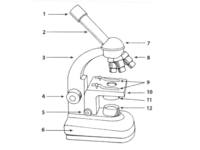
A microscope is an instrument that.

Access all questions and much more by creating a free account
Create resources
Host any resource
Get auto-graded reports

Continue with Google

Continue with Email

Continue with Classlink

Continue with Clever
or continue with

Microsoft
%20(1).png)
Apple

Others
Already have an account?


