
- Resource Library
- Science
- Chemistry
- Types Of Chemical Reactions
- Identifying Different Types Of Chemical Reactions
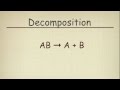
Identifying Different Types of Chemical Reactions

Interactive Video
•
Science
•
6th - 10th Grade
•
Practice Problem
•
Medium
Standards-aligned

Aiden Montgomery
Used 11+ times
FREE Resource
Standards-aligned
10 questions
Show all answers
1.
MULTIPLE CHOICE QUESTION
30 sec • 1 pt
What is a synthesis reaction?
A reaction where a compound breaks down into elements.
A reaction where two elements combine to form a compound.
A reaction where elements switch places in compounds.
A reaction that produces CO2 and H2O.
Tags
NGSS.MS-PS1-1
2.
MULTIPLE CHOICE QUESTION
30 sec • 1 pt
In a synthesis reaction, what is on the left side of the equation?
A compound
A single element
CO2 and H2O
Two different elements
3.
MULTIPLE CHOICE QUESTION
30 sec • 1 pt
What happens in a decomposition reaction?
Two elements combine to form a compound.
Elements switch places in compounds.
A compound breaks down into elements.
A reaction produces CO2 and H2O.
4.
MULTIPLE CHOICE QUESTION
30 sec • 1 pt
Which of the following is an example of a single displacement reaction?
AB + CD -> AD + CB
A + BC -> AC + B
AB -> A + B
A + B -> AB
Tags
NGSS.MS-PS1-5
5.
MULTIPLE CHOICE QUESTION
30 sec • 1 pt
In a single displacement reaction, what happens to the single element?
It takes the place of one element in a compound.
It forms CO2 and H2O.
It breaks down into simpler elements.
It combines with another single element.
6.
MULTIPLE CHOICE QUESTION
30 sec • 1 pt
What is a double displacement reaction?
A reaction that produces CO2 and H2O.
A reaction where two elements combine to form a compound.
A reaction where a compound breaks down into elements.
A reaction where elements in two compounds switch places.
7.
MULTIPLE CHOICE QUESTION
30 sec • 1 pt
In a double displacement reaction, what happens to the elements in the compounds?
They break down into simpler elements.
They combine to form a new compound.
They switch places with each other.
They form CO2 and H2O.
Access all questions and much more by creating a free account
Create resources
Host any resource
Get auto-graded reports

Continue with Google

Continue with Email

Continue with Classlink

Continue with Clever
or continue with

Microsoft
%20(1).png)
Apple

Others
Already have an account?


