
Enzymes (3.1 + 3.2 + 3.3)
Authored by Amany Ezzeldein
Biology
12th Grade
NGSS covered
Used 20+ times


AI Actions
Add similar questions
Adjust reading levels
Convert to real-world scenario
Translate activity
More...
About
This comprehensive quiz covers enzyme structure, function, and kinetics as well as fundamental concepts of cellular energetics, making it appropriate for 12th grade AP Biology students. The questions assess students' understanding of enzyme mechanisms including the induced fit model, competitive and non-competitive inhibition, and the relationship between enzyme structure and specificity. Students must demonstrate knowledge of how environmental factors like temperature and pH affect enzyme activity, interpret graphs showing optimal conditions and saturation kinetics, and distinguish between endergonic and exergonic reactions. The quiz requires students to analyze energy diagrams, understand activation energy concepts, and connect metabolism to anabolic and catabolic processes. To succeed on this assessment, students need a solid foundation in protein structure, chemical thermodynamics, and the ability to interpret scientific data presented in graphical format. Created by Amany Ezzeldein, a Biology teacher in AE who teaches grade 12. This quiz serves as an excellent comprehensive assessment tool covering multiple units on enzymes and cellular energetics that can be effectively used for end-of-unit review, cumulative practice before AP exams, or as a formative assessment to identify areas requiring additional instruction. The diverse question formats, including diagram interpretation and graph analysis, make it particularly valuable for reinforcing visual learning and data interpretation skills essential for advanced biology coursework. Teachers can deploy this quiz as a homework assignment to reinforce classroom learning, use selected questions as warm-up activities to begin enzyme-related lessons, or implement it as a formal assessment to gauge student mastery. The content aligns with AP Biology Learning Objectives 4.A.1, 4.A.2, and 4.B.1, addressing enzyme catalysis, environmental effects on enzyme activity, and energy coupling in biological systems.
Content View
Student View
35 questions
Show all answers
1.
MULTIPLE CHOICE QUESTION
1 min • 1 pt
Enzymes are capable of increasing the rate of a chemical reaction within a living cell. Enzymes accomplish this through which of the following means?
Tags
NGSS.HS-PS1-4
2.
MULTIPLE CHOICE QUESTION
1 min • 12 pts
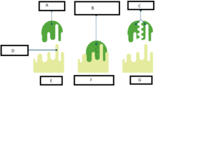
What is structure A?
Tags
NGSS.HS-PS1-2
3.
MULTIPLE CHOICE QUESTION
1 min • 1 pt
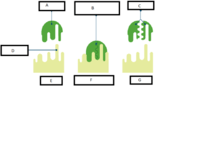
What is structure D?
4.
MULTIPLE CHOICE QUESTION
1 min • 1 pt

What is structure C?
5.
MULTIPLE CHOICE QUESTION
1 min • 12 pts
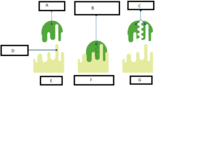
What is structure E, F, G?
6.
MULTIPLE CHOICE QUESTION
20 sec • 1 pt
What 3 letters do enzymes typically end in?
7.
MULTIPLE CHOICE QUESTION
45 sec • 12 pts
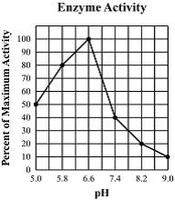
Which of the following conclusions can be drawn from this graph?

Access all questions and much more by creating a free account
Create resources
Host any resource
Get auto-graded reports

Continue with Google

Continue with Email

Continue with Classlink

Continue with Clever
or continue with

Microsoft
%20(1).png)
Apple

Others
Already have an account?



