
Cylinders Lateral and Total Surface Area
Authored by Anthony Clark
Mathematics
8th Grade


AI Actions
Add similar questions
Adjust reading levels
Convert to real-world scenario
Translate activity
More...
Content View
Student View
20 questions
Show all answers
1.
MULTIPLE CHOICE QUESTION
1 min • 1 pt
What is lateral surface area?
The area of all of the sides (including bases or top and bottom).
The area of only the sides (not including the bases or top and bottom).
The perimeter of the base.
The area of the base.
2.
MULTIPLE CHOICE QUESTION
1 min • 1 pt
What is total surface area?
The area of all of the sides (including bases or top and bottom).
The area of only the sides (not including the bases or top and bottom).
The perimeter of the base.
The area of the base.
3.
MULTIPLE CHOICE QUESTION
1 min • 1 pt
What is the difference between lateral and total surface area?
Total surface area solves for perimeter of all the sides where lateral solves for area.
Total surface area is the sum of the area of all the sides where lateral surface area is the sum of the area of only the sides. (Not including the bases or top and bottom).
Total surface area can only be used for prisms and lateral surface area can only be used for cylinders and cones.
None of the above.
4.
MULTIPLE CHOICE QUESTION
1 min • 1 pt
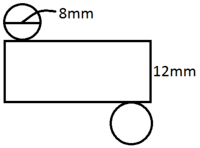
Find the lateral surface area of the cylinder.
301.6 mm2
603.2 mm2
402.1 mm2
1005.3 mm2
5.
MULTIPLE CHOICE QUESTION
1 min • 1 pt
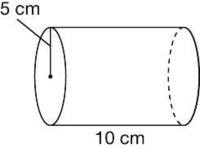
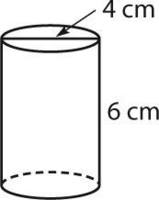
Find the lateral surface area of the cylinder.
471.24 square centimeters
157.08 square centimeters
314.16 square centimeters
296.72 square centimeters
6.
MULTIPLE CHOICE QUESTION
1 min • 1 pt

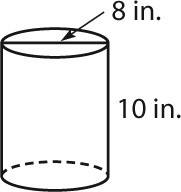
Find the total surface area of the cylinder.
100.53 square inches
351.86 square inches
251.33 square inches
50.27 square inches
7.
MULTIPLE CHOICE QUESTION
1 min • 1 pt
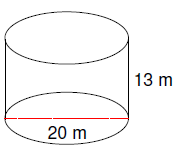
Find the lateral surface area.
Don't forget to divide the diameter by 2 to get the radius.
100.53 square inches
351.86 square inches
251.33 square inches
50.27 square inches

Access all questions and much more by creating a free account
Create resources
Host any resource
Get auto-graded reports

Continue with Google

Continue with Email

Continue with Classlink

Continue with Clever
or continue with

Microsoft
%20(1).png)
Apple

Others
Already have an account?
Similar Resources on Wayground

15 questions
Supplementary angles

Quiz
•
7th - 11th Grade
20 questions
Solving systems of equations by substitution_1
Quiz
•
9th Grade
20 questions
Math 10C Labelling Right Triangles
Quiz
•
8th - 11th Grade
20 questions
Exponent Quiz
Quiz
•
9th Grade
20 questions
Research Methodology Test
Quiz
•
University
20 questions
12 Data Handling
Quiz
•
7th - 9th Grade
18 questions
Year 11 - Diagnostic Test
Quiz
•
10th Grade
20 questions
T1 Perimeter and Area
Quiz
•
6th - 9th Grade
Popular Resources on Wayground
15 questions
Fractions on a Number Line
Quiz
•
3rd Grade
20 questions
Equivalent Fractions
Quiz
•
3rd Grade
25 questions
Multiplication Facts
Quiz
•
5th Grade
29 questions
Alg. 1 Section 5.1 Coordinate Plane
Quiz
•
9th Grade
22 questions
fractions
Quiz
•
3rd Grade
11 questions
FOREST Effective communication

Lesson
•
KG
20 questions
Main Idea and Details
Quiz
•
5th Grade
20 questions
Context Clues
Quiz
•
6th Grade
Discover more resources for Mathematics
14 questions
finding slope from a graph
Quiz
•
8th Grade
20 questions
Graphing Inequalities on a Number Line
Quiz
•
6th - 9th Grade
8 questions
8th U6L1: Organizing Data
Quiz
•
8th Grade
20 questions
Slope from a Graph
Quiz
•
8th Grade
12 questions
8th U5 Test Review: Functions & Volume
Quiz
•
8th Grade
20 questions
Slope Intercept Form
Quiz
•
7th - 8th Grade
20 questions
Angle Relationships
Quiz
•
6th - 8th Grade
14 questions
Estimate and Classify Real Numbers
Quiz
•
8th Grade