
Liquids and Solids Chemistry
Authored by Charles Martinez
Chemistry
10th Grade - University
NGSS covered


AI Actions
Add similar questions
Adjust reading levels
Convert to real-world scenario
Translate activity
More...
Content View
Student View
35 questions
Show all answers
1.
MULTIPLE CHOICE QUESTION
45 sec • 1 pt
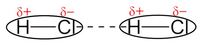
Which type of IMF is pictured above?
Dipole-Dipole Interaction
Ion-Dipole Interaction
Hydrogen Bonds
Covalent Bond
Ionic Bond
Tags
NGSS.HS-PS1-3
2.
MULTIPLE CHOICE QUESTION
45 sec • 1 pt

Which type of IMF is pictured above?
Dipole-Dipole Interaction
Ion-Dipole Interaction
Hydrogen Bonds
Covalent Bond
Ionic Bond
3.
MULTIPLE CHOICE QUESTION
45 sec • 1 pt
Which of the following would experience dipole-dipole forces of attraction between molecules?


Tags
NGSS.HS-PS1-3
4.
MULTIPLE CHOICE QUESTION
45 sec • 1 pt
For which of the following would hydrogen bonding occur between molecules?


Tags
NGSS.HS-ESS2-5
5.
MULTIPLE CHOICE QUESTION
2 mins • 1 pt
Rank these in order of strength:
covalent bond
dispersion force
hydrogen bond
dipole-dipole attraction
dipole-dipole > covalent bond > hydrogen bond > dispersion
dispersion > dipole-dipole > hydrogen bond > covalent bond
covalent bond > hydrogen bond > dipole-dipole > dispersion
hydrogen bond > dipole-dipole > dispersion > covalent bond
6.
MULTIPLE SELECT QUESTION
45 sec • 1 pt
Which intermolecular force is present in Cl2?
dipole dipole
H-bond
dispersion
metallic
7.
MULTIPLE CHOICE QUESTION
45 sec • 1 pt
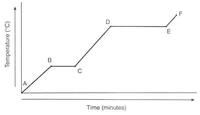
Which line segment represents ONLY the solid state?
A-B
B-C
C-D
D-E
Tags
NGSS.MS-PS1-4
Access all questions and much more by creating a free account
Create resources
Host any resource
Get auto-graded reports

Continue with Google

Continue with Email

Continue with Classlink

Continue with Clever
or continue with

Microsoft
%20(1).png)
Apple

Others
Already have an account?
Similar Resources on Wayground

39 questions
Review: Redox & Nuclear Chemistry

Quiz
•
10th Grade
34 questions
SDSMT - Exam 3 - Redox Chemistry
Quiz
•
University
30 questions
01-11-2021 Year 9 Chemistry Quiz 2 KS3 C1 Part 2
Quiz
•
6th - 10th Grade
30 questions
01-11-2021 Year 11 Chemistry Quiz 2- C6 Electrolysis
Quiz
•
9th - 10th Grade
40 questions
Επανάληψη : Διαμοριακές και χημική ισορροπία
Quiz
•
11th - 12th Grade
39 questions
Chp 5 Review
Quiz
•
9th - 12th Grade
40 questions
chemistry igcse 2016 past year
Quiz
•
10th - 12th Grade
30 questions
HYDROGEN
Quiz
•
11th Grade
Popular Resources on Wayground
15 questions
Fractions on a Number Line
Quiz
•
3rd Grade
20 questions
Equivalent Fractions
Quiz
•
3rd Grade
25 questions
Multiplication Facts
Quiz
•
5th Grade
29 questions
Alg. 1 Section 5.1 Coordinate Plane
Quiz
•
9th Grade
22 questions
fractions
Quiz
•
3rd Grade
11 questions
FOREST Effective communication

Lesson
•
KG
20 questions
Main Idea and Details
Quiz
•
5th Grade
20 questions
Context Clues
Quiz
•
6th Grade
Discover more resources for Chemistry
22 questions
Unit 9 Gas Law Quiz
Quiz
•
10th Grade
10 questions
Exploring Types of Chemical Reactions

Interactive video
•
6th - 10th Grade
20 questions
Types of Chemical Reactions
Quiz
•
9th - 12th Grade
20 questions
Acids and Bases
Quiz
•
10th Grade
7 questions
GCSE Chemistry - Balancing Chemical Equations #4
Interactive video
•
9th - 10th Grade
20 questions
Chemistry: Classification of Matter
Quiz
•
10th Grade
40 questions
Unit 3 (Part 1) Chemical Equations & Reactions Review Game
Quiz
•
8th - 12th Grade
20 questions
Stoichiometry Review
Quiz
•
10th Grade