
Mastering Lewis Diagrams for Covalent Compounds in Chemistry

Interactive Video
•
Chemistry, Science, Mathematics
•
9th - 10th Grade
•
Practice Problem
•
Hard

Patricia Brown
FREE Resource
Read more
10 questions
Show all answers
1.
MULTIPLE CHOICE QUESTION
30 sec • 1 pt
What is the first step in drawing a Lewis diagram for a covalent compound?
Distribute electrons among atoms.
Count the total number of valence electrons.
Draw the atomic symbols.
Form double bonds.
2.
MULTIPLE CHOICE QUESTION
30 sec • 1 pt
How many valence electrons are available for phosphorus trifluoride (PF3)?
24
26
30
28
3.
MULTIPLE CHOICE QUESTION
30 sec • 1 pt
In the Lewis diagram for PF3, how many electrons are shared between the phosphorus and each fluorine atom?
6
4
2
8
4.
MULTIPLE CHOICE QUESTION
30 sec • 1 pt
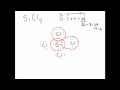
What is the total number of valence electrons available for silicon tetrachloride (SiCl4)?
34
28
32
30
5.
MULTIPLE CHOICE QUESTION
30 sec • 1 pt
How many electrons does each chlorine atom in SiCl4 feel like it has after drawing the Lewis diagram?
7
6
9
8
6.
MULTIPLE CHOICE QUESTION
30 sec • 1 pt
What is the total number of valence electrons for carbon dioxide (CO2)?
16
12
14
18
7.
MULTIPLE CHOICE QUESTION
30 sec • 1 pt
Why was the initial Lewis diagram for CO2 incorrect?
Oxygen had too many electrons.
Carbon had too few electrons.
There were no bonds formed.
Too many electrons were used.
Access all questions and much more by creating a free account
Create resources
Host any resource
Get auto-graded reports

Continue with Google

Continue with Email

Continue with Classlink

Continue with Clever
or continue with

Microsoft
%20(1).png)
Apple

Others
Already have an account?


