
AP Biology Topic 8.2 Energy Flow Through Ecosystems
Authored by Emily Tombleson
Biology
11th Grade
NGSS covered
Used 5+ times


AI Actions
Add similar questions
Adjust reading levels
Convert to real-world scenario
Translate activity
More...
Content View
Student View
30 questions
Show all answers
1.
MULTIPLE CHOICE QUESTION
2 mins • 1 pt

A mouse eats a grasshopper which eats grass.
What trophic level is the mouse in this food chain?
Primary Producer
Primary Consumer
Secondary Consumer
Tertiary Consumer
Tags
NGSS.MS-LS2-2
2.
MULTIPLE CHOICE QUESTION
2 mins • 1 pt

Which trophic level is positioned at the bottom of an energy pyramid?
decomposers
primary consumers
primary producer
apex predator
Tags
NGSS.MS-LS2-3
3.
MULTIPLE SELECT QUESTION
2 mins • 1 pt
Which of the following can be considered primary producers? Select all that apply.
Human
Algae
Grasshopper
Grass
Snake
Tags
NGSS.MS-LS2-3
4.
MULTIPLE CHOICE QUESTION
2 mins • 1 pt

What percent (%) of energy is transferred from one trophic level to the next?
5%
10%
15%
20%
Tags
NGSS.MS-LS2-3
NGSS.MS-LS1-6
5.
MULTIPLE CHOICE QUESTION
30 sec • 1 pt
Algae generate 84,000 kcals of tissue. Which of the following represents the amount of energy available for primary consumers in the food chain? Remember the 10% rule!
84,000 kcals
8,400 kcals
840 kcals
84 kcals
Tags
NGSS.MS-LS2-3
NGSS.MS-LS1-6
6.
MULTIPLE CHOICE QUESTION
2 mins • 1 pt
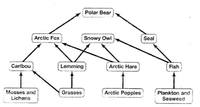
An arctic food web is shown. Suppose that the lemming population is removed from the web. Which of the following would be a likely short-term effect of this change?
The arctic fox population will increase.
The polar bear population will increase.
The caribou population will decrease.
The snowy owl population will decrease.
Tags
NGSS.MS-LS2-1
NGSS.MS-LS2-2
NGSS.MS-LS2-4
7.
MULTIPLE CHOICE QUESTION
2 mins • 1 pt
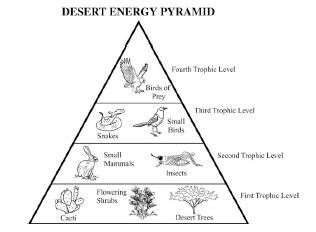
A team of ecologists observed feeding patterns of several populations in the desert. Which of the following best explains the difference in the amount of available energy in the trophic levels of the desert ecosystem?
There is less energy in the producers because they are at the bottom.
There is more energy in the producers because they provide energy for all the consumers in the ecosystem.
There is more energy available in the tertiary consumers because they need the energy to hunt.
There is more energy in the level containing the top predators because they are larger in size.
Tags
NGSS.MS-LS2-3
NGSS.MS-LS2-1


Access all questions and much more by creating a free account
Create resources
Host any resource
Get auto-graded reports

Continue with Google

Continue with Email

Continue with Microsoft
or continue with

%20(1).png)
Apple

Others
Already have an account?



