
Tema 1: Educación ambiental y participación ciudadana
Authored by XIMENA PILAR BALLIN SHIGUANGO
Science
4th Grade
Used 1+ times


AI Actions
Add similar questions
Adjust reading levels
Convert to real-world scenario
Translate activity
More...
Content View
Student View
11 questions
Show all answers
1.
MULTIPLE CHOICE QUESTION
30 sec • 1 pt
¿Cuál es uno de los principales propósitos de la educación ambiental según el texto?
a) Eliminar los problemas ambientales directamente
b) Proporcionar conocimientos científicos solamente
c) Formar una conciencia crítica y participativa
d) Aumentar el consumo sostenible de recursos
2.
MULTIPLE CHOICE QUESTION
30 sec • 1 pt
La participación ciudadana en temas ambientales implica principalmente:
Elegir representantes en comités gubernamentales
Realizar estudios técnicos complejos
Tomar decisiones informadas y responsables sobre el entorno
Limitarse a actividades escolares ambientales
3.
MULTIPLE CHOICE QUESTION
30 sec • 1 pt
¿Qué rol cumplen las instituciones educativas en la educación ambiental?
Administrar recursos naturales
Servir como espacios para el desarrollo de actitudes ambientales responsables
Fomentar el consumo responsable de productos
Reemplazar las políticas gubernamentales sobre el medio ambiente
4.
MULTIPLE CHOICE QUESTION
30 sec • 1 pt
Qué se necesita para lograr una participación ciudadana ambiental efectiva?
Conocimiento, compromiso y acción por parte de la sociedad
Solo tener leyes ambientales estrictas
Delegar la responsabilidad en el gobierno
Campañas publicitarias permanentes
5.
MULTIPLE CHOICE QUESTION
30 sec • 1 pt
Según el texto, ¿cuál de las siguientes acciones NO refleja una participación ciudadana activa en temas ambientales?
Denunciar delitos ambientales
Plantar árboles en la comunidad
Participar en talleres de educación ambiental
Mantenerse indiferente ante la contaminación
6.
MULTIPLE CHOICE QUESTION
30 sec • 1 pt
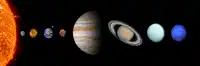
Which of these is the largest planet in the Solar System?
Answer explanation
Jupiter is a gas giant made primarily of hydrogen and helium. Unlike terrestrial planets that have solid surfaces, gas giants like Jupiter don't have a well-defined solid surface, allowing them to accumulate more mass in a gaseous form. This composition has allowed Jupiter to grow significantly larger than planets with solid surfaces.
7.
MULTIPLE SELECT QUESTION
30 sec • 1 pt

Which of these celestial bodies are planets?

Access all questions and much more by creating a free account
Create resources
Host any resource
Get auto-graded reports

Continue with Google

Continue with Email

Continue with Classlink

Continue with Clever
or continue with

Microsoft
%20(1).png)
Apple

Others
Already have an account?


