
4.1 Cell Communication & 4.2 Cell Cycle
Authored by Corinne Salter
Science
11th Grade
NGSS covered
Used 3+ times


AI Actions
Add similar questions
Adjust reading levels
Convert to real-world scenario
Translate activity
More...
Content View
Student View
45 questions
Show all answers
1.
MULTIPLE CHOICE QUESTION
30 sec • 1 pt
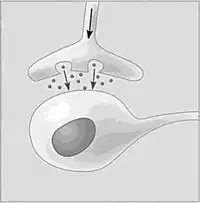
Which of the following types of signaling is represented in the figure?
hormonal
paracrine
autocrine
synaptic
2.
MULTIPLE CHOICE QUESTION
30 sec • 1 pt
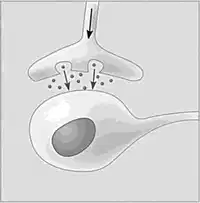
In the figure, the dots in the space between the two structures represent which of the following types of molecules?
neurotransmitters
hormones
receptor molecules
signal transducers
3.
MULTIPLE CHOICE QUESTION
30 sec • 1 pt
Immediately after a membrane receptor protein binds to its ligand, which of the following processes occurs?
The membrane receptor protein undergoes a conformational change.
An intracellular G protein is activated.
Cytoplasmic enzymes are activated by phosphorylation.
The receptor/ligand complex enters the cytoplasm by endocytosis.
4.
MULTIPLE CHOICE QUESTION
30 sec • 1 pt
Which of the following statements best describes how the lack of receptors for local paracrine signal molecules would affect animal cells?
The cells would not respond to growth factors from nearby cells.
The cells would bind locally secreted growth factors, but signal transduction to alter gene expression would not occur.
The cells would not respond to hormone signals delivered through the bloodstream.
The cells would produce their own paracrine molecules internally.
5.
MULTIPLE CHOICE QUESTION
30 sec • 1 pt
Secreted signal molecules that travel only short distances and influence only cells in the immediate vicinity are associated with which of the following signaling pathways?
endocrine signaling
paracrine signaling
hormonal signaling
synaptic signaling
6.
MULTIPLE CHOICE QUESTION
30 sec • 1 pt
How is the plant hormone ethylene delivered to target cells?
through plasmodesmata from adjacent cells
through the plant vascular system
through intracellular steroid hormone receptors
through the air
7.
MULTIPLE CHOICE QUESTION
30 sec • 1 pt
Testosterone is most likely to alter cell function by which of the following mechanisms?
binding to a receptor protein that enters the nucleus and activates specific genes
binding to a transmembrane signal receptor that activates cell-signaling pathways
serving as a second messenger that activates cell-signaling pathways
acting as a steroid signal receptor that activates ion channel proteins
Access all questions and much more by creating a free account
Create resources
Host any resource
Get auto-graded reports

Continue with Google

Continue with Email

Continue with Classlink

Continue with Clever
or continue with

Microsoft
%20(1).png)
Apple

Others
Already have an account?



