
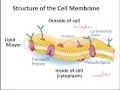
Exploring Cell Structure and Function

Interactive Video
•
Science
•
6th - 10th Grade
•
Practice Problem
•
Hard
+1
Standards-aligned

Aiden Montgomery
Used 2+ times
FREE Resource
Standards-aligned
Read more
10 questions
Show all answers
1.
MULTIPLE CHOICE QUESTION
30 sec • 1 pt
What is the basic unit of structure and function for all organisms?
Tissue
Organ
Cell
Organ system
Tags
NGSS.MS-LS1-1
NGSS.MS-LS1-2
NGSS.MS-LS1-3
2.
MULTIPLE CHOICE QUESTION
30 sec • 1 pt
Which organelle is known as the 'brain' of the cell?
Nucleus
Mitochondria
Golgi apparatus
Ribosome
Tags
NGSS.MS-LS1-2
3.
MULTIPLE CHOICE QUESTION
30 sec • 1 pt
Which organelle is responsible for photosynthesis in plant cells?
Mitochondria
Nucleus
Ribosome
Chloroplast
Tags
NGSS.MS-LS1-6
4.
MULTIPLE CHOICE QUESTION
30 sec • 1 pt
What is the main difference between plant and animal cells?
Plant cells have a cell wall, chloroplasts, and a large central vacuole.
Animal cells have a cell wall, chloroplasts, and a large central vacuole.
Plant cells have centrioles and small vacuoles.
Animal cells have chloroplasts and a large central vacuole.
5.
MULTIPLE CHOICE QUESTION
30 sec • 1 pt
What is the function of the plasma membrane?
To synthesize proteins
To store genetic information
To control what enters and exits the cell
To produce energy
Tags
NGSS.MS-LS1-2
6.
MULTIPLE CHOICE QUESTION
30 sec • 1 pt
Which type of transport requires energy in the form of ATP?
Facilitated diffusion
Diffusion
Active transport
Passive transport
7.
MULTIPLE CHOICE QUESTION
30 sec • 1 pt
What is a key characteristic of prokaryotic cells?
They have a nucleus.
They have membrane-bound organelles.
They are generally larger and more complex.
They lack a nucleus.
Access all questions and much more by creating a free account
Create resources
Host any resource
Get auto-graded reports

Continue with Google

Continue with Email

Continue with Microsoft
or continue with

%20(1).png)
Apple

Others
By signing up, you agree to our Terms of Service & Privacy Policy
Already have an account?

