
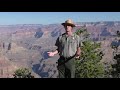
Geological Processes of the Grand Canyon

Interactive Video
•
Science, Geography
•
5th - 8th Grade
•
Practice Problem
•
Hard

Ethan Morris
FREE Resource
Read more
10 questions
Show all answers
1.
MULTIPLE CHOICE QUESTION
30 sec • 1 pt
What does the acronym DUDE stand for in the context of the Grand Canyon's formation?
Deposition, Uplift, Downcutting, Erosion
Deposition, Undercutting, Downcutting, Erosion
Deposition, Uplift, Development, Erosion
Deposition, Uplift, Downcutting, Expansion
2.
MULTIPLE CHOICE QUESTION
30 sec • 1 pt
Which type of rock is most commonly found in the Grand Canyon?
Sedimentary
Volcanic
Metamorphic
Igneous
3.
MULTIPLE CHOICE QUESTION
30 sec • 1 pt
What geological process is responsible for the elevation of the Grand Canyon?
Erosion
Uplift
Volcanic Activity
Deposition
4.
MULTIPLE CHOICE QUESTION
30 sec • 1 pt
How did the Colorado River contribute to the formation of the Grand Canyon?
By depositing sediments
By uplifting the land
By downcutting through the rock layers
By causing volcanic eruptions
5.
MULTIPLE CHOICE QUESTION
30 sec • 1 pt
What is the primary force behind the downcutting process in the Grand Canyon?
Tectonic uplift
Glacial movement
River flow
Wind erosion
6.
MULTIPLE CHOICE QUESTION
30 sec • 1 pt
Which type of erosion involves water freezing and thawing in rock cracks?
Chemical erosion
Wind erosion
Ice wedging
Biological erosion
7.
MULTIPLE CHOICE QUESTION
30 sec • 1 pt
What causes the North Rim of the Grand Canyon to erode more than the South Rim?
Stronger winds
More volcanic activity
Lower elevation and less precipitation
Higher elevation and more precipitation
Access all questions and much more by creating a free account
Create resources
Host any resource
Get auto-graded reports

Continue with Google

Continue with Email

Continue with Classlink

Continue with Clever
or continue with

Microsoft
%20(1).png)
Apple

Others
Already have an account?


