
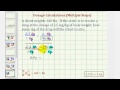
Dosage Calculations and Unit Conversions

Interactive Video
•
Mathematics, Science
•
7th - 10th Grade
•
Practice Problem
•
Hard

Sophia Harris
FREE Resource
Read more
10 questions
Show all answers
1.
MULTIPLE CHOICE QUESTION
30 sec • 1 pt
What is the initial step in solving a dosage calculation problem?
Guessing the dosage
Setting up a proportion
Converting units
Using a calculator
2.
MULTIPLE CHOICE QUESTION
30 sec • 1 pt
In the context of proportions, what must be true for cross-multiplication to be valid?
The units of a and d must be different
The units of b and d must be different
The units of a and c must be the same
The units of a and b must be the same
3.
MULTIPLE CHOICE QUESTION
30 sec • 1 pt
What is the first rate used in the dosage calculation?
1 kilogram to 2.5 milligrams
2.5 milligrams to 1 kilogram
2.5 milligrams to 1 pound
1 milligram to 2.5 kilograms
4.
MULTIPLE CHOICE QUESTION
30 sec • 1 pt
What is the unknown variable in the second rate of the dosage calculation?
y kilograms
w grams
x milligrams
z pounds
5.
MULTIPLE CHOICE QUESTION
30 sec • 1 pt
Why is it necessary to convert pounds to kilograms in this problem?
To simplify the calculation
To match the units in the proportion
To avoid using a calculator
To make the problem more complex
6.
MULTIPLE CHOICE QUESTION
30 sec • 1 pt
What is the conversion factor used to convert pounds to kilograms?
2.2 kilograms = 1 pound
2.2 pounds = 1 kilogram
1 pound = 2.2 kilograms
1 pound = 1 kilogram
7.
MULTIPLE CHOICE QUESTION
30 sec • 1 pt
After converting 140 pounds to kilograms, what is the equivalent weight in kilograms?
70 kilograms
50 kilograms
63.64 kilograms
140 kilograms
Access all questions and much more by creating a free account
Create resources
Host any resource
Get auto-graded reports

Continue with Google

Continue with Email

Continue with Classlink

Continue with Clever
or continue with

Microsoft
%20(1).png)
Apple

Others
Already have an account?

