
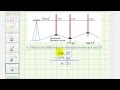
Understanding Builder's Level and Elevation Calculations

Interactive Video
•
Mathematics, Science
•
7th - 10th Grade
•
Practice Problem
•
Hard

Lucas Foster
FREE Resource
Read more
10 questions
Show all answers
1.
MULTIPLE CHOICE QUESTION
30 sec • 1 pt
What is the primary function of a builder's level?
To measure temperature
To measure elevation
To measure speed
To measure weight
2.
MULTIPLE CHOICE QUESTION
30 sec • 1 pt
What is the known elevation of the benchmark in the video?
110.5 ft
115.5 ft
100.5 ft
105.5 ft
3.
MULTIPLE CHOICE QUESTION
30 sec • 1 pt
How do you calculate the height of the instrument?
By subtracting the benchmark from the first reading
By adding the benchmark to the first reading
By multiplying the benchmark by the first reading
By dividing the benchmark by the first reading
4.
MULTIPLE CHOICE QUESTION
30 sec • 1 pt
What is the height of the instrument calculated in the video?
106.33 ft
104.02 ft
105.5 ft
110.25 ft
5.
MULTIPLE CHOICE QUESTION
30 sec • 1 pt
How is the elevation at Point A determined?
By adding the reading to the height of the instrument
By subtracting the reading from the height of the instrument
By dividing the reading by the height of the instrument
By multiplying the reading by the height of the instrument
6.
MULTIPLE CHOICE QUESTION
30 sec • 1 pt
What is the elevation at Point A?
105.5 ft
104.02 ft
110.25 ft
106.33 ft
7.
MULTIPLE CHOICE QUESTION
30 sec • 1 pt
How is the elevation at Point B calculated?
By dividing the reading by the height of the instrument
By multiplying the reading by the height of the instrument
By subtracting the reading from the height of the instrument
By adding the reading to the height of the instrument
Access all questions and much more by creating a free account
Create resources
Host any resource
Get auto-graded reports

Continue with Google

Continue with Email

Continue with Classlink

Continue with Clever
or continue with

Microsoft
%20(1).png)
Apple

Others
Already have an account?
Popular Resources on Wayground

15 questions
Fractions on a Number Line

Quiz
•
3rd Grade
10 questions
Probability Practice
Quiz
•
4th Grade
15 questions
Probability on Number LIne
Quiz
•
4th Grade
20 questions
Equivalent Fractions
Quiz
•
3rd Grade
25 questions
Multiplication Facts
Quiz
•
5th Grade
22 questions
fractions
Quiz
•
3rd Grade
6 questions
Appropriate Chromebook Usage

Lesson
•
7th Grade
10 questions
Greek Bases tele and phon
Quiz
•
6th - 8th Grade
Discover more resources for Mathematics
14 questions
Volume of rectangular prisms
Quiz
•
7th Grade
23 questions
TSI Math Vocabulary
Quiz
•
10th - 12th Grade
15 questions
Graphing Inequalities
Quiz
•
7th - 9th Grade
20 questions
Graphing Inequalities on a Number Line
Quiz
•
6th - 9th Grade
10 questions
Mean, Median, Mode, and Range
Quiz
•
7th Grade
12 questions
Simple Probability
Quiz
•
7th Grade
15 questions
Simple Probability
Quiz
•
7th Grade
15 questions
Volume of Triangular and Rectangular Prisms
Quiz
•
5th - 7th Grade