
- Resource Library
- Science
- Earth & Space Science
- Igneous Rocks
- Understanding Igneous Rocks: Tuff, Obsidian, And Pumice
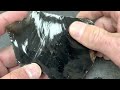
Understanding Igneous Rocks: Tuff, Obsidian, and Pumice

Interactive Video
•
Science
•
6th - 12th Grade
•
Practice Problem
•
Hard

Ethan Morris
FREE Resource
Read more
10 questions
Show all answers
1.
MULTIPLE CHOICE QUESTION
30 sec • 1 pt
What is the primary goal of studying rocks according to the video?
To memorize rock names
To identify the rock types
To collect as many rocks as possible
To understand the story behind the rocks
2.
MULTIPLE CHOICE QUESTION
30 sec • 1 pt
What is the main characteristic of tuff?
It is formed underwater
It is made entirely of crystals
It has a pyroclastic texture
It is always dark in color
3.
MULTIPLE CHOICE QUESTION
30 sec • 1 pt
How can tuff be distinguished from fine-grained sedimentary rocks?
By its smell
By examining the particle shapes
By its weight
By its color
4.
MULTIPLE CHOICE QUESTION
30 sec • 1 pt
What makes obsidian unique among igneous rocks?
It is made of minerals
It has a crystalline structure
It is always light in color
It is a glassy material without crystals
5.
MULTIPLE CHOICE QUESTION
30 sec • 1 pt
Why is obsidian not considered a true rock or mineral?
It is too soft
It lacks ordered crystal structure
It is not found in nature
It is always transparent
6.
MULTIPLE CHOICE QUESTION
30 sec • 1 pt
What is the main difference between pumice and obsidian?
Obsidian contains more minerals
Obsidian is lighter in color
Pumice is formed from gas-rich magma
Pumice is denser than obsidian
7.
MULTIPLE CHOICE QUESTION
30 sec • 1 pt
What property of pumice allows it to float on water?
Its color
Its high density
Its vesicular structure
Its mineral content
Access all questions and much more by creating a free account
Create resources
Host any resource
Get auto-graded reports

Continue with Google

Continue with Email

Continue with Microsoft
or continue with

%20(1).png)
Apple

Others
By signing up, you agree to our Terms of Service & Privacy Policy
Already have an account?

