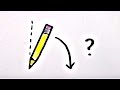
Balancing Objects and Stability Concepts

Interactive Video
•
Physics, Mathematics, Science
•
7th - 12th Grade
•
Practice Problem
•
Hard

Emma Peterson
FREE Resource
Read more
10 questions
Show all answers
1.
MULTIPLE CHOICE QUESTION
30 sec • 1 pt
Why are top-heavy objects considered unstable?
They are balanced by default.
They tend to fall easily with any small disturbance.
They are lightweight.
They have a low center of mass.
2.
MULTIPLE CHOICE QUESTION
30 sec • 1 pt
What is an inverted pendulum?
A pendulum that swings in a circle.
A pendulum that is upside down.
A pendulum that doesn't move.
A pendulum that is perfectly stable.
3.
MULTIPLE CHOICE QUESTION
30 sec • 1 pt
How quickly would a perfectly balanced pencil fall if nudged slightly?
It would never fall.
In about one minute.
In about three seconds.
In about ten seconds.
4.
MULTIPLE CHOICE QUESTION
30 sec • 1 pt
What do acrobats and robots require to balance objects?
A very light object.
A very heavy object.
Active stabilization efforts.
A perfectly flat surface.
5.
MULTIPLE CHOICE QUESTION
30 sec • 1 pt
What is necessary to balance a pencil on a single atom-wide tip?
Using a very light pencil.
Removing all air and cooling to absolute zero.
Balancing on a rough surface.
Using a very heavy pencil.
6.
MULTIPLE CHOICE QUESTION
30 sec • 1 pt
Why can't a pencil be perfectly upright and still at the same time?
Due to air resistance.
Because of quantum effects.
Due to its length.
Because of its weight.
7.
MULTIPLE CHOICE QUESTION
30 sec • 1 pt
What is the effect of thermal jiggling on balancing?
It has no effect.
It stabilizes the object.
It makes the object heavier.
It causes the object to jiggle off balance.
Access all questions and much more by creating a free account
Create resources
Host any resource
Get auto-graded reports

Continue with Google

Continue with Email

Continue with Classlink

Continue with Clever
or continue with

Microsoft
%20(1).png)
Apple

Others
Already have an account?
Similar Resources on Wayground
Popular Resources on Wayground

15 questions
Fractions on a Number Line

Quiz
•
3rd Grade
20 questions
Equivalent Fractions
Quiz
•
3rd Grade
25 questions
Multiplication Facts
Quiz
•
5th Grade
54 questions
Analyzing Line Graphs & Tables
Quiz
•
4th Grade
22 questions
fractions
Quiz
•
3rd Grade
20 questions
Main Idea and Details
Quiz
•
5th Grade
20 questions
Context Clues
Quiz
•
6th Grade
15 questions
Equivalent Fractions
Quiz
•
4th Grade
Discover more resources for Physics
20 questions
Thermal Energy
Quiz
•
5th - 8th Grade
27 questions
Simple Machines and Mechanical Advantage Quiz
Quiz
•
9th Grade
16 questions
Coulomb's Law
Quiz
•
11th Grade
24 questions
PS.8b Newtons Laws
Quiz
•
8th Grade
14 questions
Electromagnetic Spectrum
Quiz
•
8th Grade
20 questions
Distance and Displacement
Quiz
•
6th - 8th Grade
10 questions
Understanding Heat, Thermal Energy, and Temperature
Interactive video
•
9th - 10th Grade
10 questions
Newton's Laws of Motion
Quiz
•
10th Grade