
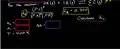
Relating Equilibrium Constants: Kp and Kc (Keq)

Interactive Video
•
Science, Physics, Chemistry
•
University
•
Practice Problem
•
Hard

Wayground Content
FREE Resource
Read more
7 questions
Show all answers
1.
MULTIPLE CHOICE QUESTION
30 sec • 1 pt
What does the 'P' in KP stand for in the context of equilibrium expressions?
Partial
Pressure
Product
Proportion
2.
MULTIPLE CHOICE QUESTION
30 sec • 1 pt
How is KP different from KEQ in terms of what it uses for calculations?
KP uses concentrations, KEQ uses pressures
KP uses partial pressures, KEQ uses concentrations
KP uses moles, KEQ uses volumes
KP uses total pressures, KEQ uses partial pressures
3.
MULTIPLE CHOICE QUESTION
30 sec • 1 pt
In the formula relating KP to KC, what does delta N represent?
The change in pressure
The change in temperature
The change in concentration
The change in the number of moles of gas
4.
MULTIPLE CHOICE QUESTION
30 sec • 1 pt
What is the ideal gas constant value used in the calculations?
6.314 joules per mole Kelvin
7.314 joules per mole Kelvin
9.314 joules per mole Kelvin
8.314 joules per mole Kelvin
5.
MULTIPLE CHOICE QUESTION
30 sec • 1 pt
What is the significance of a positive Delta G at equilibrium?
The reaction is spontaneous
The reaction is non-spontaneous
The reaction is at equilibrium
The reaction is exothermic
6.
MULTIPLE CHOICE QUESTION
30 sec • 1 pt
How does the difference in moles of gas between products and reactants affect KP and KEQ?
It has no effect on KP and KEQ
It can cause significant variation between KP and KEQ
It causes KP to be larger than KEQ
It makes KP and KEQ equal
7.
MULTIPLE CHOICE QUESTION
30 sec • 1 pt
What is the calculated KEQ at 400 Kelvin in scientific notation?
2.7 x 10^-7
3.0 x 10^-8
3.0 x 10^-7
2.7 x 10^-8
Access all questions and much more by creating a free account
Create resources
Host any resource
Get auto-graded reports

Continue with Google

Continue with Email

Continue with Classlink

Continue with Clever
or continue with

Microsoft
%20(1).png)
Apple

Others
Already have an account?

