
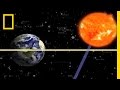
Celestial Events and Ancient Alignments of Equinoxes and Solstices

Interactive Video
•
Science, Geography, History
•
9th - 10th Grade
•
Practice Problem
•
Hard

Patricia Brown
FREE Resource
Read more
10 questions
Show all answers
1.
MULTIPLE CHOICE QUESTION
30 sec • 1 pt
What are equinoxes known for in terms of day and night duration?
Day and night are of nearly equal length
Night is longer than day
Neither day nor night occurs
Day is longer than night
2.
MULTIPLE CHOICE QUESTION
30 sec • 1 pt
In which months do equinoxes typically occur?
March and September
June and December
April and October
January and July
3.
MULTIPLE CHOICE QUESTION
30 sec • 1 pt
What is the celestial equator?
A line marking the longest day of the year
A line dividing the Earth into two hemispheres
A projection of Earth's equator onto the celestial sphere
The path of the sun across the sky
4.
MULTIPLE CHOICE QUESTION
30 sec • 1 pt
What marks the longest day of the year in the northern hemisphere?
Summer solstice
Autumnal equinox
Vernal equinox
Winter solstice
5.
MULTIPLE CHOICE QUESTION
30 sec • 1 pt
Which ancient site is known for its solar alignments during solstices?
The Colosseum
Stonehenge
The Great Wall of China
The Eiffel Tower
6.
MULTIPLE CHOICE QUESTION
30 sec • 1 pt
What illusion is created at Chichen Itzá during equinoxes?
A flowing river
A writhing serpent
A flying bird
A rising sun
7.
MULTIPLE CHOICE QUESTION
30 sec • 1 pt
What is the Harvest Moon?
The first full moon of spring
The full moon nearest the autumnal equinox
The first full moon after the summer solstice
The last full moon of the year
Access all questions and much more by creating a free account
Create resources
Host any resource
Get auto-graded reports

Continue with Google

Continue with Email

Continue with Microsoft
or continue with

%20(1).png)
Apple

Others
Already have an account?


