
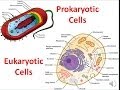
Cellular Complexity: Eukaryotic And Prokaryotic Differences Explained

Interactive Video
•
Biology, Science
•
6th - 8th Grade
•
Practice Problem
•
Medium

Patricia Brown
Used 19+ times
FREE Resource
Read more
10 questions
Show all answers
1.
MULTIPLE CHOICE QUESTION
30 sec • 1 pt
What is a defining feature of eukaryotic cells that contributes to their complexity?
Membrane-bound organelles
Smaller size compared to prokaryotes
Lack of a nucleus
Presence of a cell wall
2.
MULTIPLE CHOICE QUESTION
30 sec • 1 pt
Which organelle is responsible for energy production in eukaryotic cells?
Ribosome
Mitochondria
Chloroplast
Golgi apparatus
3.
MULTIPLE CHOICE QUESTION
30 sec • 1 pt
Which organelle is involved in the synthesis of lipids?
Lysosome
Smooth endoplasmic reticulum
Rough endoplasmic reticulum
Golgi apparatus
4.
MULTIPLE CHOICE QUESTION
30 sec • 1 pt
Which kingdom includes organisms that are photosynthetic?
Fungi
Animalia
Protista
Plantae
5.
MULTIPLE CHOICE QUESTION
30 sec • 1 pt
Which kingdom is known for organisms that feed on dead organic matter?
Animalia
Fungi
Plantae
Protista
6.
MULTIPLE CHOICE QUESTION
30 sec • 1 pt
What is a characteristic of prokaryotic cells?
Complex internal structure
Larger size than eukaryotic cells
Presence of a nucleus
Lack of membrane-bound organelles
7.
MULTIPLE CHOICE QUESTION
30 sec • 1 pt
Which of the following is NOT a kingdom of prokaryotic cells?
Eubacteria
Archaebacteria
Protista
None of the above
Access all questions and much more by creating a free account
Create resources
Host any resource
Get auto-graded reports

Continue with Google

Continue with Email

Continue with Microsoft
or continue with

%20(1).png)
Apple

Others
By signing up, you agree to our Terms of Service & Privacy Policy
Already have an account?


