
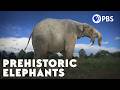
Proboscideans: Adaptations and Extinction

Interactive Video
•
Biology, Science, Geography
•
9th - 10th Grade
•
Practice Problem
•
Hard

Patricia Brown
FREE Resource
Read more
10 questions
Show all answers
1.
MULTIPLE CHOICE QUESTION
30 sec • 1 pt
What was a key feature missing in early proboscideans compared to modern elephants?
Large ears
Thick skin
Long, grasping trunk
Short legs
2.
MULTIPLE CHOICE QUESTION
30 sec • 1 pt
Which group of proboscideans had an especially extreme mouth shape?
Woolly mammoths
Mastodons
Modern elephants
Shovel-tuskers
3.
MULTIPLE CHOICE QUESTION
30 sec • 1 pt
What environmental change contributed to the shift from long jaws to long trunks in proboscideans?
Rise in sea levels
Increase in forested areas
Decrease in atmospheric oxygen
Expansion of grasslands
4.
MULTIPLE CHOICE QUESTION
30 sec • 1 pt
What adaptation allowed proboscideans to effectively graze on grasses?
Long trunks
Sharp claws
Powerful hind legs
Thick fur
5.
MULTIPLE CHOICE QUESTION
30 sec • 1 pt
How did proboscideans adapt their teeth to the abrasive nature of grasses?
By reducing the size of their jaws
By developing higher crowns and folded enamel
By growing larger tusks
By having more molars
6.
MULTIPLE CHOICE QUESTION
30 sec • 1 pt
What was a major factor in the decline of proboscideans around 7 million years ago?
Increased predation by large cats
Asteroid impact
Volcanic eruptions
Impending Ice Age
7.
MULTIPLE CHOICE QUESTION
30 sec • 1 pt
Which species are the last remaining proboscideans today?
Woolly mammoths
Mastodons
Elephants
Shovel-tuskers
Access all questions and much more by creating a free account
Create resources
Host any resource
Get auto-graded reports

Continue with Google

Continue with Email

Continue with Classlink

Continue with Clever
or continue with

Microsoft
%20(1).png)
Apple

Others
Already have an account?

